Tundra (SQA National 5 Geography): Revision Note
Exam code: X833 75

Tundra Climate
‘Tundra’ comes from the Finnish word ‘tunturi’, meaning ‘treeless plain’
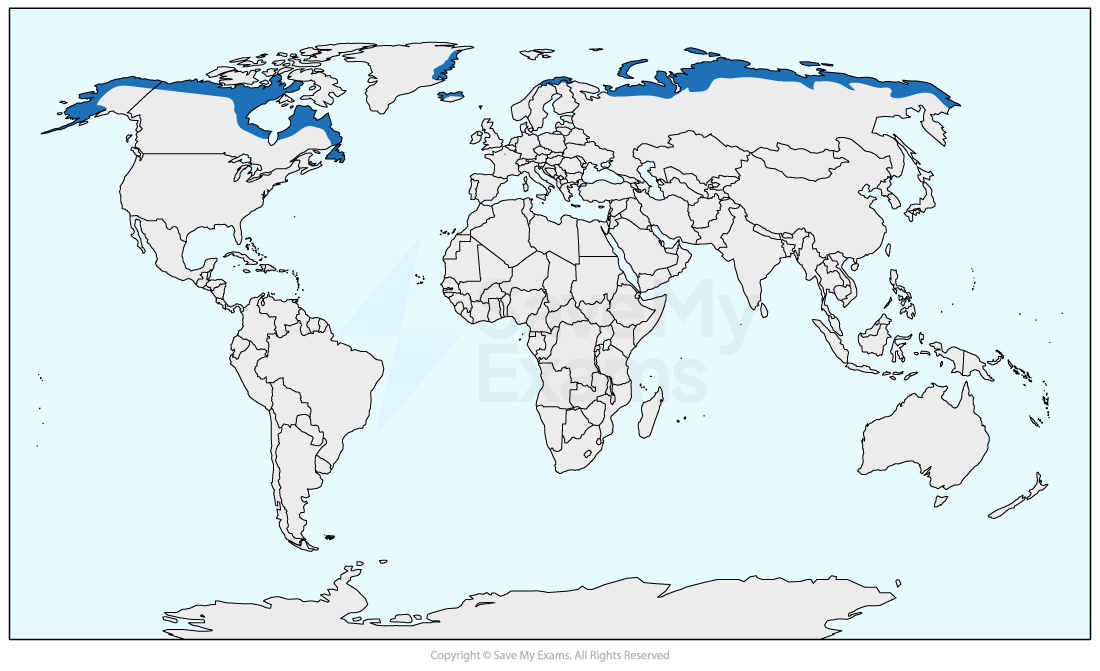
Tundra location
The tundra region is located between 60° and 75° north and south of the equator
It is found mostly in the northern hemisphere, near the Arctic Circle
This includes parts of Alaska, northern Canada, Greenland, Iceland, Russia and Scandinavia
There is limited tundra in the southern hemisphere because there is less land at this latitude
Small areas are found in South Georgia and the Antarctic Peninsula
Tundra Climate
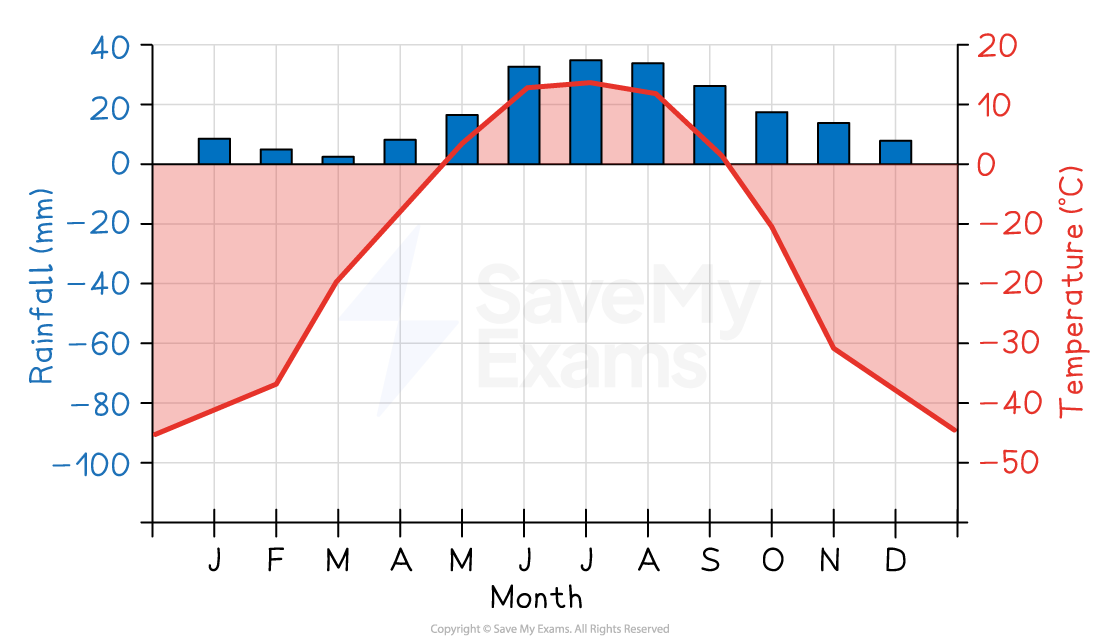
Temperatures are low all year round
Below 0°C for 6–10 months
Winters are very cold, with a period of continuous darkness
Temperatures can fall as low as –50°C
Summers are short and cool, with a period of continuous daylight
Temperatures reach a high of 10–15°C
Precipitation is low, often below 250mm
Tundra regions are sometimes called ‘cold deserts’
Winds are strong and cold
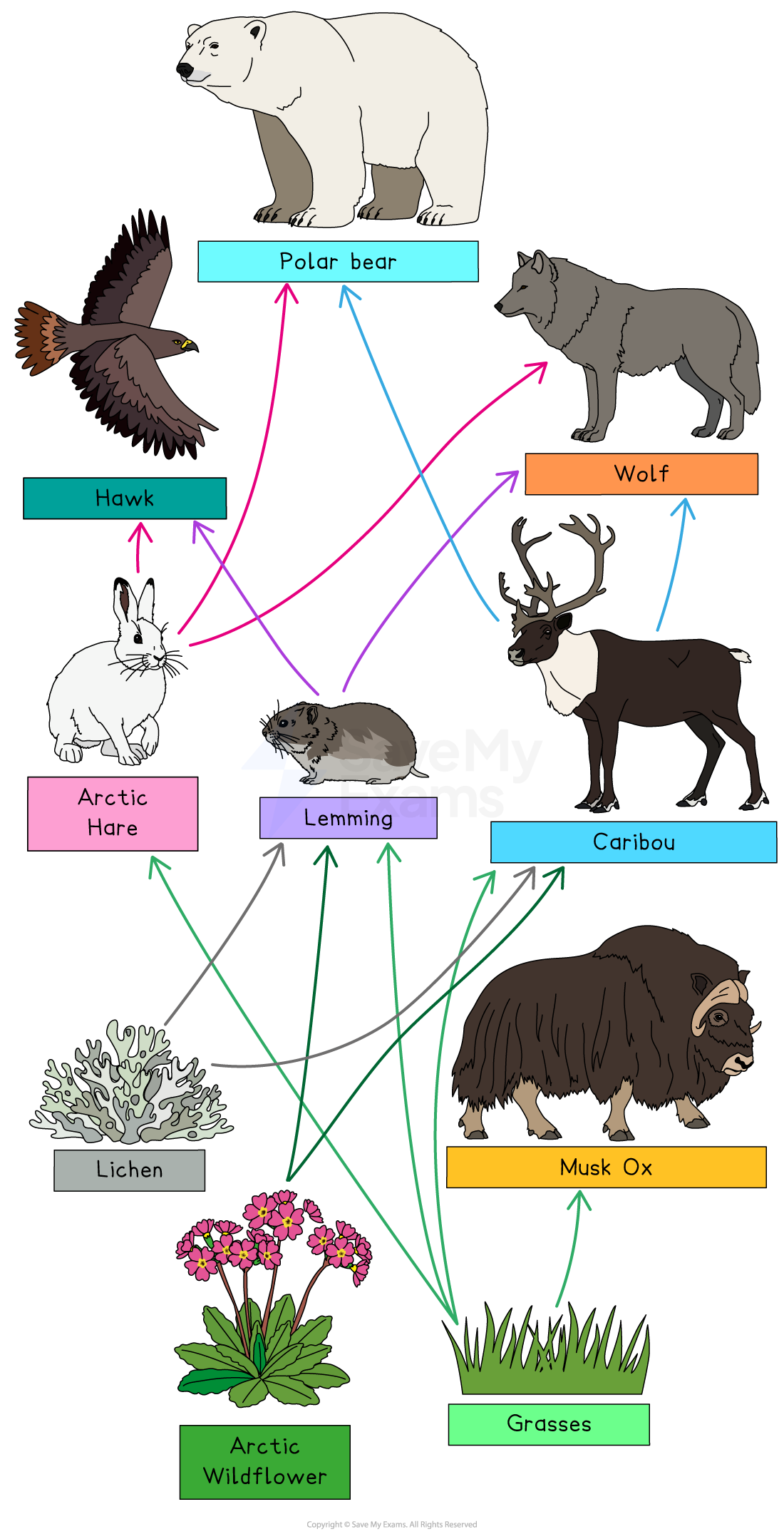
Tundra ecosystem
The harsh climate means that the tundra has low biodiversity
There are about 1700 species of plants, 400 varieties of flowers, but only 48 different mammals
There is a short growing season of just 50–60 days
The soil is permanently frozen because of low temperatures
This is known as permafrost and makes it harder for plants to grow
In the summer, the top layer thaws, leaving the land boggy and waterlogged
There are no trees in the tundra ecosystem
Plants
Plants include mosses, lichens, grasses and shrubs
They are small and round to protect the plant from the wind
Leaves are small to limit moisture loss
Flowering plants are bright and vibrant to attract insects for pollination
Most become dormant to survive the cold, dark winters
They have shallow roots because of the permafrost
Arctic Willow is one of the smallest shrubs in the world
It is low-growing to avoid wind and prevent heat loss
It has shallow roots because of the permafrost
It has fuzzy leaves to trap heat and reduce water loss
Animals
Animals include caribou, foxes and polar bears, as well as birds and insects
Many animals have white coats in winter for camouflage (e.g. Arctic hares and Arctic foxes)
This helps predators to sneak up on prey and allows prey to hide in the snow
Some animals hibernate to conserve energy and survive the winter
Arctic ground squirrels hibernate for 7–8 months of the year and can survive even if their body temperature drops below freezing
Most animals have thick fur or fat layers to insulate them against the cold
Musk oxen grow two layers of fur to trap heat
Birds such as the Arctic tern migrate to warmer areas during winter
Caribou eat lichens, grasses and mosses
They have thick fur and a fat layer for insulation
Their large, wide hooves help to spread their weight on the snow
They migrate long distances for food and to avoid harsh winters

Unlock more, it's free!
Join the 100,000+ Students that ❤️ Save My Exams
the (exam) results speak for themselves:

Was this revision note helpful?
