Types of Tourism (SQA National 5 Geography): Revision Note
Exam code: X833 75

What is Mass Tourism?
Mass tourism is when large numbers of tourists visit the same destination
Large tour operators sell package deals, making holidays easier and cheaper to plan
These are often all-inclusive, so people pay for the flight, hotel, transfer, food and drink before they travel
Most people travel during peak season
This means that the destination is extremely busy for part of the year, and much quieter for the rest of the year
Examples of mass tourism destinations include:
Benidorm, Spain – nearly 3 million visitors per year
Orlando, USA – around 75 million visitors per year
Causes of Mass Tourism
Economic factors
Higher wages and disposable incomes mean that more people prioritise frequent overseas trips
Many people take more than one foreign holiday per year
Cheap package holidays and low-cost airlines make travel more affordable
Social factors
People tend to work fewer hours and can take paid annual leave, meaning they have more free time to travel
People often want guaranteed sunshine during their holiday
They are more likely to travel abroad to avoid a cold or rainy British summer
Improved transport and infrastructure
Improvements to airport facilities and increased flight availability make it easier to travel
People now have a wider range of travel options, including:
High-speed rail networks
Larger cruise ships
Improved road networks
An increase in purpose-built resorts and hotels means there is a wider range of accommodation choices
Technological developments
The rise in advertising and social media makes people more aware of tourist destinations
Online booking platforms and package holiday websites make it easier to plan and book online
What is Eco-Tourism
Eco-tourism is a type of sustainable tourism
It is small-scale, with a limited number of visitors at one time
It focuses on the enjoyment and conservation of natural areas
It supports local communities
Accommodation is often owned by local people rather than large international companies
This means that local communities benefit more financially
Buildings and activities are designed to reduce environmental impact and protect wildlife
An example of this is the use of renewable energy or reducing waste
Tourists often learn about the local culture and environment
This promotes understanding, respect and conservation
Sometimes there are rules to follow to reduce negative impacts
E.g. Do not pick plants or flowers, do not feed animals
Examples of eco-tourist destinations include:
Rainforest lodges in Costa Rica
Gorilla trekking in Uganda
Causes of Eco-Tourism
Increasing environmental awareness
As people become more concerned about environmental issues, they look for ways to travel more sustainably by reducing their carbon footprint and supporting conservation
Developing countries look for ways to promote economic growth without damaging the environment
Disillusionment with mass tourism
Some people are tired of overcrowded and inauthentic mass tourism destinations, which offer very similar holidays no matter where you are in the world
Many people look for more unique experiences where they can:
Participate in adventurous activities
Meet local people
Learn about the culture and environment
Improved transport and infrastructure
Increased numbers of small airports in remote regions and the building of eco-lodges make it easier to access and stay in more remote destinations
Economic factors
Higher wages and disposable incomes mean that people can afford more expensive and exclusive eco-tourism holidays
Technological developments
Rise in social media inspires people to visit eco-tourism destinations and encourages more sustainable travel
Small eco-resorts can reach global audiences online without expensive marketing campaigns
Worked Example
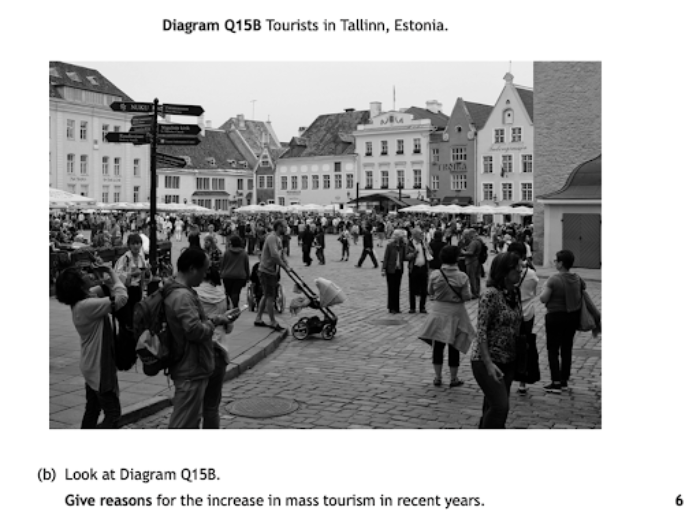
Look at Diagram Q15B
Give reasons for the increase in mass tourism in recent years
Answer
Mass tourism has increased due to improvements in road, rail and air travel which enable people to travel more easily [1]. In addition, people have more time off work, such as Bank holidays, giving them the opportunity to travel to different places [1]. People also get paid holiday pay so they can afford to take time off work [1] and budget airlines such as EasyJet make travel more affordable for lots of people [1]. Online tour operators also make it easier to go on holiday abroad by offering package deals which include flights, hotels, transfers and meals [1], as well as holiday reps who can help to solve any problems people encounter when they are away.[1]
Award 1 mark for each valid point
Award 2 marks for a developed point
Examiner Tips and Tricks
There is an overlap between the causes of mass tourism and eco-tourism. Make sure you learn each factor and can explain how it causes either an increase in mass tourism or eco-tourism.

Unlock more, it's free!
Join the 100,000+ Students that ❤️ Save My Exams
the (exam) results speak for themselves:

Was this revision note helpful?
