Impact of World Trade (SQA National 5 Geography): Revision Note
Exam code: X833 75

Impact of World Trade Patterns on People
World trade has had positive and negative impacts on people
Positive impacts
Increased employment
Creates jobs leading to increased income and improved standard of living
e.g. the garment industry in Bangladesh employs around 4 million people (mostly women)
This helps to improve gender equality and close the gender pay gap
Economic growth and development
Increased employment leads to more tax revenue for governments
The money can be invested in services such as healthcare and education
This improves the quality of the labour force, helping to attract more investment
As wealth increases, people have more disposable income to spend, which increases business profits
Access to goods
World trade allows countries to import products that are cheaper to produce elsewhere
E.g. Clothes manufactured in Bangladesh are cheaper for consumers in the UK
It also provides access to goods that are not available locally
E.g. UK imports bananas from South and Central America because they cannot be grown in the British climate
Negative impacts
Dependence on primary commodities
Many developing countries trade by producing and exporting low-value primary commodities
This means that income and standard of living are low
Worker exploitation
People in developing countries often have to work very long hours for low wages
This leads to a poor standard of living
Working conditions may be poor and unsafe, with some factories using child labour
Job insecurity
TNCs might choose to relocate their factories to another country which has cheaper labour
This can lead to workers losing their jobs with little or no notice
Increased inequality
Developing countries tend to export low-value primary commodities and import high-value secondary commodities
This leads to a trade deficit, which may mean developing countries have to borrow more money to pay for services like health and education
Increased debt will make it harder to break out of the cycle of poverty
The wealth gap between countries may grow as developed countries benefit more from world trade than developing countries
Impact of World Trade Patterns on the Environment
World trade has had mostly negative impacts on the environment
Negative impacts
Deforestation
Forests are cleared to provide space for agricultural land to supply the global food industry (e.g. palm oil, soy)
This leads to loss of habitats and biodiversity
e.g. in Borneo, around 80% of orangutan habitat has been cleared for oil palm plantations
Pollution
Factories often release untreated waste, contaminating rivers and lakes
Environmental protection laws are usually less strict in developing countries, leading to increased pollution
Large crop plantations use lots of pesticides and fertilisers, which can run off during rainfall, leading to water pollution
Manufacturing and transport of goods require energy, most of which is generated through fossil fuels
This leads to air pollution and contributes to climate change
Waste and packaging
Goods that are being transported long distances require more packaging to protect them
This leads to plastic pollution, e.g. over 11 million tonnes of plastic end up in the ocean every year
Land degradation
Intensive farming reduces soil fertility over time
When crops are harvested, it leaves the land exposed to soil erosion
Farmers use more fertilisers to compensate and boost crop yields, which in turn leads to more water pollution
Positive impacts
Growth in renewable technology
World trade has led to a rise in the manufacturing of renewable technology in countries like China
Lower labour and land costs have led to a significant fall in the price of solar panels and wind turbines
This makes them more affordable and accelerates the global switch to renewable energy
Improved environmental quality in developed countries
Polluting industry relocates from developed to developing countries
This allows developed countries to invest in environmental restoration
e.g. polluted sites can be cleaned up and deforested land can be reforested
Worked Example
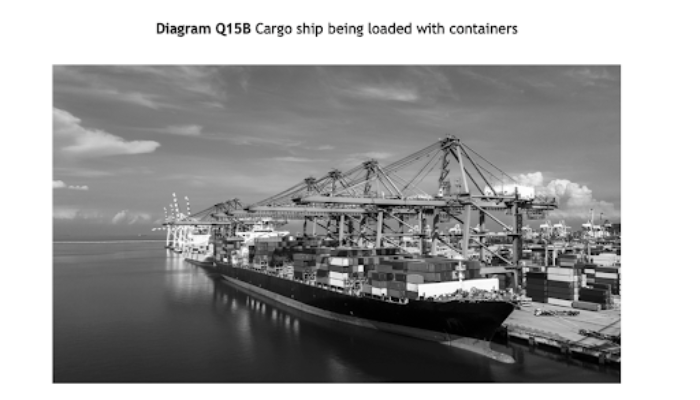
Look at Diagram Q158
Explain the impact of world trade patterns on people and the environment
Answer
One positive impact on people is the provision of jobs e.g. in Bangladesh, the garment industry provides around 4 million jobs [1]. However, wages are often low, meaning that people struggle to support themselves and their families [1]. Some countries export mainly primary commodities like coffee for relatively low prices but import mainly secondary commodities such as cars for much higher prices [1]. This leads to a trade deficit [1]. A negative impact on the environment is the increase in carbon emissions caused by the transport of goods around the world via container ships [1]. Deforestation to create space for agricultural land also results in the loss of habitats and biodiversity in places like Borneo. [1]
Award 1 mark for each valid point
Award 2 marks for a developed point
For full marks, both people and the environment must be mentioned.
Examiner Tips and Tricks
There are lots of valid points that you could include in your answer, with both positive and negative impacts on people and the environment. There is no mention of positive or negative in the question, so you are not required to explain both, although you can if you want to. However, if you don’t remember to explain the impacts on people and the environment, you will get a maximum of 5 marks.

Unlock more, it's free!
Join the 100,000+ Students that ❤️ Save My Exams
the (exam) results speak for themselves:

Was this revision note helpful?
