World Trade (SQA National 5 Geography): Revision Note
Exam code: X833 75

World Trade Patterns: Globalisation
Trade is the exchange of goods and services between countries
Goods and services sold to other countries are called exports
Goods and services bought from other countries are called imports
Trade allows countries to get things they need but do not produce themselves
For example, the UK might import bananas from countries with warmer climates
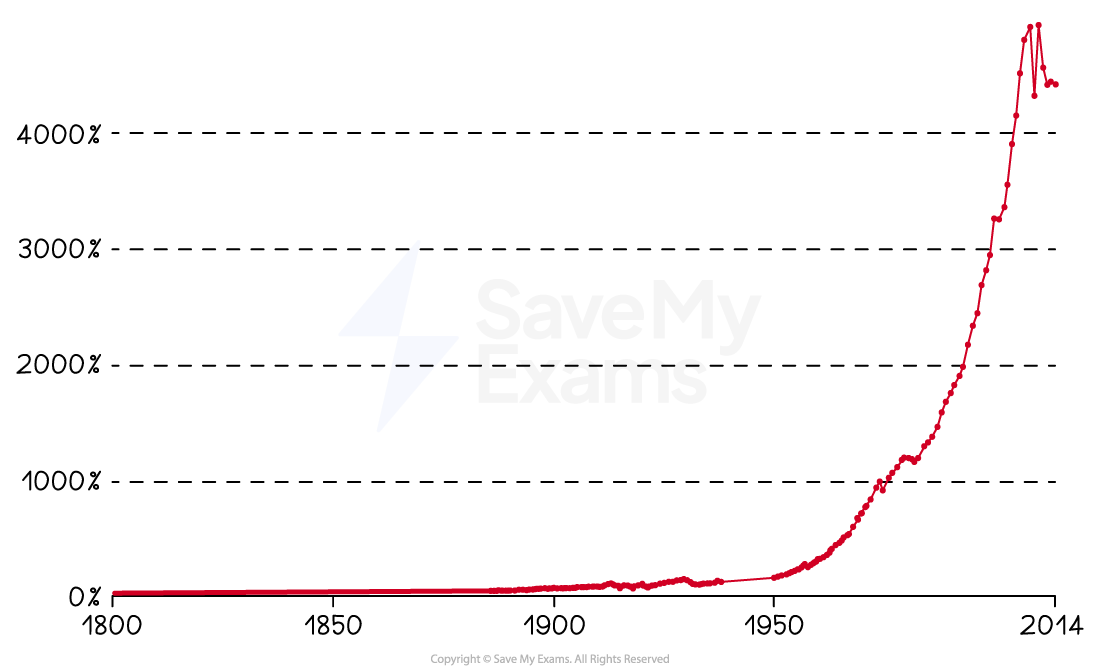
The volume of global trade has increased substantially over time
The fastest growth took place between 1980 and 2010
Globalisation
The growth in global trade is caused by globalisation
Globalisation is where the world has become more interconnected through the processes of economics, culture, politics, trade and tourism
It allows people, goods, money, services and information to move more quickly and easily around the world
Globalisation is nothing new; trade between people, businesses and countries has always existed
However, globalisation has accelerated since the 1980s, leading to a dramatic increase in the volume and speed of trade
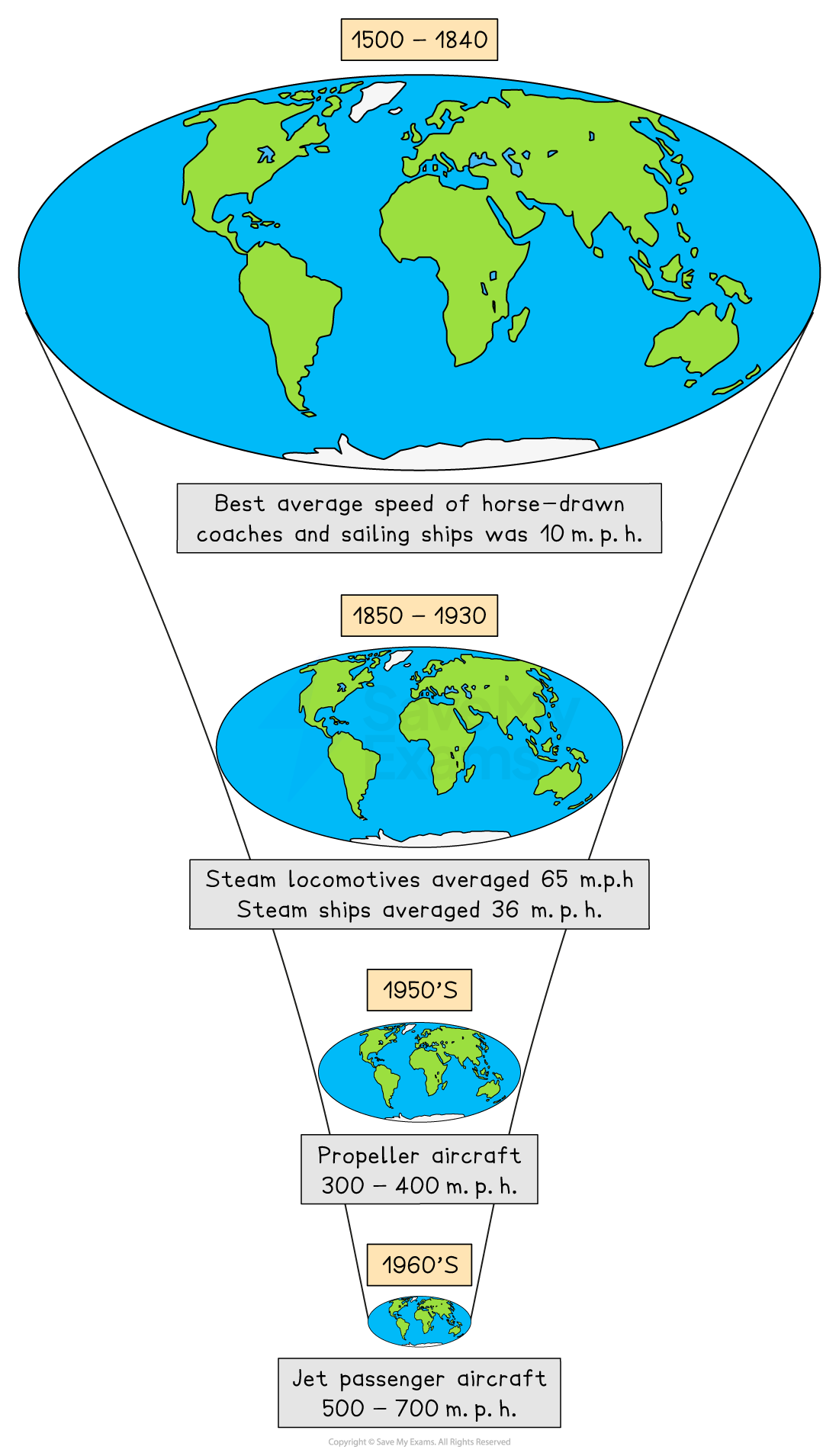
In the past, trade would have taken weeks, months or even years
Now, modern transport and communications have made trading and interaction almost instantaneous
This is known as time-space compression
Reasons for globalisation
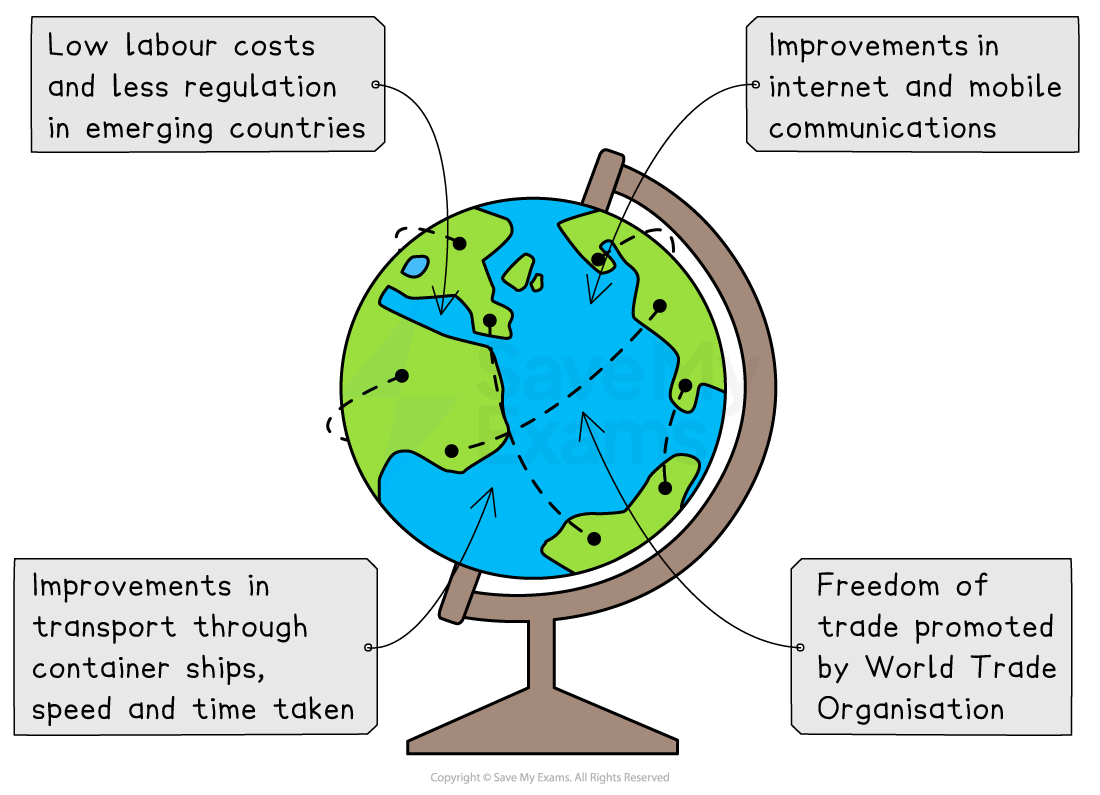
The acceleration of globalisation is caused by:
An increase in the number of transnational corporations (TNCs)
Factories are set up in different countries around the world and products are sold globally
The growth of regional economies and trade blocs
Reduces tariffs and quotas
The development of modern transport networks
Enables faster and cheaper movement of goods and people
Advances in IT and communications, particularly the WWW and the internet
Makes communication faster and cheaper
Patterns of world trade
World trade is dominated by TNCs, many of which are owned by developed countries such as the USA, Germany and the UK
Their decisions can have a significant impact on other parts of the world
This has led to a rise in global inequality
Most global trade happens between developed countries
Developed countries usually export a wide range of high-value goods and services
Services include IT consulting, financial management and legal services
Goods are mostly secondary commodities, such as cars and machinery
Developing countries usually export low-value goods
These are mainly primary commodities, such as agricultural products and minerals
Developing countries often depend on a small number of exports, making them vulnerable to price changes
Change in world trade
The pattern of global trade is changing
Emerging countries like China, Bangladesh and Brazil are now playing a more significant role
As a result of globalisation, they have started to industrialise
Cheap labour costs and skilled workers attract investment from TNCs
Developments in transport and communications improve access to global markets
Rapid growth in industry enables countries to export manufactured goods
China is now the largest exporter of goods in the world, and while the USA remains the world’s largest importer of goods, China is in second place
Causes of Inequalities in World Trade
Trade is often promoted as the key to economic development
It allows countries to sell resources and increase their wealth
The income can be used to invest in things to advance their development
Improved education and healthcare will lead to a more skilled and productive workforce
Machinery such as tractors and technology like computers can improve productivity
This results in countries being able to produce more goods to sell
However, developing countries usually benefit less from global trade than developed countries for a variety of reasons:
Dependence on primary products
Developing countries rely on exporting raw materials like coffee, cocoa and copper
These goods tend to have a lower value than manufactured goods
The prices of primary goods often fluctuate dramatically
They are also vulnerable to weather hazards, disease and pests, e.g. locust swarms can decimate crops
This leads to low and unreliable income, limiting the capacity to invest in future development
Trade barriers
Developed countries use tools like tariffs and quotas to protect their own industries
For example, they may put a tariff on imports of manufactured goods, while raw materials can be imported tariff-free
This makes it harder for developing countries to compete
As a result, they are often unable to develop manufacturing industries
Poor infrastructure
Poor transport connections, like roads, railways and ports, make it more difficult and expensive to participate in global trade
Less reliable electricity provision and internet connectivity make it harder to run factories and businesses efficiently
Poorer quality of education results in a less skilled and productive workforce
Poorer healthcare may mean more people suffer from ill health, so they are unable to work
Debt
Many developing countries are heavily indebted
This means that they have to spend money repaying their debts rather than investing in infrastructure, education and healthcare
Usually, interest is charged on the debt, so countries end up owing far more than they borrowed
Countries become trapped in a cycle of poverty
Examiner Tips and Tricks
It is important to recognise that the trading relationship between countries makes it difficult for developing countries to achieve significant economic growth. Trade barriers and restrictions prevent them from producing more high-value secondary commodities, e.g. EU places higher tariffs on imports of roasted nuts compared to imports of raw nuts, making it difficult for developing countries to access the market for processed goods.
Worked Example
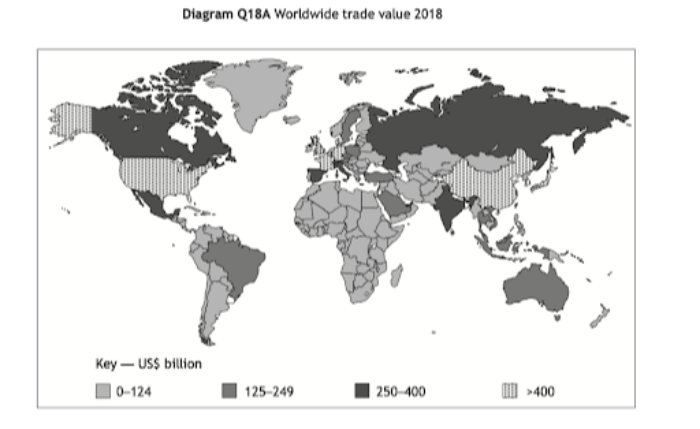
Study Diagram Q18A.
Describe, in detail, the worldwide trade of goods and services in 2018
Answer
Worldwide trade of goods and services in 2018 was higher in developed countries than in developing countries [1]. For example, trade in countries like the USA, UK, China and Japan is more than $400 billion [1]. In contrast, trade in most of South America is $0–124 billion [1], except Brazil, which is $125–250 billion [1].
Award 1 mark for each valid point
A maximum of 1 mark for a list of countries with the same trade value

Unlock more, it's free!
Join the 100,000+ Students that ❤️ Save My Exams
the (exam) results speak for themselves:

Was this revision note helpful?
