Limestone Landscapes: Processes (SQA National 5 Geography): Revision Note
Exam code: X833 75

Specification checklist
This page covers what you need to know from the SQA National 5 geography specification to answer questions on:
Landscape types
Limestone - limestone pavements, potholes/swallow holes, caverns, stalactites and stalagmites, intermittent drainage
Processes of limestone erosion
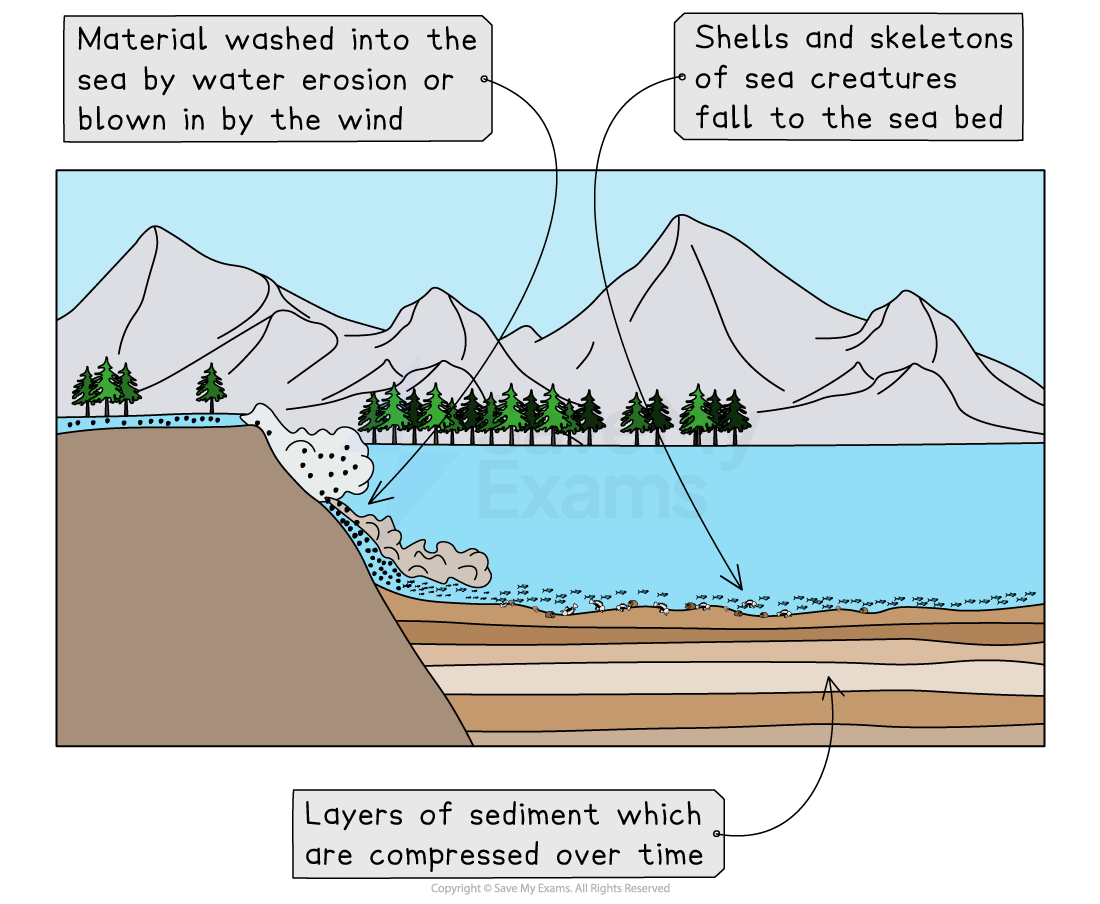
Limestone is a sedimentary rock
Layers of sediment are compacted together until they become solid rock
Limestone is formed from the tiny shells and skeletons of dead sea creatures
Solution is the main type of erosion
The main chemical component of limestone is calcium carbonate (alkali)
Rainwater is a weak carbonic acid, which reacts with the calcium carbonate
Limestone, therefore, dissolves by carbonation weathering
Rock particles are washed away in solution
Examiner Tips and Tricks
For the exam, you need to know the processes which lead to the formation of limestone pavements, potholes/swallow holes, caverns, stalactites and stalagmites and intermittent drainage.
You also need to be able to identify these features on an OS map or photograph.
Formation of a limestone pavement
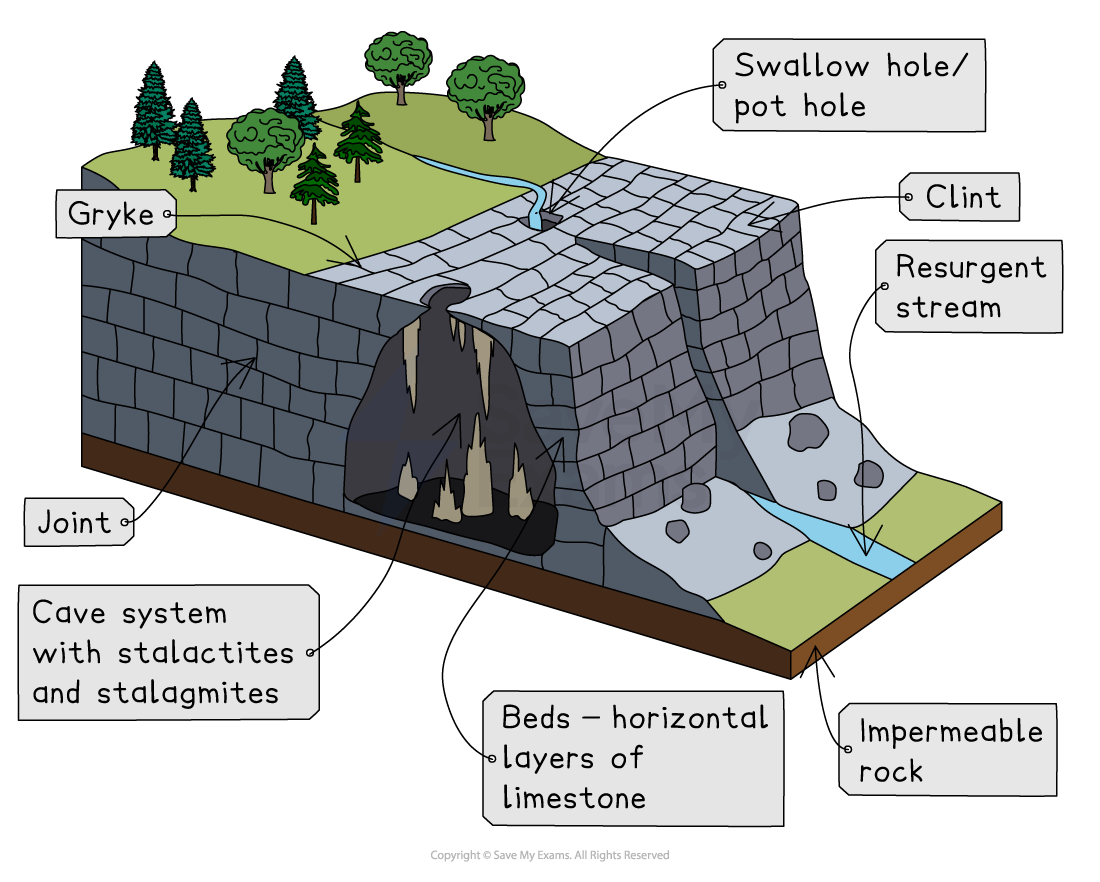
Limestone was laid down in horizontal layers called beds, separated by bedding planes
It contains vertical cracks called joints
During glaciation, the topsoil was removed by the ice
The bare limestone rock was exposed to the wind and rain
Acidic rainwater is a weak carbonic acid
This reacts with limestone as it passes through the permeable rock, dissolving it
The joints become deeper and wider to form gaps called grykes
In between the grykes are rectangular blocks of limestone called clints
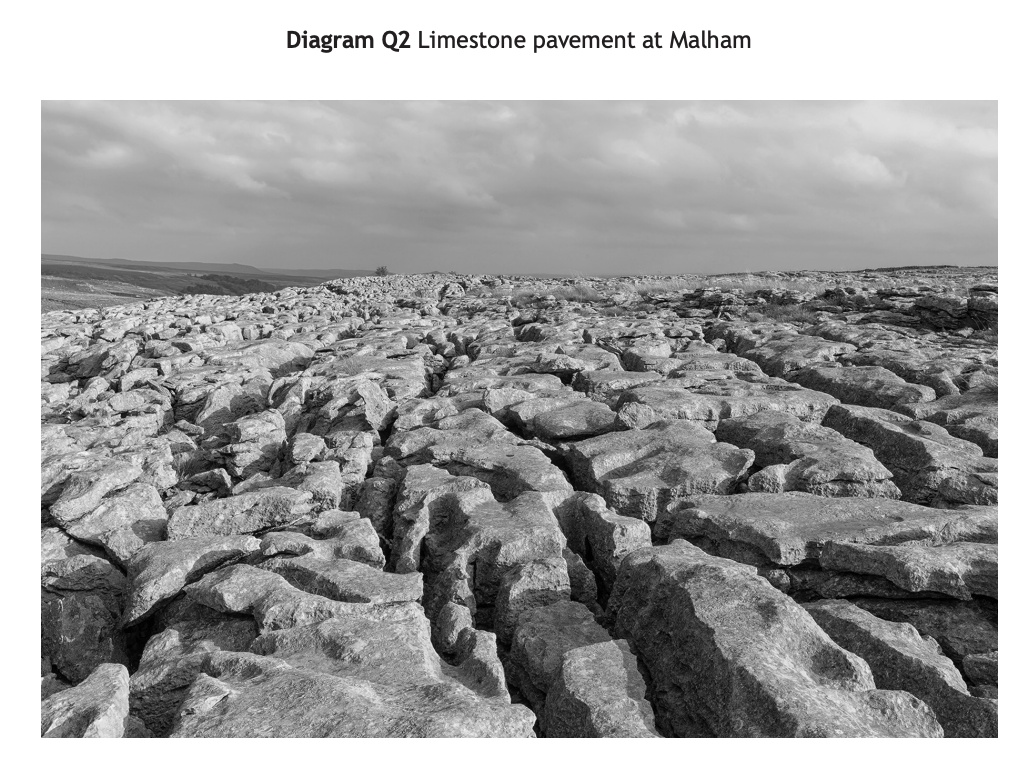
The resulting pattern of block-like rock is called a limestone pavement
Worked Example
Look at Diagram Q2.
Explain the formation of a limestone pavement.
You may use a diagram(s) in your answer.
[4 marks]
Example answer
During glaciation, ice scraped away the topsoil and exposed the bare rock to rain. [1] Acidic rainwater reacts with the limestone and dissolves the rock (carbonation) [1] and the water is carried away by running water (solution). [1] Continued chemical weathering widens and deepens the cracks to form grykes [1]
Formation of potholes/swallow holes
Surface streams or rainwater do not flow far over exposed limestone as they rapidly seep into the rock.
When the water flows over the limestone, it enlarges the joints in the rock through chemical weathering called solution and carbonation
Water can therefore easily seep through the rock layers.
Eventually, a surface stream will disappear down a hole and flow along underground channels.
The resulting hole in the surface of the landscape is called a swallow hole (potholes)
Formation of stalactites and stalagmites
When water flows underground, it contains dissolved limestone called calcium carbonate
Water may drip from the roof of a cavern
When this happens, some water evaporates and tiny amounts of solid calcite are deposited on the cavern roof
These deposits build up over a very long period and form features called stalactites, which hang down from the ceiling of a cavern
Some of the water dripping from the roof of the cavern may also drop on the floor, where it evaporates
The splash spreads the deposit of calcite on the cavern floor to create short and stumpy features called stalagmites
Occasionally, stalagmites and stalactites meet to form a rock pillar
Intermittent drainage
If limestone has a layer of impermeable rock above it, then it is capped
Surface streams form because the water cannot infiltrate
When the surface streams reach limestone, the water will disappear from the surface, as limestone is permeable
This will occur because water may seep through joints, or streams may disappear down swallow holes
The underground stream will flow down through the limestone until it reaches impermeable rock
It will re-emerge at the surface (called a resurgence) because it cannot flow through the rock below.

Unlock more, it's free!
Join the 100,000+ Students that ❤️ Save My Exams
the (exam) results speak for themselves:

Was this revision note helpful?
