The Importance of Plantation Crops (SQA National 5 History): Revision Note
Exam code: X837 75

Summary
Before the rapid growth of sugar plantations in the Caribbean, sugar was a luxury item only enjoyed by the rich. However, the development of sugar plantations and the use of enslaved labour reduced the price of sugar. It was added to an increasing number of food products and was a key feature of diets for all British people. In 1700, the average Brit consumed less than 2kg of sugar per year. By 1800, this had increased to over 8kg per year.
Sugar became a significant factor in the trade in enslaved African people. The more demand there was for sugar, the more demand there was for enslaved African labour.
Sugar also became economically important to Britain. In 1773, the value of British imports from the small sugar island of Grenada was eight times higher than the value of imports from the whole of Canada.
Sugar was the most important plantation crop in the Caribbean. However, other crops, including coffee, rice, cotton, indigo and tobacco were also grown on Caribbean plantations.
The importance of sugar
Sugar was first introduced to the Caribbean in the 1640s
Sugar grew well in the climate of the Caribbean islands
It quickly became the main crop produced on the plantations.
In 1770, of the 200,000 tons of sugar produced globally
Over 90 per cent of this came from the Caribbean
Sugar was a very labour-intensive crop - this meant it required a large workforce to cultivate it
Indigenous people and indentured servants were first used as labour on Caribbean plantations
Both groups of people suffered from high death rates and were difficult to replace
Plantation owners regarded enslaved African people as a more reliable source of labour
The demand for sugar increased the trade in enslaved African people
During the 18th Century sugar became increasingly popular in European diets
The cost of buying sugar began to fall due:
An increase in the number of plantations
The use of enslaved labour
Recipe books from the time show that sugar was being added to more foodstuffs and was no longer being purchased only by the wealthy
Sugar was added to cakes, jams and puddings, increasing the demand for the crop
The popularity of tea and coffee also increased demand for sugar
Coffee houses were becoming increasingly popular
The tea duty was lowered in 1784, making the product cheaper
The demand for both tea and coffee, in turn, created more demand for sugar, which was added to both drinks as a sweetener
The production of sugar
Sugar cane was a very labour-intensive crop
Before the cane was planted, the land had to be cleared of any grass and burnt
Rows of holes were then dug in which the new sugar canes were planted
The growing canes required constant weeding and tilling
Once planted, the base of each cane had to be covered with earth and then covered again as the cane grew
Once the cane was ready to harvest, it needed to be cut down and then taken to a boiling house
In the boiling house, the cane was crushed, boiled and distilled within 24 hours to prevent spoiling
Working in the boiling house was particularly dangerous
Enslaved African people risked having limbs caught in presses and severe burns
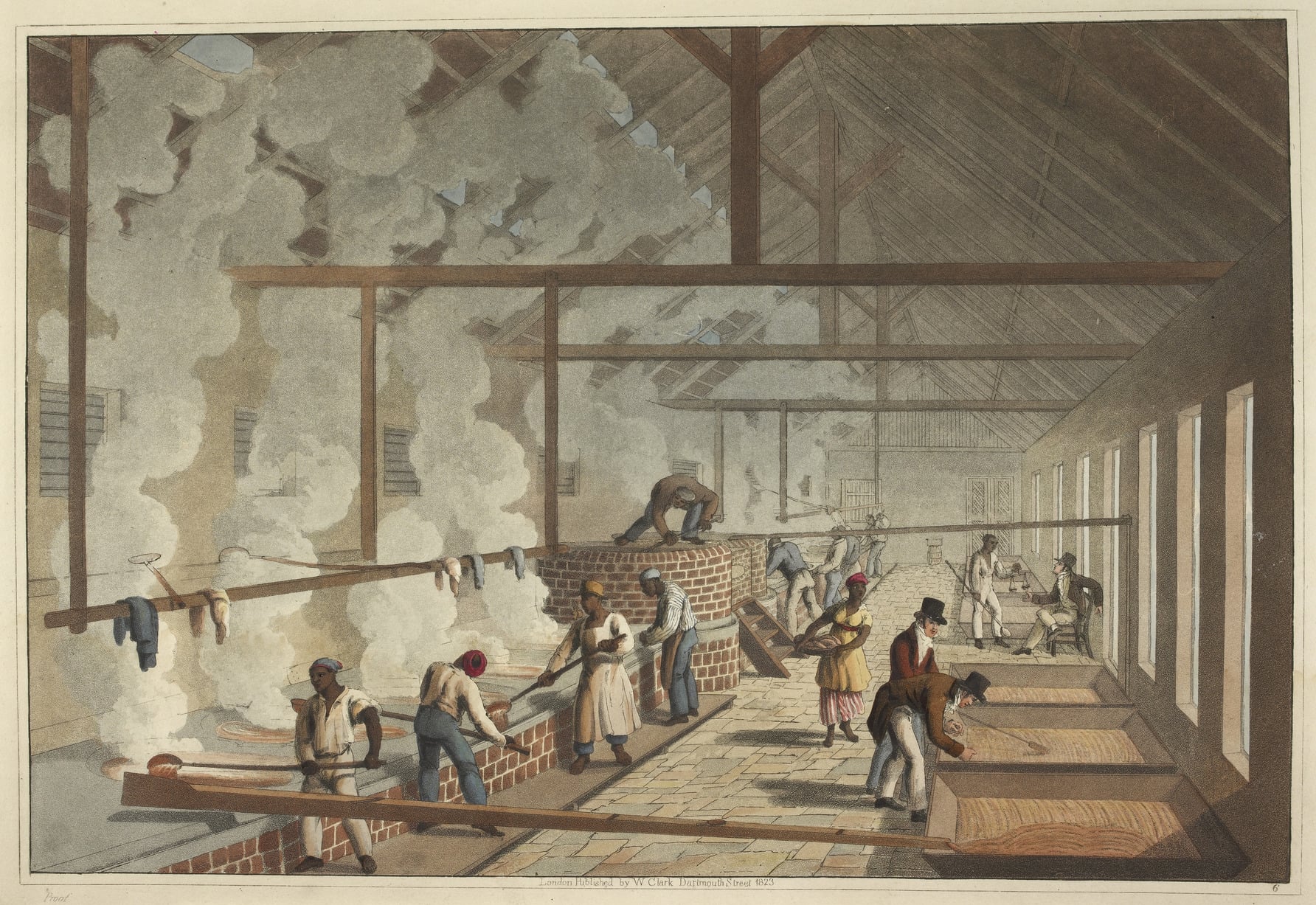
Sugar cane production created a dangerous and physically demanding environment for the enslaved African people
Nearly 70 per cent of all enslaved African people in the Americas worked on plantations that grew sugar cane
Molasses was produced as a by-product of sugar
Molasses could be fermented and distilled to produce rum
Rum was often sold to slave ship merchants and was sometimes used as part payment for the crew of slave ships
Other plantation crops
Sugar was the dominant crop in Caribbean plantations
Sugar made up roughly 90% of all exports from the Caribbean
Other important crops were also grown on Caribbean plantations
Cotton was produced on plantations and sold to textile mills in Lancashire
Tobacco was the first major export crop in the Caribbean
However, Caribbean tobacco production struggled to compete with plantations in Virginia in the modern-day USA
The tobacco trade became particularly important to the growth of Glasgow
‘Tobacco barons’ like John Glassford and Andrew Buchanan became very wealthy
Both Glassford and Buchanan have streets named after them in Glasgow
Coffee, indigo and rice also grew well in the climate of the Caribbean

Unlock more, it's free!
Join the 100,000+ Students that ❤️ Save My Exams
the (exam) results speak for themselves:

Was this revision note helpful?
