What was the Triangular Trade? (SQA National 5 History): Revision Note
Exam code: X837 75

Summary
European countries first became involved in the trade in enslaved African people in the late 15th Century. European involvement in the slave trade would last for over 400 years. Ships left European ports to sail to the West African coast to trade manufactured goods for captured African people.
The enslaved people were then transported across the Atlantic Ocean and sold to colonies in the Americas. In the colonies, enslaved African people were forced to work on plantations, producing raw materials such as sugar, cotton and tobacco. The European ships would then be loaded with these goods, sailing back to Europe to sell them.
The three legs of this journey led to the trading route becoming known as the triangular trade.
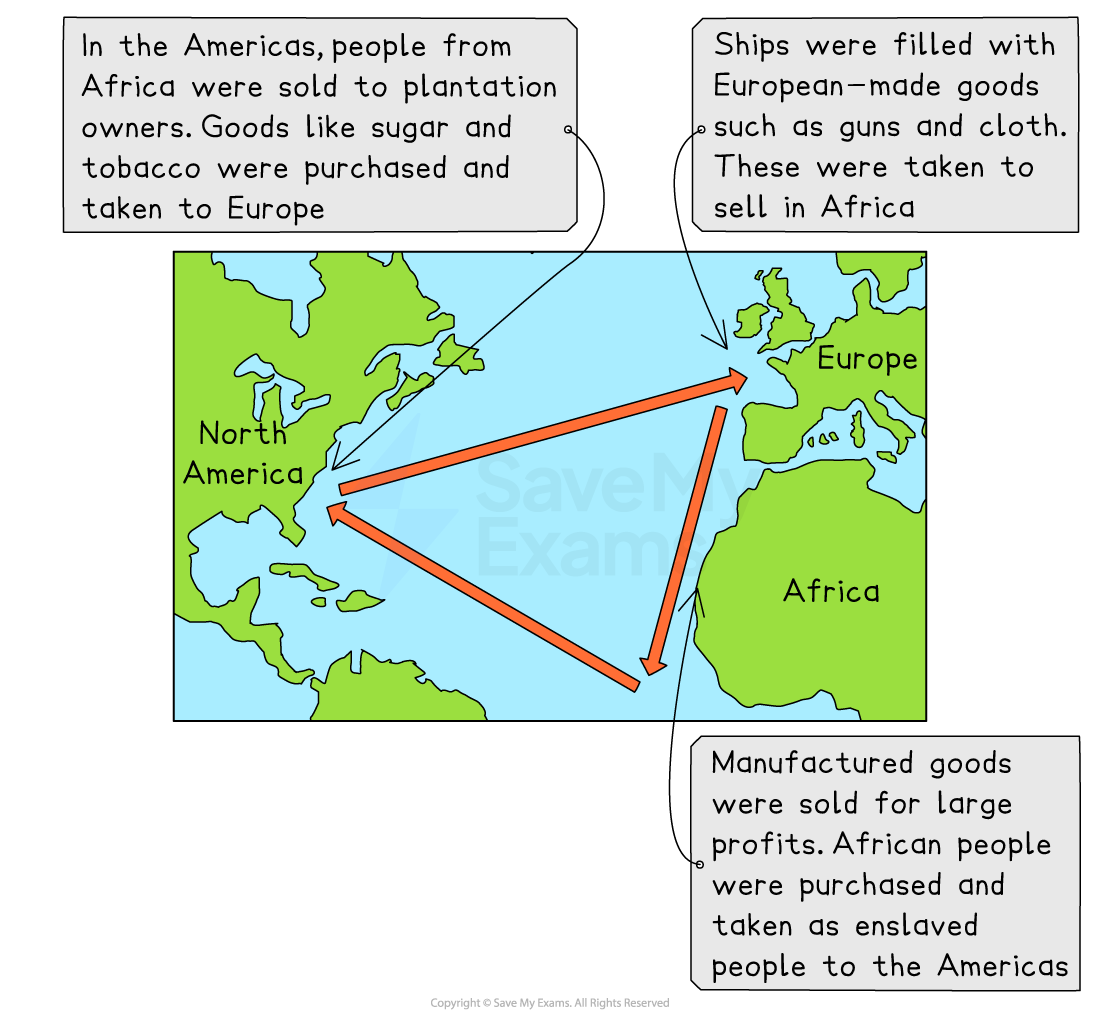
Britain, France, Spain and Portugal were the countries most involved in the trade. In total, over 12 million African people were enslaved and forcibly transported to plantations across North and South America and the Caribbean.
Examiner Tips and Tricks
This unit focuses on British involvement in the triangular trade from 1770 to 1807. It covers the impacts of the trade in enslaved people, the experience of enslaved people and the campaigns for abolition.
The development of the triangular trade
The triangular trade was very profitable for slave merchants
Investors and merchants typically gained profits of between 10 and 20% on a completed voyage
The development of the triangular trade was also due to the growing demand for sugar in Britain
In the early 1700s, sugar was a luxury item only enjoyed by the rich
The development of sugar plantations and the use of enslaved labour decreased the price of sugar
Sugar was added to an increasing number of food products
It became a key part of the British diet
In 1700, the average Brit consumed less than 2kg of sugar per year
By 1800, this had increased to over 8kg per year
The increasing demand for sugar, along with the profitability of the triangular trade, led to more British ships embarking on voyages
Organisation & nature of the triangular trade
The outward passage
Ships left British ports with goods to trade for captured African people
The goods carried were those that appealed to African leaders and slave traders
Guns, weapons and ammunition were the most important goods carried on the outward passage
Ships would typically have a crew of around 30 workers
This depended on the size of the boat
The majority of British ships involved in the trade left from Liverpool, Bristol or London
The middle passage
When they reached the West African coast, captains would trade with African leaders or with Slave Factors
The captains would purchase captured African people in exchange for money, weapons and goods
Slave ships would typically carry 250-600 enslaved African people on one journey
Conditions during the middle passage were horrific
Enslaved African people were chained together beneath the decks of the ship for most of the journey
The ship's crew were armed with whips, guns and canons
Around 10% of enslaved African people died during the middle passage
These deaths were from diseases and executions but also from suicide and in acts of resistance
Disease and revolts also led to high death rates amongst the ship’s crew
On arrival in the Caribbean, the enslaved African people were auctioned off to plantation owners
Captains would sometimes sail to different islands in search of the highest price
The journey time for this leg could be anything from 21 to 90 days, depending on weather conditions
The homeward passage
With the money gained from the sale of the enslaved African people, captains would then purchase raw materials
The ships transported the raw materials back to Britain
Mainly this was sugar, but cotton, tobacco, coffee, indigo and rice were also produced
Many of the crew members were sacked in the Caribbean and left to make their own way home
Once the ship arrived back in Britain, the raw materials would be sold
Sugar was sold to refineries and confectioners
Tobacco to tobacco merchants
Cotton to textile manufacturers
The journey time back to Britain was around 50 days
Worked Example
Describe the stages of the triangular trade.
[4 marks]
On the outward passage, ships left British ports with goods to trade for enslaved African people. [1] These goods included textiles, alcohol and most commonly guns and ammunition. [1] Enslaved African people would then be forced to board the ship and transported across the Atlantic in the middle passage. [1] The final leg of the journey saw the ship return to Britain with raw materials including cotton, sugar and tobacco. [1]
Examiner Tips and Tricks
When answering "describe" questions, remember you only need to give four facts in four separate sentences. Do not overwrite for a "describe" question as you cannot gain extra marks and will give yourself less time for other questions in the paper.

Unlock more, it's free!
Join the 100,000+ Students that ❤️ Save My Exams
the (exam) results speak for themselves:

Was this revision note helpful?
