Conscription in the Great War (SQA National 5 History): Revision Note
Exam code: X837 75

Summary
The Military Service Act (1916) made it compulsory for men aged 18-41 to join the armed forces. By May 1916, this included both single and married men. The government had to introduce conscription to the armed forces because volunteer numbers fell after 1915 and the army needed more soldiers for a long and costly war. Some men were exempt for health reasons. Others could be excused because of their moral, religious or political reasons against fighting. These men were known as conscientious objectors.
Conscription
Conscription was introduced by the Military Service Acts (1916-18)
This began with single men aged 18-41 in January 1916
In May 1916, it widened to include married men
In 1918, the upper age limit rose to include men aged 50-51
Industries such as shipbuilding and engineering on the Clyde were reserved occupations
This meant that men working in these industries were exempt from conscription
Many men from these industries enlisted voluntarily, which led to the labour shortages
Other men exempt from conscription included those who:
Were sole family earners
Were medically unfit
Had caring responsibilities
Police and military authorities pursued absentees
Some men faced fines or court martial
Conscientious objectors
A conscientious objector is someone who refuses military service because of moral, religious or political beliefs
These included men who:
Were pacifists
Belonged to the Quaker faith
Had socialist anti-war views
The Military Service Act (1916) allowed applications for exemptions from conscription on conscientious grounds
Some conscientious objectors joined the Non-Combatant Corps or were medical orderlies
Road building, forestry, farm work and ambulance units were other roles conscientious objectors took on during the war
There were hundreds of conscientious objectors across major Scottish cities
They faced hostility from the public and were often shamed with white feathers, regarded by some people as symbolising cowardice
Dyce Work Camp near Aberdeen was set up by the Home Office in 1916
The work camp was for conscientious objectors undertaking quarrying and land work, sometimes in harsh conditions
Walter Roberts, a conscientious objector at Dyce, died of pneumonia
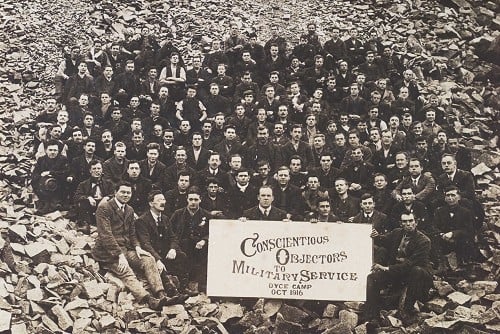
Scottish Quakers and other pacifist churches supported conscientious objectors
Conscientious objectors who refused all forms of service were known as ‘absolutists’
Absolutists were sometimes imprisoned with hard labour and solitary confinement
Families of conscientious objectors could face social pressure and stigma
Worked Example
Explain the reasons why some people became conscientious objectors.
[6 marks]
Religious pacifism led some men to object: members of pacifist churches such as the Quakers believed killing was a sin and that duty to God outweighed duty to the state [1], so they refused to serve in combat. [1]
Moral and humanitarian principles also caused objection: some individuals held a personal conviction that all violence was wrong [1] and, faced with reports of mass casualties and industrialised killing, concluded that taking part would betray their conscience. [1]
Political ideology motivated others: socialists (including ILP members) argued the war was an imperialist, capitalist conflict and, seeing foreign soldiers as fellow workers rather than enemies, [1] chose conscientious objection instead of fighting. [1]
Examiner Tips and Tricks
Ensure that you focus on the question asked. Some students for the question above wrote about how conscientious objectors were treated when the focus of the question is why they objected to war, their beliefs and principles.

Unlock more, it's free!
Join the 100,000+ Students that ❤️ Save My Exams
the (exam) results speak for themselves:

Was this revision note helpful?
