Impact of the Campaigns for Women's Suffrage (SQA National 5 History): Revision Note
Exam code: X837 75

Summary
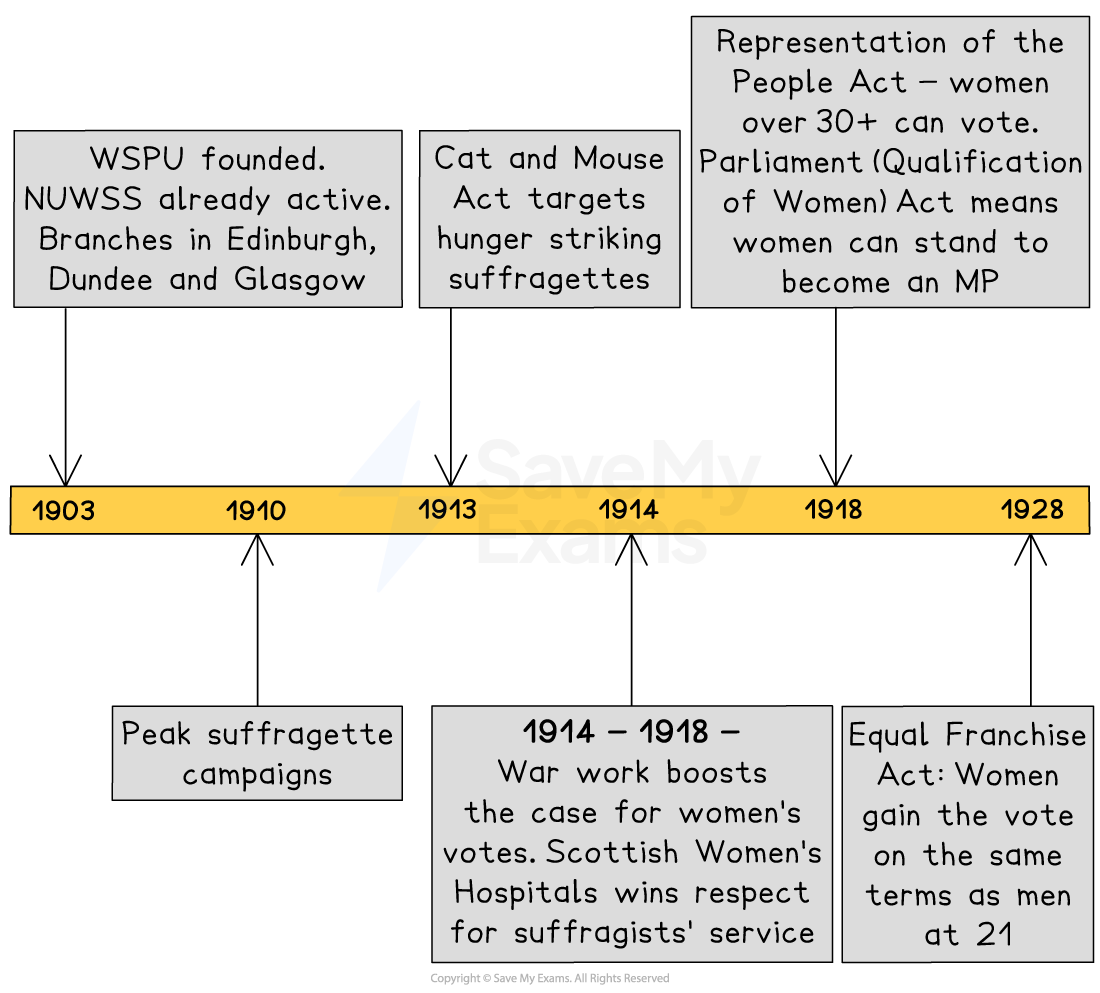
Although the franchise had been extended to many groups by the start of the 20th century, women still could not vote in British general elections. Activists campaigned for women’s suffrage and kept the issue in front of Parliament. The National Union of Women’s Suffrage Societies (NUWSS) lobbied peacefully and won supporters; the Women’s Social and Political Union (WSPU) used militant tactics that drew headlines and backlash.
During the war, women did essential work and strengthened their case for the vote. Parliament passed the Representation of the People Act in 1918, which allowed many women over 30 to vote, and the Equal Franchise Act in 1928, which gave women the same voting rights as men at 21.
The Suffragettes
Throughout the 19th century, there had been demands for the right to vote to be extended to women
This was also known as suffrage
A suffragette was someone who fought for women's right to vote
Suffragette activities
Activists organised high-profile marches, rallies and interruptions of political meetings to force the vote onto the agenda
Some Liberals and Labour figures engaged with campaigners
Other politicians faced noisy protests and hostility
Winston Churchill’s political meetings and campaigns in Dundee (contests) were frequently interrupted
The activists also used civil disobedience and militancy, including:
Window-smashing
Letter-box fires
Damage to empty buildings and golf greens
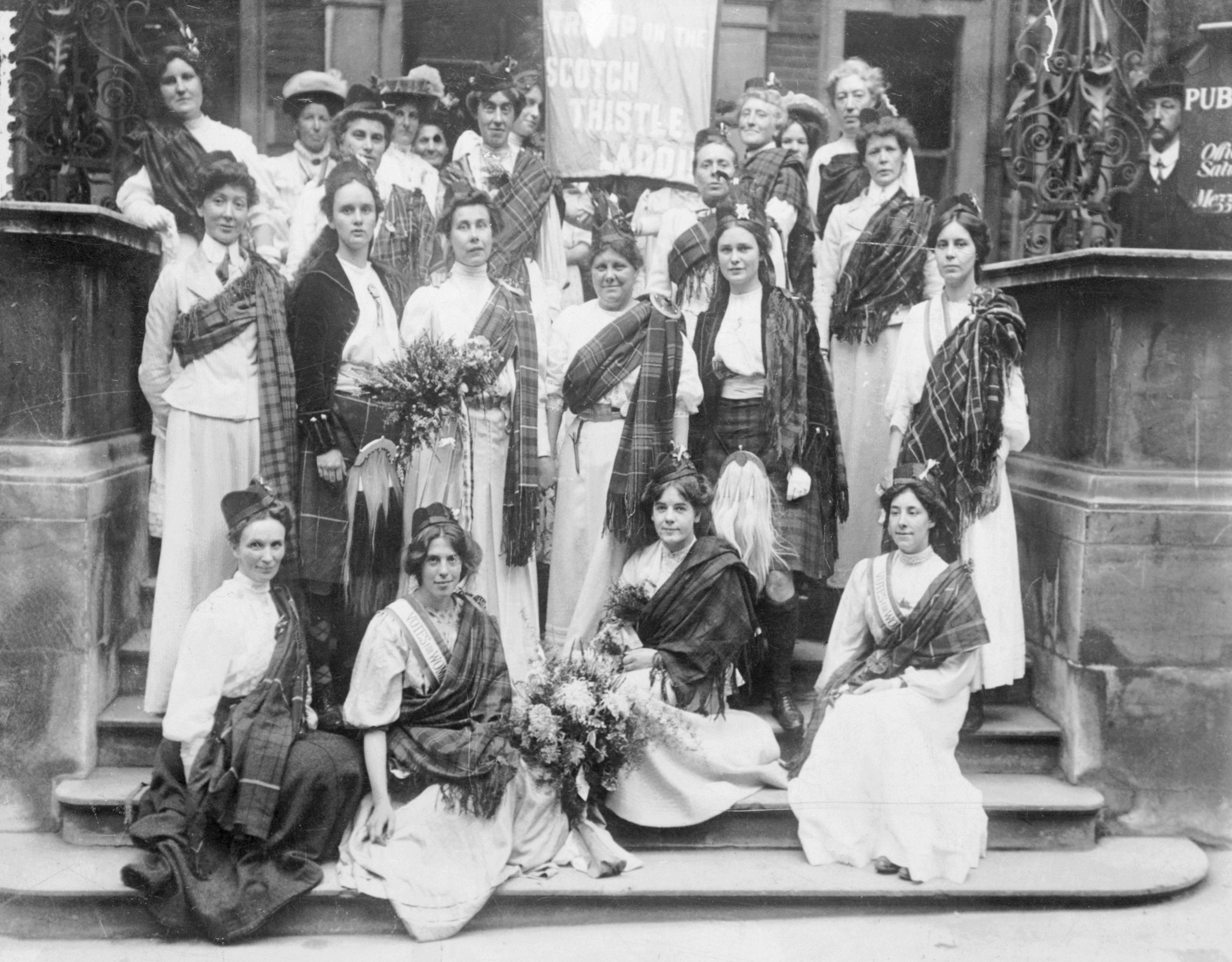
Scottish suffragettes (e.g. the McPhun sisters of Glasgow) linked local branches to UK-wide campaigns
They joined the 1912 window-smashing raids, and used arrests to attract attention in the press and pressure MPs
Scottish and UK papers covered arrests, window-smashing and hunger strikes extensively, amplifying (increasing) both support and backlash
WSPU members in Glasgow, Edinburgh and Dundee smashed windows, attacked property and disrupted meetings to keep the vote in the news
Suffragettes targeted Cabinet ministers and key by-elections with protests to embarrass the government
They ran a disciplined organisation with local branches, paid organisers and a tight central leadership
Suffragette activities included:
Publication of newspapers and pamphlets
Posters and the colours purple, white, and green to spread the message
Raising funds through subscriptions, sales, fêtes and speaking tours to sustain campaigning
The suffragettes accepted arrest to gain publicity
They also used hunger strikes in prison to highlight their treatment
Activists such as Ethel Moorhead and Arabella Scott were imprisoned in Edinburgh/Perth
They went on hunger strike and were force-fed
Force-feeding in Edinburgh and Perth drew outrage and sympathy for prisoners
In response to these claims, the government passed the Prisoners' Temporary Discharge for Ill Health Act in 1913
This allowed prisoners to be released when they were weak from starvation and rearrested when they recovered their health
Critics of the Act said it was like a cat cruelly toying with a mouse and it became widely known as the ‘Cat and Mouse Act’

During 1914–18, the suffragettes suspended militancy and backed the war effort
They argued that this proved women’s citizenship
Views on suffrage
Militancy grabbed headlines and split public opinion: some people admired the bravery; others condemned the damage and disruption
Work by Scottish-linked initiatives like Scottish Women’s Hospitals improved public respect for suffrage activists by 1914–18

Unlock more, it's free!
Join the 100,000+ Students that ❤️ Save My Exams
the (exam) results speak for themselves:

Was this revision note helpful?
