Recruitment (SQA National 5 History): Revision Note
Exam code: X837 75

Summary
As soon as war had been declared on Germany, many Scots rushed to sign up and volunteer to fight. In this early stage, recruitment was voluntary and popular. A strong martial tradition and patriotism were important drivers of recruitment in 1914. Friends, neighbours and co-workers willingly signed up in a spirit of camaraderie in local ‘Pals battalions’.
At the same time, war hysteria grew with the surge of propaganda posters and newspapers. These shared a narrative of a quick Allied victory and shame for conscientious objectors who failed to enlist. Some Scots were attracted by the regular income, adventure and the hope that the war would be over by Christmas. By 1915, the nature of recruitment changed and conscription was introduced, making military service compulsory.
Methods of recruitment
Propaganda posters were displayed in every Scottish town
These encouraged duty and played on feelings of guilt if men were hesitant to enlist
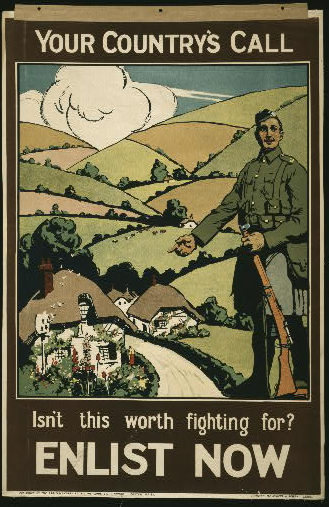
One example is the 1915 Parliamentary Recruiting Committee poster showing a kilted Highland soldier
The soldier is pointing toward a peaceful rural scene with the slogan “Your country’s call - Isn’t this worth fighting for?”
There were recruitment meetings and speeches in halls, churches and town squares
These were led by officials and local leaders and encouraged men to sign up to fight
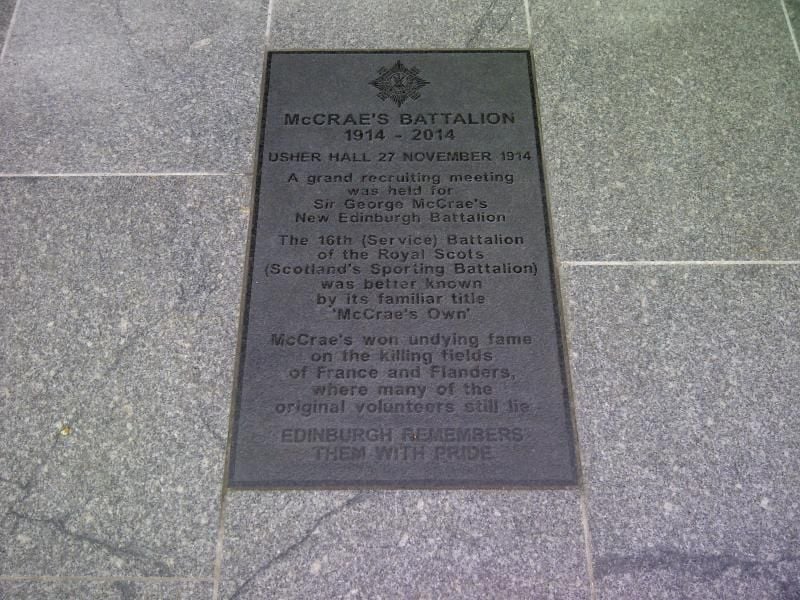
One example of this was a rally led by Sir George McCrae in the Usher Hall, Edinburgh, in November 1914
Within hours of this rally, almost 300 men enlisted and over 800 within a week
These men became members of McCrae’s Battalion (16th Royal Scots)
Pals battalions were established, which encouraged friends, teammates or co-workers to enlist together
In 1914, 16 Heart of Midlothian players enlisted (the first British team to join)
Many hundreds of Hearts supporters and other footballers from nearby clubs, such as Hibernian and Raith Rovers, also enlisted
Public pressure tactics were used to encourage recruitment
Women associated with the Order of the White Feather publicly handed feathers to men in civilian clothes as a sign of cowardice
Reasons for enlisting
Martial tradition
There was a strong tradition, particularly in the Highlands, of military service passed down through families and communities
Famous kilted regiments such as the Gordon Highlanders and Black Watch were held in high regard
Local identities were often tied to specific kilted regiments
Being a soldier was seen as honourable and natural to some men
Patriotism
Some Scottish men believed it was their duty to defend Britain and the British Empire in wartime
Lord Rosebery held a recruiting rally in Glasgow in Dec 1914, where he urged Scots to join up as a duty to Britain and Belgium
Camaraderie
Friends, teammates and co-workers enlisted together as Pal’s Battalions
This made them feel a sense of belonging and pride
An example is the Glasgow Tramways Battalion, which included many Glasgow Corporation Tramways men
Public pressure
Public pressure drove many men to enlist as they feared being labelled publicly as a coward
Halftime parades at football grounds like Tynescastle pushed hesitant men to enlist
Impact of recruitment
Recruitment was highly successful in 1914
There was a huge response that filled Scottish military units
McCrae’s Battalion signed up hundreds within a week
The impact of communities, co-workers, families and friends enlisting in Pal’s Battalions was:
Local communities were emptied of men
Services were disrupted
As the war progressed, losses hit the same neighbourhoods and industries hard
Heart of Midlothian lost many first-team players to McCrae’s Battalion.
By 1915, recruitment started to decrease because:
It became clear that the war was not going to be won by Christmas
The number of casualties grew
The realities of trench conditions and trench warfare became more widely known
Recruitment rallies in Edinburgh and Glasgow drew fewer volunteers
Falling volunteer numbers led to the Miltary Service Acts from 1916-1918
This led to conscription (compulsory military service) for single men aged 18-41
This was later extended to include married men
By 1918 the upper age limit was increased to 51
Local tribunals in cities such as Aberdeen and Dundee decided exemptions for men in reserved industries such as the Clyde shipyards
Worked Example
Describe the methods used to recruit Scottish soldiers in the Great War.
[4 marks]
Recruiters used propaganda posters with striking images and headlines such as “Your country’s call - Isn’t this worth fighting for?” [1] These were displayed in Scottish streets and on trams, which created duty, guilt and peer pressure to enlist. [1]
Women handed out white feathers to men not in uniform, which publicly branded them as cowards. [1] For example, members of the Order of the White Feather were reported giving feathers in Glasgow and Edinburgh, prompting some men to sign up immediately. [1]
Examiner Tips and Tricks
In your answers, make sure that your answers relate to Scotland with named examples where possible.
Aim for four separate, relevant points with one sentence each.
Alternatively, give two distinct points and add a clear descriptive development to each, so each point earns two marks.

Unlock more, it's free!
Join the 100,000+ Students that ❤️ Save My Exams
the (exam) results speak for themselves:

Was this revision note helpful?
