The Western Front and the Trenches (SQA National 5 History): Revision Note
Exam code: X837 75

Summary
The Western Front was the long line of trenches and battlefields in Belgium and northern France where the British, French and U.S. (from 1917) armies fought the Germans in the Great War. The Western Front spanned from the North Sea to the Swiss border and was about 700 kilometres long (430 miles). After the first few months of movement at the start of the war in 1914, both sides began to dig trenches along the Western Front. In between the facing trenches was "No Man’s Land". This was an expanse of land covered with barbed wire, shell holes and bodies.
The experience of life in the trenches along the Western Front was challenging. Long periods of waiting, difficult living conditions, hard work and sudden danger were common. Trenches were dug in three lines called front, support and reserve and linked by communication trenches.
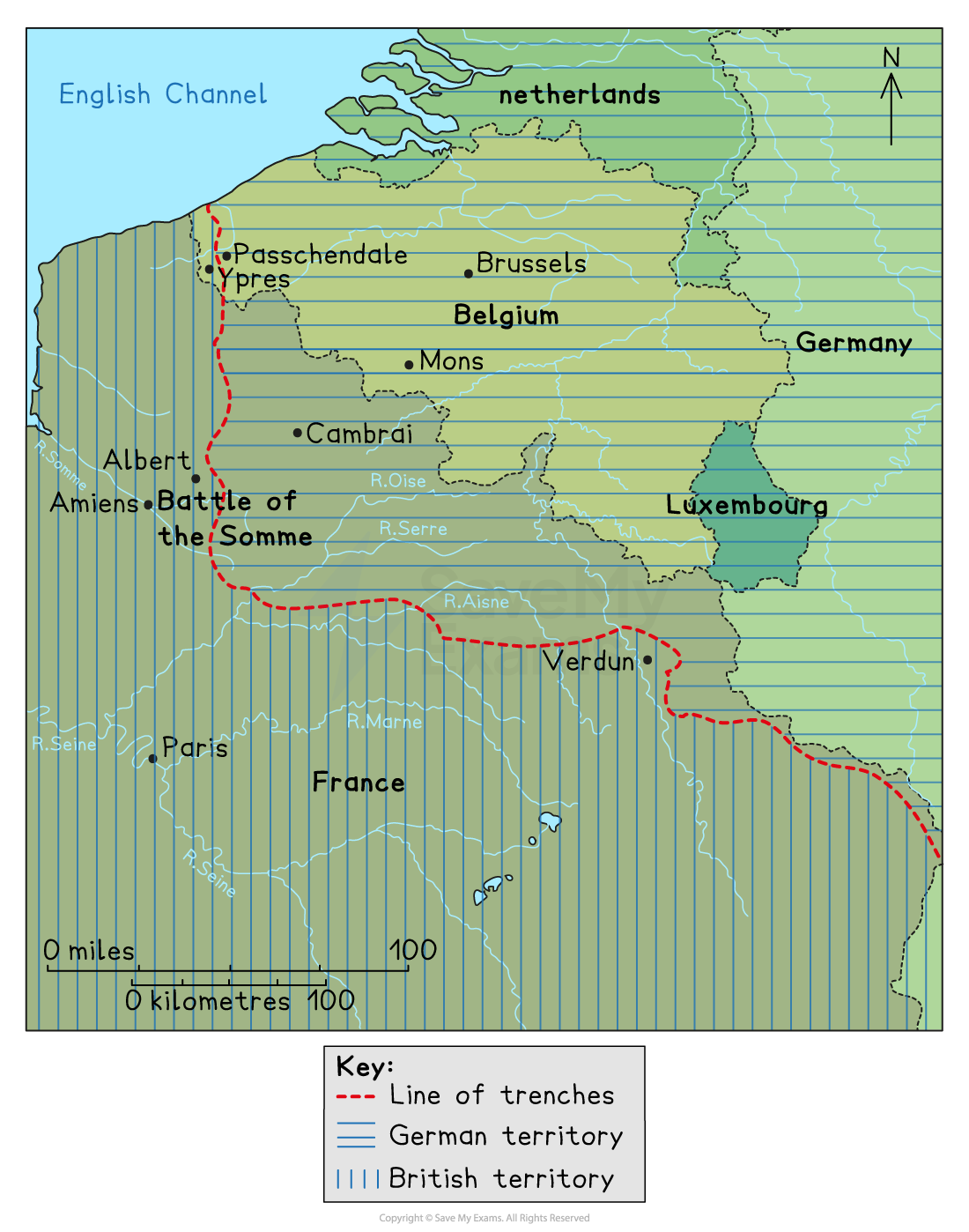
Building the trenches on the Western Front
Trenches were dug in zigzags, so if they were hit by enemy shells, the blasts would not travel far along the trench and destroy it
The trench walls needed reinforcement and protection from poor weather
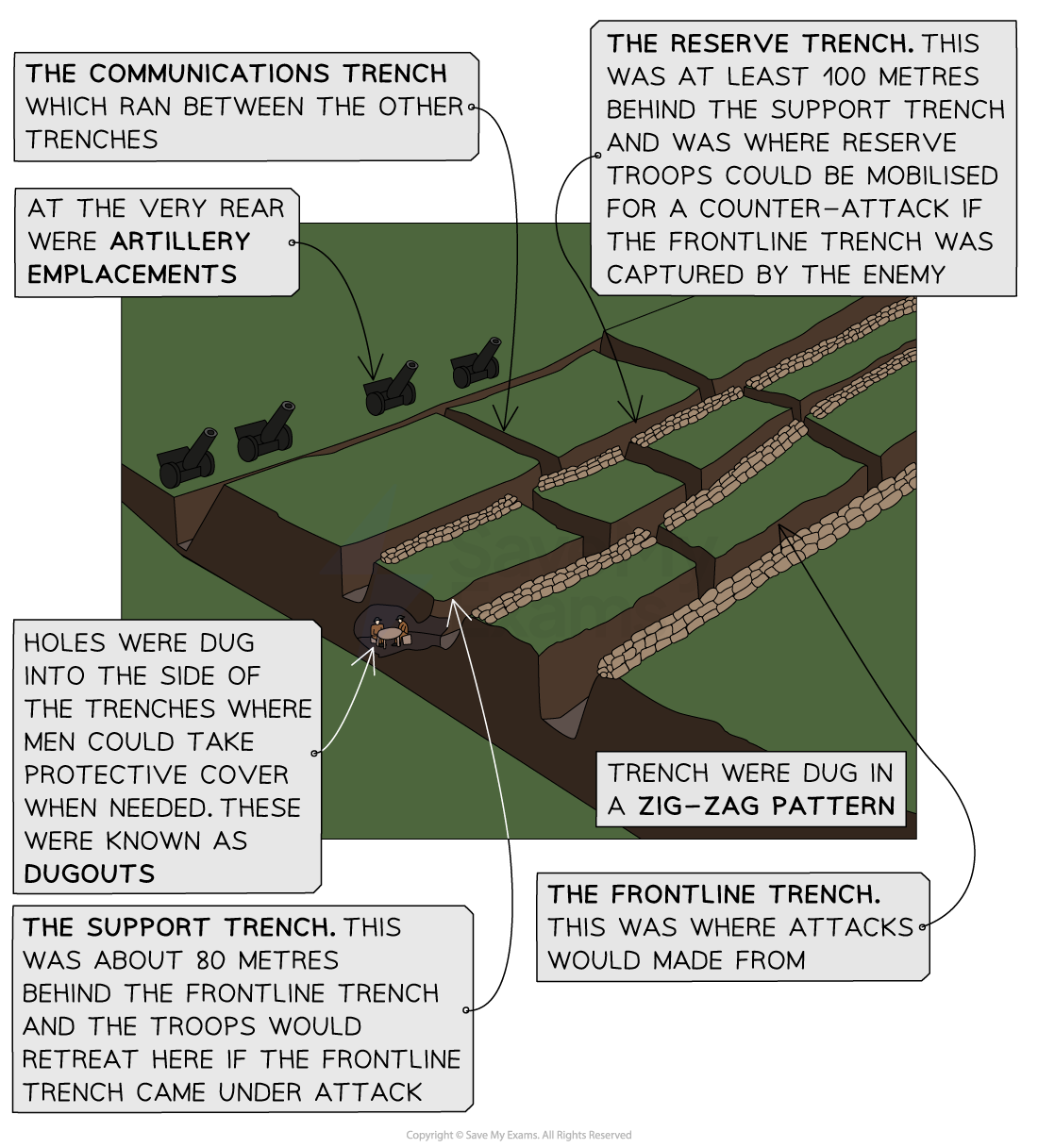
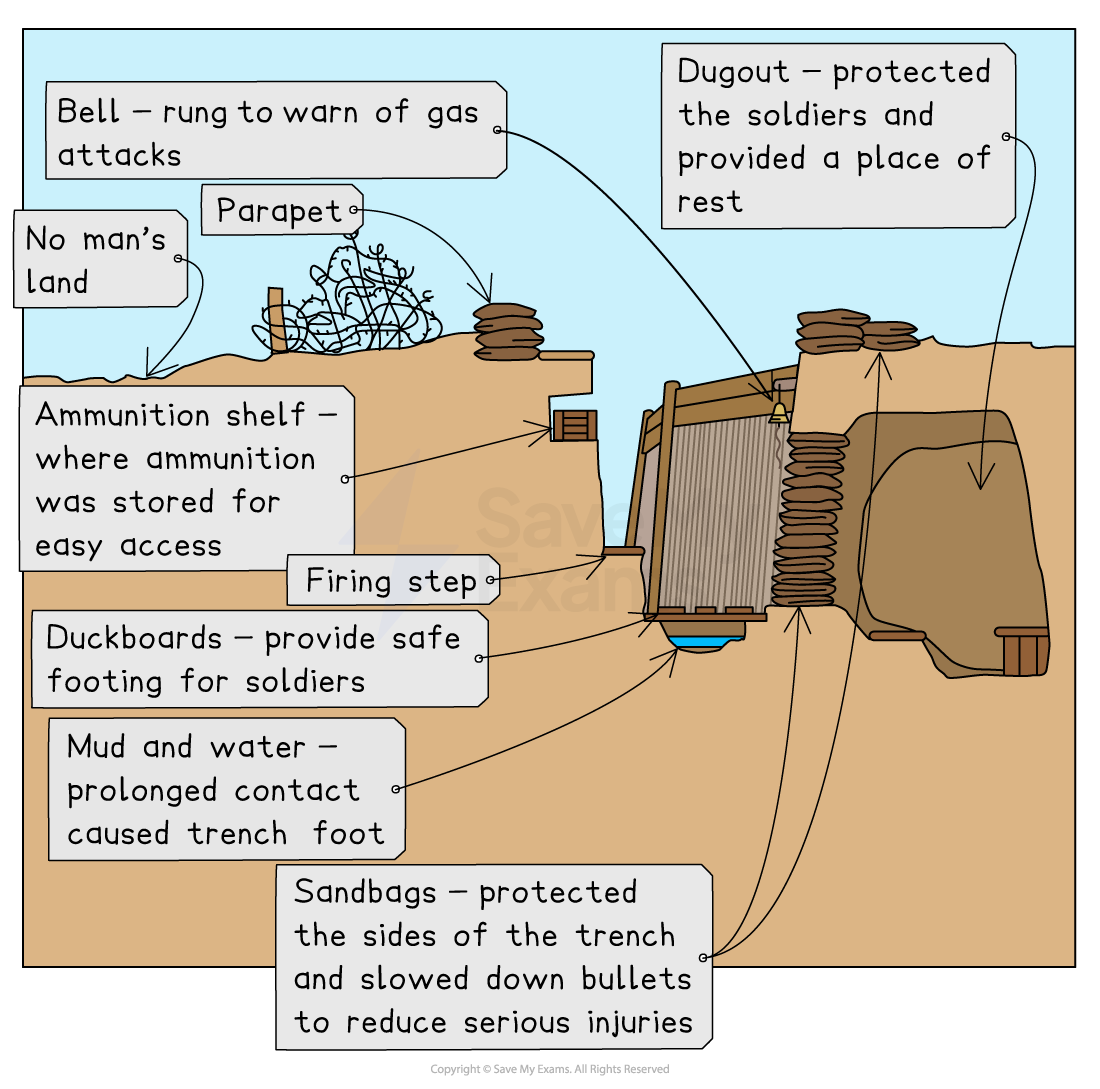
The trenches were supported by wooden revetments, corrugated iron or wicker and topped with a parapet and parados
A fire step allowed soldiers to see and fire their weapons over the top of the trench
Dugouts were cut into the side for shelter
Trench floors were covered with duckboards to combat mud, flooding and trench foot
Royal Engineers planned and led the digging of the trenches
Infantry soldiers dug mostly at night, sometimes while under enemy fire
Daily life in the trenches
Life in the trenches had a routine
Soldiers in Scottish units like the Royal Scots and Highland Light Infantry spent short periods of time at the front line and then moved to support and reserve trenches
Activities for soldiers when not involved in active combat included sentry duty and kit inspections
Each day brought stand to at dawn and dusk
This involved soldiers taking positions on the fire step with rifles loaded and bayonets fixed.
Soldiers had to maintain the trenches as they became damaged through shellfire or inclement weather
They had to repair parapets, lay barbed wire and dig new sections
Battalions such as the Black Watch often went out into "No Man’s Land" at night to fix the barbed wire
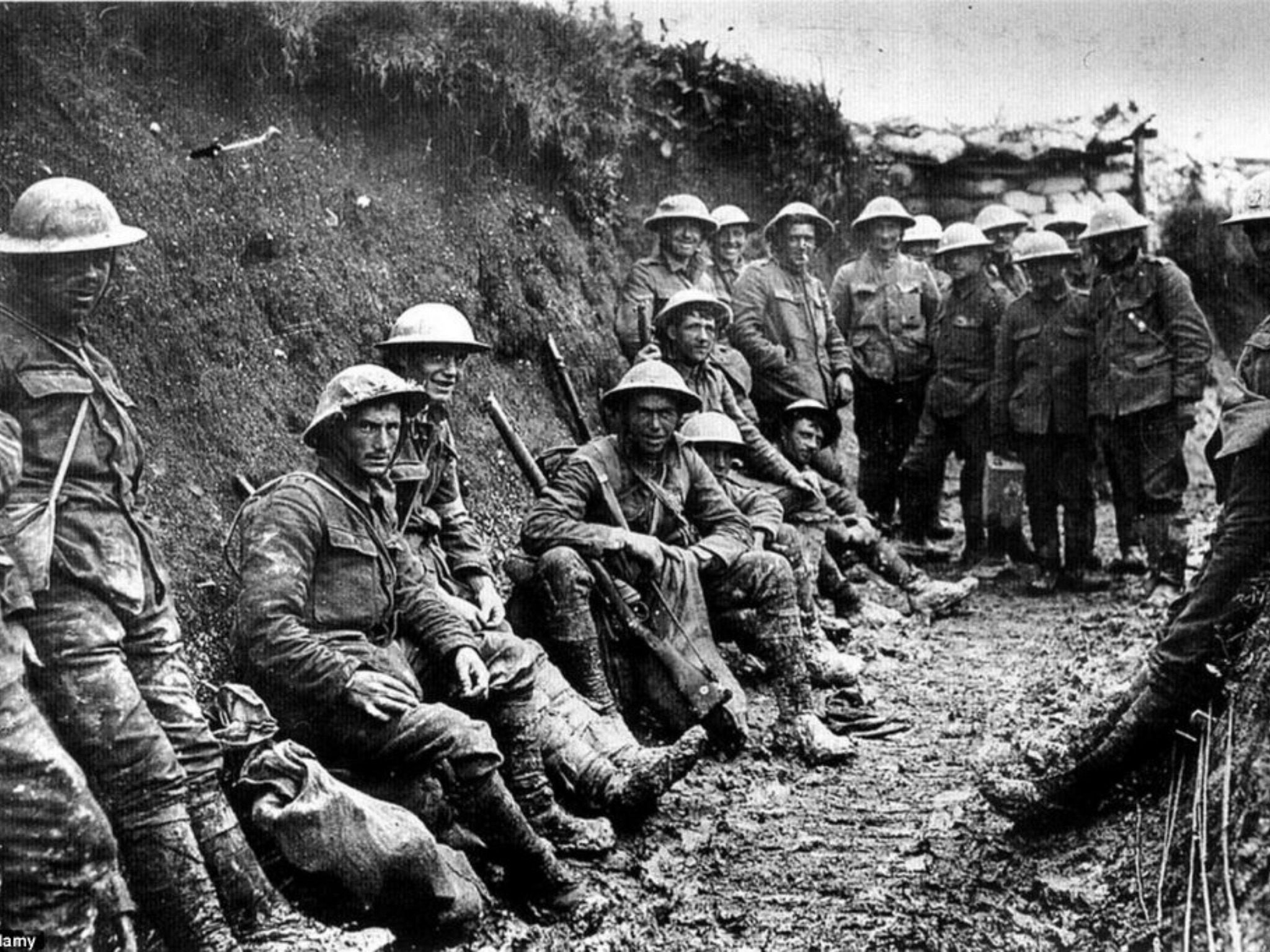
Living conditions were tough
Mud, lice, rats, poor drainage and low temperatures made life in the trenches miserable
Soldiers faced trench foot, which could become debilitating
Illnesses such as trench fever caused by lice were common
Many Scots in kilted regiments wore a khaki kilt cover or switched to trousers in winter to keep warm and dry
Morale could be low for soldiers in the trenches because of the poor conditions and constant threat of danger
Letters and parcels from home, unit pipers and Scottish traditions such as Burns Night in billets behind the line helped to boost morale
Worked Example
Describe the conditions Scottish soldiers faced in the trenches.
[4 marks]
Mud and poor drainage made trenches filthy and cold, with a constant risk of trench foot. [1]
Lice and rats infested clothing and dugouts, and trench fever was common. [1]
Shellfire, snipers and gas were constant threats, with stand to at dawn and dusk. [1]
Most time was spent on hard routine work such as repairing parapets, carrying rations and laying barbed wire.[1]
Examiner Tips and Tricks
Write four separate facts, one short sentence each. No explanations or reasons are needed for a 'describe' question.
Ensure that you use trench vocabulary, for example, duckboards, parapet, dugouts, trench fever, barbed wire, and gas masks.

Unlock more, it's free!
Join the 100,000+ Students that ❤️ Save My Exams
the (exam) results speak for themselves:

Was this revision note helpful?
