Khrushchev & De-Stalinisation (Edexcel A Level History): Revision Note
Exam code: 9HI0

Summary
This note will examine how Khrushchev came to power and how successful the policy of de-Stalinisation was
Stalin left behind a legacy of terror, repression, and a rigid centralised state
At the 20th Party Congress (1956), Khrushchev denounced Stalin’s cult of personality and abuses of power in his “Secret Speech”
The Crisis of 1957 showed Khrushchev’s vulnerability but also his ability to outmanoeuvre rivals
De-Stalinisation involved dismantling aspects of Stalin’s rule, releasing prisoners, and relaxing censorship
However, it was inconsistent and limited
Historians debate whether de-Stalinisation was a genuine break from Stalinism or a tactical adjustment to preserve Communist Party power
Stalin's legacy
Stalin left behind a Soviet Union transformed into a superpower
The Second World War brought the USSR military prestige
However, his rule had also created:
Widespread fear
Repression
Inefficiency in government and the economy
The cult of personality around Stalin meant the Party had to find a way to distance itself from him without undermining its own legitimacy
His death in 1953 created an opportunity for reform
However, it also caused uncertainty over the USSR’s future direction
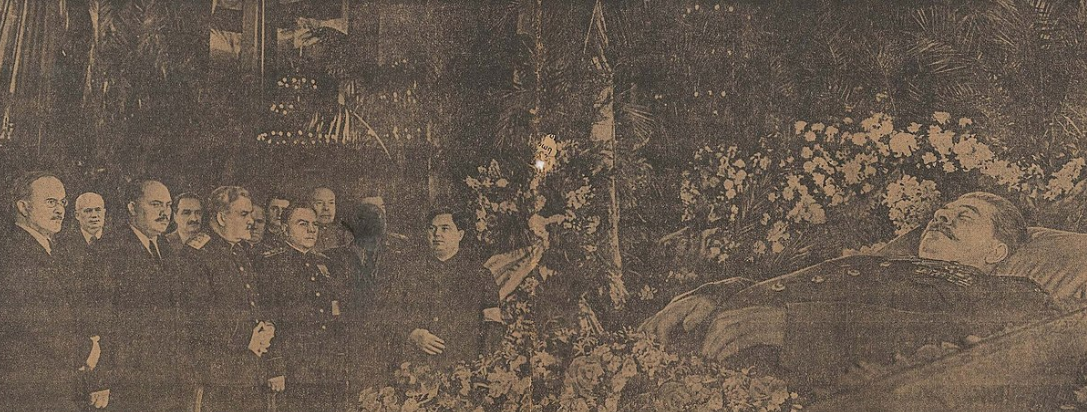
Leadership struggle
After Stalin’s death, three main figures emerged as contenders for leadership
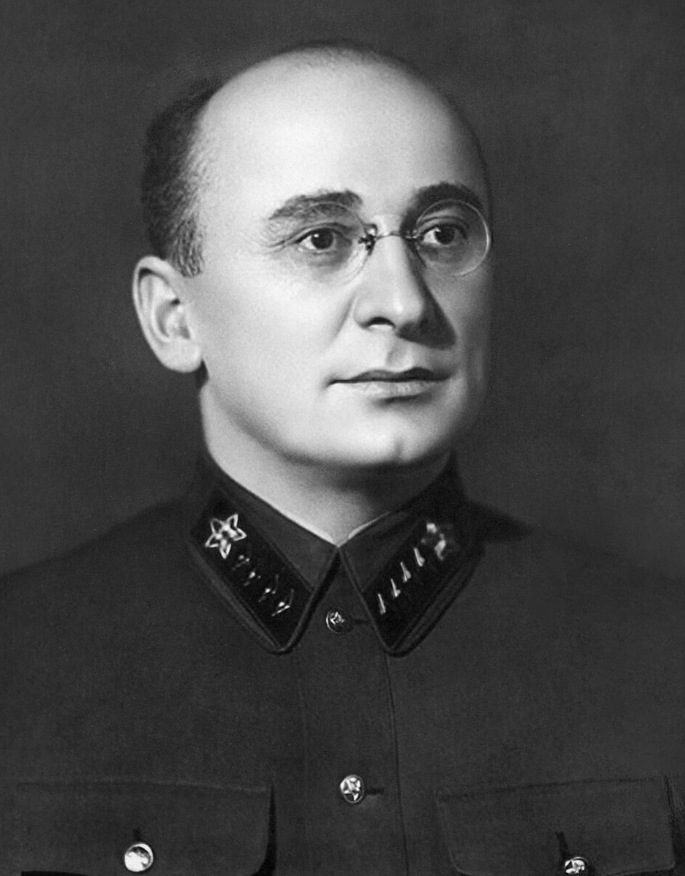
Lavrentiy Beria
Head of the secret police
He had the support and loyalty of the MVD
Beria was Stalin's Deputy Premier in his final years
He was feared for his ruthless reputation
He advocated liberalising policies, such as prisoner releases
This weakened the MVD
The Party did not trust him
Khrushchev and Malenkov accused Beria of working with the British government
Beria was arrested and executed in June 1953
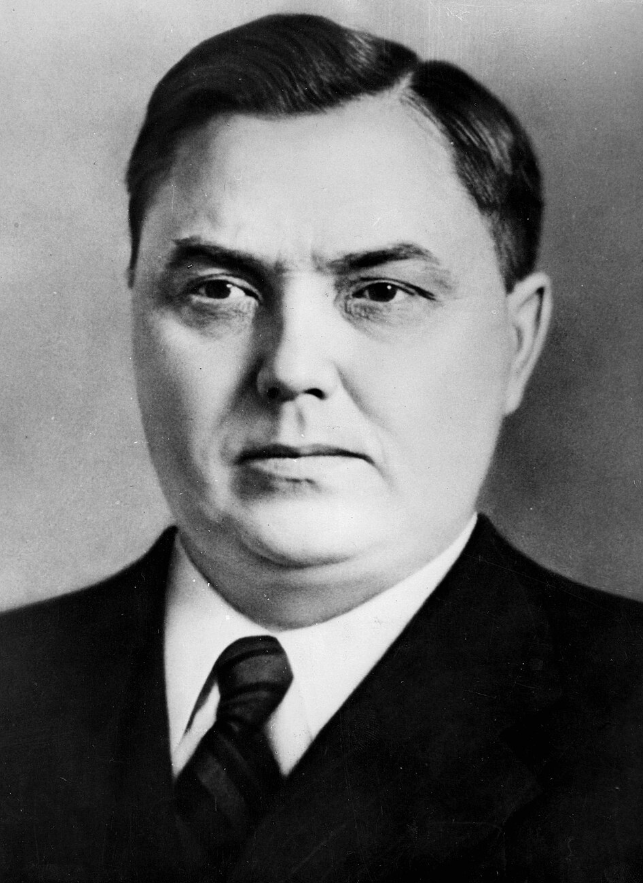
Georgy Malenkov
Malenkov was Stalin’s designated successor as Premier
He initially seemed the most likely leader as he had support from the Soviet state
He worked together with Khrushchev initially
However, he lacked strong Party support
Khrushchev's popularity meant that Malenkov lost the role of Premier in February 1955
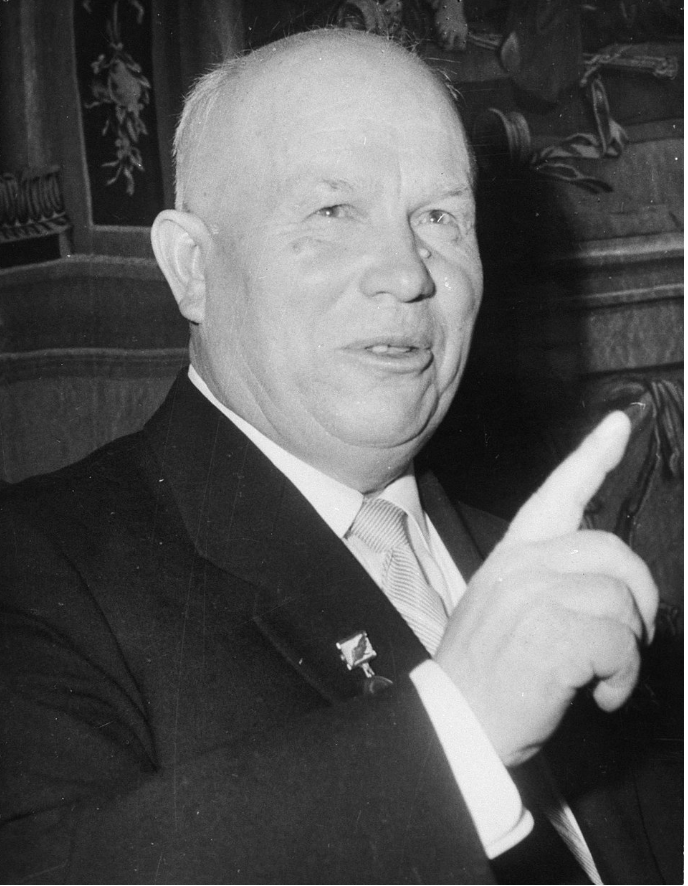
Nikita Khrushchev
Secretary of the Central Committee after Stalin's death
He used this role to bring his supporters into senior roles in the Party
Popular with the Communist Party
He was known for his loyalty to the Party
However, he had no role in the state
His early reforms aimed to weaken the state by cutting the number of central Soviet roles and relying on republic governments
Examiner Tips and Tricks
Many students write as if Stalin died and Khrushchev immediately took over. Examiners expect you to show awareness of Beria and Malenkov as rivals and Khrushchev’s gradual consolidation of power.
The 20th Party Congress & the 'Secret Speech', 1956
On 25 February 1956, Khrushchev delivered his speech “On the Cult of Personality and Its Consequences” to a closed session of the 20th Party Congress
The speech lasted nearly four hours
It shocked delegates by directly criticising Stalin
Main criticisms of Stalin
Cult of Personality
Khrushchev denounced the excessive glorification of Stalin
He argued that it went against Lenin’s principle of collective leadership
Khrushchev also quoted the section about Stalin in Lenin's Testament
Use of terror
He condemned the purges of loyal Communists, including the execution of Old Bolsheviks
He believed that it was wrong that suspects were not given a fair trial
He stated that Stalin's actions went against Lenin's legacy
Khrushchev revealed the scale of the terror to the Party
This extent of the political violence had been kept hidden from the wider Party
Military failures
Stalin was blamed for disastrous mistakes during the early stages of the Second World War, including:
Purging the army before the war
Ignoring intelligence about Hitler’s invasion in 1941
What did Khrushchev not criticise?
To keep the legitimacy of the Party intact, Khrushchev did not criticise
Stalin's economic and agricultural policies
Stalin's communist ideology
Was the speech truly 'secret'?
The speech was delivered in a closed session
It was not officially published in the USSR until 1989
However, copies quickly circulated among Party members
These were leaked to the West via the Polish Communist Party
It was printed in the New York Times
The secrecy reflected the difficulty of balancing criticism of Stalin with maintaining the legitimacy of the Communist Party
Reactions to the speech
Delegates were stunned
Some reportedly fainted or had heart attacks in shock
The speech had a huge psychological impact
It shattered the myth of Stalin
Some members reportedly took their own lives after hearing about Stalin's crimes
Abroad, it undermined communist movements
The crisis of 1957
In 1957, a group of senior leaders, known as the 'Anti-Party Group' attempted to remove Khrushchev from power
This group included Molotov, Malenkov, and Kaganovich
They accused him of undermining Party unity with his reforms and reckless criticism of Stalin
Khrushchev survived by appealing to the Central Committee
He argued that only the Central Committee could decide to replace him
Khrushchev held the majority of support in the Central Committee
The failure of the coup attempt strengthened Khrushchev’s authority
He consolidated his power in March 1958
However, it showed reform because:
Khrushchev fired, rather than killed, his political opponents
Khrushchev relied on the support of the Central Committee to rule, rather than on fear
The process of de-Stalinisation
Khrushchev introduced a series of reforms designed to dismantle the worst excesses of Stalin’s rule
Release of political prisoners
In June 1956, 51,439 prisoners were released from the GULAG system
By 1961, half of all prisoners executed under Stalin had been pardoned by the state
Reform of the secret police
The MVD was reorganised into the KGB, with a narrower focus and fewer powers
Relaxation of censorship
Writers, artists, and intellectuals were allowed more freedom
An example is the publication of critical works like One Day in the Life of Ivan Denisovich
Democratisation of the government
He expanded Party membership to include more peasants and workers
He introduced fixed term positions for key positions in the Communist Party
This meant that officials were chosen more regularly and could not exploit their power
Impacts of de-Stalinisation
Positive impacts
Soviet society was no longer dominated by mass terror
Political enemies were sacked, rather than tortured and killed
Thousands of political prisoners were released and rehabilitated
The USSR was not ruled under a personal dictatorship
Khrushchev's position relied upon the support of the Central Committee
Negative impacts
Repression did not end
Dissent was still punished
Uprisings in the republics, such as Hungary in 1956, were brutally crushed
Khrushchev did not permanently remove Stalinism
Khrushchev never publicly denounced Stalin
Khrushchev created his own cult of personality
Brezhnev revived the cult of Stalin
Examiner Tips and Tricks
Khrushchev attacked Stalin’s cult of personality and excesses, but he did not reject the one-party state. Making this distinction shows evaluative understanding.
How successful was de-Stalinisation?
Historians disagree over whether de-Stalinisation was a real break with the past or simply a tactical reform
Successful reform
Some historians argue de-Stalinisation reduced fear and made Soviet life less repressive
Key historians
"Inside Russia, then, de-Stalinization has in mind mainly the unraveling of the second phase of Stalinization. But even this limited process has many complexities when it passes beyond the enunciation of the negative principle of "No new Stalin." To rehabilitate the memory of a murdered majority of a party's leadership is not to resurrect them... So revival of party rule is thus far not, in practice, a very impressive phenomenon. The Presidium, reduced to its pre-1952 small size immediately upon Stalin's death, became a "collective"-that is, a talking, debating, voting, fighting, and feuding-organ of government, with some apparent effort to introduce political order into its workings... The Central Committee was brought back from post-1947 oblivion to become, at least in theory, the supreme arbiter of the Presidium's squabbles. Khrushchev, as First Secretary, has tried very hard to pack the Central Committee with his supporters. It meets in plenary session at intervals of roughly six months, as the 1952 statutes demand. A party congress was held on schedule last year for the first time in many years." - Robert C. Tucker, The Politics of Soviet De-Stalinization (1957)
"[Khrushchev] wanted to break the mould of Soviet politics and to narrow the gap between the leadership and the masses... It served several purposes. It permitted him to vilify his political opponents and Stalinists and replace them with his own cadres; it allowed him to advocate radically different policies; it ushered in new initiatives in foreign policy but entailed much risk-taking; it emptied the labour camps and gave a new meaning to socialist legality and it introduced some fresh air into the world of Soviet culture... One of his achievements was to bring the Soviet Union onto the world stage to reduce some of the fear it engendered and to increase respect for it." - Martin McCauley, Khrushchev and Khrushchevism (1987)
Reforms were limited and inconsistent
Others stress that repression continued and the one-party state remained intact
Key historians
"In the West, his policies were dubbed de-Stalinization. This was understandable, since Khrushchev had devoted an entire report to denouncing Stalin. But Khrushchev himself talked instead of a campaign to eliminate 'the cult of the individual'. This was not an inappropriate term even though it was so euphemistic. For Khrushchev kept Stalin's kolkhozes in agriculture and his capital goods priorities in industry; he also refrained from rehabilitating Trotski, Bukharin, and the various other communists alleged to have been foreign spies. Much remained in place that would have been congenial to Stalin." - Robert Service, A History of Modern Russia from Nicholas II to Vladimir Putin (2005)
"Khrushchev’s criticism of the errors of the past also spilled out into the present: many ordinary Communists began to attack the corruption of local elites and to question the behavior of party leaders in Moscow. Faced with a barrage of conflicting responses in 1956, the party leadership seemed to retreat from “radicalism” and, even as it made what seemed like a more public and complete attempt at de-Stalinization at the 22nd Party Congress, imposed firmer restrictions on public discussion... Condemning Stalin and the purges he had overseen was, perhaps inevitably, problematic: first, because repudiating terror raised the practical question of how to treat those who had been its victims; second, because condemning Stalin and the terror compelled society to rethink the way it understood its own recent, and very bloody, past—and by extension how people were now to relate to their own life stories." - Miriam Dobson, The Post-Stalin Era: de-Stalinization, daily life, and dissent (2011)
Reforms had unintended consequences
Some argue de-Stalinisation destabilised the USSR by raising expectations it could not meet
Key historians
"Khrushchev gave them the belief that they could reconnect with the revolutionary ideals of their parents' generation and carry on the work that they had left undone. But as well as giving many people hope his speech gave rise to widespread scepticism and disbelief. His revelations invited questions not just about Stalin but about the system as a whole; and once they started questioning the system, they thought about alternatives to it." - Orlando Figes, Revolutionary Russia, 1891-1991 (2014)
"A passionate public discussion followed, with many different viewpoints expressed. Veterans were upset at the criticism of Stalin’s wartime leadership. Students and intellectuals were excited at the implied prospect of cultural liberalisation. In some Russian provincial towns, it stimulated attacks on corruption in local party leaderships; in Central Asia, the issue was Russian ‘colonial’ attitudes in the republics’ administration. The only actual civil unrest within the Soviet occurred in Tbilisi, Georgia, where after days of largely peaceful demonstrations marking the third anniversary of Stalin’s death, a military unit opened fire, killing twenty-one people. It was another story in Eastern Europe, where the Secret Speech sparked a crisis in Poland and Hungary." - Sheila Fitzpatrick, The Shortest History of the Soviet Union (2021)

Unlock more, it's free!
Join the 100,000+ Students that ❤️ Save My Exams
the (exam) results speak for themselves:

Was this revision note helpful?