Political Stagnation, 1982-85 (Edexcel A Level History: Route E: Communist states in the twentieth century): Revision Note
Exam code: 9HI0

Summary
This note will examine the causes and impacts of political stagnation in the 1980s
By Brezhnev’s final years, the Soviet political system had become rigid, corrupt, and resistant to reform
His successors, Andropov and Chernenko, made limited attempts to address these problems but achieved little
Historians debate whether political stagnation was merely a short-term issue or whether it posed a fundamental threat to the survival of the USSR
Brezhnev & political stagnation
By the late 1970s, Brezhnev’s leadership was marked by political stagnation
Gerontocracy
By the early 1980s, Soviet leadership was dominated by elderly men
Many of the leaders had served since Stalin’s time
By 1982, the average age of the Politburo was 75
This caused the government to be nicknamed gerontocracy
Gerontocracy meant that:
Leadership lacked energy
As senior officials got older, they became less efficient and motivated
Brezhnev himself was seriously ill in his final years and unable to govern effectively
Leadership became out-of-touch with the public
There was a clear generation gap between Soviet leadership and the public
Leadership no longer understood the needs of the society they were governing
Examiner Tips and Tricks
Words like 'gerontocracy' are key terms that examiners are looking for you to use in your answers where appropriate.
Create a glossary of key terms for the course and practice the spellings and meanings regularly.
Lack of innovation
Officials held posts for decades without rotation
This created a rigid leadership culture
Brezhnev’s commitment to 'stability of cadres' meant few new appointments were made
Younger or reform-minded figures were blocked from promotion
This stifled creativity
This allowed problems in the economy and society to go unaddressed
Corruption
The nomenklatura system encouraged patronage and nepotism
Party officials gave jobs, promotions, and privileges to loyal supporters or family members
This was unpunished by the Party
Bribery became common, with access to scarce goods often dependent on personal connections
The Party gave Brezhnev's daughter access to diamonds, which her boyfriend smuggled out of the USSR
Many officials also sold goods on the black market
Corruption:
Made the public lose faith in the Party
Widened the gap between leaders and ordinary citizens
Two Moscow Circus members believed to be friends of President Leonid Brezhnev's daughter have been arrested in connection with a million-dollar gem smuggling ring, Soviet and Western sources said Friday... Circus performer Boris Tsvigov, known as 'Boris the Gypsy,' was arrested Jan. 29, the sources said, and police found $1 million in diamonds and other valuables in his apartment. Two weeks later, police arrested Moscow State Circus Director Anatoly Kolevatov for involvement in the same ring, the sources said.
Extract from a United Press International (UPI) newspaper article, 26th February 1982
Lack of reform
Brezhnev prioritised stability over risk, avoiding major reforms even as problems mounted
Economic slowdown, declining productivity, and shortages were tolerated rather than challenged
Foreign policy remained cautious and predictable, focused on maintaining the Cold War balance
The result was a rigid system, unable to adapt to internal or external pressures
Andropov & Chernenko
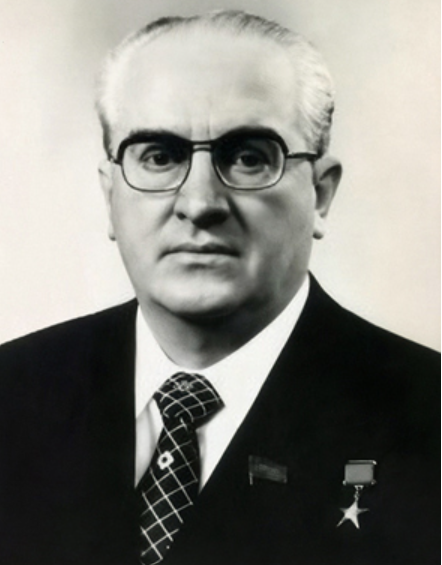
Yuri Andropov (1982–84)
Former head of the KGB, Andropov succeeded Brezhnev in 1982
He attempted limited reforms to tackle corruption and inefficiency by:
Ending the 'stability of cadres' policy
Andropov replaced a quarter of all officials
Launching an anti-corruption campaign
The Soviet media exposed corrupt officials
The government dismissed Nikolai Shchelokov, the Soviet Minister of Internal Affairs, for corruption and abuses of power
Encouraging limited economic experimentation
Andropov efforts were cut short by ill health
He died in February 1984 after just 15 months in office
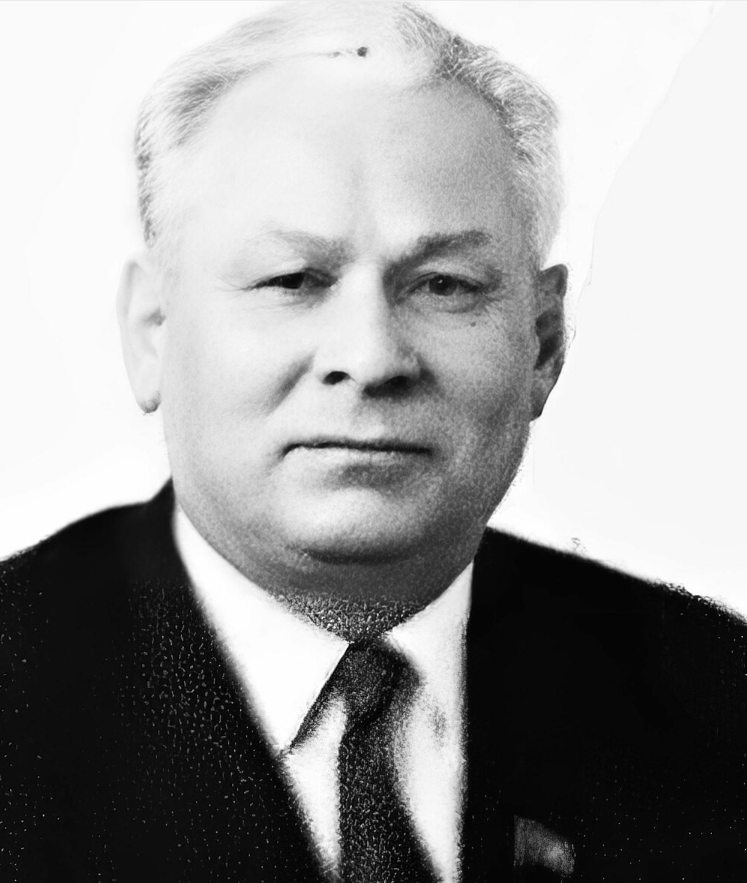
Konstantin Chernenko (1984–85)
Chernenko was a close ally of Brezhnev
He was 72 years old when he took power
Chernenko was too ill to govern effectively. However, his government:
Returned to Brezhnev-style conservatism
Made very few reforms to government
Chernenko’s death in March 1985
Mikhail Gorbachev was the natural choice of leader
He routinely led meetings during Chernenko's government
Examiner Tips and Tricks
Students often forget Andropov and Chernenko, skipping straight to Gorbachev.
It is important to remember these two leaders as:
It shows the extent of political stagnation in the USSR by 1985
It highlights the issues within government that Gorbachev faced when he came to power
How dangerous was political stagnation to the USSR?
Historians debate whether political stagnation was a temporary weakness or a major threat to the survival of the Soviet system
Stagnation as a manageable problem
Some historians stress that stagnation was serious but not fatal on its own
Key historians
"In 1985 the Soviet Union seemed as permanent as any state. None of the problems Gorbachev intended to address threatened the existence of the Soviet system... In other words, the regime could have soldiered on. There was no pressing need for radical reform. Authoritarian regimes can survive - not for ever but certainly for decades - with worsening economies. Many have done so with circumstances worse than in the Soviet Union during the 1980s. If there was a 'crisis' in the USSR, it was perceived mainly by the Soviet élites." - Orlando Figes, A People’s Tragedy (1996)
"To ask if the Soviet system was reformable means asking if any or all of the basic components could be reformed. Contrary to the view that the system was an indivisible "monolith," or that the Communist Party was its own essential element, it makes no sense to assume that if any components were transformed, supplemented by new ones, or eliminated, the result would no longer be the Soviet system. Such reasoning is not applied to reform in other systems and there are no grounds for it in Soviet history. The system's original foundations, the soviets of 1917, were popularly elected, multi-party institutions, only later becoming something else. There was no monopolistic control of the economy or absence of a market until the 1930s, and when the Stalinist mass terror, which had been a fundamental feature for twenty-five years, ended in the 1950s, no one doubted that the system was still Soviet." - Stephen F. Cohen, Was the Soviet System Reformable? (2017)
Stagnation as a dangerous weakness
Other historians argue that stagnation weakened the USSR from within, whilst leaving it stable-looking on the outside
This meant that the USSR was unable to adapt and reform
Key historians
"The Brezhnev era was one in which a great virtue was made out of ‘stability of cadres’. If Brezhnev's consolidation of the status quo and postponement of all difficult decisions was undoubtedly bad for his country, it was splendidly attuned to the desires of its ageing bureaucracy. The security of tenure he gave to senior officials—after the life-threatening rule of Stalin and the job-threatening reorganizations of Khrushchev—made him the most congenial top leader the party and governmental apparatus ever had. The nostalgia of the old apparatchiki for the Brezhnev era became the greater with each successive year of perestroika." - Archie Brown, The Gorbachev Factor (1996)
"Policy was so motionless that it was rarely a topic for glance and comment in Pravda or even in the scholarly economic journals. The claims that, by avoiding Khrushchev's utopianism, the USSR could make steady economic advance was being tested and found wanting. Only very dimly were Brezhnev and his colleagues aware that doing nothing was a recipe for political disaster...the Politburo was failing to maintain active support in society even at previous levels... Politburo leaders contrived to overlook the problem. For them, the dangers of further change outweighed the risks of keeping things as they were. Indeed, the contemplation of change would have required a concentration of intellectual faculties that hardly any of them any longer possessed, and those few, such as Andropov, who had even mildly unorthodox ideas kept quiet about them." - Robert Service, A History of Modern Russia from Nicholas II to Vladimir Putin (2005)

Unlock more, it's free!
Join the 100,000+ Students that ❤️ Save My Exams
the (exam) results speak for themselves:

Was this revision note helpful?