The Roles of Yagoda, Yezhov & Beria (Edexcel A Level History): Revision Note
Exam code: 9HI0

Summary
This note will examine who created a terror state in the Soviet Union
Stalin had three main secret police chiefs — Yagoda, Yezhov, and Beria
Each expanded the scope of terror in different ways
They oversaw some of the most violent phases of Soviet repression, including the Great Terror
All were ultimately removed and executed
This showed that no one in Stalin’s USSR was safe, not even those who carried out the terror
Historians disagree whether these men directed the terror themselves or were simply tools of Stalin’s will
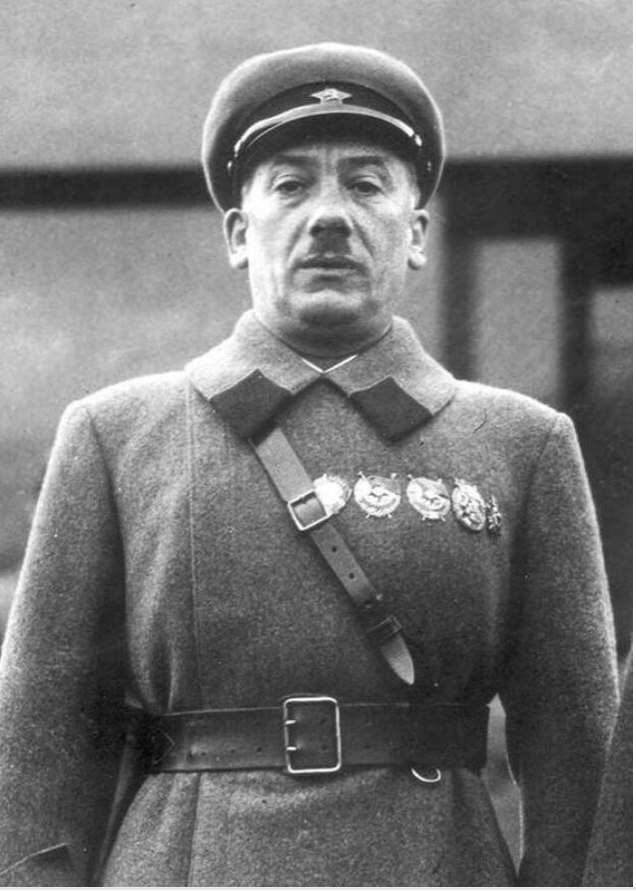
The role of Yagoda
Yagoda had been a long-standing member of the Bolshevik Party
He has joined in 1907
Between 1921 and 1933, he was responsible for completing the building of the Moscow-Volga Canal
He gained workers through the GULAG system
Over 20,000 people died making the canal
Appointed head of the NKVD in July 1934, replacing Genrikh Menzhinsky
Achievements
Supervised the early stages of Stalin’s purges
Oversaw the 1934 assassination of Sergei Kirov, which Stalin used as justification for the Great Purge
Organised the arrests of Zinoviev and Kamenev
Reason for fall
Stalin accused Yagoda of “insufficient enthusiasm” for the purges
The scale of the terror of 1935-1936 were not satisfactory for Stalin's wishes
The state arrested Yagoda in 1937
He was executed in 1938 in the Trial of the Twenty-One
The role of Yezhov
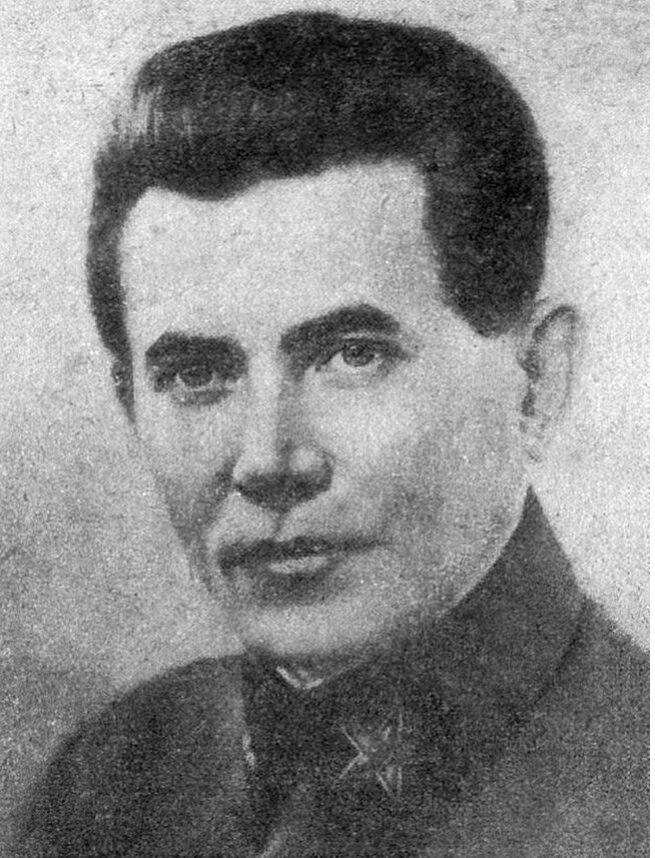
Took over the NKVD in September 1936
Known as the “Bloody Dwarf” for his ruthless efficiency
Achievements
Head of the NKVD during the Great Terror (Yezhovshchina)
This was the most violent phase of Stalin’s repression
Introduced quotas for arrests and executions
NKVD officers were expected to exceed them
Created an interrogation method known as the “conveyor belt” system
Prisoners were interrogated continuously for days or even weeks without rest
NKVD officers worked in shifts, so the questioning never stopped
The goal was to break down prisoners physically and mentally until they confessed to crimes, whether real or imagined
Personally authorised mass arrests, torture, and executions of alleged 'enemies of the people'
This included ordinary citizens, military officers, and ethnic minorities
Estimated 1.5 million arrests and 700,000 executions during his tenure
Orchestrated the Trial of the Seventeen (1937) and Trial of Twenty-One (1938)
Reason for fall
By late 1938, Stalin planned to arrest Yezhov for “excesses”
He soon became depressed and resigned from his position as Head of the NKVD
Stalin arrested Yezhov in 1939 and executed in 1940
The state kept Yezhov's execution a secret for a decade
Examiner Tips and Tricks
Students often get Yagoda and Yezhov confused. In your revision, use the information above to make a fact file on each person. You could also make a mnemonic to help you differentiate.
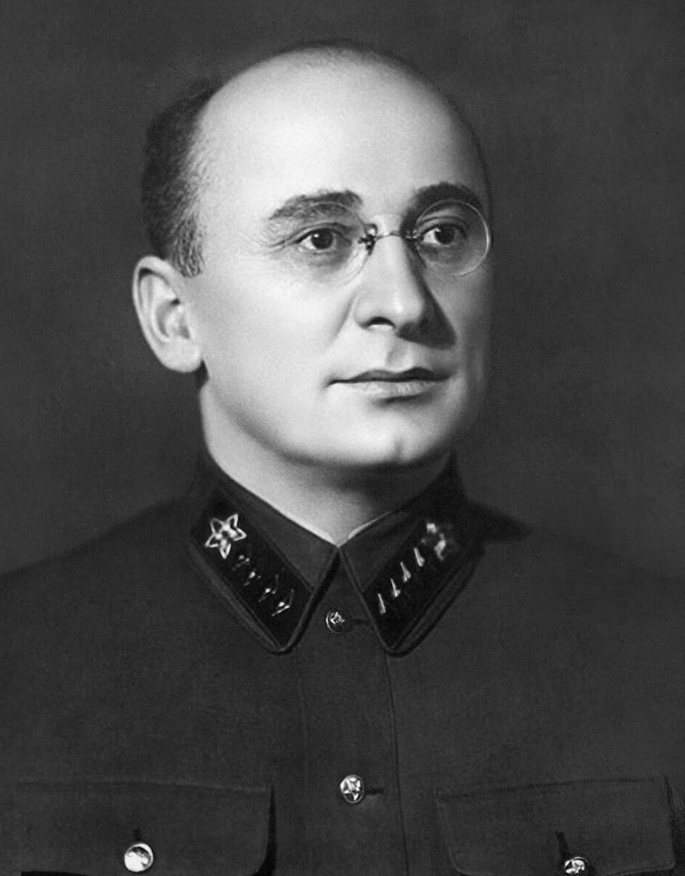
The role of Beria
Replaced Yezhov in November 1938, claiming to “clean up” the NKVD after the Great Terror
He soon rebuilt the secret police into a more efficient system of control
Achievements
The arrest of Yezhov (1939)
The murder of Trotsky in Mexico (1940)
The wartime deportations of ethnic groups
The Kalmyk people were deported in December 1943 on charges of collaboration
Estimates suggest one in three Kalmyks perished due to the harsh conditions
In February 1944, Beria organised the complete deportation of the Chechens from the North Caucasus to Central Asia
Around 170,000 people died
The Leningrad Affair (1949–1950)
Beria helped orchestrate the arrests and executions of high-ranking figures like Nikolai Voznesensky and Alexei Kuznetsov
They were accused of building an independent power base
The Doctors’ Plot (1952–1953)
A fabricated conspiracy alleging that Jewish doctors were plotting to assassinate Soviet leaders
Dozens of doctors were arrested and tortured
The case was abruptly dropped after Stalin’s death in March 1953
He became feared across the USSR for his power and cruelty
He used torture, sexual violence, and intimidation to maintain control
The impact & removal of Beria
After Stalin’s death (1953), Beria initially positioned himself as a key figure in the new leadership
Other leaders, especially Khrushchev, feared his influence over the police and army
They accused Beria of treason and “anti-Party activity”
He was arrested in June 1953 and executed in December that year after a secret trial
Impact
His fall marked the end of large-scale terror in the USSR
The KGB (created in 1954) would still control dissent but without mass purges
How much power did Yagoda, Yezhov & Beria have?
The three NKVD chiefs each appeared powerful
Yagoda’s power was mainly administrative
He built up the GULAG system and managed state security efficiently
However, he showed little initiative to launch wider purges
Yezhov’s power was more visible and extreme
However, Yezhov’s authority depended on Stalin’s approval
Once the violence became uncontrollable and politically risky, Stalin blamed Yezhov for the “excesses”
Beria’s power was the most far-reaching
However, even Beria’s vast influence relied on Stalin’s favour
When Stalin died, his rivals removed him within months
All three were ultimately victims of the same system they helped create
This shows that terror in the USSR was never truly delegated
Who was responsible for terror in the USSR?
Historians disagree over whether the terror stemmed from Stalin’s personal control or from the institutions and individuals beneath him
Stalin controlled the terror
Yagoda, Yezhov, and Beria acted as tools of Stalin’s paranoia and ambition
Terror stopped when Stalin chose to, such as during the Second World War
Key historians
"To begin to understand it, we must look at the Great Terror, not, as some have argued, as an uncontrolled or accidental happening, a product of the chaos and infighting of the Stalinist regime, nor as something driven by social pressures from below, as argued by 'revisionist' historians, but as an operation masterminded and controlled by Stalin in response to the specific circumstances he perceived in 1937." - Orlando Figes, A People’s Tragedy (1996)
"The Great Purge by which he established himself as unchallenged dictator is distinctive in three main respects: above all, its immense scale, in which millions perished and every member of the population was held under immediate threat; secondly, its methods, and in particular the extraordinary device of the confession trial, with the ruler's leader leading critics publicly denouncing themselves for treason; and thirdly, its secrecy - apart from the public trials and a few announcements of other executions, nothing was officially said of the whole vast operation. For the barest facts of Stalin's terror were long concealed or misunderstood: and it was for decades the main source of doubts and falsehoods which ate deep into the consciousness and conscience of the West." - Robert Conquest, The Great Terror: Stalin's Purge of the Thirties (1968)
Institutions controlled the terror
While Stalin initiated repression, the secret police system developed its own logic and rules
NKVD officials competed to prove loyalty, exaggerating conspiracies and quotas
Key historians
"In general, researchers on the 1920s and 1940s have been struck by the ad hoc and voluntarist nature of Stalinist policy formation. None of these works have suggested that Stalin was not the most powerful political actor, but some of them imply that he was not necessarily the author of every initiative... In this view, Stalin's lieutenants had not only executive but also policymaking powers... In turn, this reinterpretation of the party structures has implications for the events of the Great Purges. The events of 1933-39 were not all part of the same planned crescendo of terror and did not constitute a single phenomenon or process... Indeed, all the political events of the 30s were not part of the same phenomenon, and it is basic assumption of the study that analysis of the party structure can help avoid such reductive fallacies. Secondly, political decision-making seemed incremental, confused, and more contradictory than consistent. Although it was clear that Stalin made crucial decisions during the Great Purges, considerable circumstantial evidence suggests that he did so tentatively, belatedly, and like most powerful politicians, by choosing or arbitrating amongst various options." - J. Arch Getty – Origins of the Great Purges (1985)
"New studies have clearly shown that party officials pursued agendas defined by their institutional interests and not solely by the will of Stalin or the directives of the central leadership. Recent document collections portray Stalin as nagged by doubts that central directives were being fulfilled. In this, his immediate subordinates were not the problem, but the greater mass of the party and state bureaucracy, pursuing institutional interests and responding to impossible demands from the centre with foot-dragging and deception. Rather than being confident of his control of party officials, Stalin appears to have been obsessed with the spectre of the dvurushnik (one who is two-faced, or a ‘double-dealer’) publicly professing his loyalty to the party line while privately working to subvert it. The new evidence thus seems to contradict the way we have understood the emergence of Stalin’s personal dictatorship and to present a more fluid and unstable picture of Soviet power in the 1920s and 1930s." - James Harris, The Great Fear: Stalin's Terror of the 1930s (2015)

Unlock more, it's free!
Join the 100,000+ Students that ❤️ Save My Exams
the (exam) results speak for themselves:

Was this revision note helpful?