Light Industry, Chemicals & Consumer Goods Under Khrushchev (Edexcel A Level History): Revision Note
Exam code: 9HI0

Summary
This note will examine Khrushchev's economic intentions for the Soviet state
Khrushchev tried to shift focus away from Stalin’s obsession with heavy industry
He promoted light industry, chemicals, and consumer goods to raise living standards and transition the USSR into communism
While some progress was made, the command economy struggled to balance production with consumer demand
Cold War pressures diverted resources into the military and the space race
He also attempted to reform economic planning through decentralisation in 1957, before stepping back towards centralisation
This process created confusion and instability
Historians disagree whether Khrushchev’s reforms represented a genuine attempt at modernisation or a poorly planned experiment that exposed the weaknesses of the Soviet system
Why did Khrushchev focus on these industries?
Khrushchev released his economic vision for the USSR in the Seven-Year Plan in January 1959
Improving living standards
Stalin’s era had neglected consumer goods
This caused a low supply of housing, clothing, and household items
Khrushchev believed improving daily life would increase loyalty to the regime
Ideological reasons
Khrushchev believed that the death of Stalin marked the beginning of socialism
In 1962, the Party announced that the USSR would reach communism in 1980
Every Soviet citizen would have free housing, food and transport and access to cheap consumer goods
Khrushchev believed he needed to develop the economy to support this transition to communism
Economic modernisation
Chemicals were seen as crucial for boosting agriculture and industry
Chemical production would create better fertilisers
In turn, this would improve crop yields and synthetic fibres for clothes
Khrushchev believed that heavy industry did not need further investment
Political motives
By moving away from Stalin’s focus on heavy industry, Khrushchev could differentiate his leadership
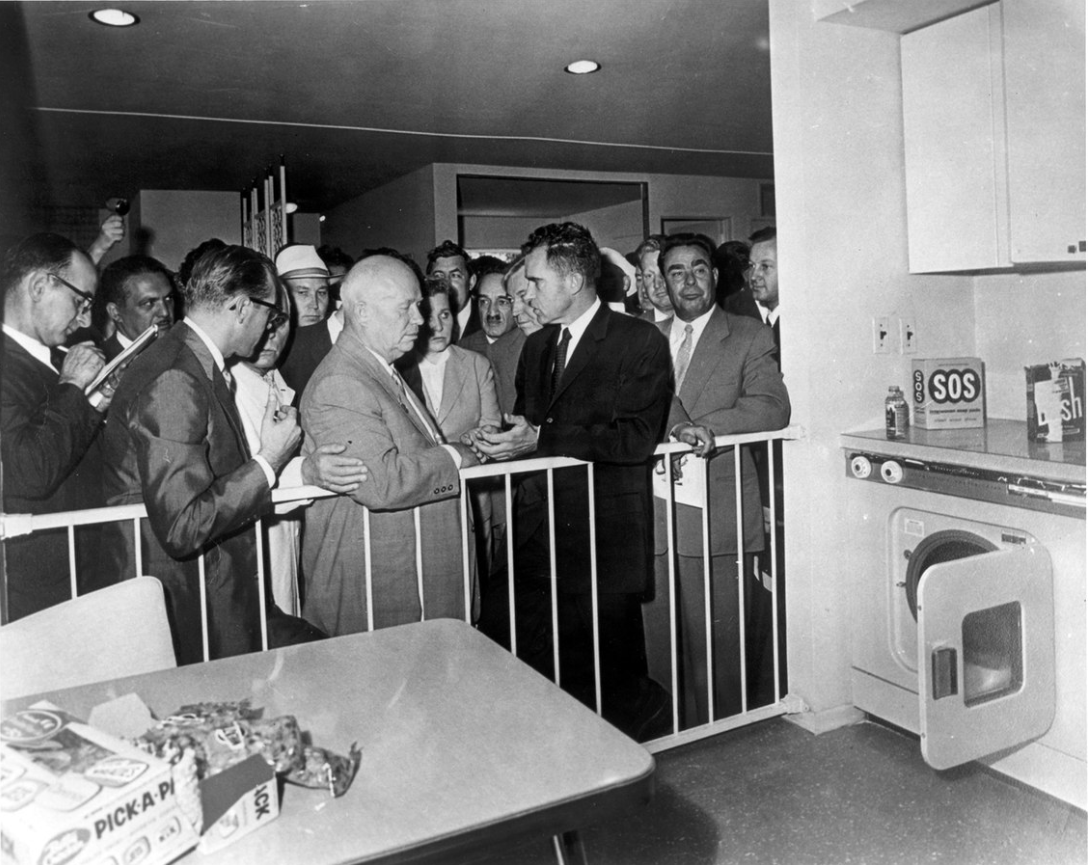
Reforms promised a “socialist abundance” to rival Western consumer societies
Khrushchev wanted to minimise Cold War tensions
He reduced military spending from 12% of GDP in 1955 to 9% in 1958
Reforms to light industry
Investment was redirected to increase the production of textiles and footwear
Successes of light industry reforms
By 1965, the USSR was producing about 800 million pairs of shoes per year
This was a significant increase on pre-war levels
Failures of light industry reforms
Production in the light industry often emphasised hitting targets rather than meeting real consumer needs
Clothes and textiles were often ill-fitting, uncomfortable, or made from poor materials
Shoes were mass-produced but frequently low durability, with many pairs wearing out quickly
Some light industry required thin sheet steel, but production targets were set by weight
This caused products, like light fittings, to be too heavy to hang on the walls
Examiner Tips and Tricks
Students often struggle to understand the difference between light industry and consumer goods.
Many consumer goods come from light industry. For example, textiles (light industry) are used to make clothes (consumer good). However, some light industries produced intermediate materials, like chemicals or synthetics, that were used in other industries rather than going straight to consumers.
Reforms to the chemical industry
Khrushchev placed big investment in chemicals to modernise agriculture and industry
Expansion of fertiliser production aimed to boost crop yields in collective farms
Successes of chemical industry reforms
Production of wool fabrics increased by 70% between 1950 and 1965
Synthetic fibre output increased by 241,000 tons
Failures of chemical industry reforms
Although chemical output increased, targets were rarely met
Fertiliser was 3.5 million tons short of the target
Synthetic fibres was 200,000 below its target
Reforms to consumer goods
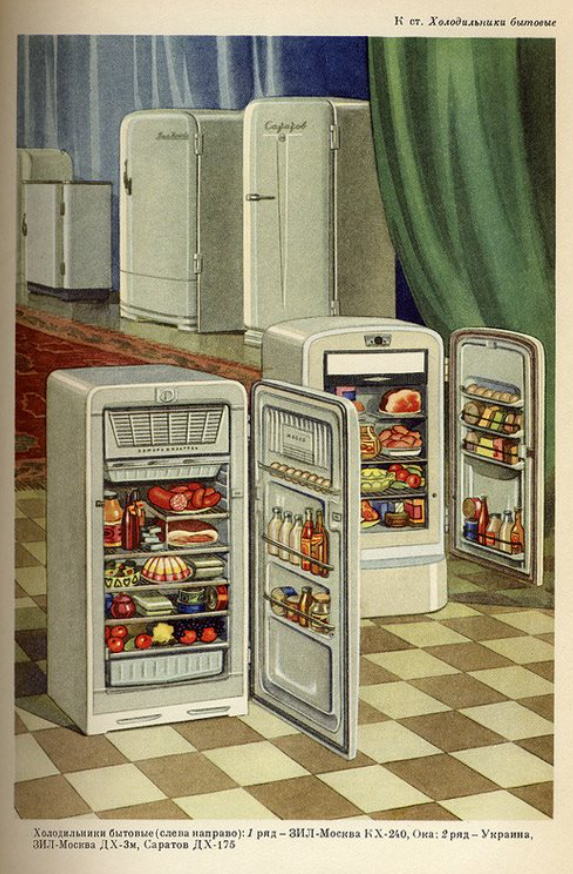
Khrushchev promised more availability of everyday household items, from fridges and TVs to washing machines
Khrushchev hoped to cause a 40% increase in consumer goods production by 1965
Successes of consumer goods reforms
Ownership of fridges rose from just 4% of families in 1955 to 44% in 1968
Washing machines became available to about half of urban households by the mid-1960s
The number of households with radios nearly doubled between 1950 and 1965
Failures of consumer goods reforms
Like light industry, consumer goods were produced to meet targets rather than consumer needs
Factories prioritised the number of items made rather than whether they actually worked well or lasted
Many products were low quality, frequently breaking down or lacking spare parts
The command economy struggled to predict consumer demand, since production was based on central plans rather than the Soviet market
This caused shortages of everyday essentials like clothing
Expensive goods were often sent to warehouses or left unsold as Soviet customers could not afford them
Examiner Tips and Tricks
Try to frame achievements and failures in long- and short-term context.
Did Khrushchev fail to meet his consumer goods targets because of the weakness of his plans or the continual issues with the Soviet command economy?
Weighing up long- and short-term reasons will help you have a clear judgement in essay questions.
Reforms to economic planning
The sovnarkhoz reforms (February 1957)
Khrushchev reorganised the economy by decentralising planning away from Gosplan
105 regional economic councils (sovnarkhozy) were created to replace central ministries
It aimed to:
Make planning more responsive to local needs
Reduce excessive bureaucracy in Moscow
Results of the sovnarkhoz reforms
The changes caused chaos and duplication of work
Factories were uncertain whether to follow directives from regional councils or Gosplan
Frequent changes undermined stability, with managers spending more time navigating bureaucracy than improving output
Step back towards centralisation (1958–64)
Khrushchev partially reversed decentralisation, giving greater powers back to Gosplan
This back-and-forth between decentralisation and centralisation left the planning system inconsistent and unstable
Party officials joked that the Seven-Year Plan was "three plans a year"
It made it hard, even impossible, for the USSR to meet industrial targets
Impact of the Cold War
Khrushchev’s economic reforms were constantly disrupted by the Cold War
The USSR felt pressure to keep up with the USA in both military strength and the space race
Crises in Berlin (1961) and Cuba (1962) brought the world close to nuclear war
By 1964, military spending increased to 11% of Soviet GDP
Khrushchev had less money to invest in his economic reforms
This reduced the ability to:
Meet industrial targets
Continue growing the Soviet economy
Eventually, this level of spending proved unsustainable for the Soviet economy
Examiner Tips and Tricks
Khrushchev’s policies were not happening in isolation. It is important to understand the wider Cold War context of his reforms.
Whilst you do not need to know excessive detail about the Cold War, consider how international crises and ideological conflict caused issues in the Soviet economy.
Did Khrushchev's economic reforms help or hinder the Soviet economy?
Historians debate whether Khrushchev’s reforms were a genuine step towards modernisation or whether they simply exposed the weaknesses of the Soviet system
His reforms helped modernise the USSR
Reforms raised living standards and diversified the Soviet economy
The focus on chemicals and consumer goods was a break from Stalinist priorities, showing an attempt to modernise
Key historians
"In 1961 a new Party Programme was published, the first since 1919. Forecasting that the Soviet Union would overtake the United States' economy by 1970, the programme projected that Communism would be built by 1980, ensuring 'an abundance of material and cultural benefits for the whole population' so that 'everyone will live in easy circumstances'. The Soviet economy grew by almost 10 per cent a year between 1955 and 1960. Fridges and TVs were introduced in many Soviet homes. There was a boom in construction, allowing millions of families to move into apartments on their own. The Sputnik programme was the highest symbol of Soviet progress. In 1961, Gagarin became the first man to journey into space. Soviet science and technology gave the country huge prestige in the Third World. For countries struggling to free themselves from colonial rule and US dominance the Soviet 'economic miracle' offered an alternative." - Orlando Figes, A People’s Tragedy (1996)
"High-rise apartment blocks were put up in all cities. Diet went on improving. Meat consumption rose by fifty-five per cent between 1958 and 1965 alone. Bridges, televisions, and even washing-machines entered popular ownership. The hospital and education services were free and universally available.; rents, home heating, and cooking fuel were very inexpensive. Labour discipline was relaxed. Unemployment was practically unknown. Wages rose after 1953 and kept on rising. In the RSFSR between 1959 and 1962, for instance, they increased by seven per cent. General financial provision had also been introduced for those who had retired from work. In fact, the minimum annual pension was set at thirty roubles and was barely sufficient for subsistence; but Khrushchev had made a start in tackling the problem and jobs were anyway available for many elderly citizens as concierges, doorkeepers, and hotel cleaners." - Robert Service, A History of Modern Russia from Nicholas II to Vladimir Putin (2005)
Poor planning hindered his reforms
Reforms promised more than they delivered.
Lack of investment, inefficiency, and poor quality control meant most targets were missed.
Key historians
"The centralised system also proved inherently clumsy in its effects at the point of production. If success indicators set by the planners were very detailed, initiative and innovation at factory level were prevented. But if they were imprecise, factories produced what it was easier to produce, rather than what was wanted. Control of quality through centrally determined indicators also proved very difficult... At the same time, the sellers markets led each individual ministry or sub-ministry to seek to become a self-contained 'empire', carrying out wasteful backward integration in order to control its supplies... In 1954-6, the central authorities undertook step-by-step decentralisation. They sought to shed some of the powers by reducing the number of planning indicators set by government. The intention was that each ministry responsible for a particular industry would devolve some of its authority to its departments and to individual state firms. The reform was on the whole unsuccessful. Ministries used their increased authorities to bind their 'empires' more closely together." - R.W. Davies, Soviet Economic Development from Lenin to Khrushchev (1998)
"Long term strategic planning was characterized by a tendency where politics and ideology took precedence over economic considerations, and the indoctrination of the population replaced material incentives for labor. Khrushchev’s economic plans were often shaped by the dynamics of political maneuvering, serving the primary goal of consolidating power... despite the declared emphasis on a “consumer” orientation in national economic planning, significant challenges persisted in plan implementation. For instance, discussions on the plan and budget for the development of the national economy for 1963 revealed disparities in overfulfillment in heavy industry. Khrushchev himself emphasized: “We now have a large overfulfillment of metal and steel. And that’s good, of course. But we have shortfalls in textiles, comrades. Now this is a contradiction, because these are budget savings. Then it’s about meeting the needs of the people.” However, despite criticism, this problem was constantly reproduced. A year later, Khrushchev also noted that “the overfulfillment was due to heavy industry and the underfulfillment of the light industry plan,” which, according to him, violated the decisions of the 21st Congress of the CPSU. This recurrent pattern reflected the systemic issues and institutional hurdles that impeded effective economic planning and implementation during the “Khrushchev era.” - E.T. Artemov & E.G. Vodichev, Economic Strategies in the “Khrushchev Decade”: Illusions and Disappointments (2024)
Examiner Tips and Tricks
The Edexcel A Level Russia, 1917–91: from Lenin to Yeltsin exam does not require you to use historians' interpretations in this section of the course.
However, to achieve top grades at A Level History, it is recommended that you do wider reading. Read extracts from historians to understand the key areas of debate around topics covered in the course. This will help you to form your own opinions, ready to answer essay questions in the exam.

Unlock more, it's free!
Join the 100,000+ Students that ❤️ Save My Exams
the (exam) results speak for themselves:

Was this revision note helpful?