Representative & Direct Democracy (Edexcel A Level Politics): Revision Note
Exam code: 9PL0

Representative democracy
Representative democracy is a system where citizens elect people or political parties to make decisions and govern on their behalf, rather than participating directly in law-making
E.g. In the 2024 General Election, 29 million voters elected 650 MPs, giving the Labour Party a majority with 411 seats
Democracy comes from the Greek words ‘demos’ and ‘kratos’ and can be literally translated as ‘rule of the people’
Features of representative democracy
1. Accountability
Representatives must justify their decisions and actions to voters at election time
If voters are unhappy with performance, they can remove the representative or the governing party
This creates a continuous incentive for MPs and governments to act in the public interest
E.g. In the 2010 General Election, Labour lost power after voter dissatisfaction with issues such as the financial crisis and leadership
2. Frequency
Elections occur on a predictable timetable, giving stability and regular opportunities for democratic input
Fixed terms help ensure fairness by preventing governments from calling elections purely for political advantage
E.g. In the UK, General Elections are typically held every 5 years under the Fixed-term Parliaments Act
3. Practicality
Representative democracy allows complex decisions to be made by people with the time and resources to analyse issues in depth
It works effectively in large, modern states where direct participation by millions would be unrealistic
Representatives can consult experts, committees and evidence before making decisions
4. Expertise
Those elected are expected to bring a range of skills to their role, such as
an understanding of the law
awareness of social issues and cultural backgrounds
strong spoken communication abilities
the ability to assess information and draw logical conclusions
being able to listen carefully and respond appropriately
clear, logical reasoning when solving problems
a careful approach with strong attention to detail
Evaluating representative democracy
Advantages | Disadvantages |
|---|---|
|
|
Direct democracy
Direct democracy is a system where citizens make political decisions themselves by voting on individual issues rather than electing representatives to decide for them
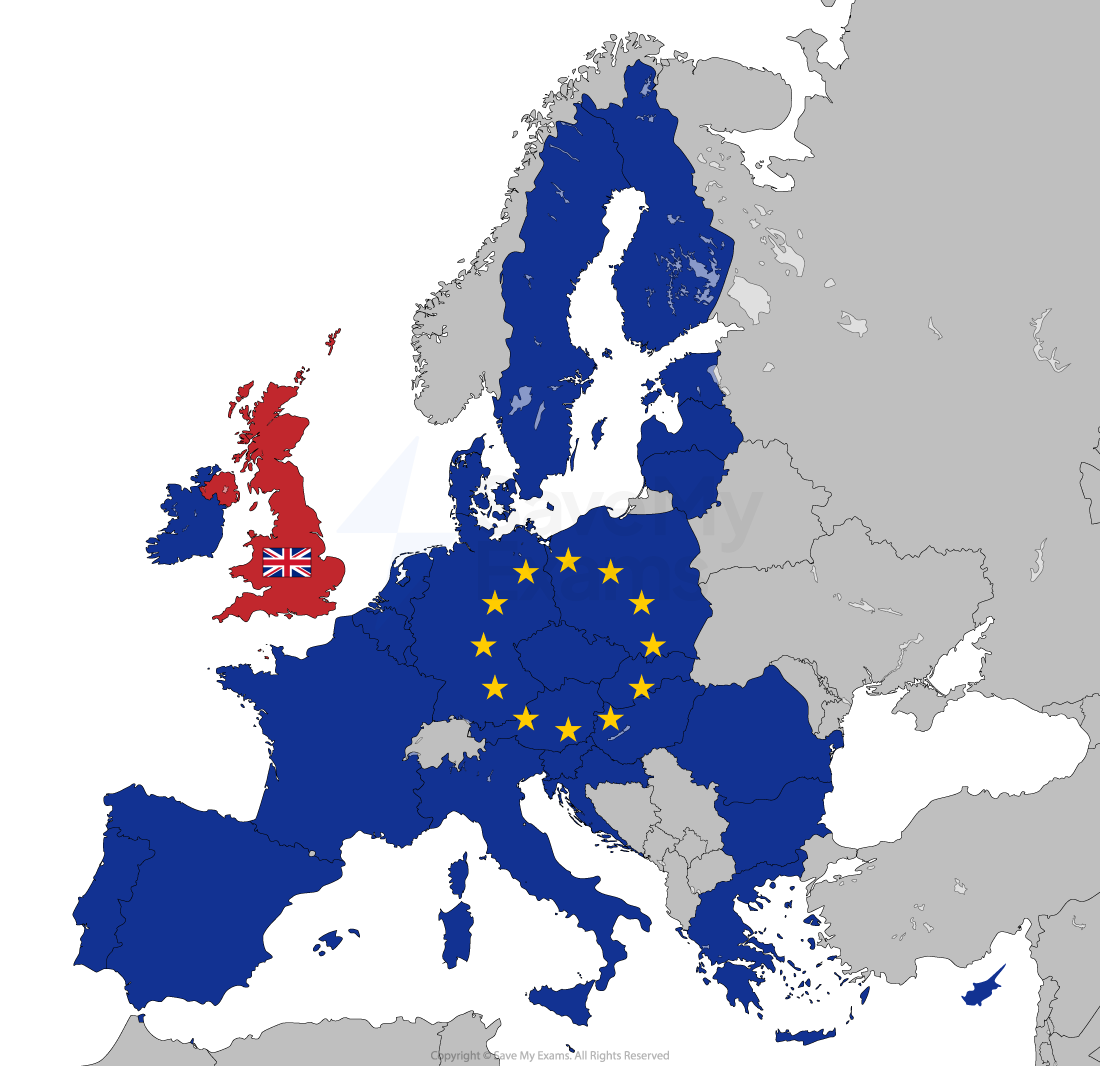
E.g. In the 2016 Brexit referendum, 33.5 million voters chose to leave the EU by 52% to 48%
Features of direct democracy
1. Accountability
Citizens make the decisions themselves, so responsibility cannot be passed to elected representatives
Voters must live with the direct outcomes of their choices, increasing the sense of ownership
2. Frequency
Decisions are made whenever an issue arises rather than waiting for a scheduled election
This allows a more immediate response to public concerns or emerging issues
3. Practicality
Effective when dealing with single, clear issues where the public can give a simple Yes/No response
Direct democracy works best in smaller or more localised settings where participation is easier
E.g. Local referendums on neighbourhood planning or council tax rises in some UK areas
4. Expertise
All citizens can participate regardless of political knowledge, education or experience
This increases democratic participation but may lead to decisions influenced by emotion or misinformation
Evaluating direct democracy
Advantages | Disadvantages |
|---|---|
|
|
Examiner Tips and Tricks
The advantages and disadvantages of representative and direct democracy are broadly inverse - the advantages of representative democracy can be seen to be the disadvantages of direct democracy, and vice versa.
Case Study
Evaluating Direct Democracy
The Brexit referendum demonstrates the advantages and disadvantages of direct democracy
Advantages
33.5 million voted, a turnout of 72.2% – highest since the 1992 General Election, showing strong public participation and legitimacy for the decision
The result was 52% voting to leave. Whilst it was close, the outcome was clear and the government acted upon it
Disadvantages
The Brexit vote oversimplified a complex issue into a single “Leave/Remain” choice, leaving a great deal of uncertainty over the UK’s future relationship with the EU
The result created division and tyranny of the majority, as those who voted Remain felt ignored, leading to political and social polarisation
Is UK democracy healthy?
Yes, it is
The UK’s democracy can be considered healthy for a range of reasons
High turnout in referendums showing public desire to participate, lending legitimacy to decisions
Turnout in the 2014 Scottish Independence referendum was 85%
In 2016 turnout for the Brexit referendum was 72%
Growth of the use of e-petitions which have informed Parliamentary action
In 2019, the Revoke Article 50 (leaving the EU) petition gained more than 6 million signatures
Devolution has allowed for local decision making
Scottish universities offer free tuition fees for Scottish students, whilst Mayor of London Sadiq Khan introduced the world’s largest clean air zone in London
Increasing voter choice with third parties becoming more popular
43% of voters cast their vote for a party other than Labour or Conservative in the 2024 General Election
Rights are well protected through legislation and an independent judiciary
E.g. the Human Rights Act 1998 and the Equality Act 2010
No, it is not
However, there are some significant signs that the UK’s democracy is unhealthy
In recent years, turnout has been low in elections
Just 59.7% of people voted in the 2024 General Election and 34% in the 2025 local elections
The House of Lords is unelected but has considerable power
E.g. House of Lords objections to the 2024 Rwanda Bill led to considerable delay
The introduction of Voter ID laws in 2023 risks disenfranchising voters
4% of people who did not vote in 2024 said it was due to voter ID requirements
1 in every 1200 voters was not issued with a ballot paper due to not having suitable ID documents
First Past The Post (FPTP) distorts representation
The 2024 election was the most disproportionate ever, with Labour gaining just 33.7% of the vote but 63% of the seats
The lack of a codified constitution means that rights can be changed easily
E.g. the swift introduction of voter ID laws in 2023
The case for democratic reform
Recent examples of democratic reform
The Human Rights Act 1998
This law codified the European Convention on Human Rights into UK law to better protect individuals' rights
Constitutional Reform Act 2005
This led to the creation of the UK Supreme Court (operational from 2009)
Equality Act 2010
This law prevents discrimination on nine protected characteristics, including gender, race and disability
Succession to the Crown Act 2013
This law ensured that it was the first-born child rather than first-born son was next in line to the throne of the UK
Recall of MPs Act 2015
This law allowed constituents to force a by-election if their MP receives a custodial sentence, is suspended from the House of Commons for 10 or more days or is convicted under the Parliamentary Standards Act 2009
E-petitions
From 2015, the House of Commons took responsibility for the e-petitions system
The potential for further reform
Reform | Advantages | Disadvantages |
|---|---|---|
Introduce proportional representation |
|
|
Abolish the House of Lords or make it elected |
|
|
Lower the voting age to 16 |
|
|
Introduce online voting |
|
|

Unlock more, it's free!
Join the 100,000+ Students that ❤️ Save My Exams
the (exam) results speak for themselves:

Was this revision note helpful?