The Established Parties (Edexcel A Level Politics): Revision Note
Exam code: 9PL0

Introduction
The UK’s three main statewide parties — the Conservatives, Labour and Liberal Democrats — each developed from different historical roots and ideological traditions
These origins continue to shape their ideas and modern policies on key areas: the economy, law and order, welfare and foreign affairs
Broad summary of their positions
Conservatives | Labour | Liberal Democrats |
|---|---|---|
|
|
|
Each party’s current policies reflect the ideological traditions that shaped their historical development
The Conservative Party
Origins and historical development
Origins in the 18th–19th centuries as a party focused on stability, tradition and national security
Emphasised evolution, not revolution
Historically balanced two broad ideological strands:
One-Nation Conservatism
The New Right
Key ideological traditions
One-Nation Conservatives | New Right |
|---|---|
|
|
Current factions
One Nation Caucus – centrist MPs, often in Lib Dem-competitive seats
European Research Group (ERG) – hardline on Brexit and immigration
New Conservatives / Northern Research Group – ex-Red Wall MPs prioritising immigration control and “levelling up”
Conservative Growth Group – supporters of Liz Truss’s 2022 tax-cutting agenda
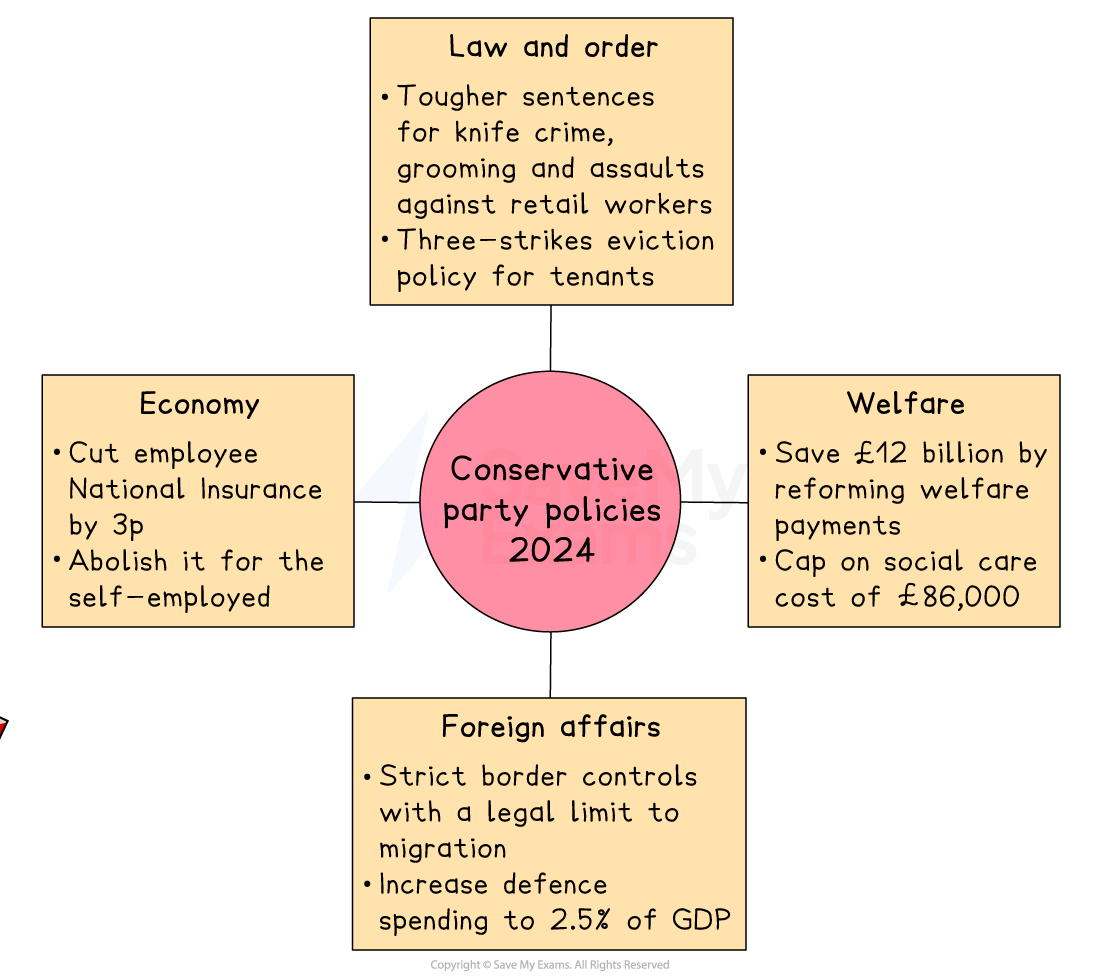
2024 Conservative policies
The Conservatives campaigned on these policies in 2024 and lost the election to The Labour Party
The Labour Party
Origins and historical development
Founded in the early 20th century by trade unions and socialist groups
Aimed to represent the working class and promote social justice
Historically split between:
Old Labour (social democracy)
New Labour (Third Way)
Key ideological traditions
Old Labour (Social Democracy) | New Labour (Third Way) |
|---|---|
|
|
Current factions
Whilst factions evolve and change frequently, some notable ones currently are:
Socialist Campaign Group (SCG): prioritises nationalisation, expansive welfare, and anti-austerity. Prominent figures historically include Richard Burgon and Rebecca Long-Bailey
Labour First prioritises the ‘moderate’ voice of the party, focusing on trade union links, strong local government and national security
Labour Group – prioritises economic growth, backing the ability to build infrastructure over those blocking it
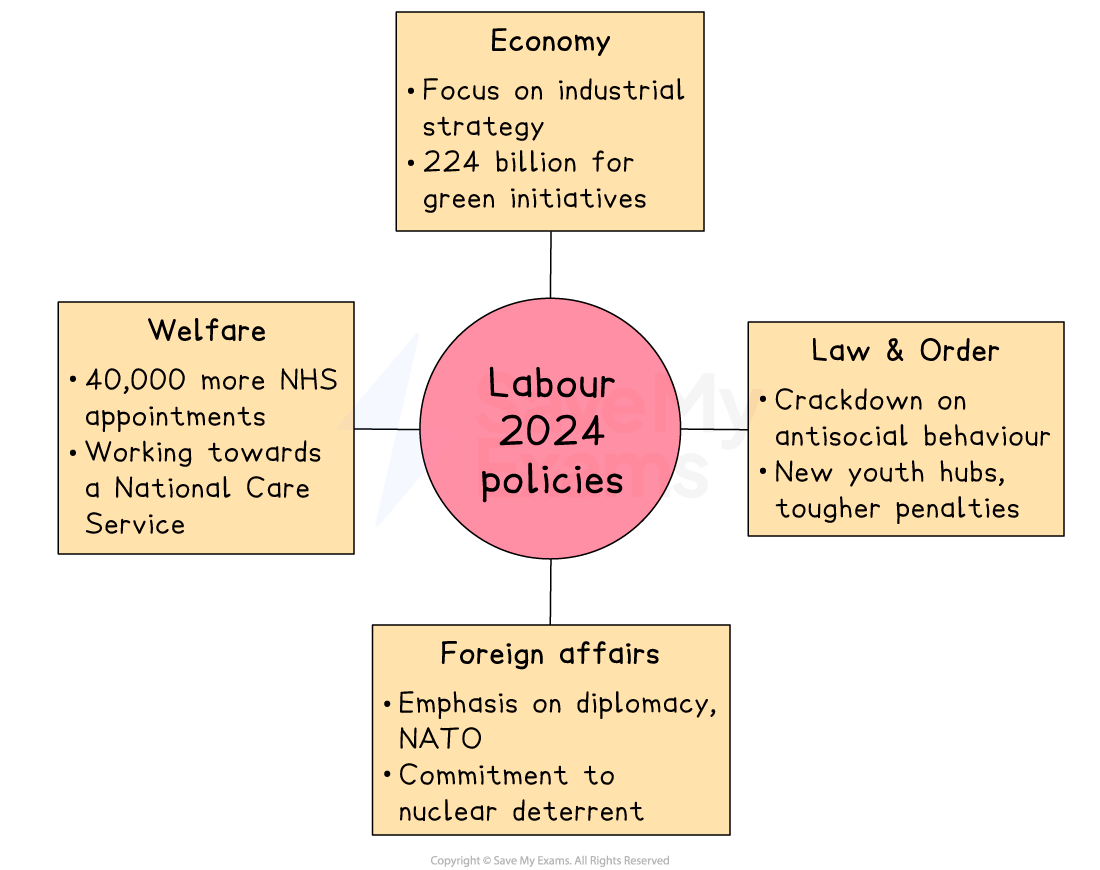
2024 Labour policies
The Labour party campaigned on these policies in 2024 and won the election
The Liberal Democrat Party
Origins and historical development
Long heritage from the 19th-century Liberal Party
The modern party formed in 1988 after the SDP–Liberal merger
Traditionally emphasise individual liberty and constitutional reform
Key ideological traditions
Historically, Liberal Democrats have had two main factions – Classic (Orange Book) Liberals and Modern Liberals
Classic (Orange Book) Liberals | Modern Liberals |
|---|---|
|
|
Current context
In the 2024 election, they returned 72 MPs to Parliament, leading to questions over whether other factions might now emerge
One senior Liberal Democrat commented, “If there’s a tribe, it’s more likely to be a geographic one rather than an ideological one”
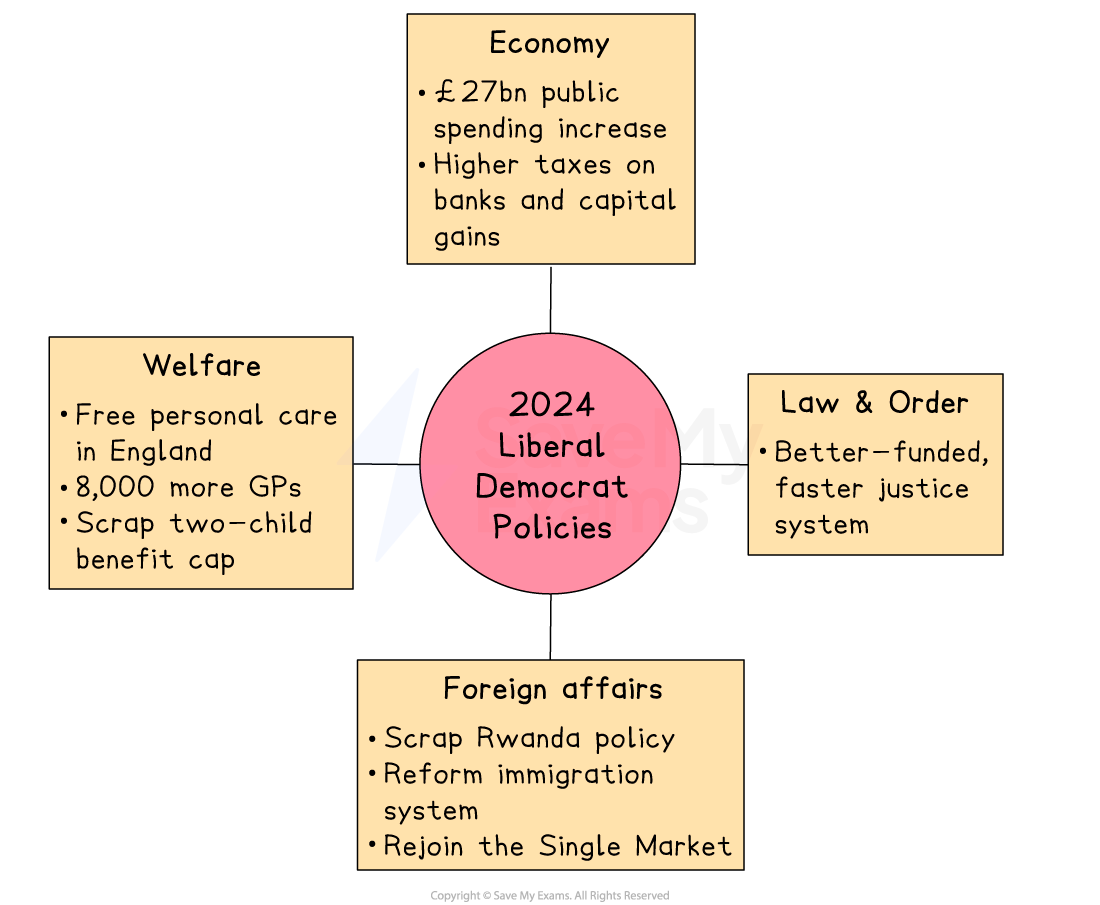
2024 Liberal Democrat policies

Unlock more, it's free!
Join the 100,000+ Students that ❤️ Save My Exams
the (exam) results speak for themselves:

Was this revision note helpful?