Case Study: The 2010 Election (Edexcel A Level Politics): Revision Note
Exam code: 9PL0

National voting behaviour in the 2010 general election
Context
The 2010 election occurred in the aftermath of the 2008 global financial crisis
This had led to rising national debt, pressure on public spending and widespread public concern about economic management
The MPs’ expenses scandal further damaged trust in politicians across all parties, contributing to increased voter volatility and support for non-traditional parties
Election results
Party | Conservative | Labour | Liberal |
|---|---|---|---|
Seats | 306 | 258 | 62 |
Vote share | 36% | 29% | 23% |
No party won an overall majority, resulting in the first hung parliament since 1974.
Voting patterns
Voting behaviour reflected declining loyalty to Labour and the Conservatives and growing openness to third parties, especially the Liberal Democrats, whose vote share rose significantly
Regional variation became more pronounced
The Conservatives made strong gains in the south and midlands
Labour retained support in major cities and parts of the north
Factors affecting the 2010 general election outcome
Economic context and Labour’s governing record
Labour emphasised its experience in government, but voters blamed the party for the severity of the financial crisis and rising national debt
Concerns about economic competence harmed Labour despite Gordon Brown’s reputation as a capable Chancellor earlier in the 2000s
Public dissatisfaction after the expenses scandal
All major parties were affected, but Labour - already struggling with incumbency fatigue after 13 years in power - was hit hardest
Campaign strategies
Conservatives focused on deficit reduction, cutting waste, promoting enterprise and limiting public spending
Labour attempted to defend public services and highlight risks of rapid austerity, but the message was overshadowed by their economic record
Liberal Democrats campaigned on abolishing tuition fees, introducing electoral reform (AV), and defending civil liberties, appealing to disillusioned voters
Leadership and image
Gordon Brown’s leadership was seen as serious but lacked charisma
His bigoted woman comment, caught on a live microphone, reinforced negative perceptions and damaged Labour’s campaign
David Cameron presented a modern, compassionate Conservative image, appealing to middle-class and younger voters
Nick Clegg gained popularity after strong performances in the newly introduced televised leaders’ debates
Media influence
Most national newspapers backed the Conservatives
The introduction of televised debates increased the focus on leadership qualities and personal style more than in any previous election
The impact of the 2010 general election on parties and government
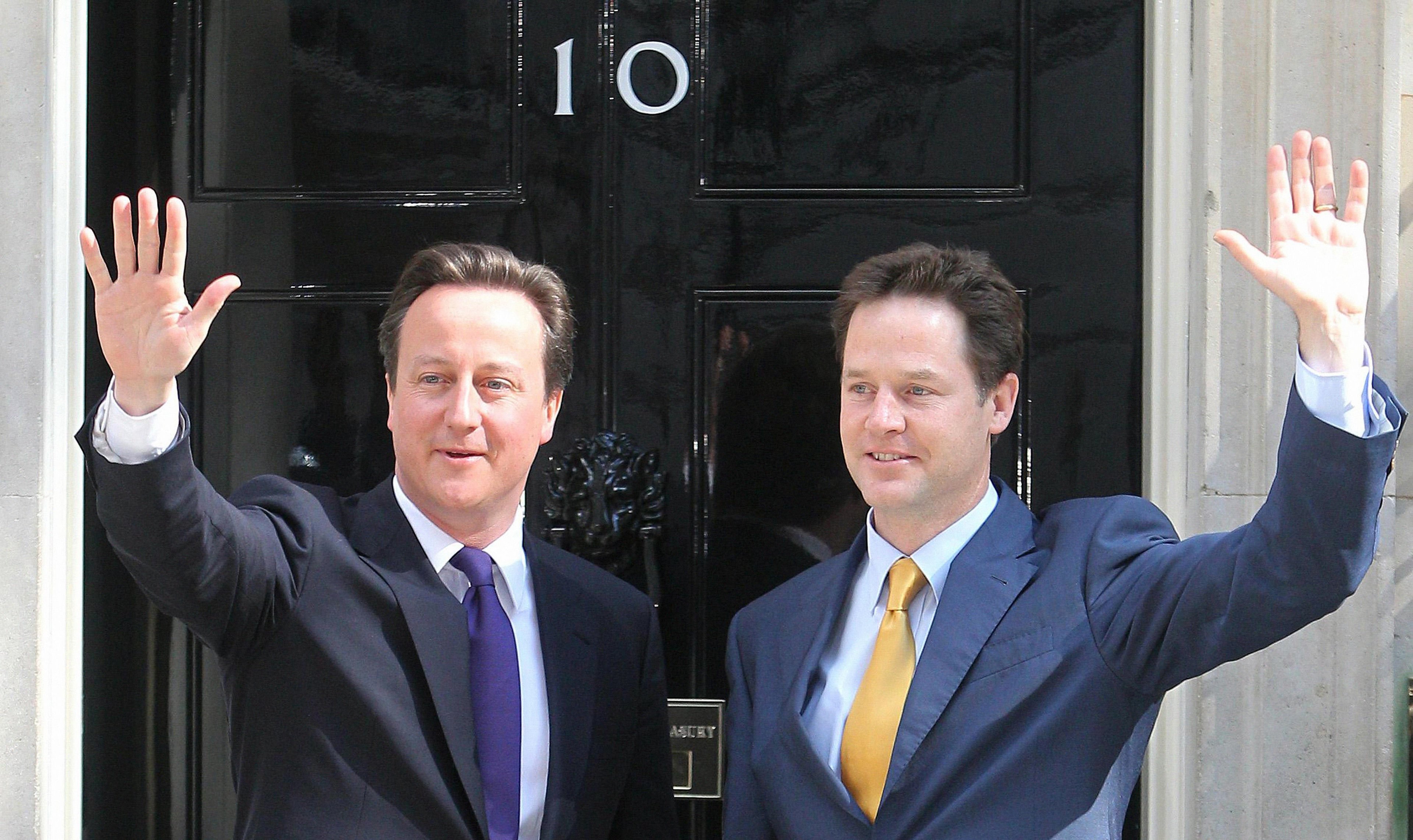
The election resulted in the first Conservative–Liberal Democrat coalition government in modern UK politics
Although coalitions are unusual in the UK, the two parties together won 59% of the popular vote, giving the arrangement democratic legitimacy
They agreed a joint programme, set out in the Coalition Agreement, combining elements of both manifestos
The election demonstrated:
Increasing fragmentation of the party system
The growing importance of third parties
A decline in the traditional two-party dominance
Impact on policy and government direction
The coalition introduced austerity policies aimed at reducing the budget deficit
Major constitutional reforms were attempted, including the (unsuccessful) 2011 AV referendum and House of Lords reform proposals.
Tuition fees were raised sharply, contradicting the Liberal Democrats’ campaign pledge and harming their credibility
Impact on political parties
The Conservative Party used the coalition to present itself as moderate and responsible
This helped prepare the ground for later electoral success under Prime Minister David Cameron
The Liberal Democrats suffered severe electoral damage in later elections due to dissatisfaction with the coalition and the tuition fee reversal
Labour entered a period of leadership change and internal debate about its direction after Gordon Brown resigned

Unlock more, it's free!
Join the 100,000+ Students that ❤️ Save My Exams
the (exam) results speak for themselves:

Was this revision note helpful?
