Parties & Voting Behaviour (Edexcel A Level Politics): Revision Note
Exam code: 9PL0

Issues, valence and governing competence
Issue voting
Voters choose the party they trust most on the salient issue of the election
In 2017, many voters trusted the Conservative Party more to Get Brexit Done
Valence and governing competence
A valence issue is one where all major parties agree on the goal
E.g. improving the NHS
Voters therefore focus not on policy differences but on which party they trust to deliver that goal
Competence becomes a key factor in determining support
Economic performance
Governments may be rewarded or punished for their economic record
John Major’s failure to prevent the collapse of the pound on Black Wednesday (1992) damaged the Conservatives’ reputation for economic competence
This contributed to Labour’s landslide victory in 1997
Leadership and party image
Leadership appeal and competence
Charismatic or trusted leaders can significantly influence election outcomes
Tony Blair in 1997 and Boris Johnson in 2019 successfully presented strong, appealing leadership that delivered large majorities
Leadership failures and negative perceptions
In 2017, Theresa May was criticised for calling an election after previously ruling one out, creating distrust
Her refusal to take part in TV debates reinforced negative perceptions
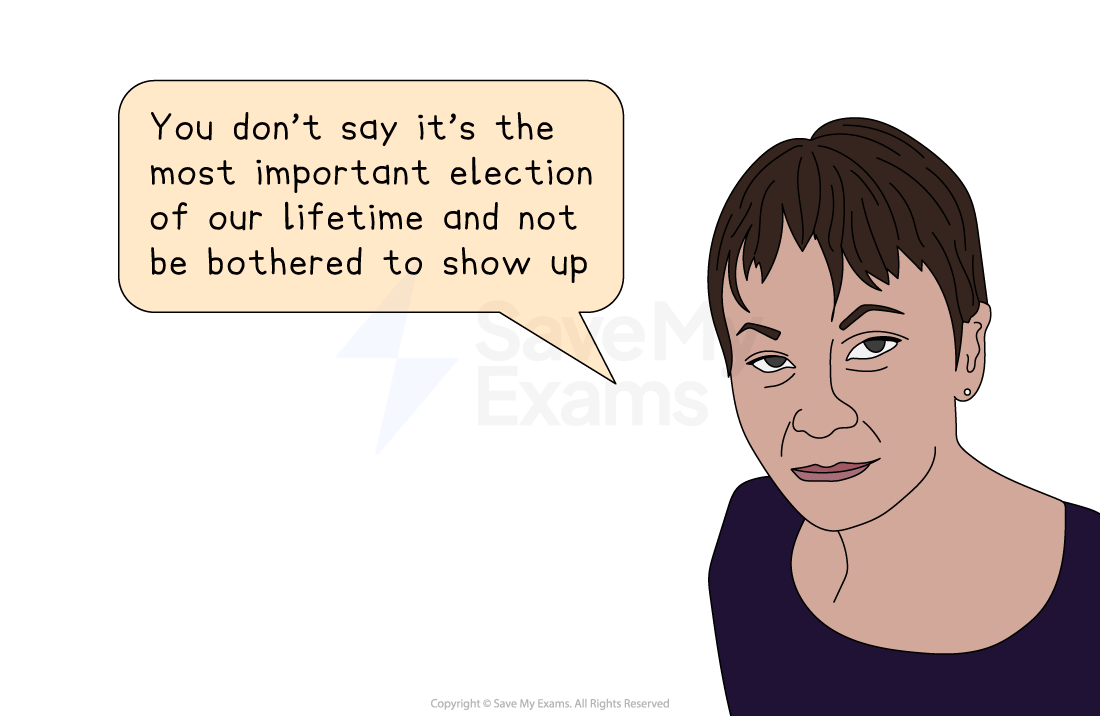
Media influence and campaign events
Media endorsements
Newspaper endorsements have historically aligned with electoral outcomes
A well-known example is The Sun’s endorsement of Tony Blair in the 1997 general election
The Sun had previously supported the Conservatives but switched to Labour, running the headline “The Sun Backs Blair”
Labour went on to win a landslide victory, and the paper later claimed“It’s The Sun Wot Won It”
However, as readership declines, social media platforms like Instagram, TikTok and Facebook allow parties to reach voters directly and challenge traditional media influence
Campaign events and messaging
Parties’ campaign strategies shape voter perceptions of credibility and personality
The Liberal Democrats in 2024 used high-profile stunts to increase visibility and communicate their message
In 2019, Boris Johnson appeared to hide in a fridge to avoid reporters, damaging his image
In 2017, Theresa May’s attempt to avoid controversy, by claiming her naughtiest act was running through fields of wheat, led to widespread ridicule
Tactical voting and scandals
Tactical voting
Tactical voting involves voters casting their ballot to block a disliked party rather than support their first preference
In 2024, nearly half of Labour voters said their motivation was to “get the Tories out”
Websites in 2019 and 2024 facilitated vote swapping to maximise the effect of tactical voting
Scandals affecting voter trust
Scandals reduce confidence in politicians and can shift electoral outcomes.
The 2009 expenses scandal saw several MPs lose their seats
E.g. Jacqui Smith resigned after misusing Parliamentary allowances, including her husband claiming for adult films
The Partygate scandal severely damaged Boris Johnson’s credibility
It led to his resignation in 2022, triggered further instability under Truss and Sunak, and contributed to the Conservatives’ heavy losses in 2024

Unlock more, it's free!
Join the 100,000+ Students that ❤️ Save My Exams
the (exam) results speak for themselves:

Was this revision note helpful?
