Socialist Thinkers & Their Ideas (Edexcel A Level Politics): Revision Note
Exam code: 9PL0

Karl Marx and Friedrich Engels
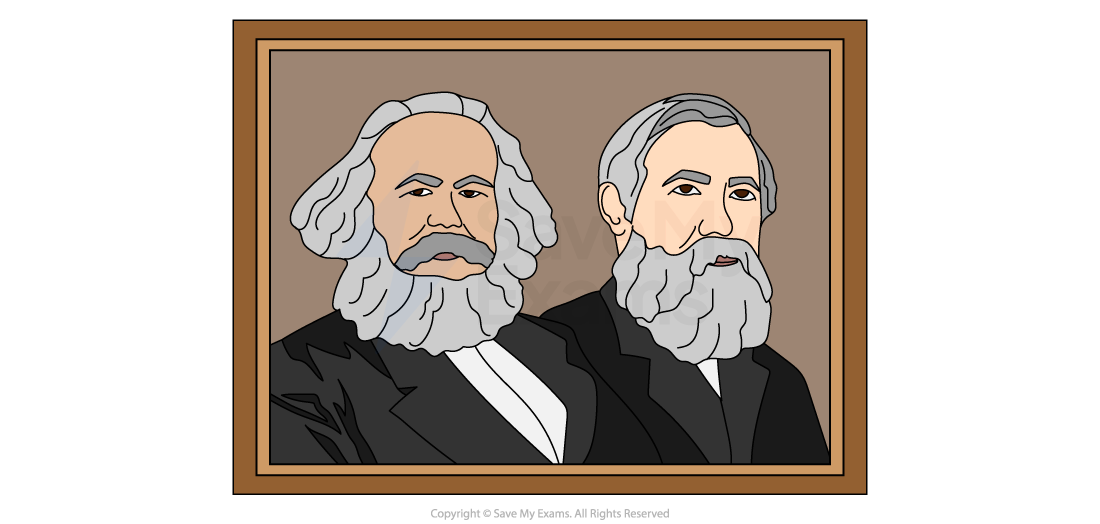
Marx and Engels argued that history is driven by class struggle, expressed through the dialectic
Throughout history change has been created by two sets of opposing values have created conflict which has led to the development of society
Historical materialism is the idea that the way in which production occurs has impacted the shape of society
The mode of production develops and leads to a class struggle
Revolutionary socialism argues that capitalism must be overthrown and private property abolished
Revolutionary class consciousness is where the exploited class needs to develop a common understanding of the need for revolution to remove those that exploit them
Beatrice Webb
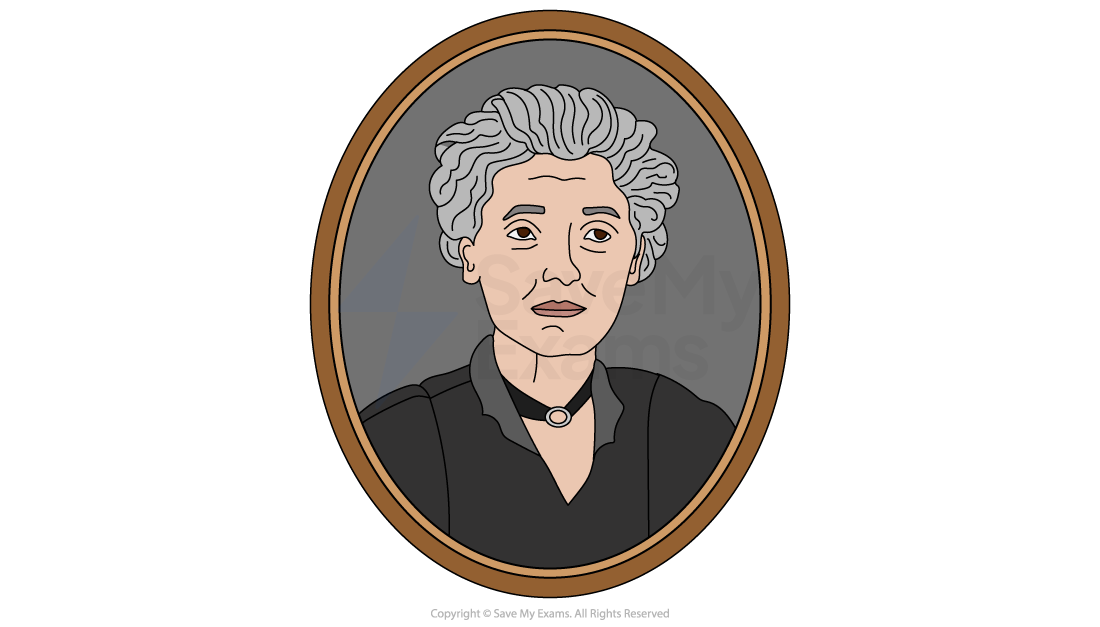
Beatrice Webb argued that socialism should be achieved through gradual reform, a process she described as the inevitability of gradualness
She believed that meaningful social change could be delivered through legislation, public administration and careful state planning rather than through revolution
For Webb, socialism was an evolutionary process
Democratic institutions, informed by expert knowledge, would steadily expand their role in managing the economy and improving social conditions
She supported the growth of the state, not its abolition
An enlarged welfare system, better public services and stronger social protection were essential to reducing poverty and inequality
Rosa Luxemburg
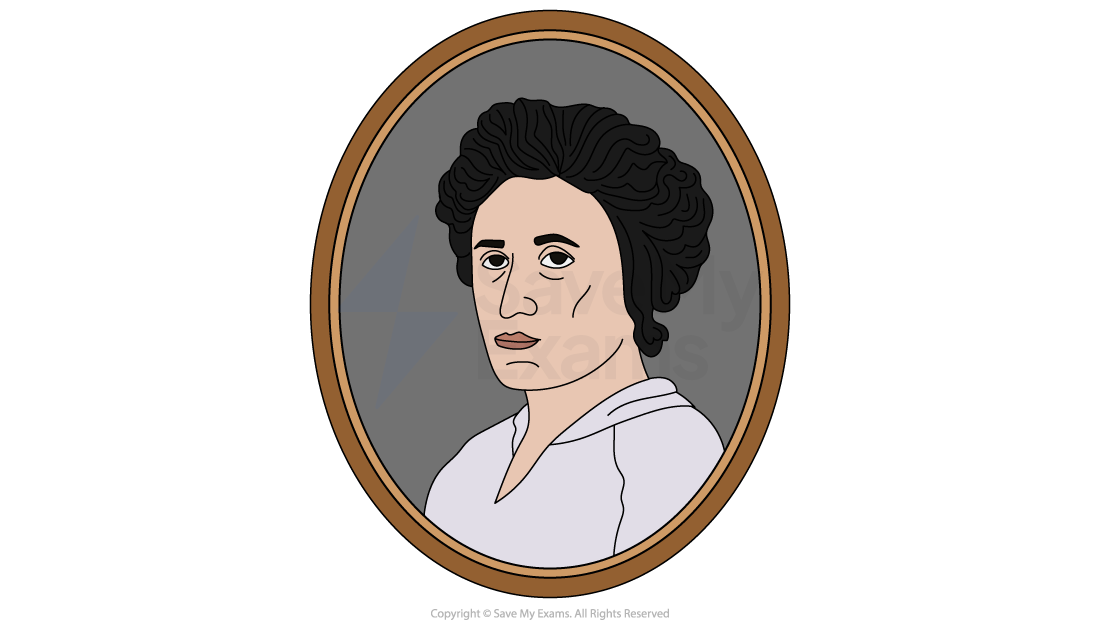
Rosa Luxemburg argued that mass action was essential to empower the working class and bring about genuine socialism
This included strikes, protests and revolutionary mobilisation
She believed that the conditions for such action would naturally emerge from the workers’ ongoing struggle to achieve political democracy and resist exploitation within capitalism
Luxemburg strongly opposed reformism and gradual, evolutionary socialism
She insisted these approaches could only make superficial improvements while leaving the capitalist system intact
For her, meaningful socialist change required the active participation of workers themselves, rather than top-down reforms delivered by the state or political elites
Anthony Crosland
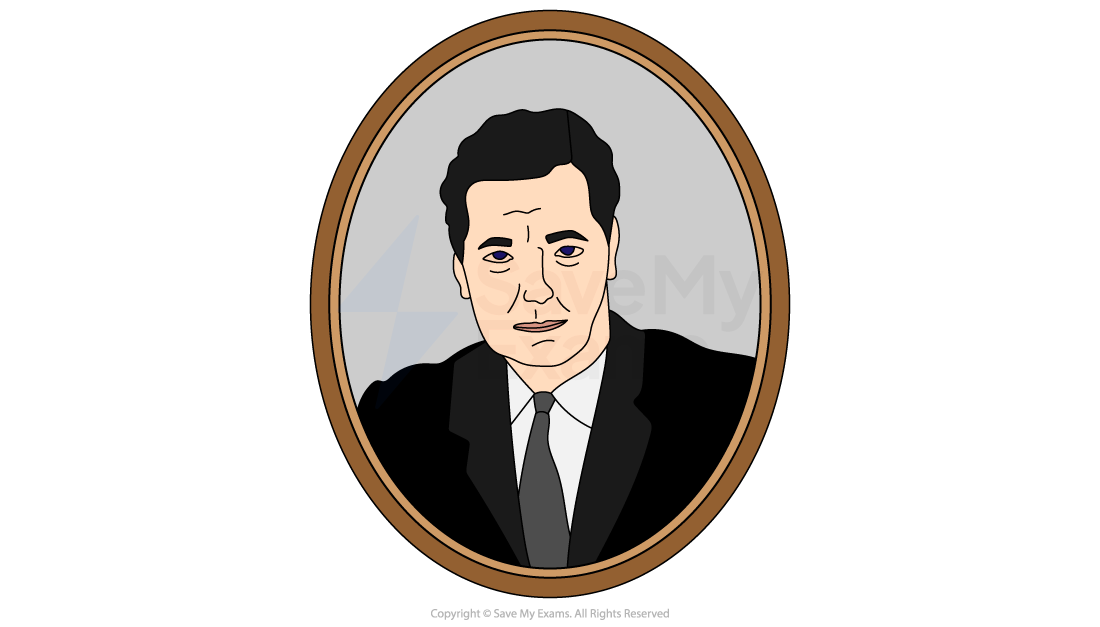
Crosland argued that capitalism, if properly managed, can deliver both social justice and equality
The development of advanced capitalist economies has reduced the older contradictions identified by Marx, such as extreme exploitation or the inevitability of class conflict
This is because modern industry creates higher living standards, a larger middle class and more complex economic structures
Inequality does not, therefore, need to be eliminated through revolution
Instead, it can be reduced through targeted welfare measures, comprehensive education systems and policies designed to expand opportunity
Social democrats support a mixed economy
Private enterprise continues to operate but is regulated and guided by the state to prevent injustice and protect vulnerable groups
Anthony Giddens
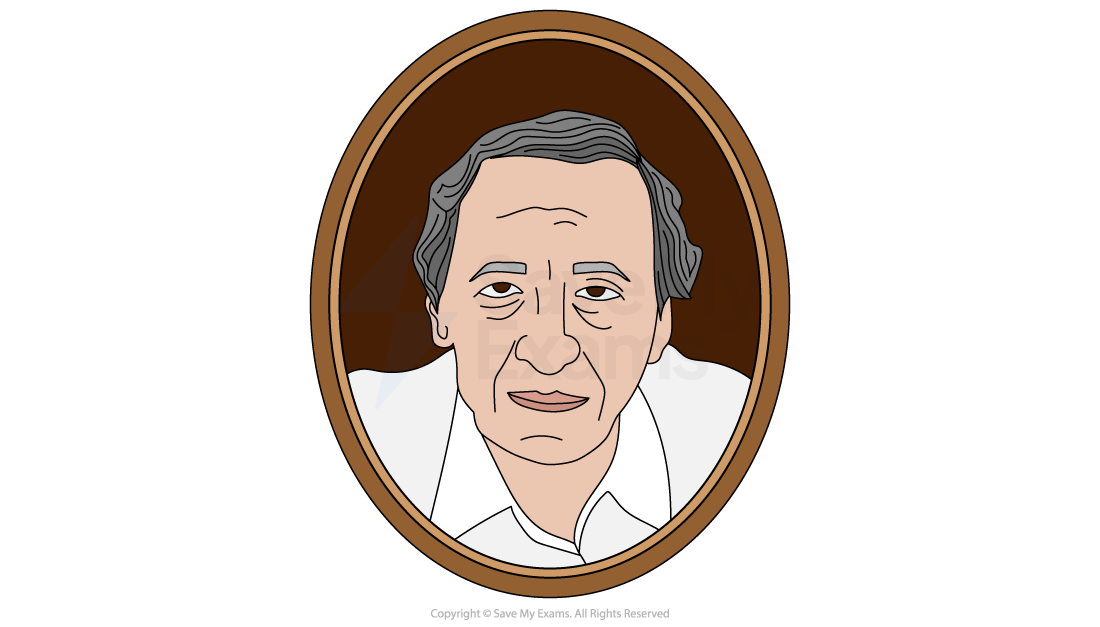
Anthony Giddens argued for Third Way pragmatism, which seeks to combine the efficiency of free-market capitalism with the pursuit of social justice
He believed that the state should not try to reshape society through extensive economic control
Its role should focus on providing the infrastructure, education and public services that allow individuals to take advantage of new economic opportunities
Giddens emphasised equality of opportunity rather than absolute equality
Empowering individuals is the most effective way to reduce disadvantage in a modern, globalised economy
Citizens must recognise their responsibilities to the wider community, not simply to their social class

Unlock more, it's free!
Join the 100,000+ Students that ❤️ Save My Exams
the (exam) results speak for themselves:

Was this revision note helpful?
