Constitutional Change Since 2015 (Edexcel A Level Politics): Revision Note
Exam code: 9PL0

Key constitutional changes since 2015
In 2015, the Conservative Party won the general election, and remained in power until 2024
They introduced a range of reforms, some developing existing provisions and some rolling back previous developments
1. Brexit referendum (2016)
What it did
A referendum was held on whether the UK should remain a member of the European Union
Turnout was around 72%, with 52% voting to leave and 48% voting to remain
Why it was introduced
The last referendum on EU membership had taken place in 1975, leading to claims that a renewed democratic mandate was needed
Support for UKIP had grown due to its policy of leaving the EU, posing a threat to the Conservative Party
As a result, the Conservatives included a referendum pledge in their 2015 manifesto
Impact
The UK left the European Union
Parliamentary sovereignty was reasserted as EU law no longer had supremacy over UK statute law
Problems
The referendum result was close, leaving the country politically divided
It left Northern Ireland in a precarious position as the Republic of Ireland remained in the EU
This ultimately resulted in the Northern Ireland Assembly being suspended over a failure to reach an agreeable Brexit settlement
2. Wales Act (2017)
What it did
Moved Wales from a conferred powers model to a reserved powers model, allowing the Welsh Parliament to legislate on any matter not explicitly reserved to Westminster
Why it was introduced
Wales gained primary legislative powers in 2011
Moving to a reserved powers model brought Wales closer to the Scottish devolution settlement
Impact
The Welsh Parliament was able to legislate over a wider range of policy areas
The significance of this expanded power was particularly evident during the Covid-19 pandemic, when Wales adopted different restrictions from England and Scotland
Problems
Despite the growth in devolved powers, turnout at Welsh elections has remained low
3. English Votes for English Laws (EVEL) (2015–2021)
What it did
Introduced a procedure in the House of Commons giving English MPs a greater say over legislation affecting only England
Why it was introduced
Aimed to address the West Lothian Question, where MPs from devolved nations could vote on England-only matters
Impact
In practice, EVEL was rarely used due to its procedural complexity
Many pieces of legislation that appeared England-only had implications for devolved nations
Problems
Fewer than 50 laws were voted on using EVEL procedures between 2015 and 2021
EVEL was repealed in 2021, suggesting it failed to provide a workable solution
4. Elections Act (2022)
What it did
Introduced a requirement for voters to show approved photographic identification at polling stations
Why it was introduced
The government argued the Act would reduce electoral fraud and increase public confidence in elections
Impact
The Act raised concerns about disenfranchisement
There was a slight reduction in turnout among voters who lacked appropriate ID or arrived at polling stations without it
Problems
According to the Electoral Commission, voter fraud in the UK was already extremely rare
The Act potentially disenfranchised voters without identification, disproportionately affecting minorities and working-class voters
5. Public Order Act (2023)
What it did
Expanded police powers to manage protests
Introduced new criminal offences, including ‘locking on’
Why it was introduced
Responded to disruptive direct action and public order concerns, particularly protests by groups such as Extinction Rebellion and Just Stop Oil
Impact
The Act intensified debate over the balance between the right to protest and the need to maintain public order
Case Study
Public Order Act (2023) used against Just Stop Oil
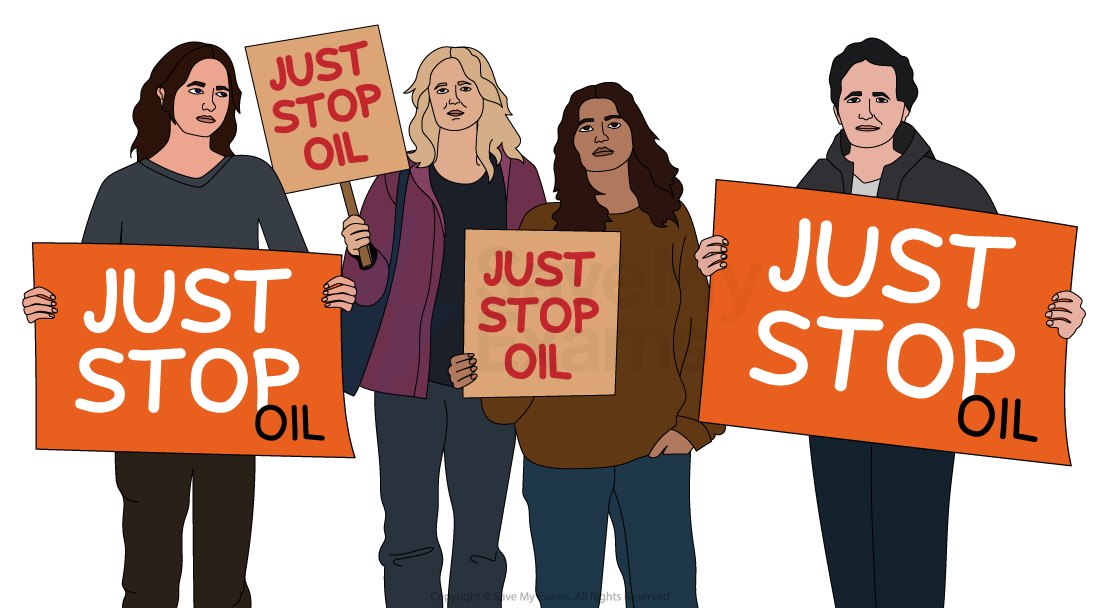
In October 2023, the Public Order Act (2023) was applied during a Just Stop Oil protest in London
Protesters blocked a road near Parliament, disrupting traffic and daily activity
Application of the Act
The Metropolitan Police used Section 7 of the Act, which criminalises interference with the use or operation of key national infrastructure, including major roads
Police intervened quickly and arrested several activists for disrupting transport
This was a significant example of the Act being used in practice
It showed how the new law allows police to act earlier and more decisively against disruptive protests than under previous legislation

Unlock more, it's free!
Join the 100,000+ Students that ❤️ Save My Exams
the (exam) results speak for themselves:

Was this revision note helpful?
