Ministerial Responsibility (Edexcel A Level Politics): Revision Note
Exam code: 9PL0

What is ministerial responsibility?
Ministerial responsibility refers to the constitutional conventions that make ministers accountable to Parliament for their actions and decisions
It exists in two forms:
Individual Ministerial Responsibility (IMR)
Collective Ministerial Responsibility (CMR)
These conventions are central to democratic accountability and the relationship between Parliament and the executive
Individual ministerial responsibility (IMR)
Individual Ministerial Responsibility (IMR) is the constitutional convention that ministers are accountable for:
their personal conduct
the actions and performance of their department
Under IMR, ministers are expected to:
give accurate information to Parliament
take responsibility for departmental failures
maintain high standards of personal behaviour
resign when their position becomes untenable
Why IMR matters
Protects the integrity of government
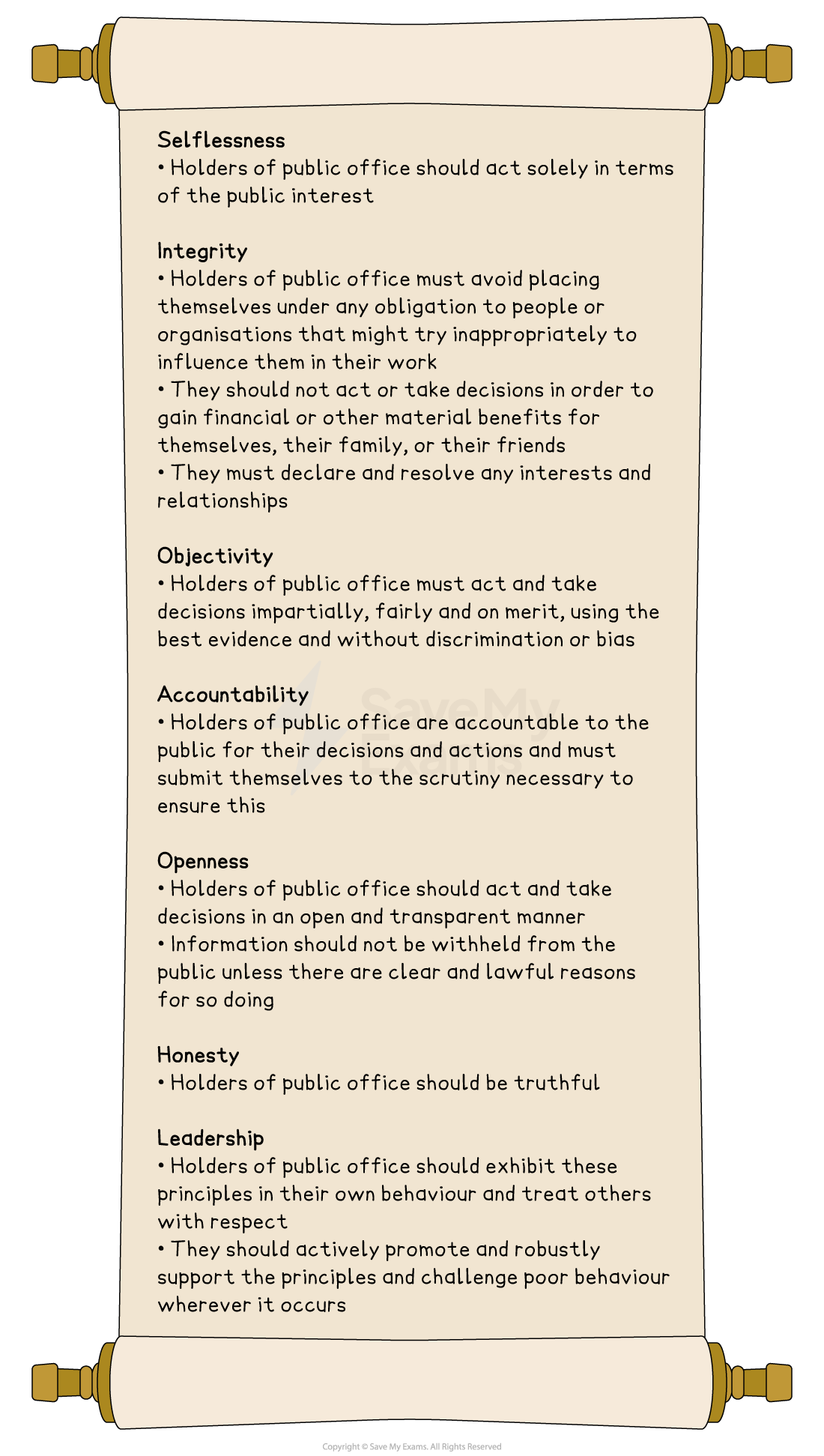
Ministers are expected to uphold the Nolan Principles of public life, including integrity and accountability
The Nolan Principles
Maintains parliamentary accountability
Ministers must answer to Parliament for departmental actions, reinforcing parliamentary sovereignty
Creates a culture of responsibility
Ministers remain accountable even where civil servants make mistakes
This helps uphold civil service neutrality
Helps ensure public confidence
Resignations demonstrate that misconduct has consequences and reinforce transparency
Case Study
Individual ministerial responsibility - Matt Hancock (2021)
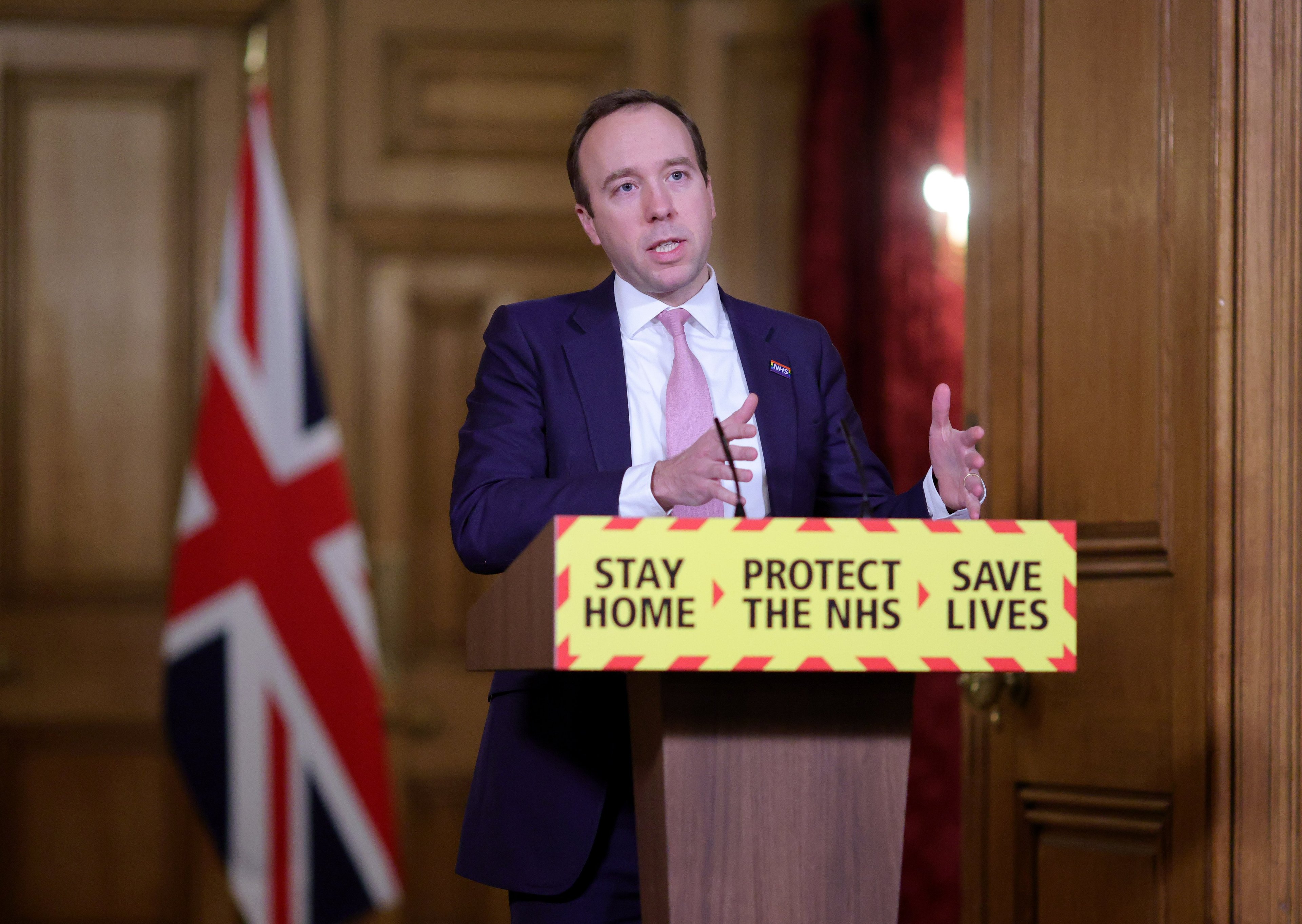
Matt Hancock was Secretary of State for Health and Social Care during the Covid-19 pandemic
Public trust in government health rules was especially important during this period
The issue
CCTV footage emerged showing Hancock breaching his own department’s Covid-19 social distancing rules by kissing a colleague
The incident involved personal misconduct rather than departmental policy failure
Outcome
Hancock resigned under intense media and public pressure
He accepted that he had let people down
This demonstrated that IMR is now strongly influenced by media scrutiny and public confidence
Case Study
Individual ministerial responsibility - Gavin Williamson (2020 and 2022)

Gavin Williamson was Secretary of State for Education during the Covid-19 pandemic
His department was responsible for GCSE and A-level grading after exams were cancelled
Actions taken
In 2020, the Department for Education oversaw the use of an algorithm that downgraded thousands of students
Despite criticism, Williamson did not resign and remained in office
In 2022, he was accused of bullying behaviour and sending abusive messages to colleagues
Outcome
Williamson resigned in 2022 following allegations of personal misconduct
He did not resign following the 2020 departmental failure
This demonstrates that IMR is inconsistently applied and personal misconduct is more likely to lead to resignation than departmental failure
Collective ministerial responsibility
Collective Ministerial Responsibility (CMR) is the constitutional convention that:
all ministers must publicly support government decisions
Cabinet decisions are binding on all members of the government
Ministers who cannot support a decision are expected to resign
Why CMR matters
Creates unified executive leadership
Prevents ministers publicly contradicting government policy
Protects Cabinet secrecy
Allows honest debate behind closed doors, encouraging effective decision-making
Ensures clear accountability
Parliament can hold the government collectively responsible for decisions
Prevents policy confusion
MPs and the public can identify the official government position
Case Study
Collective ministerial responsibility - Suella Braverman (2023)

Suella Braverman was Home Secretary in 2023
Policing of pro-Palestine protests was politically sensitive
Actions taken
Braverman published an unauthorised newspaper article criticising the Metropolitan Police and accusing them of bias
Her comments contradicted the government’s position and were not approved by Number 10
Outcome
Prime Minister Rishi Sunak dismissed Braverman from Cabinet
This demonstrated that CMR remains a powerful tool for prime ministerial discipline
It reinforced the principle that ministers must not publicly contradict government policy
How effective is ministerial responsibility?
IMR and CMR remain important constitutional conventions
Their enforcement is:
inconsistent
shaped by political context
heavily influenced by media and public pressure
CMR tends to be enforced more consistently than IMR
Together, they remain central to parliamentary accountability but are no longer applied in a strict or automatic way

Unlock more, it's free!
Join the 100,000+ Students that ❤️ Save My Exams
the (exam) results speak for themselves:

Was this revision note helpful?
