The Prime Minister & Cabinet (Edexcel A Level Politics): Revision Note
Exam code: 9PL0

What is the Cabinet?
The Cabinet is a committee of senior ministers, usually around 20–25, chaired by the Prime Minister
It is the central decision-making body of the UK executive
Cabinet ministers are collectively responsible for government policy and are typically the heads of major government departments
The role of the Cabinet
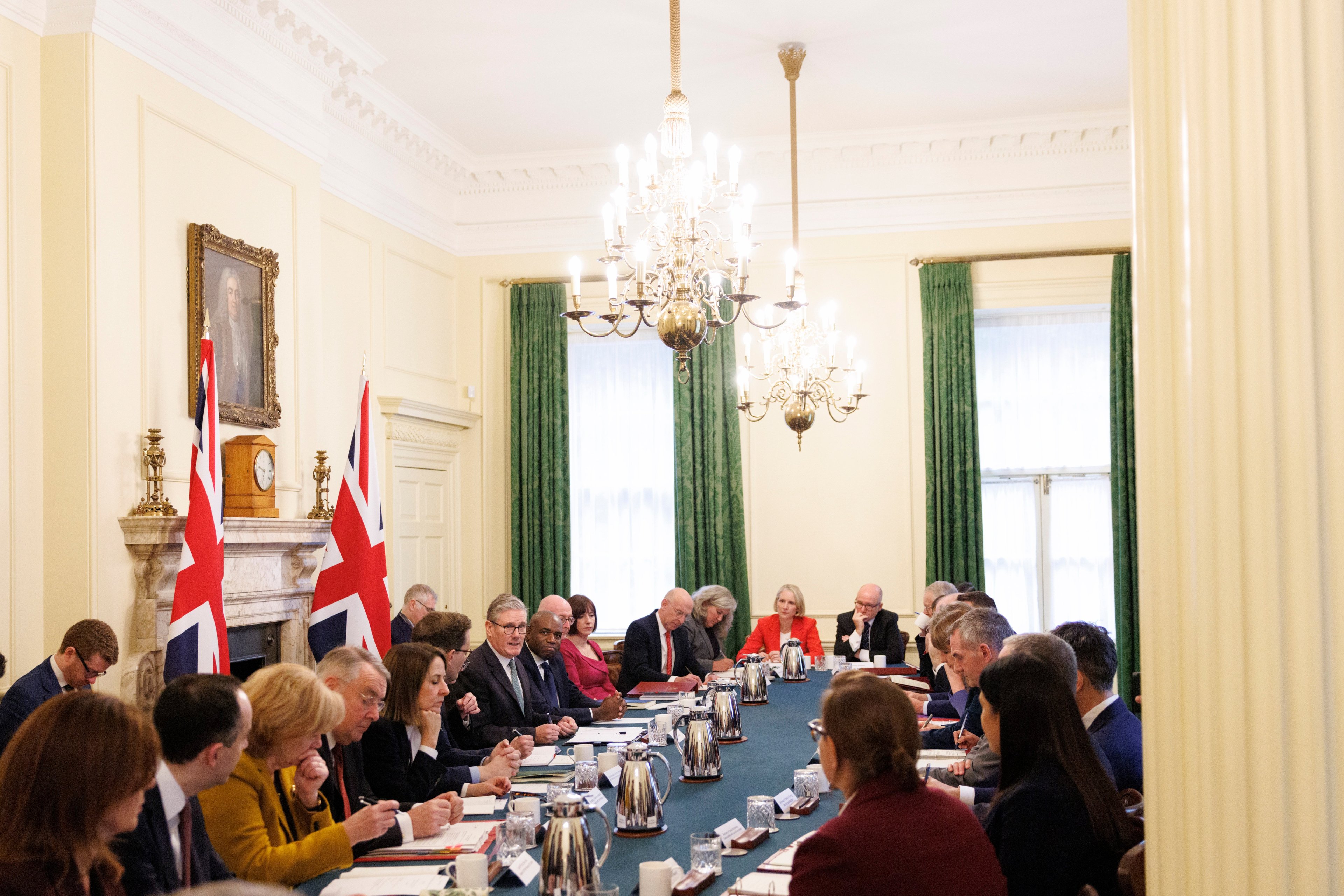
Discussing and agreeing major government policy
Coordinating the work of different government departments
Resolving disputes between ministers
Providing political legitimacy for executive decisions
Acting as a forum for collective decision-making
The Prime Minister’s role in relation to the Cabinet
The Prime Minister is the head of the Cabinet and controls its membership and operation.
The PM:
appoints and dismisses Cabinet ministers
chairs Cabinet meetings
sets the Cabinet agenda
determines the structure and membership of Cabinet committees
Factors affecting the Prime Minister’s choice of Cabinet Ministers
As head of the Cabinet, the Prime Minister uses cabinet appointments strategically to balance political authority, party unity and effective government
1. Loyalty to the Prime Minister
PMs often reward personal loyalty
Loyal ministers are less likely to challenge the PM publicly or in Cabinet
Examples
Rishi Sunak appointed Jeremy Hunt as Chancellor (2022) as a stabilising and loyal figure
Boris Johnson promoted Priti Patel and Dominic Raab (2019) due to their loyalty during the Brexit debates
2. Balancing party factions
Cabinets often reflect different ideological strands within the governing party
Balancing factions helps prevent rebellions and leadership challenges
Examples
David Cameron appointed Eurosceptic Iain Duncan Smith alongside pro-EU figures such as Philip Hammond
Keir Starmer appointed both soft left ministers like Angela Rayner and centrists like Rachel Reeves
3. Ministerial experience and competence
PMs select ministers capable of running complex departments
Experience increases credibility and effectiveness
Example
Starmer’s 2024 Cabinet emphasised experience, including Yvette Cooper’s appointment to the Home Office
4. Public image and media handling
High-profile departments require ministers able to withstand media pressure
Example
Wes Streeting was appointed to Health in 2024 partly due to his communication skills
5. Representational diversity
PMs aim to make cabinets appear representative in terms of gender, ethnicity and background
Example
The appointment of Heidi Alexander to the Transport Department in 2024 meant the Cabinet was entirely state-school educated for the first time
The relationship between the Prime Minister and the Cabinet
The balance of power between the Prime Minister and Cabinet varies depending on political circumstances and leadership style
Prime Ministerial leadership style
Some PMs adopt a collective style, relying on Cabinet discussion
Others adopt a more presidential style, relying on informal decision-making
Examples
Tony Blair used sofa government and informal meetings rather than full Cabinet discussion
The Coalition government relied on The Quad rather than the full Cabinet
Boris Johnson relied heavily on advisers such as Dominic Cummings, causing tension with senior ministers
Party unity and parliamentary majority
A united party and large majority strengthens PM dominance
Division or minority status increases Cabinet influence
Examples
John Major’s divided government reduced his authority
Boris Johnson’s 80-seat majority (2019) strengthened his control
Despite a large majority in 2024, Keir Starmer faced early Cabinet tensions
External crises
Crises can:
increase Cabinet coordination
or centralise power around the Prime Minister
Examples
Covid-19 initially strengthened Cabinet coordination through COBRA
Later stages caused divisions, including disagreements between Sunak and Gove
Liz Truss’s mini-budget crisis (2022) led to Cabinet breakdown and loss of authority
Is the Cabinet significant?
The Cabinet is significant | The Cabinet is not significant |
|---|---|
Can block or change policy
| PM can bypass Cabinet
|
Can force PM resignation
| Patronage limits independence
|
Cabinet committees matter
| Rubber-stamping role
|
Represents party factions
| PM controls committees
|

Unlock more, it's free!
Join the 100,000+ Students that ❤️ Save My Exams
the (exam) results speak for themselves:

Was this revision note helpful?