The EU and UK Government (Edexcel A Level Politics): Revision Note
Exam code: 9PL0

What is the European Union?
The European Union (EU) is an economic and political alliance made up of 27 European countries
It operates as a single market and aims to promote stability on the European continent
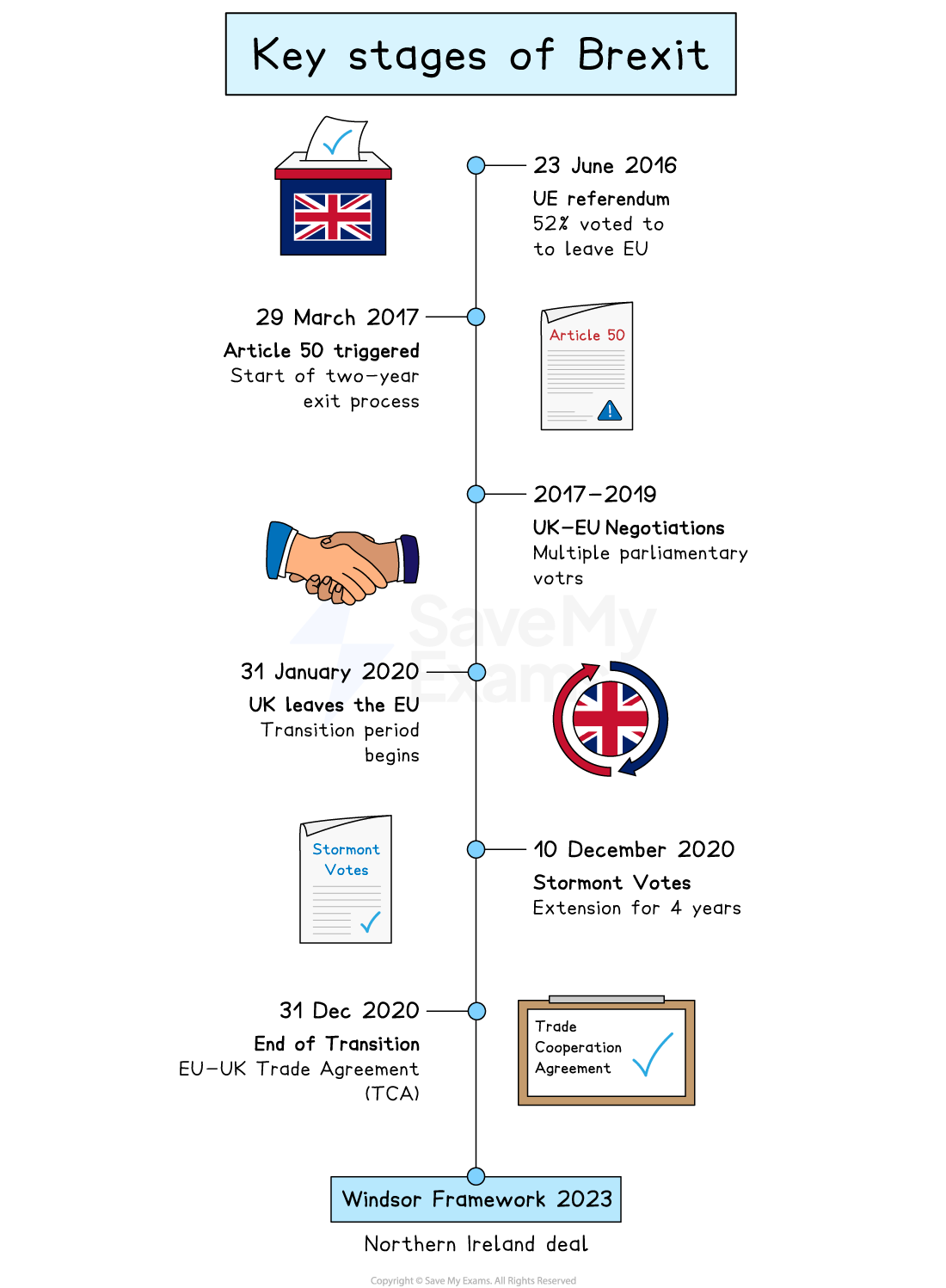
UK voters chose to leave the EU in the Brexit referendum of 2016
The UK officially left the EU on 31 January 2020, reducing the membership of the EU from 28 to 27 members
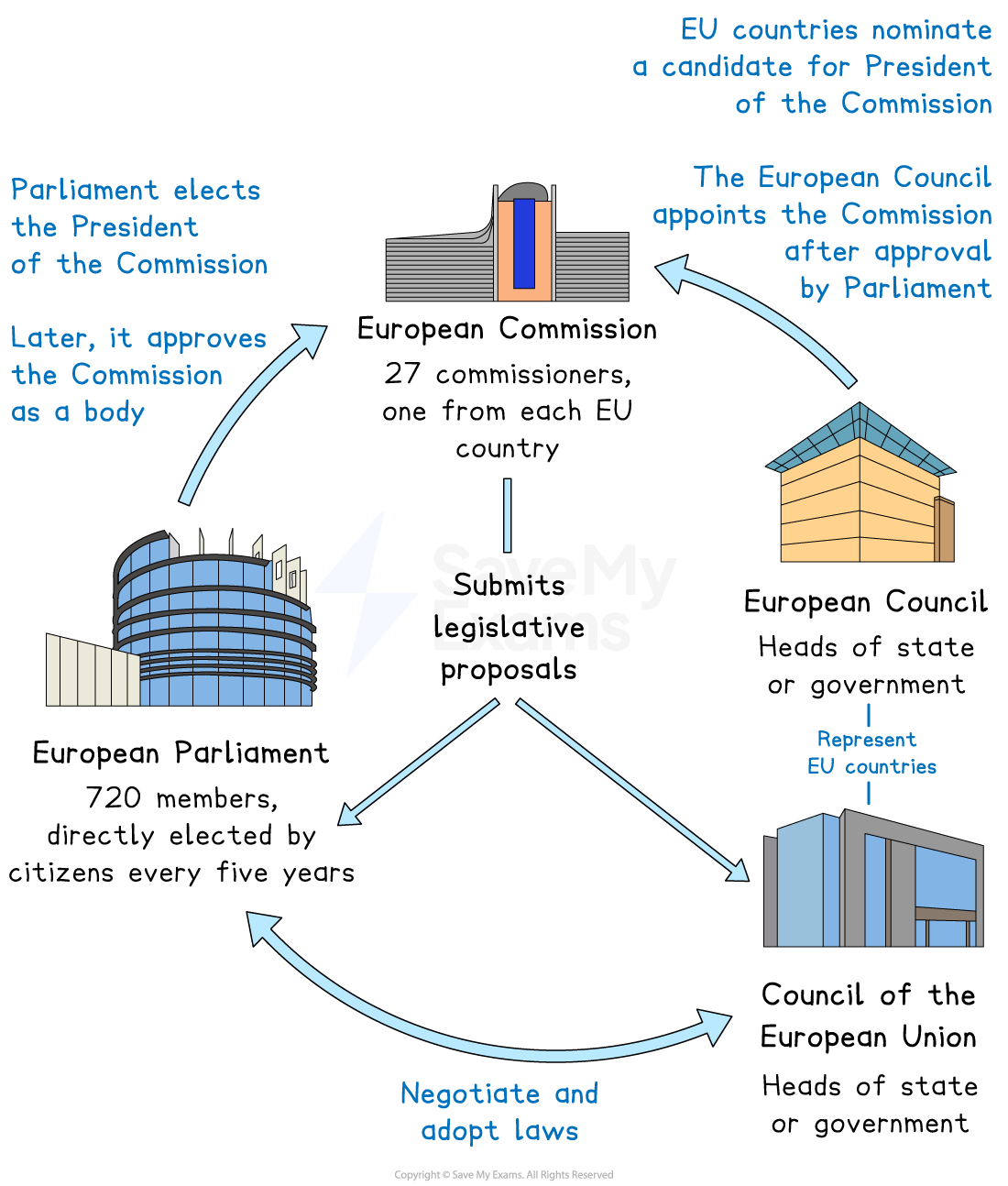
The aims of the EU
The EU was set up initially as an economic community, and therefore its original ‘four freedoms’ were aims designed to support and develop economic prosperity
The Four Freedoms
Free movement of goods
Allows trade across borders without tariffs
Achieved through the EU internal market, customs union, and common regulations
Free movement of services
Enables service providers such as banks, insurers, and other businesses to operate across EU member states
Free movement of people
Allows EU citizens to live and work in any member state
Free movement of capital
Allows investment and financial integration across the EU
The development of the EU beyond an economic union
As the EU evolved beyond being an economic union, it developed further aims
Many of these were laid out in various treaties regarding the EU, beginning with the Maastricht Treaty in 1992
The three pillars of the Maastricht Treaty
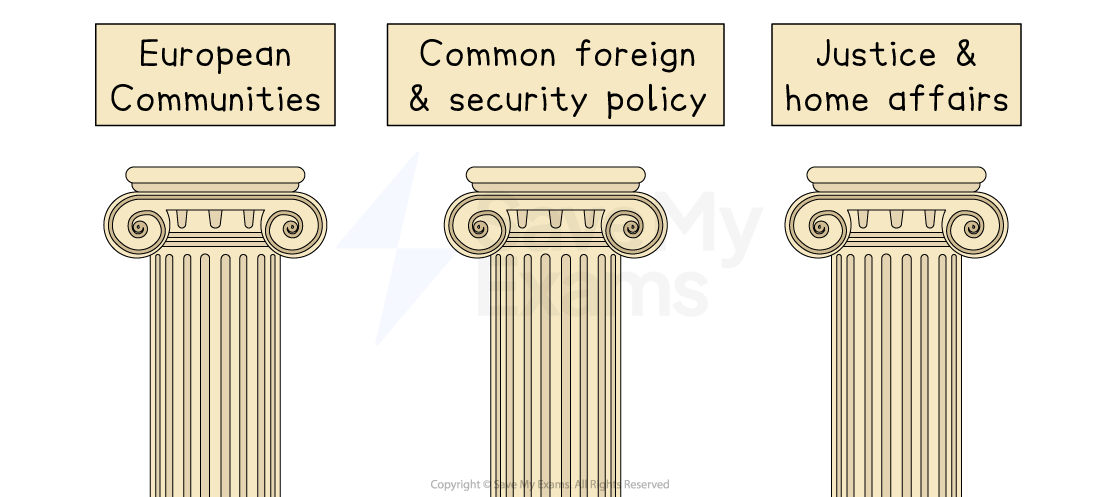
Pillar 1: European Communities
Oversaw economic, social and environmental policies
Aimed to create a monetary union, setting the foundation for the Euro
Managed the single market economy
Crucially resulted in pooled sovereignty from member states
Pillar 2: Common foreign and security policy
Coordinated the foreign policy of member states
Created joint actions
Required cooperation but did not involve surrendering sovereignty
Pillar 3: Justice and home affairs
Aimed to create cross-border police cooperation
Coordinated asylum rules and immigration policy
Member states retained most control, although some issues were later moved to Pillar 1
Brexit and UK parliamentary sovereignty
In 2016, a UK-wide referendum resulted in a vote for the UK to leave the European Union
This led to a range of agreements and legislation to achieve withdrawal
Key stages of Brexit
Outstanding issues following Brexit
Northern Ireland sovereignty concerns
Unresolved fisheries and services barriers
Long-term UK–EU governance mechanisms for disputes
Impact of leaving the EU on UK parliamentary sovereignty
In leaving the EU, Parliament reclaimed full sovereignty in the UK
The withdrawal had a number of wider impacts
1. Legislative sovereignty
Parliament regained the authority to legislate without automatic supremacy of EU law
The European Union (Withdrawal) Act 2018 repealed the European Communities Act 1972
EU law was converted into UK law as retained law
2. Impact on devolution
Brexit shifted powers to the UK level, creating tensions with devolved governments
Northern Ireland
Special status under the Windsor Framework attempted to resolve NI’s position
Balances UK sovereignty with the Republic of Ireland remaining in the EU
Scotland
Voted to remain in the EU
Has discussed a second independence referendum after being taken out of the EU against the majority vote in Scotland
3. Economic impact
Economic growth has been less positive than expected
Studies suggest GDP is 6–8% smaller in 2025 than if the UK had remained in the EU
Trade losses are estimated at £27bn
4. Impact on asylum and migration policy
The UK has weaker powers to return asylum seekers to their country of origin
A legal vacuum has emerged despite negotiations with France and the EU
This has led to unilateral policies such as the Rwanda scheme

Unlock more, it's free!
Join the 100,000+ Students that ❤️ Save My Exams
the (exam) results speak for themselves:

Was this revision note helpful?