The Supreme Court (Edexcel A Level Politics): Revision Note
Exam code: 9PL0

What is the Supreme Court?
The UK Supreme Court (UKSC) is the highest court in the UK
It was created by the Constitutional Reform Act 2005 and began operating in 2009
It replaced the Appellate Committee of the House of Lords, removing the judiciary from Parliament and strengthening the separation between the branches of government
The creation of the Supreme Court was intended to:
increase judicial independence
clarify the role of the judiciary
modernise the UK constitution
Composition of the Supreme Court
The Supreme Court consists of 12 justices
Judges usually sit in panels of five, although seven or more may sit for cases of major constitutional importance
The Court has a President and Deputy President, who are senior justices
Appointment of Supreme Court Justices
The appointment process to the UK Supreme Court is set out in the Constitutional Reform Act 2005
The appointment process
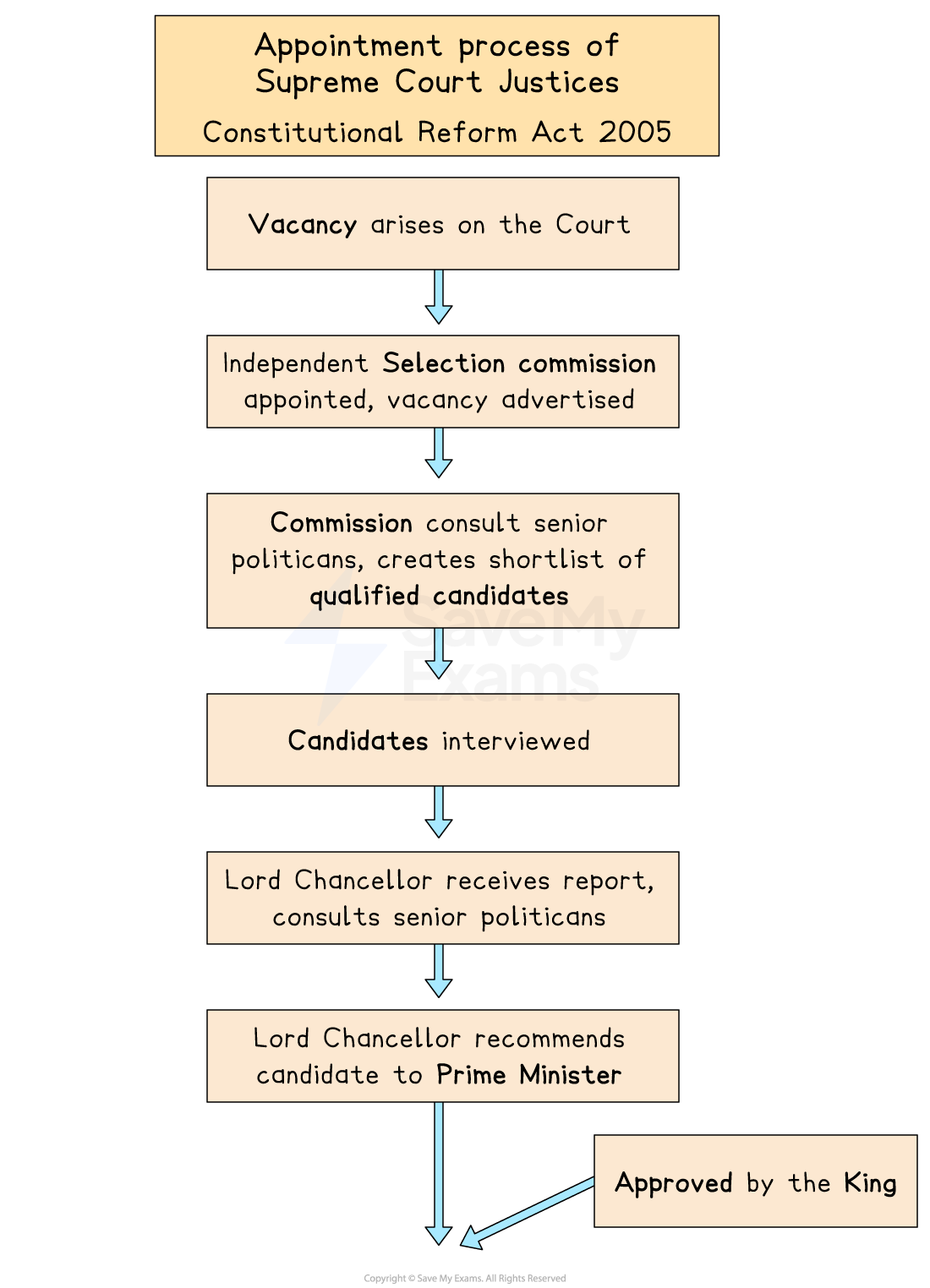
This process is designed to:
reduce political influence
preserve judicial independence
retain limited democratic oversight
The role of the Supreme Court
The Supreme Court has two main roles:
1. Final court of appeal
It is the highest court of appeal in the UK
Its decisions are binding on all lower courts
2. Constitutional role
This role is particularly important because the UK has an uncodified constitution
It rules on disputes between:
the executive and Parliament
devolved governments and Westminster
It interprets the law in cases involving:
constitutional principles
the limits of executive power
Operating principles of the Supreme Court
1. Judicial independence
Judicial independence refers to the ability of judges to make decisions:
free from political pressure
without fear of removal or punishment
Judicial independence is protected by:
secure tenure
protected salaries
an independent appointments process
2. Judicial neutrality
Judicial neutrality refers to judges:
not expressing political views
deciding cases based on law rather than opinion
Independence and neutrality are closely related but not the same thing
Summary table
Judicial independence | Judicial neutrality |
|---|---|
|
|
|
|
|
|
|
|
Challenges to judicial independence and neutrality
Despite constitutional protections, judicial independence and neutrality have been challenged.
Political criticism
Following Miller v Prime Minister (2019), Boris Johnson criticised the Supreme Court
Some politicians argued the Court had overstepped its role
Media criticism
In 2016, the Daily Mail described judges involved in Miller v Brexit Secretary as “Enemies of the People”
Accusations of judicial activism
Critics argue the Supreme Court has become too willing to intervene in political matters
These accusations are particularly linked to Brexit-related cases
Supreme Court influence on the Executive and Parliament
The main way in which the UK Supreme Court can influence Parliament or the executive is through the use of judicial review
Judicial review
Judicial review is the process by which the courts assess whether decisions or actions by the executive, including ministers, government departments, and public bodies, comply with the law
This includes reviewing whether they have:
acted within the limits of the law
followed correct procedure
complied with constitutional principles
Judicial review is binding when considering executive actions. If the government is found to have acted unlawfully, they must:
undo their actions, or
stop the action altogether
If the government wishes to overcome a ruling of unlawfulness, they may attempt to pass a new law that makes their action lawful
However, judicial review cannot strike down Acts of Parliament
Case Study
Miller v Prime Minister (2019)
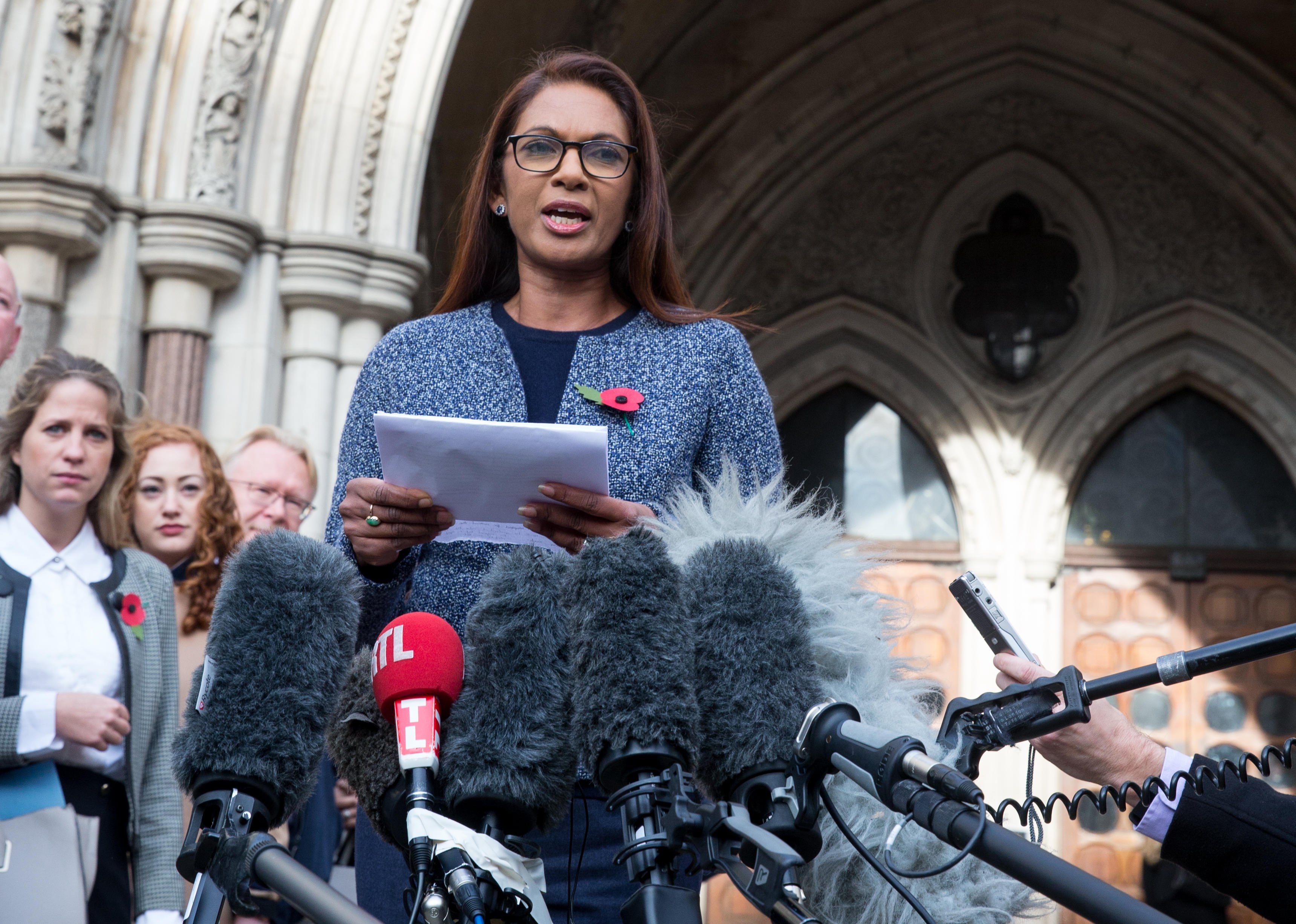
In 2019, Boris Johnson prorogued Parliament
While prorogation is a common power of the Prime Minister, it was carried out unusually early
It appeared that Parliament was sent away to avoid difficult votes on Brexit
Gina Miller initiated a legal challenge, and the case was heard by the UK Supreme Court
Outcome
The Court ruled that:
the prorogation frustrated Parliament’s constitutional role of scrutiny
Boris Johnson had therefore acted unlawfully
Although Johnson said that he “profoundly disagreed” with the ruling, he did ultimately follow it
The doctrine of ultra vires
The doctrine of ultra vires means “beyond their power”
If a minister or public body acts beyond the authority given to them by statute law, the courts can declare the action ultra vires and therefore unlawful
This doctrine underpins judicial review
The Court reviews executive action to ensure it has not exceeded the limits set by Parliament
Together, judicial review and the doctrine of ultra vires prevent the executive or Parliament exceeding their powers, placing a notable check on their actions
Key examples of the UK Supreme Court checking the executive and Parliament
Case | Significance |
|---|---|
Miller v Brexit Secretary (2017) |
|
Miller v Prime Minister (2019) |
|
Begum v Home Secretary (2021) |
|
R v Home Secretary (2023) |
|
These cases show that the UK Supreme Court can and does intervene to:
prevent the executive exceeding its legal authority
protect constitutional principles
reinforce the role of Parliament
How powerful is the Supreme Court?
The power of the UK Supreme Court is significant but limited
While it plays an important role in checking the executive and upholding constitutional principles, it operates within clear constraints
Supreme Court is powerful | Supreme Court is limited |
|---|---|
Judicial review is binding
| Cannot strike down Acts of Parliament
|
Limits executive power
| Parliament can respond with legislation
|
Intervenes in constitutional disputes
| Reactive role
|
Key role in an uncodified constitution
| Relies on compliance
|
Willing to check the executive
| Does not always oppose the executive
|

Unlock more, it's free!
Join the 100,000+ Students that ❤️ Save My Exams
the (exam) results speak for themselves:

Was this revision note helpful?