Ecologism: Core Ideas & Principles (Edexcel A Level Politics): Revision Note
Exam code: 9PL0

The core ideas of ecologism
Examiner Tips and Tricks
For Component 2, Non-Core Political Ideas, students only need to study one idea from the following:
anarchism, ecologism, feminism, multiculturalism, nationalism
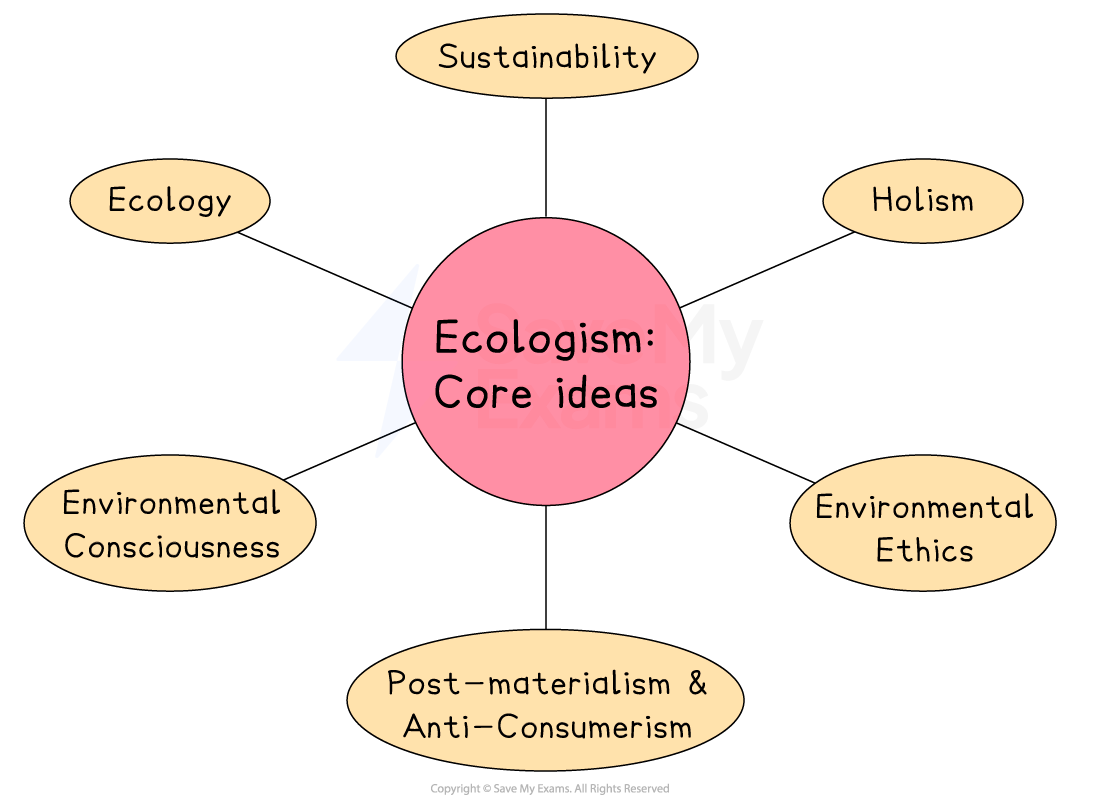
Ecologism argues humans must live sustainably and fundamentally change their relationship with nature to protect the environment and ensure long-term survival
Ecology
Ecology recognises the importance of all living things and the interdependence of organisms within ecosystems
For ecologists, ecology means
Interdependence
All living organisms are interconnected within ecosystems
Systems thinking
Actions affecting one species impact the wider environment
Ecological limits
Human activity must respect ecological boundaries
Humans are part of the ecosystem, not separate from it
Ecocentrism
Nature has intrinsic value beyond its usefulness to humans
Rejection of anthropocentrism
The belief in a species hierarchy placing humans above nature is rejected
Biodiversity and conservation
Protecting species diversity is essential for ecosystem stability
Conservation is crucial to maintaining ecological balance
Key thinkers
Aldo Leopold | Rachel Carson | Murray Bookchin |
|---|---|---|
|
|
|
Agreement within ecologism
All strands agree on the importance of respecting natural systems
Disagreement within ecologism
Deep green ecologism
Argues for radical ecological limits
Prioritises nature over human interests
Shallow green ecologism
Prioritises reform within existing economic systems
Social ecology (particularly eco-socialists)
Argues capitalism causes nature to be viewed as a commodity
Holism
Holism refers to the belief that nature should be understood as an interconnected whole rather than as separate, isolated parts
For ecologists, holism means
Interconnected systems
Ecosystems should be viewed as integrated wholes
Natural systems cannot be understood in isolation
Challenge to the mechanistic worldview
Rejects the idea that nature can be broken down into separate, independent parts
Interdisciplinary approach
Environmental solutions require social, economic and ecological perspectives
Moral responsibility
Humans have ethical duties to the environment
Humans are inseparable from ecological and social systems
Key thinkers
Aldo Leopold | Carolyn Merchant |
|---|---|
|
|
Agreement within ecologism
All strands recognise the importance of holistic ecological thinking
Disagreement within ecologism
Deep green ecologism
Prioritises natural systems over human needs
Shallow green ecologism
Seeks to balance ecosystem health with human priorities
Social ecology (particularly eco-feminism)
Argues the mechanistic worldview stems from patriarchal social structures
Environmental ethics
Environmental ethics refers to the belief that humans have moral responsibilities towards the natural world, challenging anthropocentric ethical frameworks
For ecologists, environmental ethics means
Moral responsibility
Humans owe ethical duties to the environment
Intrinsic value of nature
Nature has value beyond its usefulness to humans
Sustainability ethics
Human actions should not compromise future generations
Key thinkers
Aldo Leopold | Murray Bookchin |
|---|---|
|
|
Agreement within ecologism
All strands agree that humans have inherent ethical duties to the environment
Disagreement within ecologism
Deep green ecologism
Prioritises protection of non-human interests
Shallow green ecologism
Balances environmental responsibility with human benefit
Environmental consciousness
'Environmental consciousness' refers to a change in how humans understand and relate to the natural world, emphasising awareness, responsibility and sustainable behaviour
For ecologists, environmental consciousness means
Awareness
Greater understanding of environmental problems and human impacts
Behavioural change
Promotion of sustainable lifestyles and consumption patterns
Public engagement
Collective awareness drives ecological movements
Public participation is central to environmental decision-making
Key thinkers
Aldo Leopold | Murray Bookchin |
|---|---|
|
|
Agreement within ecologism
All strands support environmental consciousness as a foundation for environmental protection
Disagreement within ecologism
Deep green ecologism
Stresses radical awareness and lifestyle change
Shallow green ecologism
Focuses on technological reform
Seeks to balance human needs with environmental protection
Eco-feminism
Argues for a new relationship with nature
Rejects historically patriarchal views of the environment
Post-materialism and anti-consumerism
Post-materialism and anti-consumerism refer to the belief that human values should prioritise ecological integrity and well-being over material wealth and excessive consumption
For ecologists, post-materialism and anti-consumerism mean
Rejection of consumerism
Excess consumption harms ecosystems and social relations
Material wealth does not lead to genuine happiness
Shift in values
Ecological integrity should be prioritised over economic growth
Critique of growth-based economics
Economic models focused solely on GDP should be challenged
Growth should not be treated as a natural or inevitable objective
Sustainable lifestyles
Ethical and conscious patterns of consumption should be encouraged
Key thinkers
E. F. Schumacher | Aldo Leopold | Murray Bookchin |
|---|---|---|
|
|
|
Agreement within ecologism
All strands support reducing consumption
All strands prioritise post-materialist values
Disagreement within ecologism
Deep green ecologism
Promotes radical anti-consumer lifestyles
Shallow green ecologism
Seeks moderate reform
Supports green capitalism
Social ecology (particularly eco-socialism)
Argues green capitalism is flawed
Claims capitalism causes nature to be viewed as a commodity
Sustainability
Sustainability refers to the long-term protection of the environment through responsible resource use and intergenerational justice
For ecologists, sustainability means
Resource stewardship
Resources should be used in ways that allow natural replenishment
Intergenerational equity
The needs of future generations must be protected
Sustainable development
Ecology, economy and society must be balanced
Role of government
Governments should promote renewable and low-impact systems
Key thinkers
E. F. Schumacher | Aldo Leopold |
|---|---|
|
|
Agreement within ecologism
All strands support sustainability as a guiding principle
Disagreement within ecologism
Deep green ecologism
Favour radical ecological limits
Argue reform alone cannot achieve sustainability
Shallow green ecologism
Support incremental reform within existing systems

Unlock more, it's free!
Join the 100,000+ Students that ❤️ Save My Exams
the (exam) results speak for themselves:

Was this revision note helpful?
