Constitutional Power of Presidents Since 1992 (Edexcel A Level Politics): Revision Note
Exam code: 9PL0

The constitutional power of presidents
The Constitution outlines specific powers of the President that are legally enforceable
These lend considerable power to the President that have broadly grown over time
Power | Explanation |
|---|---|
Commander-in-Chief |
|
Veto power |
|
Appointment power |
|
Power to negotiate treaties |
|
Power of the pardon |
|
Factors affecting the President’s exercise of constitutional powers
Several factors influence how effectively presidents use their constitutional powers
Congressional majority
Divided government, where the party controlling at least one house of Congress is different to the party of the President, can lead to blockage or delays in amending presidential legislation or nominations
E.g. President Trump consistently failed to get full funding for his proposed border wall between Mexico and the US
Public approval
High opinion poll ratings strengthens the president’s bargaining power
E.g. President Obama’s approval ratings boosted negotiations on the Affordable Care Act (2010)
Party support
Loyalty of party members enables legislative success and successful appointments
E.g. President Trump relied on Republican unity to confirm his three Supreme Court judges
Supreme Court oversight
Judicial review can limit presidential actions
E.g. The Supreme Court struck down President Trump’s attempt to end DACA (2020)
Media
Positive media coverage can enhance presidential influence
Negative scrutiny can constrain power and impact presidential approval ratings
Global events
Crises can expand or limit presidential discretion
Examples
The COVID-19 pandemic allowed expanded emergency powers under Presidents Biden and Trump
The Russian invasion of Ukraine allowed the President considerable power on the international stage
However, events such as recessions can significantly limit presidential powers and require their focus to prioritise domestic issues
Case Study
DACA and DAPA – Executive Power and Judicial Checks in the USA
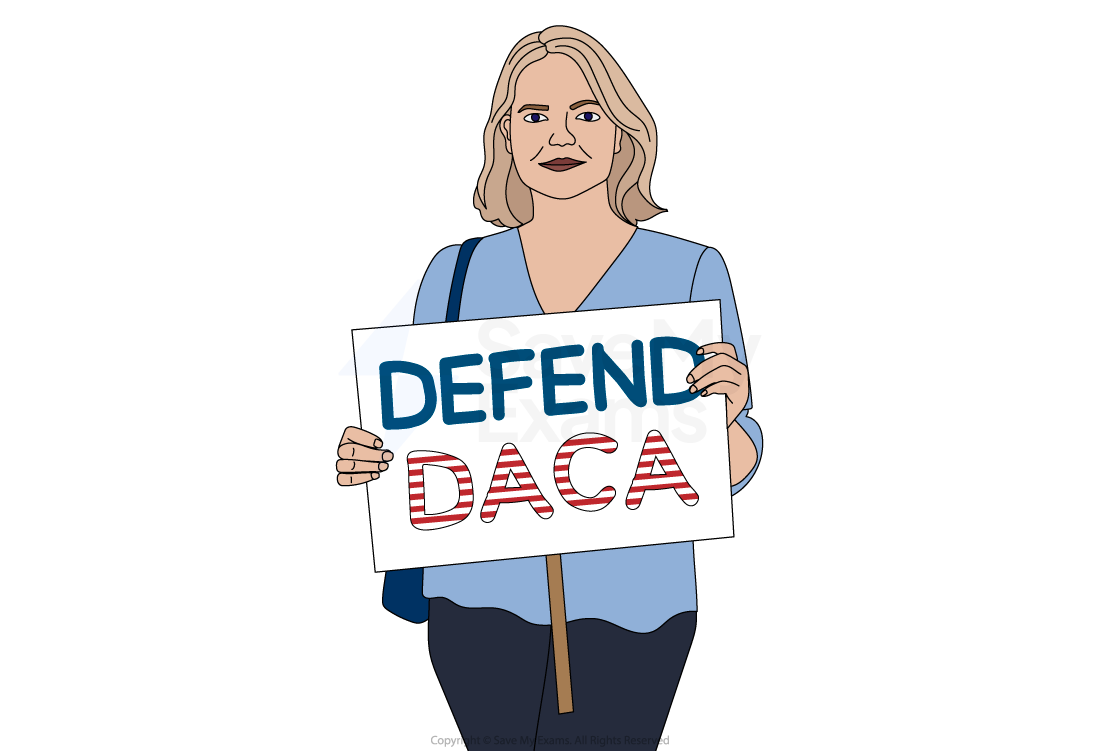
In the early 2010s, the US faced major political disagreement over immigration reform
Congress, controlled by Republicans, repeatedly failed to pass comprehensive immigration legislation
In response, President Obama turned to executive action to address the issue
Introduction of DACA (2012)
In 2012, President Obama introduced Deferred Action for Childhood Arrivals (DACA) through an executive order
DACA protected certain undocumented migrants who had arrived in the US as children from deportation and allowed them to work legally
This action bypassed Congress and relied on the president’s executive authority
Expansion with DAPA (2014)
In 2014, Obama expanded this approach with Deferred Action for Parents of Americans (DAPA)
DAPA aimed to protect undocumented parents of US citizens from deportation
Again, this was introduced without congressional approval due to continued legislative gridlock
Supreme Court Blocks DAPA (2016)
In United States v Texas (2016), the Supreme Court blocked DAPA
The Court ruled that the president had exceeded executive authority, reinforcing limits on presidential power when acting without Congress
Supreme Court Protects DACA (2020)
In Department of Homeland Security v Regents (2020), the Supreme Court blocked President Trump’s attempt to cancel DACA
The Court ruled that the administration had not followed proper legal procedures, showing judicial support for executive action when the law is correctly applied

Unlock more, it's free!
Join the 100,000+ Students that ❤️ Save My Exams
the (exam) results speak for themselves:

Was this revision note helpful?