Informal Sources of Presidential Power (Edexcel A Level Politics): Revision Note
Exam code: 9PL0

An introduction to informal sources of power
Alongside formal constitutional powers, presidents also rely on informal sources of power to influence policy and decision-making
These powers are not explicitly set out in the Constitution, but have developed through convention, circumstance and political practice
This section examines how presidents use:
the executive branch and its components
the electoral mandate
executive orders
national events and crises
the cabinet
powers of persuasion
Executive Office of the President (EXOP)
Together, these informal powers help explain why presidential power can expand or contract in practice, depending on political context
The executive branch
The US executive branch implements and enforces federal law
The President heads the executive branch
A team of advisers and permanent bureaucrats implement policy
Constitutional powers grant authority to the President, Cabinet, the Executive Office of the President (EXOP) and bureaucracy
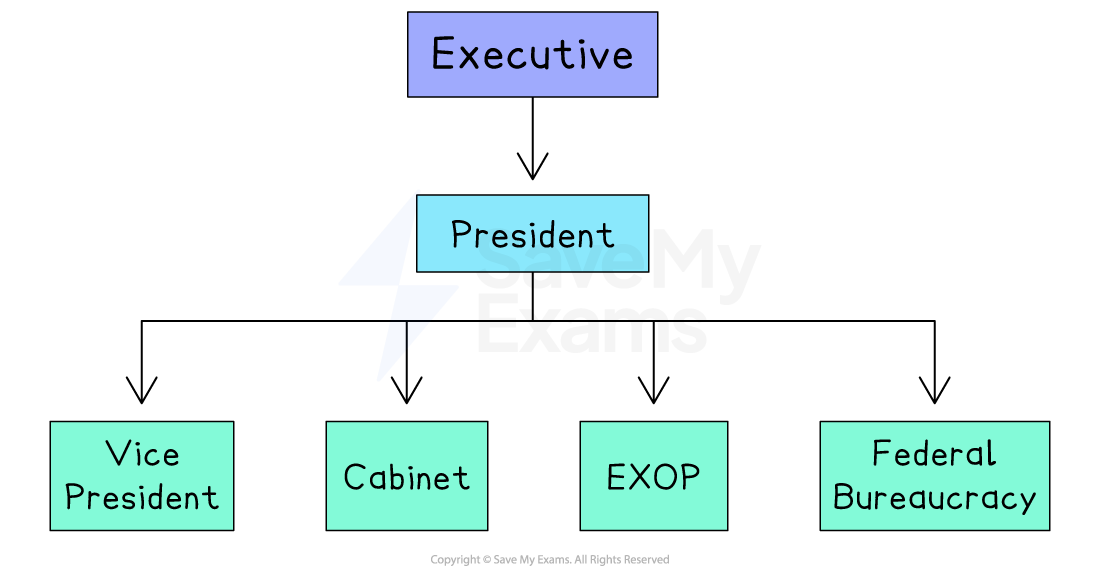
President
The head of the executive branch
Enforces laws, directs foreign policy, and commands the military
President Trump directed the US intervention in Venezuela in 2026
Vice President (VP)
Second-in-command of the executive branch
Presides over the Senate
Assumes the presidency if the president is incapacitated
VP JD Vance cast the tie-breaking Senate vote over the war powers resolution in January 2026, preventing the restriction of President Trump's power
Cabinet
The president’s key advisors, including heads of federal departments
Provide policy advice and administer executive agencies
President Trump’s Secretary of Health Robert Kennedy took an anti-vaccine stance, firing all the independent experts on the CDC’s Advisory Committee on Immunization Practices
Executive Office of the President (EXOP)
Includes offices including the National Security Council (NSC), Office of Management and Budget (OMB) and White House Office (WHO)
Advises the president and coordinates policy implementation
The OMB managed federal pandemic relief spending during the American Rescue Plan 2021
Federal Bureaucracy
Permanent administrative departments and agencies
Implement laws and regulations, ensuring continuity regardless of the president
The Department of Homeland Security oversaw security for US elections in 2020
Implied powers of the President
Implied powers of the President come from the necessary and proper clause of the US Constitution
They allow the President to go beyond formally listed powers
Implied powers allow presidents to act decisively when formal powers are insufficient
However, they can result in legal and political scrutiny
E.g. court challenges to Trump’s emergency funding of the US-Mexico border wall
Implied power | Example | Explanation |
|---|---|---|
Executive orders |
|
|
Executive agreements |
|
|
Emergency powers |
|
|
The electoral mandate
The electoral mandate is the power that a president gains after an election
Results provide a clear endorsement from the electorate of their policies and provides:
Legitimacy
A strong electoral mandate can pressure members of Congress to support the president’s agenda
E.g. Biden’s 2020 victory, with 306 electoral votes and over 81 million popular votes, strengthened his position to pass the American Rescue Plan (2021)
Public persuasion
Presidents with a clear electoral mandate can use public opinion to influence legislation and policy debates
E.g. Trump’s 2016 mandate, despite losing the popular vote, allowed him to push the Tax Cuts and Jobs Act (2017) through Congress
International authority
A perceived strong electoral mandate can enhance the president’s credibility in foreign negotiations
E.g. Obama’s 2012 re-election allowed him to negotiate international climate commitments, strengthening US influence at COP21 (2015)
The electoral mandate is symbolic rather than legally binding
Midterm elections can undermine the President’s electoral mandate, as the president’s party frequently loses congressional seats
The electoral mandate can expand presidential authority
Its effect is limited by partisanship, congressional control, and public opinion
Executive orders
Executive orders are directives issued by the president to federal departments and agencies to instruct them on the operation and implementation of laws
They carry the force of law but do not require congressional approval
E.g. In 2021, President Biden issued an order mandating COVID-19 vaccinations for federal employees
Why are executive orders important?
Immediate effect
Orders allow swift action without waiting for Congressional action
E.g. President Biden quickly reinstated the US in the Paris Climate Agreement (2021) and President Trump once again removed the US from the Agreement (2025)
Policy direction
They can shape federal departments and agency priorities
E.g. President Trump led to a range of environmental rollbacks through executive orders to the Environmental Protection Agency (EPA) (2017–20)
Bypass governmental gridlock
They can be particularly useful during times of divided government resulting in little governance taking place
E.g. Biden’s executive actions on student loan forgiveness (2022)
Why might executive orders may be limited?
Limit | Explanation |
|---|---|
Judicial review |
|
Reversibility |
|
Limited scope |
|
National events
National events, such as crises or emergencies, can significantly affect presidential power, both formally and informally
Wars and conflicts
Crises often enhance the president’s role as commander-in-chief, enabling them to make rapid military decisions
E.g. President Biden’s decision to withdraw US troops from Afghanistan (2021) demonstrated crisis decision-making authority
Health emergencies
Presidents can expand executive discretion and command public resources
E.g. President Trump declared a national emergency during COVID-19 (2020), unlocking funds and emergency powers
Economic crises
Events such as recessions allow presidents to push large-scale legislation
E.g. President Biden’s American Rescue Plan (2021) was justified by the pandemic’s economic impact
Positive impact of national events | Negative impact of national events |
|---|---|
|
|
The Cabinet
The Cabinet is the president’s key advisory body, composed of the heads of federal departments
Membership of cabinet
Vice President
Fifteen Cabinet Secretaries that are the heads of each of the 15 executive departments
E.g. Pete Hegseth is the Secretary of Defense as the Head of the Department of Defense under President Trump (2025-)
Other members of Cabinet rank as chosen by the President
E.g. the White House Chief of Staff, the Environmental Protection Agency Administrator, the CIA Director
Appointment to the Cabinet
Most Cabinet members are subject to Senate approval after being nominated by the president
Secretary of Defense Pete Hegseth was nominated by President Trump, but the Senate vote was split 50-50 on his approval, requiring the tie-breaking vote of the Vice President
The importance of the Cabinet
Policy advice
The Cabinet can shape presidential decisions and policies
E.g. Secretary Hegseth argued for the removal of the Joint Chiefs of Staff and other senior military officials, including defending the removal of Air Force General CQ Brown Jr.
Administrative control
The Cabinet can direct departmental policy
E.g. Secretary of Defense Hegseth reinstated a ban on transgender individuals serving in the US military
Political legitimacy
Cabinet choices may reflect party and regional balance
E.g. Secretary of State Rubio (2025) was the first Latino person to hold this role in US history
Limitations of the Cabinet as a source of presidential power
The advice of the Cabinet is not binding, so Presidents can ignore it
E.g. Kirstjen Nielsen resigned as the Secretary of Homeland Security in 2019 after President Trump announced he wanted a tougher stance on immigration
Internal conflict
Cabinet members can disagree, reducing their effectiveness as an advisory body
E.g. In 2025, Secretaries Hegseth and Rubio gave conflicting views on the necessary settlement for ending the Russian invasion of Ukraine
Senate confirmation is required, limiting the president’s freedom to appoint
E.g. Criticism of President Trump’s nomination of Matt Gaetz as US Attorney General led to his withdrawal from the nomination process
Presidential powers of persuasion
Presidential persuasion is the ability of the president to influence Congress, public opinion and foreign leaders without formal powers
They enable them to achieve policy goals without relying solely on constitutional authority
Type of persuasion | Explanation |
|---|---|
Legislative persuasion |
|
Public persuasion |
|
Party persuasion |
|
International persuasion |
|
Case Study
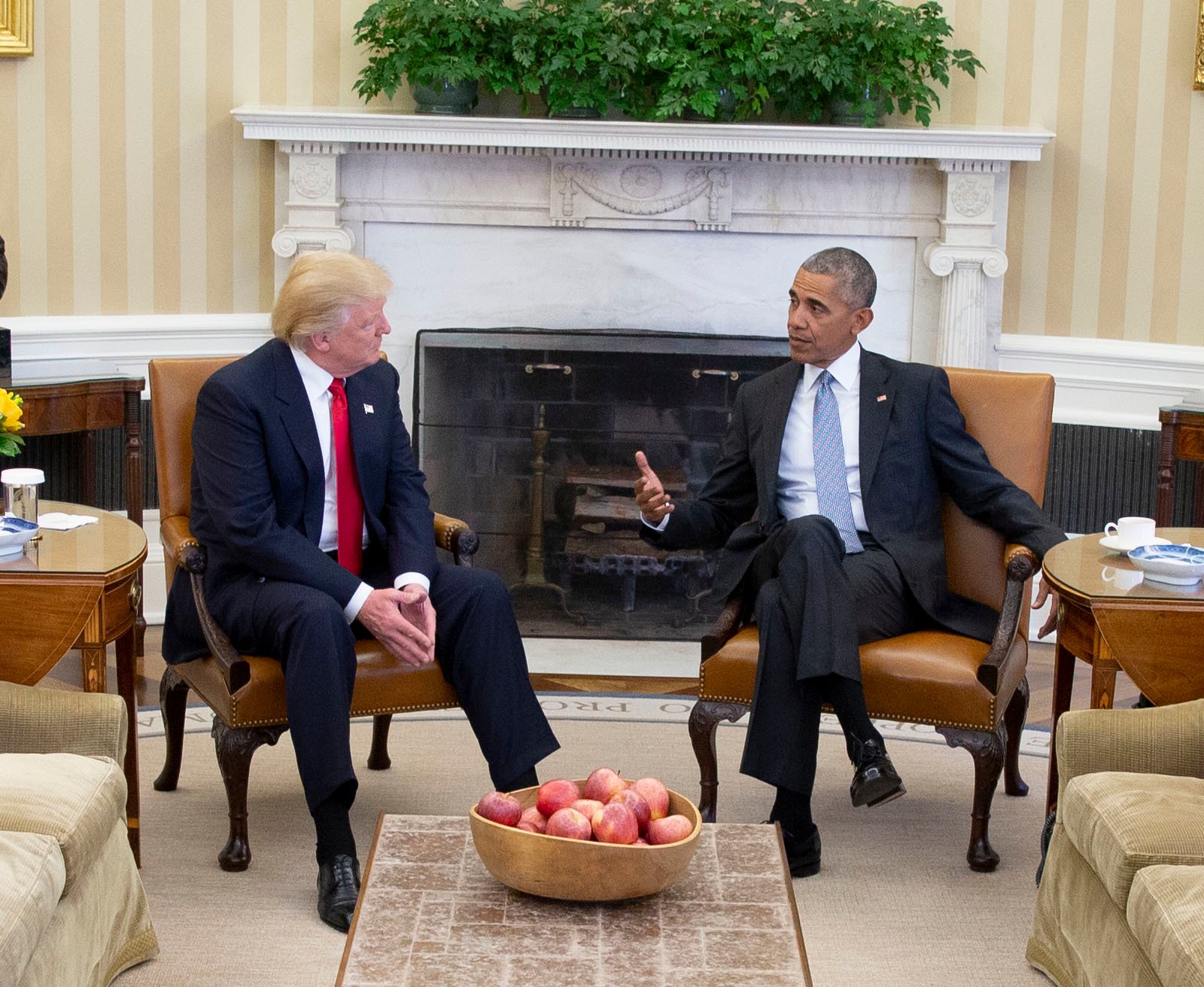
Powers of persuasion: Trump vs Obama
Presidential persuasion varies according to personal style, party control, and political context
Trump’s approach expanded informal presidential power but heightened polarisation
Obama’s was more consensus-driven but often slowed by partisan opposition
Barack Obama (2009–2017)
Used public speeches and media appearances to build support for legislation
In 2009, Obama addressed the nation multiple times to gain public support for the Affordable Care Act, pressuring Congress to pass the law
Emphasised bipartisanship, though often limited by Senate obstruction
Failed to pass comprehensive immigration reform despite public campaigning in 2013
Used party loyalty to coordinate legislative voting
Democratic unity allowed passage of Dodd-Frank Act (2010) despite Republican opposition
Donald Trump (2017–2021)
Relied heavily on direct communication via social media, particularly X, to pressure Congress and mobilise supporters
Promoted the Tax Cuts and Jobs Act (2017) by tweeting about legislative priorities
Strongly polarised persuasion, often bypassing traditional congressional negotiation
Threatened government shutdowns to push funding for his proposed border wall (2019)
Used party loyalty aggressively, forcing Republican alignment to confirm judges and block Democratic initiatives
Swift confirmation of Amy Coney Barrett to the Supreme Court (2020) relied on party cohesion
Executive Office of the President (EXOP)
EXOP supports the president with policy development, administration and coordination
It extends presidential influence by centralising information, policy advice and administrative control
EXOP staff report directly to the president
Its power lies in proximity to the president and control over information flow.
Key components of EXOP
Component | Explanation |
|---|---|
National Security Council (NSC) |
|
Office of Management and Budget (OMB) |
|
White House Office (WHO) |
|

Unlock more, it's free!
Join the 100,000+ Students that ❤️ Save My Exams
the (exam) results speak for themselves:

Was this revision note helpful?
