The Supreme Court Appointment Process (Edexcel A Level Politics): Revision Note
Exam code: 9PL0

How members of the Supreme Court are appointed
Supreme Court justices are appointed through a three-stage process, set out in Article II, Section 2 of the US Constitution, which requires the President to nominate justices with the “advice and consent” of the Senate

Stage 1: Vacancy
A vacancy on the Supreme Court arises in three circumstances:
A justice retires
Stephen Breyer retired in 2022 at the age of 83 and was replaced by Ketanji Brown Jackson
A justice dies
Ruth Bader Ginsburg died in September 2020 and was replaced by Amy Coney Barrett shortly before the 2020 election
A justice is impeached
This is extremely rare and last occurred in 1805, when Samuel Chase was impeached and acquitted
Strengths | Weaknesses |
|---|---|
|
|
Stage 2: Presidential nomination
The President selects a nominee for the vacant seat
Presidents are influenced by several factors when choosing a nominee:
Ideology
Party affiliation is closely linked to judicial ideology
Republican presidents typically nominate conservative justices, while Democratic presidents nominate liberal justices
All six current conservative justices were nominated by Republican presidents, and all three liberal justices by Democratic presidents
Judicial experience
Legal experience demonstrates competence and reduces the risk of controversial rulings
All current justices have legal backgrounds
Elena Kagan previously served as Solicitor General
Demographic representation
Presidents may seek to enhance the Court’s legitimacy and reflect social diversity
Joe Biden fulfilled a campaign pledge by appointing the first Black woman justice in 2022
Age
Younger justices can shape the Court for decades
Amy Coney Barrett, appointed at 48, may influence decisions into the 2040s
Strengths | Weaknesses |
|---|---|
|
|
Stage 3: Informal vetting by the American Bar Association (ABA)
Before Senate hearings, nominees are informally assessed by the American Bar Association (ABA)
Strengths | Weaknesses |
|---|---|
|
|
Stage 4: Senate Judiciary Committee hearings
The nominee appears before the Senate Judiciary Committee
Senators question the nominee on their judicial philosophy, past rulings and legal record
The committee then decides whether to:
recommend confirmation
recommend rejection
make no recommendation
Strengths | Weaknesses |
|---|---|
|
|
Case Study
Death of Ruth Bader Ginsburg and appointment of Amy Coney Barrett (2020)

Ruth Bader Ginsburg, a leading liberal justice, died in September 2020
This occurred shortly before the 2020 presidential election, with Donald Trump in office
Actions taken
President Trump nominated Amy Coney Barrett, a conservative judge
Senate Republicans fast-tracked the confirmation process
Outcomes
Barrett was confirmed shortly before the election
This shifted the Court to a 6–3 conservative majority
The episode increased criticism of the appointment process as highly politicised
Case Study
Senate confirmation of Brett Kavanaugh (2018)
Context
Brett Kavanaugh was nominated by President Trump to replace Anthony Kennedy, a swing justice
The nomination occurred during a period of high partisan polarisation
Actions taken
Kavanaugh faced intense Senate Judiciary Committee hearings, including allegations of sexual misconduct
The nomination was debated extensively in the full Senate
Outcomes
Kavanaugh was confirmed by a narrow margin
The process highlighted increasing partisanship in Senate confirmations
It reduced public confidence in the neutrality of the appointment process
Stage 5: Full Senate vote
Following committee hearings, the nominee is considered by the full Senate
Senators debate and vote on the nomination
A simple majority (51 votes) is required for confirmation
Strengths | Weaknesses |
|---|---|
|
|
Stage 6: Appointment as Supreme Court justice
If confirmed, the nominee is formally appointed as a Supreme Court justice.
Justices receive life tenure
They cannot be removed for political reasons
Their decisions are independent of electoral pressure
Strengths | Weaknesses |
|---|---|
|
|
Overall evaluation of the appointment process
Overall, the Supreme Court appointment process balances judicial independence with democratic accountability, but this balance has become increasingly strained
The process protects judicial independence
Life tenure, salary protection and security after appointment allow justices to act without electoral or political pressure
The involvement of the President and Senate provides democratic legitimacy
Both actors are elected, allowing voters indirect influence over appointments
However, the process has become highly politicised
Ideological nominations, partisan confirmation votes and strategic retirements have reduced perceptions of neutrality
The declining role of consensus has weakened public confidence
Senate confirmations increasingly reflect party loyalty rather than legal scrutiny
As a result, appointments now shape the ideological balance of the Court more overtly than in the past
This raises questions about whether the Court is a political or judicial body
Overall, while the appointment process remains constitutionally sound, growing partisanship has undermined its legitimacy and intensified debates over the role of the Supreme Court in US politics
Current composition and ideological balance of the Supreme Court
The current composition of the Supreme Court is significant because it shapes the Court’s approach to civil rights, liberties and constitutional interpretation
As of 2025, the Supreme Court consists of nine justices with a 6–3 conservative majority, which has influenced decisions on abortion, voting rights and affirmative action
The conservative bloc includes Chief Justice John Roberts and Associate Justices Clarence Thomas, Samuel Alito, Neil Gorsuch, Brett Kavanaugh and Amy Coney Barrett, most of whom identify with originalist approaches
The liberal bloc consists of Justices Sonia Sotomayor, Elena Kagan and Ketanji Brown Jackson, who tend to favour a living constitution approach in civil rights cases
Senate approval for recent justices has been highly partisan, with all six conservative justices appointed by Republican presidents and confirmed primarily with Republican votes
The American Bar Association rated most current justices as “well qualified,” although ratings were politicised, particularly during the confirmations of Kavanaugh and Barrett.
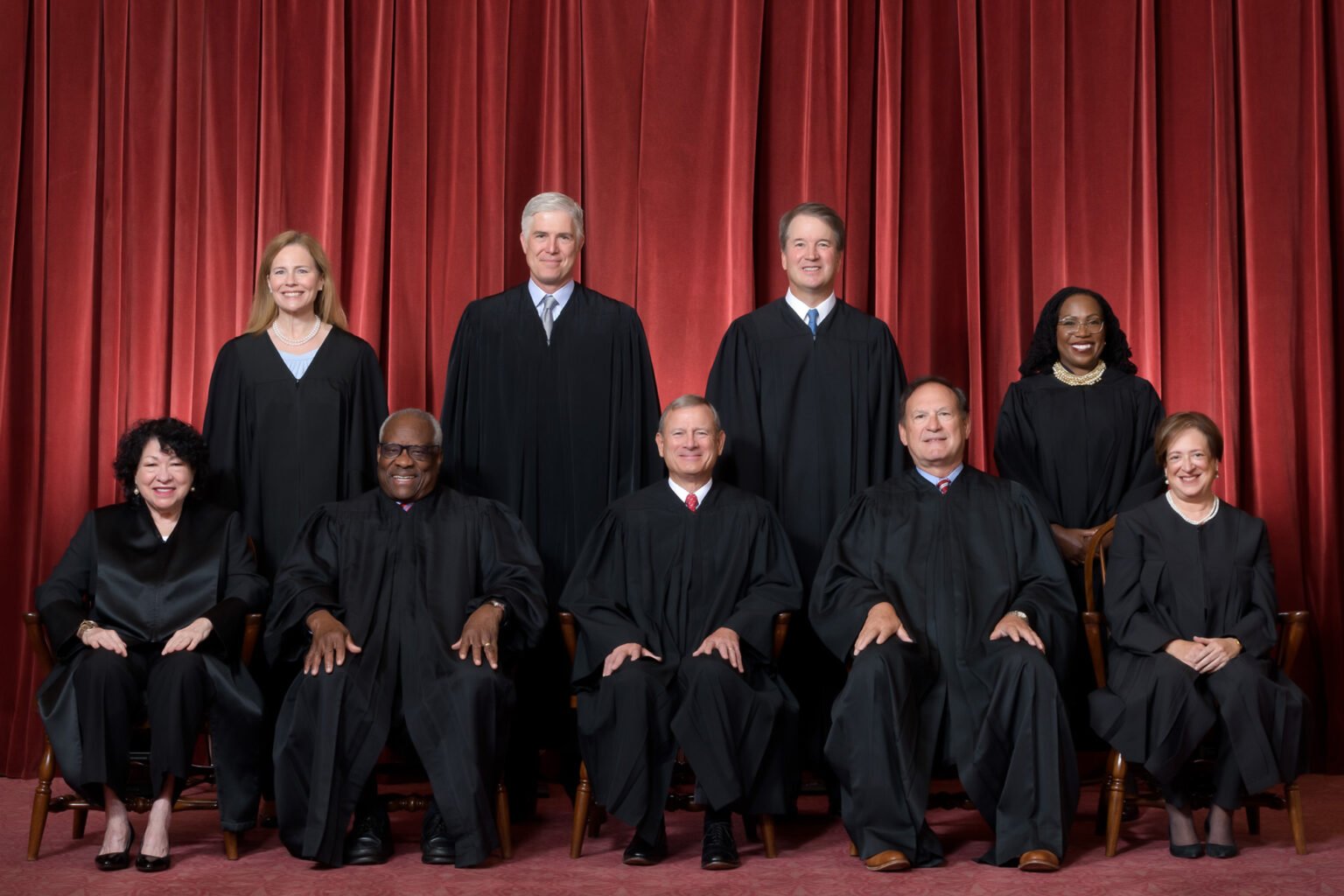
Justice | Appointment date | Appointed by | Ideology |
|---|---|---|---|
Chief Justice John Roberts | 2005 | George W. Bush | Conservative |
Clarence Thomas | 1991 | George H. W. Bush | Conservative |
Samuel Alito | 2006 | George W. Bush | Conservative |
Sonia Sotomayor | 2009 | Barack Obama | Liberal |
Elena Kagan | 2010 | Barack Obama | Liberal |
Neil Gorsuch | 2017 | Donald Trump | Conservative |
Brett Kavanaugh | 2018 | Donald Trump | Conservative |
Amy Coney Barrett | 2020 | Donald Trump | Conservative |
Ketanji Brown Jackson | 2022 | Joe Biden | Liberal |

Unlock more, it's free!
Join the 100,000+ Students that ❤️ Save My Exams
the (exam) results speak for themselves:

Was this revision note helpful?