Current Debates & Interpretations (Edexcel A Level Politics): Revision Note
Exam code: 9PL0

Debate: Electoral reform in the US
There is significant debate over whether the US electoral system should be reformed to improve democratic participation and fairness
Arguments for electoral reform
Argument | Explanation |
|---|---|
The Electoral College can undermine democratic legitimacy |
|
Voter suppression concerns justify reform |
|
Low voter turnout suggests disengagement |
|
Gerrymandering distorts fair representation |
|
Winner-takes-all elections marginalise third parties |
|
Arguments against electoral reform
Argument | Explanation |
|---|---|
Protection of federalism |
|
Risk of partisan advantage |
|
Stability of the current system |
|
Concerns over electoral integrity |
|
Difficulty of constitutional amendment |
|
Debate: Campaign finance reform
Campaign finance reform remains controversial due to tensions between democratic equality and free speech
Arguments for campaign finance reform
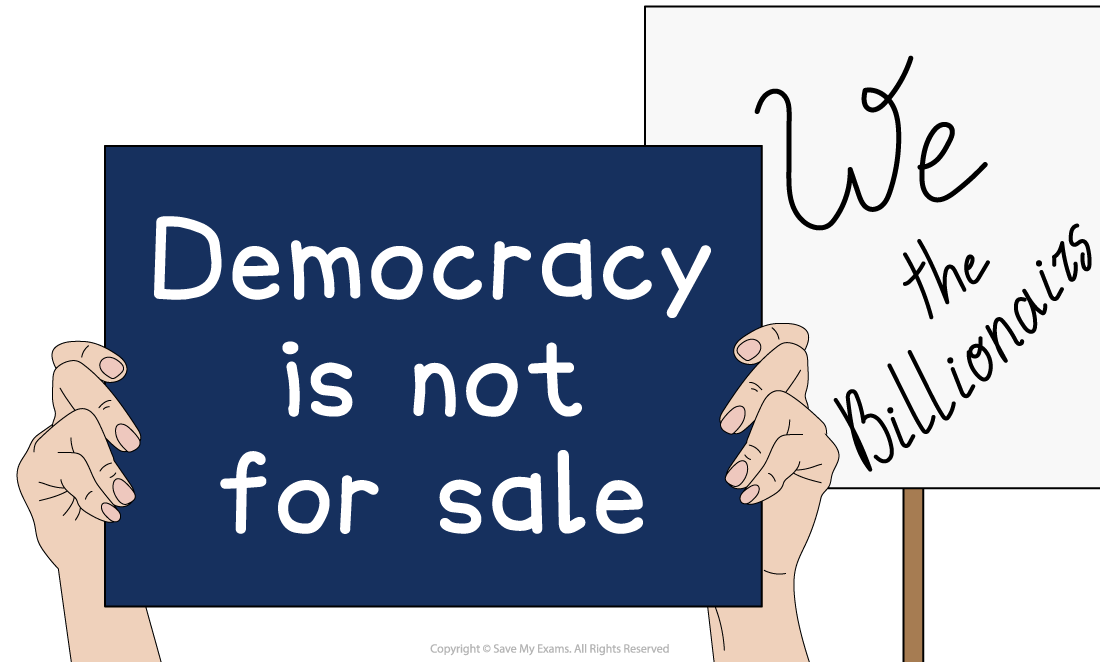
Wealthy donors dominate politics
Large donors and Super PACs can exert disproportionate influence
In the 2024 election, Super PACs such as MAGA Inc. and Priorities USA spent hundreds of millions of dollars, meaning an elite shapes political messaging and candidate viability
Impact of Citizens United v FEC (2010)
The Supreme Court’s ruling allowed unlimited independent expenditures by corporations and unions
Corporate lobbying groups spent heavily on advertising during the 2020 and 2024 elections, reinforcing candidates with whom they aligned
Undermining public trust
Polls consistently show that Americans believe money wields too much influence over elections
Over 80% of Americans feel that large donors and special interests have too much sway over politics
Policy bias toward donors
Legislation often reflects the interests of major funders
Pharmaceutical lobbying played a role in shaping the Inflation Reduction Act (2022)
This limited negotiations to lower Medicare drug prices
Discourages small-donor participation
High-cost campaigns discourage grassroots involvement
Candidates reliant on small donations struggle to compete against billion-dollar campaigns
Bernie Sanders’ 2016 and 2020 campaigns showed that small-donor models can work, but require enormous mobilisation and effort
Arguments against campaign finance reform
Money as free speech
The Supreme Court in Citizens United v FEC (2010) affirmed that spending money on political campaigns is a protected form of free speech
Limiting it could infringe constitutional rights
Limits can disadvantage challengers
Caps on campaign spending can make it harder for non-incumbents or outsiders to compete
They often rely on Super PAC or outside funding to gain visibility.
Money does not guarantee success
Even candidates with huge resources can fail
Michael Bloomberg spent over $1 billion in the 2020 Democratic primary
He was eliminated after only winning one state
Regulatory loopholes
Attempts to regulate campaign finance often lead to creative workarounds
Examples include funnelling money through 527 organisations, non-profits, and Super PACs
Grassroots fundraising offsets inequality
Small-donor fundraising, used effectively by candidates like Bernie Sanders, shows that dedicated campaigns can compete without reliance on major corporate or elite donations
Debate: The role of incumbency in elections
Incumbency refers to the advantage held by candidates who already hold a specific political office in which they are running for re-election
In the US, incumbency is often significant but not decisive
It provides structural advantages, but these are conditional on performance, context and voter mood
Arguments that incumbency is important | Arguments that incumbency is less important |
|---|---|
|
|
Debate: The impact of interest groups on government and policy
Interest groups are a prominent feature of US democracy
They are influential, but their power is constrained by public opinion, competition and political context
Arguments that interest groups are influential
Interest groups provide specialist expertise to lawmakers, shaping policy in complex areas
Pharmaceutical lobbying groups were heavily consulted during debates over Medicare drug price negotiations in the Inflation Reduction Act (2022)
Campaign donations increase access to lawmakers, as groups support sympathetic candidates
AIPAC-backed PACs spent millions in the 2022 and 2024 congressional elections to support pro-Israel candidates, helping defeat critics such as Representative Andy Levin in 2022
Litigation allows groups to directly shape law, particularly through Supreme Court cases
The ACLU has repeatedly challenged restrictive voter ID laws, including cases against Texas voting legislation after 2021
Grassroots mobilisation can pressure politicians
The March for Our Lives organised nationwide protests after the 2018 Parkland shooting and helped build support for the Bipartisan Safer Communities Act (2022)
Agenda-setting through media campaigns shapes debate
The NRA uses advertising and candidate scorecards to frame gun control as a threat to constitutional rights
Arguments that interest groups are not influential
Public opinion can limit interest group success
Even well-funded and organised groups can fail when public sentiment is strongly opposed to their position
Many interest groups face direct competition from other organisations with conflicting agendas
Environmental groups such as the Sierra Club and the League of Conservation Voters actively campaigned against fossil fuel industry lobbying during climate policy debates
Some groups are less influential today because they cannot mobilise large numbers of supporters
This is especially true of labour unions, whose membership in the United States fell below 11% in 2023
Political polarisation restricts compromise, limiting effectiveness as interest groups struggle to achieve legislative goals when partisan gridlock prevents negotiation
Healthcare lobbying by groups like the AMA has often failed to lead to legislation in highly polarised sessions
Government priorities can override group pressure during crises, such as the COVID-19
Congress passed emergency relief legislation and health measures rapidly, including stimulus packages and the American Rescue Plan (2021), with limited time for lobbying input
Case Study
The declining influence of the NRA
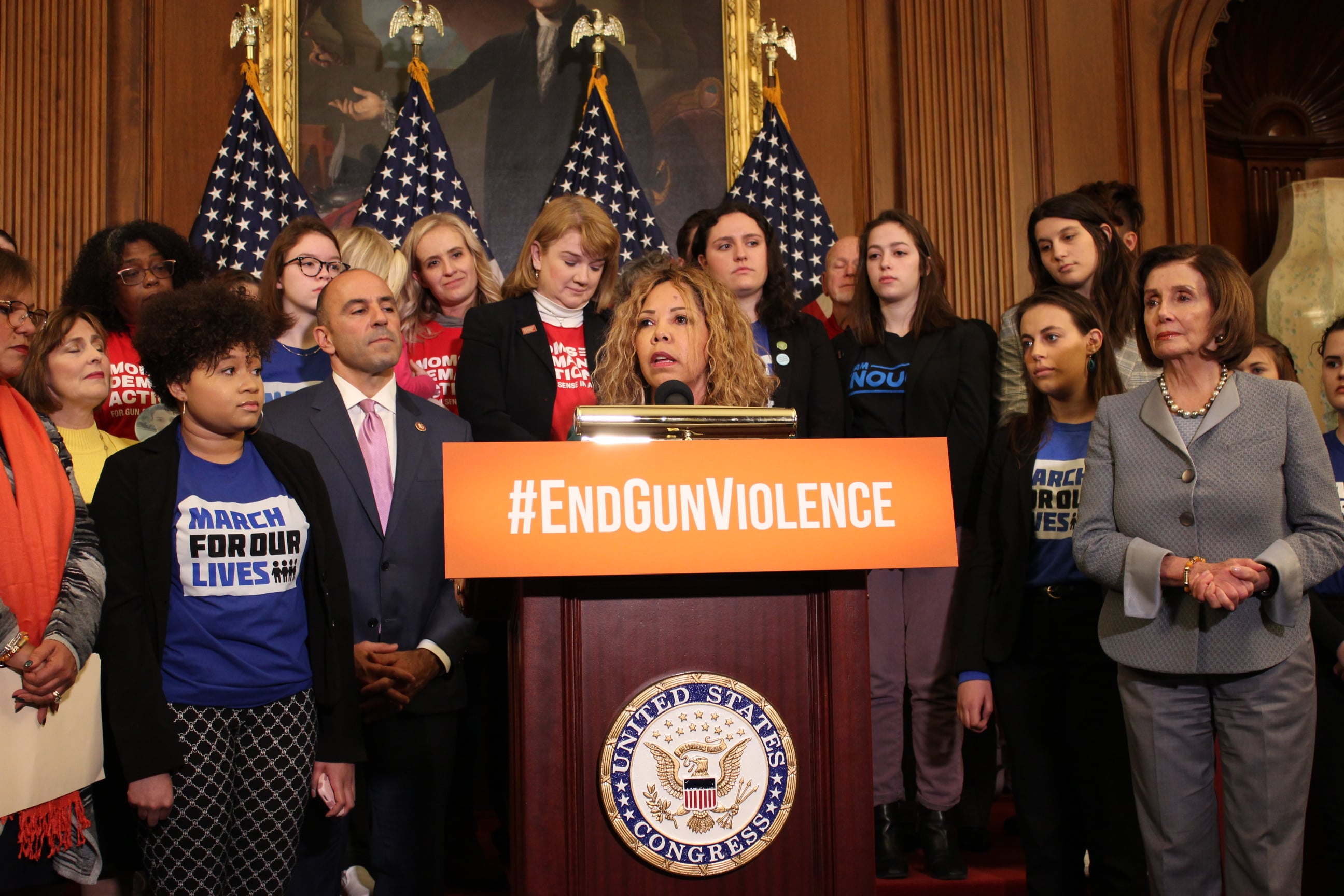
For decades, the National Rifle Association (NRA) was one of the most powerful interest groups in US politics
It successfully opposed most forms of federal gun control through lobbying, campaign support and voter mobilisation
Turning point: Uvalde (2022)
In May 2022, a mass shooting at Robb Elementary School in Uvalde, Texas, killed 19 children and two teachers
The scale of the tragedy generated intense public outrage and renewed demands for gun reform
Policy outcome
In response, Congress passed the Bipartisan Safer Communities Act (2022)
The law introduced modest gun control measures, including stricter background checks for some young buyers and increased funding for mental health services
The bill passed despite NRA opposition, marking a significant shift in policy-making
Significance
This example demonstrates the waning influence of the NRA, as public opinion and bipartisan pressure outweighed its lobbying power
It shows that even powerful interest groups can be overridden when public concern becomes overwhelming and politically costly to ignore

Unlock more, it's free!
Join the 100,000+ Students that ❤️ Save My Exams
the (exam) results speak for themselves:

Was this revision note helpful?