Democratic Party: Key Ideas & Principles (Edexcel A Level Politics): Revision Note
Exam code: 9PL0

Social and moral issues
The Democratic Party has consistently adopted more liberal positions on social and moral issues
Overall, Democratic social policy has shifted from protection of established liberal rights to an active defence against conservative rollback
Hillary Clinton: 2016 election
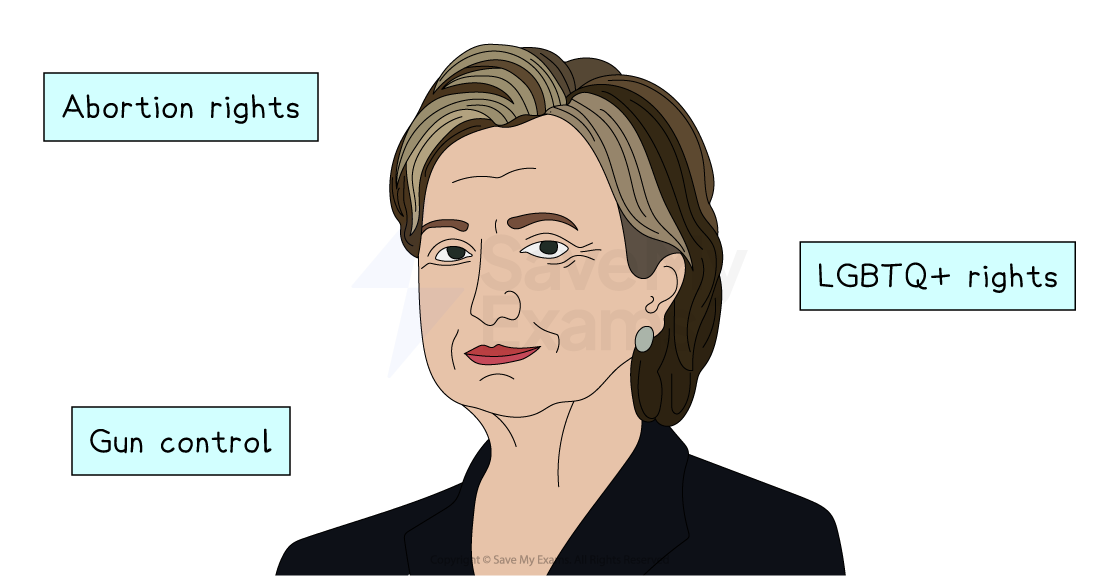
Abortion rights were strongly supported
Clinton pledged to protect Roe v Wade and expand access to reproductive healthcare, particularly following Republican-led state restrictions
LGBTQ+ rights were prioritised
This included support for same-sex marriage following Obergefell v Hodges (2015)
Gun control measures
These focused on expanding background checks after mass shootings such as the 2016 Orlando Pulse nightclub attack
Joe Biden: 2020 election
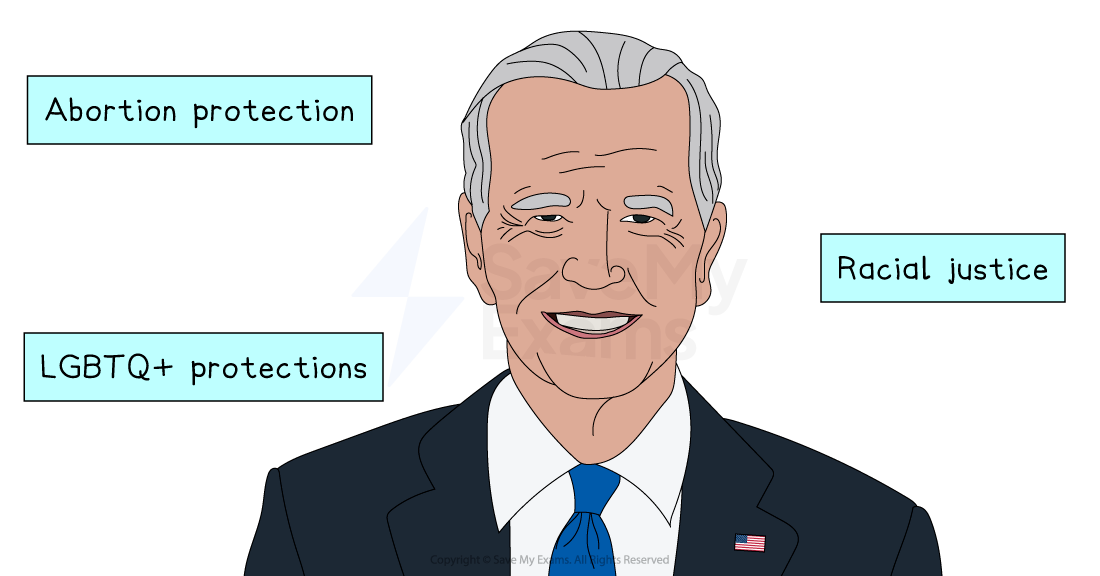
Abortion access became more central
Biden committed to codifying Roe v Wade into federal law in response to conservative Supreme Court appointments
Racial justice was a key issue
Particularly following the killing of George Floyd in May 2020, with Democrats supporting police reform and anti-discrimination legislation
LGBTQ+ protections expanded
This included opposition to Trump-era bans on transgender people serving in the military
Joe Biden: 2024 election
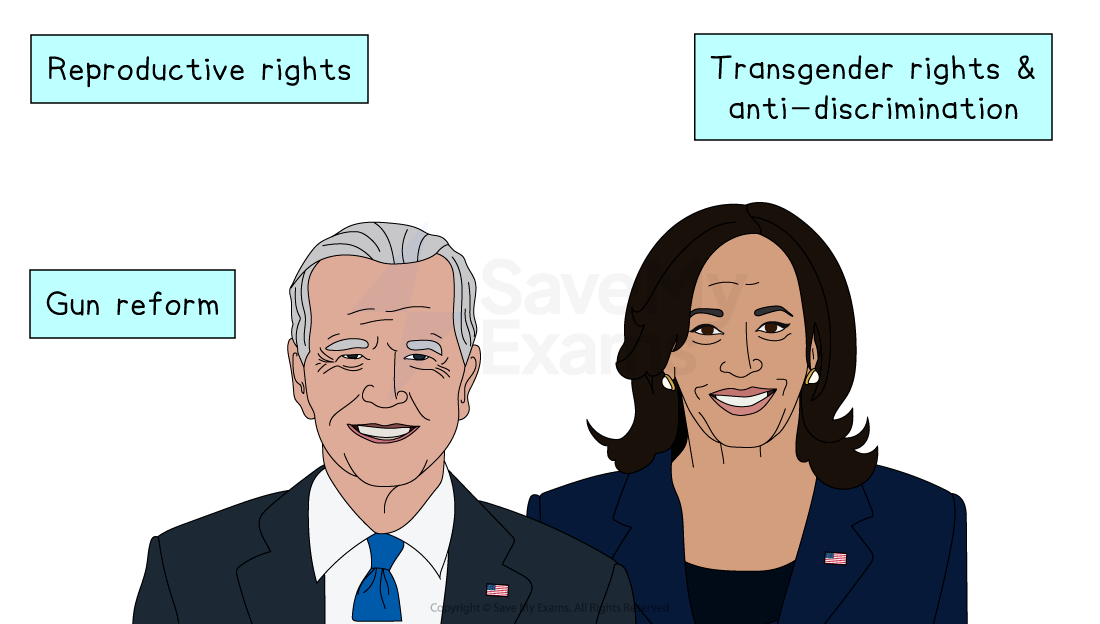
Reproductive rights dominated social policy
Especially after Dobbs v Jackson (2022), with Biden campaigning on restoring abortion protections nationwide
Gun reform efforts continued
Building on the Bipartisan Safer Communities Act (2022), which expanded background checks
Transgender rights and anti-discrimination policies featured prominently
Democrats opposed state-level restrictions on gender-affirming healthcare
Governmental intervention
The Democratic Party generally supports a mixed economy with significant government intervention to promote equality and economic stability
Democratic economic policy has recently become more interventionist, reflecting public demand for government action during unforeseen crises
Candidate | Election year | Policies |
|---|---|---|
Hillary Clinton | 2016 |
|
Joe Biden | 2020 |
|
Joe Biden (Kamala Harris) | 2024 |
|
Government provision of social welfare
Democrats consistently support an expanded welfare state to reduce inequality and protect vulnerable groups
Its welfare policy has evolved toward broader provision and federal responsibility
Candidate | Election year | Policies |
|---|---|---|
Hillary Clinton | 2016 |
|
Joe Biden | 2020 |
|
Joe Biden (Kamala Harris) | 2024 |
|
Liberals, moderates and conservatives
Rather than focussing on the names of specific factions, it is more important to understand the issues that cause division within a party
Factions within the Democratic Party
The Democratic Party contains several factions with differing ideological priorities
These factions create internal tension but also shape Democratic policymaking by forcing compromise between ideological ambition and electoral practicality
1. Progressive Democrats
Progressive Democrats advocate extensive economic redistribution and social reform
Key figures include Bernie Sanders and Alexandria Ocasio-Cortez, who have pushed policies such as Medicare for All and the Green New Deal
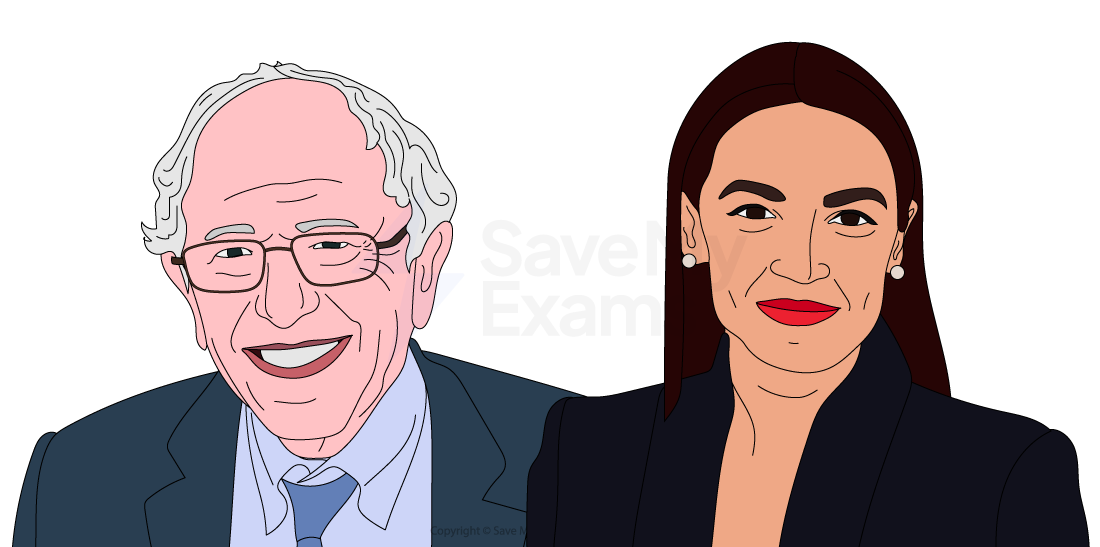
They argue that government should play a central role in reducing inequality
While Medicare for All has not passed, progressives successfully influenced the Inflation Reduction Act (2022), securing the largest-ever federal investment in climate change mitigation
2. Moderate Democrats
Moderate Democrats prioritise pragmatism and electability
Figures such as Joe Biden and Chuck Schumer represent this faction
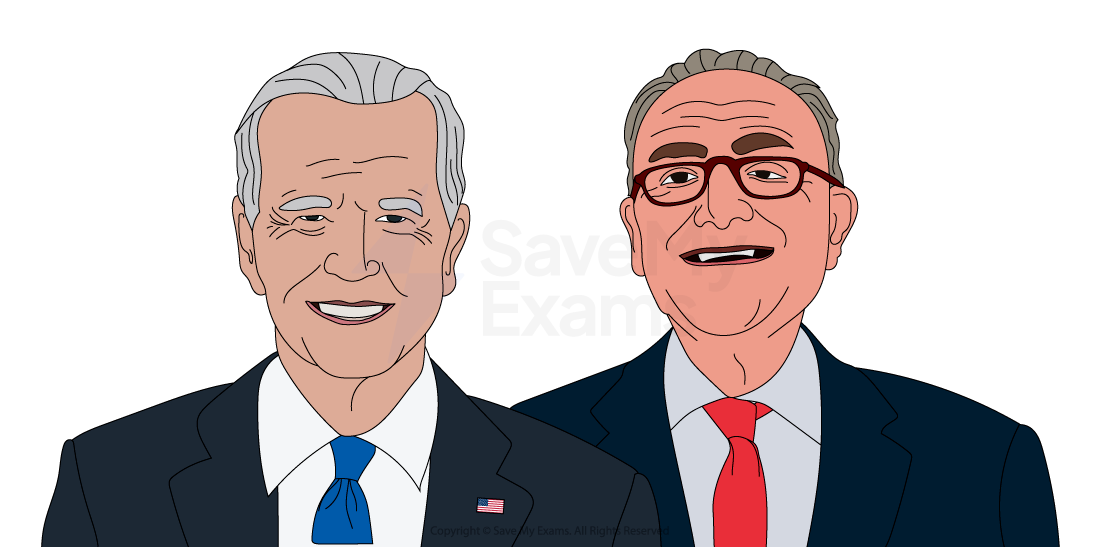
They favour incremental reform to maintain broad electoral appeal
Their influence is evident in Biden’s rejection of Medicare for All in favour of expanding the Affordable Care Act through a public option proposal
3. Centrist Democrats
Centrist Democrats emphasise bipartisan cooperation, often representing swing districts

Senators such as Joe Manchin and Kyrsten Sinema significantly shaped policy by opposing parts of Biden’s social spending agenda
For example, forcing reductions to Build Back Better and shaping the final Inflation Reduction Act
4. Blue Dog Democrats
Blue Dog Democrats focus on fiscal restraint and moderation, particularly in conservative-leaning districts
Although diminished in size, they have historically influenced budget negotiations and deficit reduction measures
5. Congressional Progressive Caucus
The Congressional Progressive Caucus acts as an organised bloc, using its voting power to extract concessions
In 2021, its members threatened to block the bipartisan Infrastructure Investment and Jobs Act unless it was paired with social spending, influencing negotiations over the Build Back Better agenda
Examiner Tips and Tricks
Factions within political parties are rarely fixed – they evolve over time, often rapidly

Unlock more, it's free!
Join the 100,000+ Students that ❤️ Save My Exams
the (exam) results speak for themselves:

Was this revision note helpful?