Economic:IMF & World Bank (Edexcel A Level Politics): Revision Note
Exam code: 9PL0

The role and significance of the International Monetary Fund
The IMF is an intergovernmental organisation (IGO) which promotes globalisation
It was established in conjunction with the United Nations at the close of World War 2 to secure global financial stability
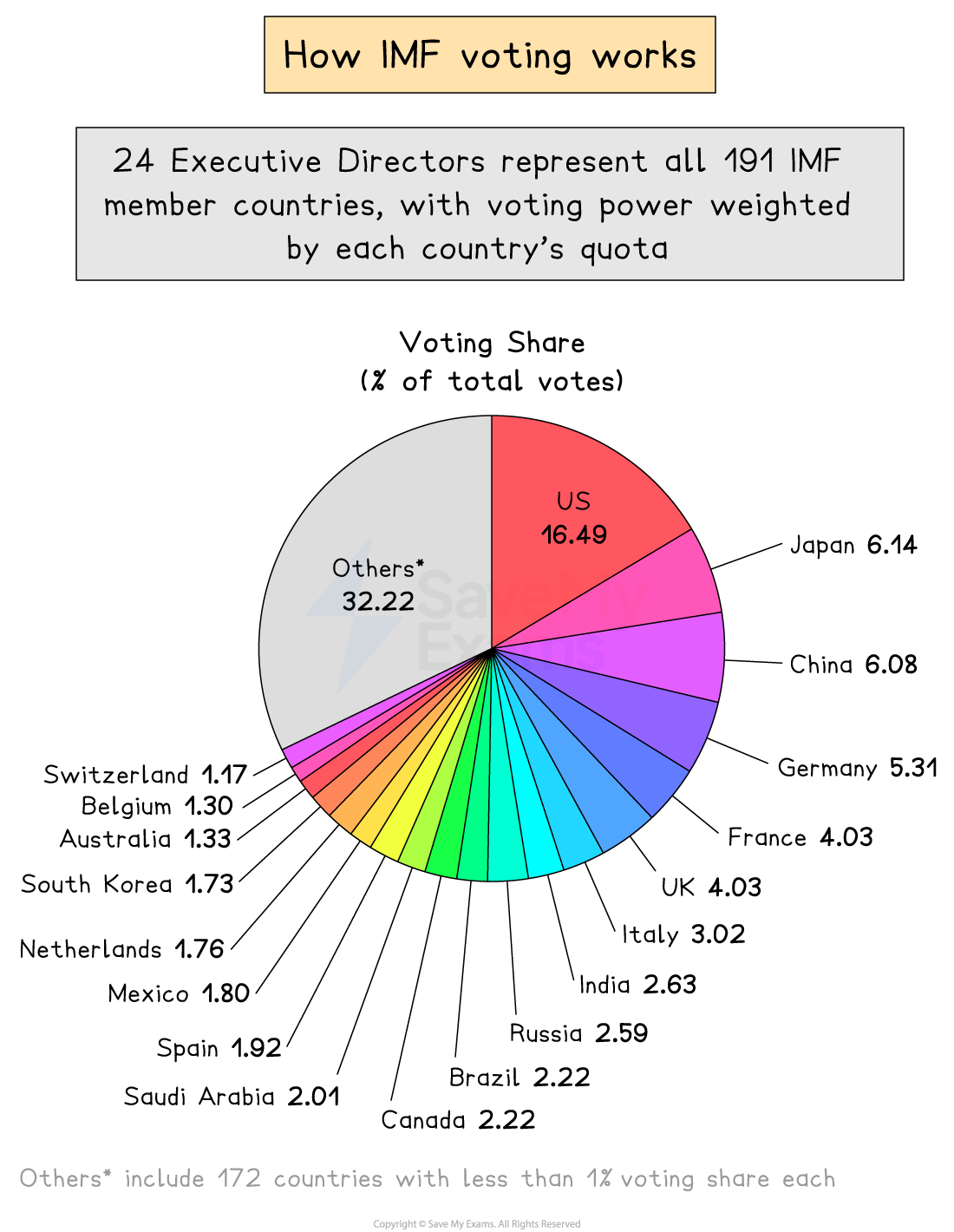
191 nation states are members of the IMF
They contribute financially based on their economic capacity
Higher contributing states have more voting power
The IMF monitors and attempts to stabilise the global financial system
It supports increased trade, economic growth and interconnectedness
It provides advice and financial assistance to states in the form of loans and aid
Loans come with conditions requiring the state to restructure its economy and focus on reducing debt and spending cuts
For example, Argentina has received multiple IMF loans, including a recent $20 billion loan, making it the IMF’s most indebted country
These loans come with conditions that require structural economic reforms aimed at stabilising the economy
The role and significance of the World Bank
The World Bank provides loans and policy advice to nation states
It was established in conjunction with the United Nations at the close of World War 2 to end extreme poverty
189 nation-state members work together to help countries develop economically and socially
They emphasise sustainable development and often focus on projects which promote green technology
For example they have funded solar power projects in Bangladesh; agricultural reform projects in Türkiye and forestry management in Liberia
Like the IMF, The World Bank also provides loans and imposes conditions
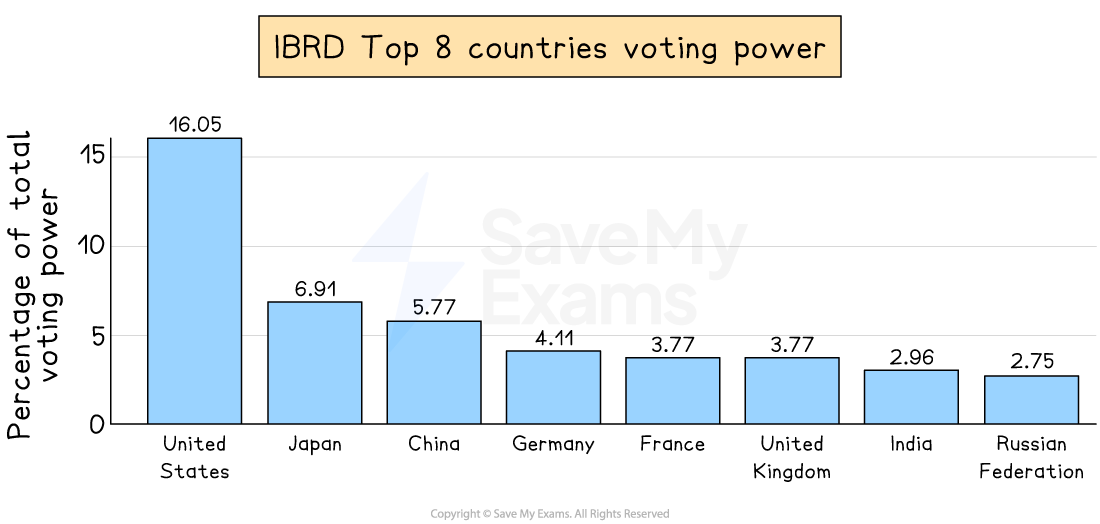
Voting power and decision-making power are determined by a state’s wealth
Voting power in the World Bank
Criticism of the IMF and World Bank
Some argue that the IMF and the World Bank are controlled by wealthy states, as the higher-contributing states
They have more voting power and a greater say in decision-making.
Some say loans issued come with harsh conditions and expectations which infringe upon state sovereignty

Unlock more, it's free!
Join the 100,000+ Students that ❤️ Save My Exams
the (exam) results speak for themselves:

Was this revision note helpful?
