European Integration (Edexcel A Level Politics): Revision Note
Exam code: 9PL0

The formation of the European Union (EU)
The idea of a distinct European identity is not a modern one
The devastation of World War 2 prompted renewed interest in working toward better political, economic and social interconnections to preserve peace and ensure regional prosperity
Milestones 1945-1959
Post-war economic cooperation is seen in such areas as the coal and steel industries
In 1957 The Treaty of Rome established the European Economic Community (EEC) to promote economic integration and the free movement of goods, people and services
The European Parliament was formed in 1958
Milestones 1960-1969
Further economic integration between states developed
The beginnings of international cooperation can be seen
Milestones 1970-79
The European Economic Community grows to include the following states and continues to politicise and promote economic cooperation
Germany
France
Italy
Netherlands
Belgium
Luxembourg
The United Kingdom
Denmark
Ireland
Milestones 1980-93
As communism in Eastern Europe declines, more countries join
The Erasmus program starts to foster links between and opportunities for young people to attend educational institutions across Europe
November 1, 1993 the Maastricht Treaty came into force, transforming the European Community into the the European Union
Role, objectives and development of the EU
The European Union is a global model of regionalism as a partnership of European states which promotes:
Peace
Prosperity
Democracy
Objectives and developments
Created a single market
Established an economic and monetary union
Countries coordinate their economic policies and share a single currency, the Euro, to promote economic stability and integration
Established the Schengen border-free zone
Many European countries have abolished internal border controls, allowing people to travel freely between them without passport checks
Created common laws, rules and standards
Acts as a unified global actor internationally
Key institutions of the EU
The EU is able to create policies and laws and, significantly, has a judicial component to ensure that they are correctly applied and enforced, giving them great legitimacy
Institutions of the EU
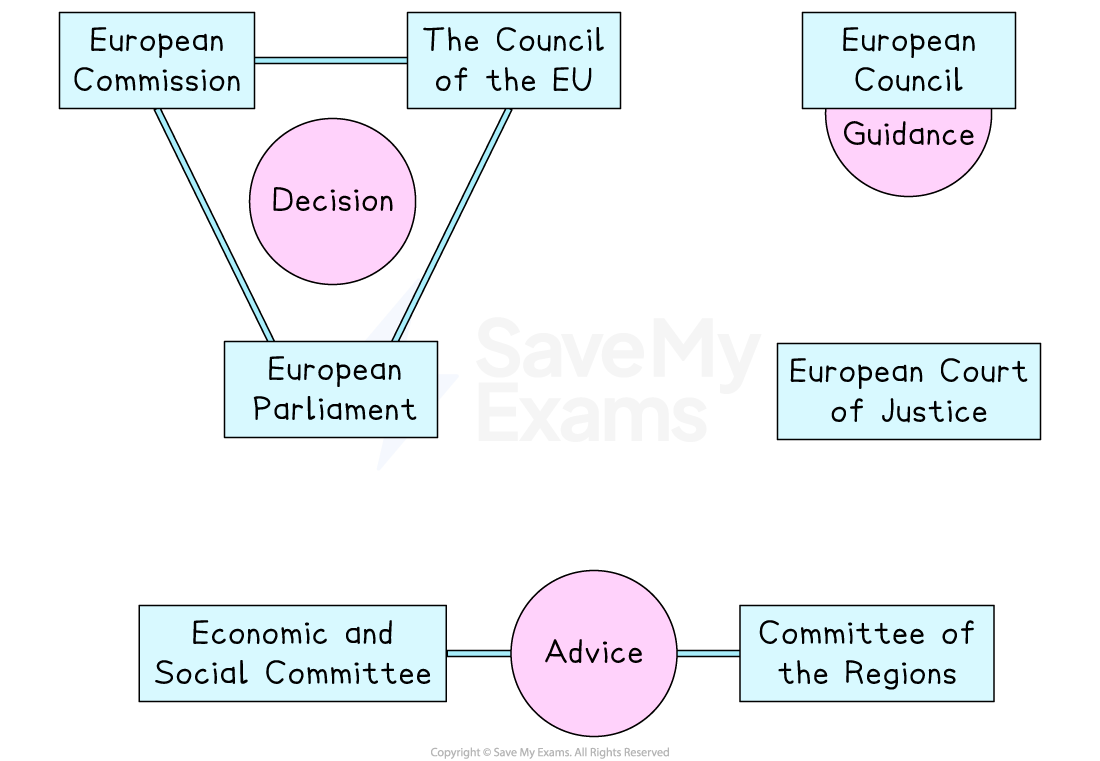
European Commission
The European Commission makes political and strategic decisions and proposes laws to parliament
European Parliament
Elected by EU citizens, the Parliament works with the Council of the EU and has the power to approve or alter laws proposed by The European Commission
Oversees the EU budget
Supervises the work of other EU institutions and works with the national parliaments of EU countries
Council of the European Union
Works closely with the European Parliament
Coordinates EU economic and security policies
Committee of the Regions (CoR)
350 representatives of regional and local governments working to increase participation of European regions in the EU community
European Economic and Social Committee
A platform for Europe's civil society groups to express opinions on EU issues
European Court of Justice
Ensures that EU laws are correctly enforced across EU countries
National courts are able to refer to the Court of Justice to explain a point concerning the understanding of EU law
European Council
Made up of the leaders (presidents and prime ministers) of each EU member country
It decides on the EU's overall political direction and priorities
EU enlargement
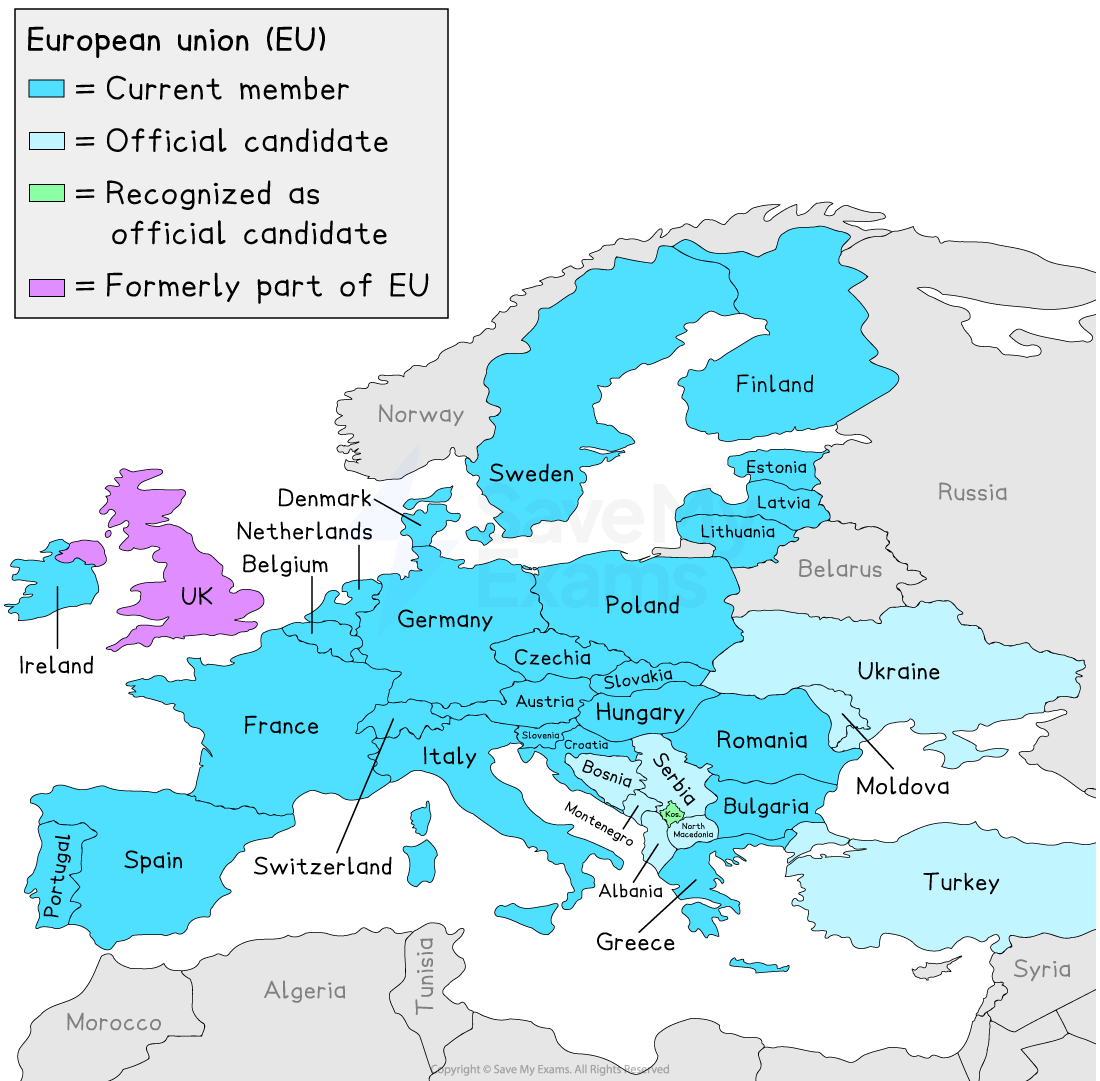
In addition to the growth in structure and scope, the number of member states has increased over the years with further applications pending
The UK (along with Gibraltar) exited in 2020
The EU is often cited as the most successful example of economic regionalism
Globally recognised as a stable and well-regulated system
The free movement of goods, services and people has led to economic growth for member states
In times of crisis, such as the Covid Pandemic, member states are able to fund and develop comprehensive recovery plans
Case Study
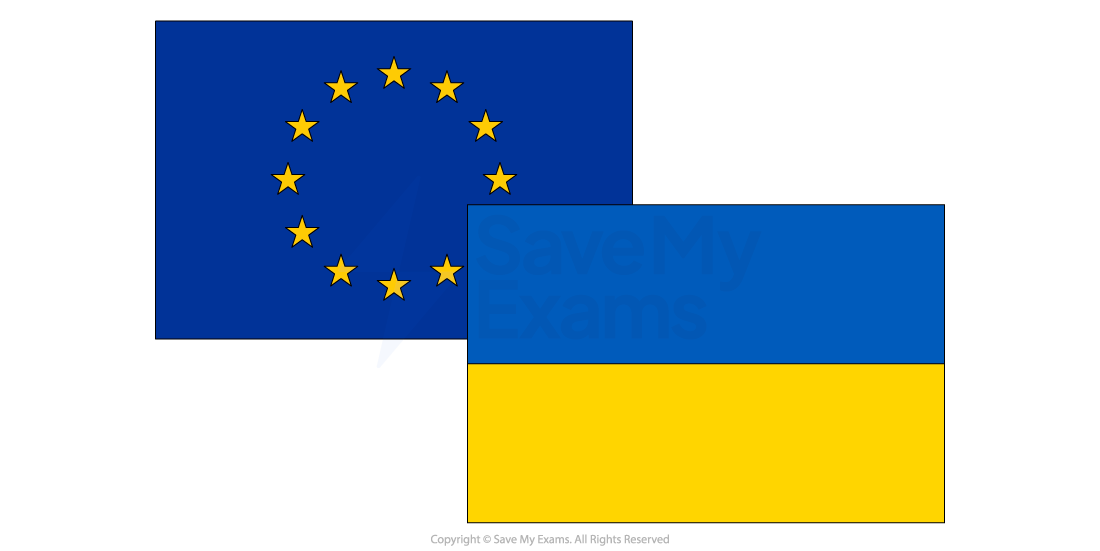
Ukraine’s application to become a member of the EU
In February 2022, just days after the Russian invasion, Ukraine applied to become a member of the EU
Accession progress
Accession negotiations formally began in 2024 after Ukraine had made significant progress on the following:
reforming its justice system
developing a functioning market economy
tackling money laundering
modernising its public administration
protecting the rights of national minorities
In 2025 Ukraine was subjected to further screening process regarding a wide range of required changes needed, including
Freedom of movement of goods, workers, services and capital
Law and judiciary reforms
Agricultural regulations, food safety and fisheries
Environmental regulations
By September of 2025 they completed the screening process and written reports summarising the progress were shared with all member states
EU attitude
The European Union has formally declared that the EU will be stronger with the inclusion of Ukraine, arguing that it would:
increase regional stability and security
reinforce shared values of freedom and democracy, and enrich cultural diversity and heritage
Expand the single market, creating new opportunities for European businesses and strengthening Europe’s competitiveness
Ukraine hopes to be formally approved as a member of the EU by 2027
Key treaties and agreements
The treaties and agreements of the EU are numerous
The most significant are its founding document and those connected with economic interconnectedness
Significant founding treaties | Trade agreements |
|---|---|
|
|
Economic and monetary union
Economic and Monetary Union is an essential component of the Maastricht Treaty
It requires coordination of its member states on
Policy-making regarding economic matters
Fiscal policies, including government debt and deficit
Acceptance of the monetary policy run by the European Central Bank (ECB)
Rules and supervision of financial Institutions
A single currency
The European Union argues that this coordination is beneficial to all member states
Benefits of greater size brings efficiency and economic stability
Benefits of higher growth and more employment
Economic governance under EMU
Within the EMU there is no single institution responsible for economic policy
Instead, the responsibility is divided between Member States and the EU institutions
The main actors in EMU are:
The European Council, which sets the main policy goals
The Council of the EU, which coordinates EU economic policy-making
The 'Eurogroup', which coordinates policies of common interest to member states
The member states, which set their national budgets within agreed limits for deficit and debt, and formulate their own policies which adhere to EU guidance involving employment and capital markets
The European Commission, which monitors performance and compliance
The European Central Bank (ECB), which sets monetary policy and acts as central supervisor of financial Institutions
The European Parliament, which shares the job of formulating legislation with the Council and reinforces democratic application of policies
Supranational versus intergovernmental approaches
A supranational organisation is an organisation made up of multiple countries where member states agree to share or transfer some sovereignty, allowing the organisation to make binding decisions that can override national laws in certain areas
The EU is, by definition, a supranational organisation and is regarded as such by the international community
It has power to exercise some of the functions of a state in global politics
Unlike other intergovernmental organisations, the sovereignty of member states is significantly reduced
Member states of the EU accept that the reduction of sovereignty because they expect economic benefits and security will be the result

Unlock more, it's free!
Join the 100,000+ Students that ❤️ Save My Exams
the (exam) results speak for themselves:

Was this revision note helpful?
