Realism (Edexcel A Level Politics): Revision Note
Exam code: 9PL0

Optional unit
Examiner Tips and Tricks
For Component 3, students only study ONE route: USA Politics (3A) or Global Politics (3B)
States as key actors
Realists argue that they see the world as it is, rather than what people may hope it to be
Realist theorists consider states to be the most significant actors in global politics
Power is the most significant concept
Human beings are selfish and competitive by nature and therefore so are states
Other actors may exist and attempt to exert power but they are always subjected to the will of powerful states
Powerful states have higher levels of external sovereignty, meaning they play a more significant role in global politics compared with other states
Relationships between states
All states possess some kind of power or ability to threaten or actually inflict damage to other states
Traditionally this could be linked to militarism but can also be linked to cybersecurity
States can never know the true intentions of other states and so should interact with caution
The primary goal of all states is its own needs and, ultimately, its survival
The balance of power
Some realists believe that the best chance of maintaining a stable world order is if the balance of power between states is maintained
In a multipolar world, this means a group of powerful states maintain their positions of power in relation to each other
In a bi-polar world, such as during the Cold War with the Soviet Union and USA, each of the two states kept up with each other in terms of power capability
It is debatable as to whether the Cold War can be defined as a stable world order period, as both primary states were constantly completing and threatening world peace
In a unipolar world, such as the situation which we see with the USA, there is no balance of power
One state dominates, contradicting the realist balance of power theory
Some argue the unipolar world system is unprecedented and unsustainable because balance is missing and inevitably hegemony will be challenged
Defensive realists | Offensive realists |
|---|---|
|
|
International anarchy
The international system is anarchic, meaning:
There is no higher power than the state
Any sense of world order being provided by a global governance institution or a universal human desire for peace, is fantasy
All states must depend on themselves for survival
Every state must maximise their power and security and never rely on another state or actor
States are constantly competing with each other and co-operation is only undertaken if each state is convinced it has more to gain than the other
A zero sum game is at play where one state’s gain is another state’s loss
The billiard ball model
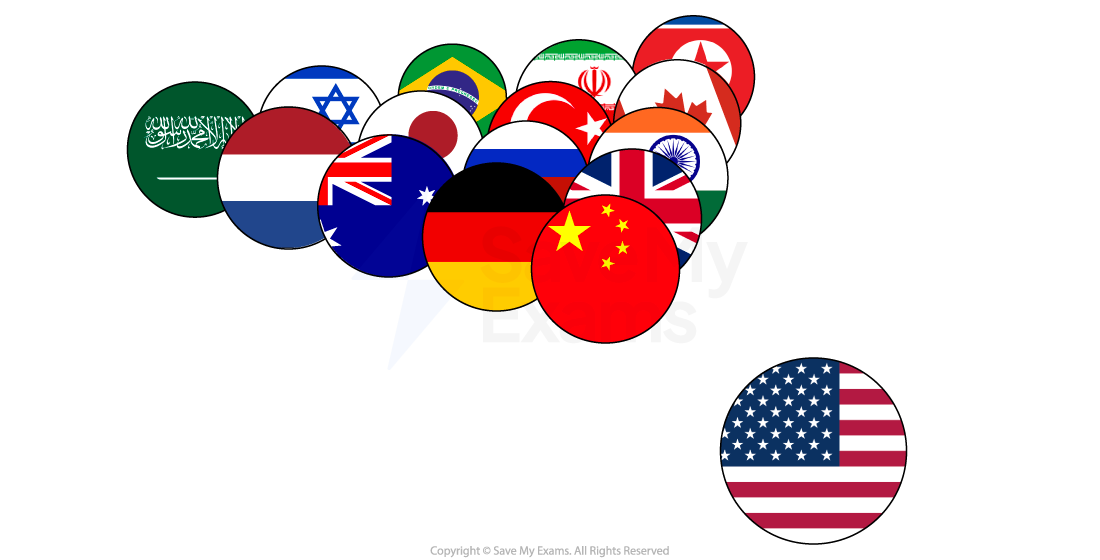
The billiard ball model explains global politics by treating states as separate, independent units operating in an anarchic international system
States are like billiard balls
Each has a “hard shell” of sovereignty, so what happens inside the state is largely hidden from the outside and the state acts as one united actor
Interactions are unpredictable
There is no guaranteed method for resolving disputes, so states rely on self-help to survive and protect their interests
Whether states cooperate, compete or clash depends heavily on the distribution of power in the system, which shapes how likely conflict is
Inevitability of war
Realists view conflict as inevitable
The constant competition for power (economic, military and political) eventually leads to conflict
International law will be ignored if states gain no benefit from following it, potentially leading to conflict
Examples that support a realist view
Russia ignores widespread condemnation for its invasion of Ukraine
Despite being a permanent member of the Security Council, it has violated numerous international laws in the process
Despite decades of interventions by global governance institutions and other states, Israel ignored calls for settlements to be halted in territories that legally belong to Palestinians
It ignores widespread condemnation from multiple actors and breaks many international laws
Israel also continues to persist in its use of disproportional force in a war against Palestinians as an act of genocide
A realist would argue these examples constitute strong evidence that states are only interested in their own gains and that there is no power greater than that of the state
The security dilemma
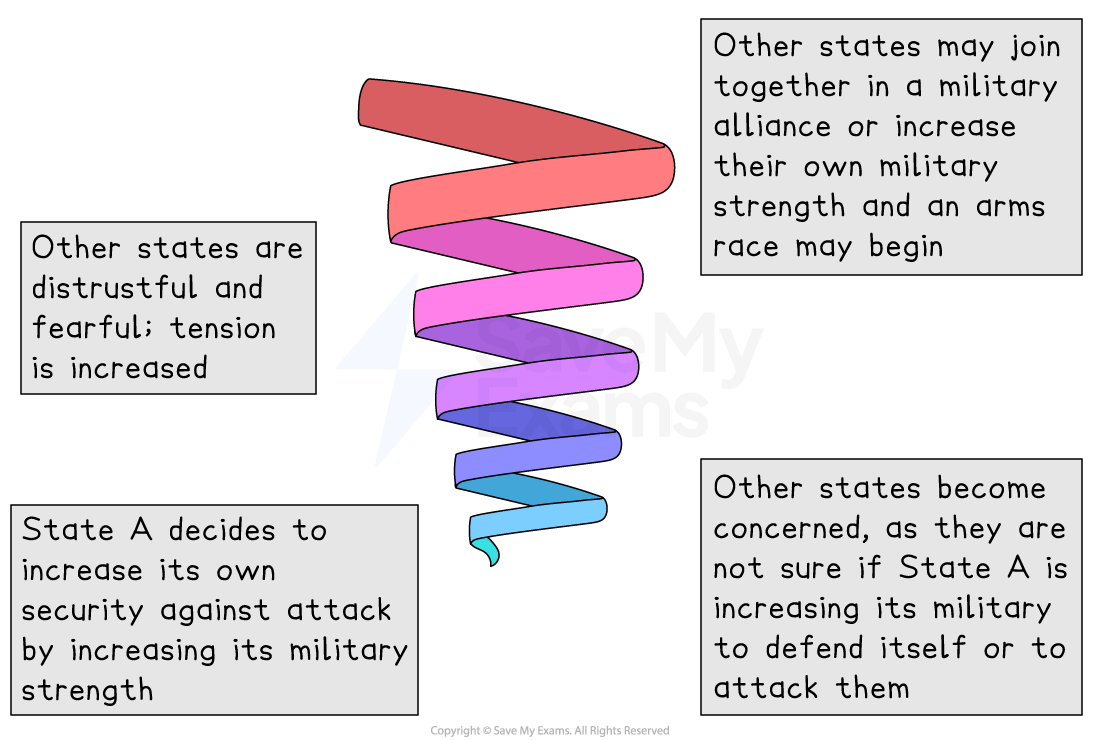
In realism. the security dilemma is the idea that actions taken by a state to increase its own security can unintentionally make other states feel less secure, leading to rising tension and conflict - even when no one wants war
The Security Dilemma is sometimes called a spiral model
In an anarchical world system each state is only concerned with itself
Conflict is inevitable even if all states recognise that it is not in their best interest
Case Study
The spiral model and the Ukraine conflict
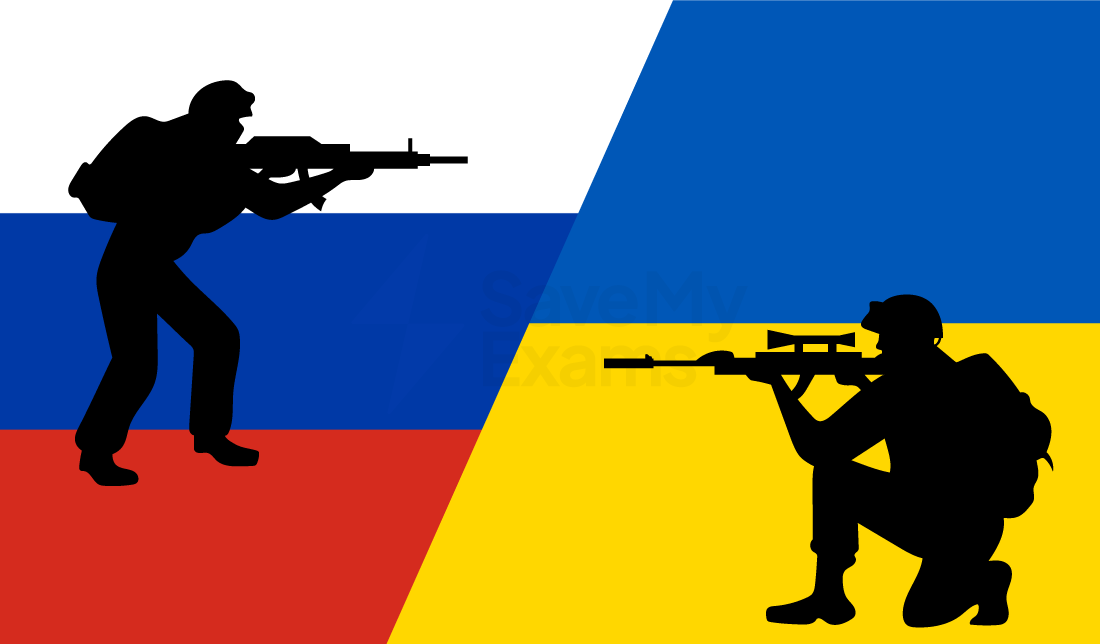
Since the end of the Cold War, NATO has expanded eastwards, incorporating several former Soviet Union states
NATO states viewed expansion as a defensive measure to promote security and stability
Russia interpreted this expansion as an offensive threat to its security and regional influence
Russia’s response
In response, Russia increased military activity and influence in its near abroad
This included the annexation of Crimea in 2014 and support for separatists in eastern Ukraine
Russia framed these actions as defensive, aimed at protecting Russian speakers and preventing NATO encirclement
Escalation into war
NATO responded by increasing military support for Ukraine and strengthening its eastern flank.
Russia interpreted this as further aggression, contributing to the decision to launch a full-scale invasion of Ukraine in 2022.
Each side’s attempts to increase security instead reduced overall security, creating a classic spiral of escalation
Significance
The Ukraine conflict demonstrates the Spiral Model clearly:
defensive actions by one side
misinterpreted as offensive by the other
leading to escalating hostility and war

Unlock more, it's free!
Join the 100,000+ Students that ❤️ Save My Exams
the (exam) results speak for themselves:

Was this revision note helpful?
