Regeneration (Edexcel AS Geography): Exam Questions

Exam code: 8GE0

2 hours24 questions
1
2 marks

Study Figure 2
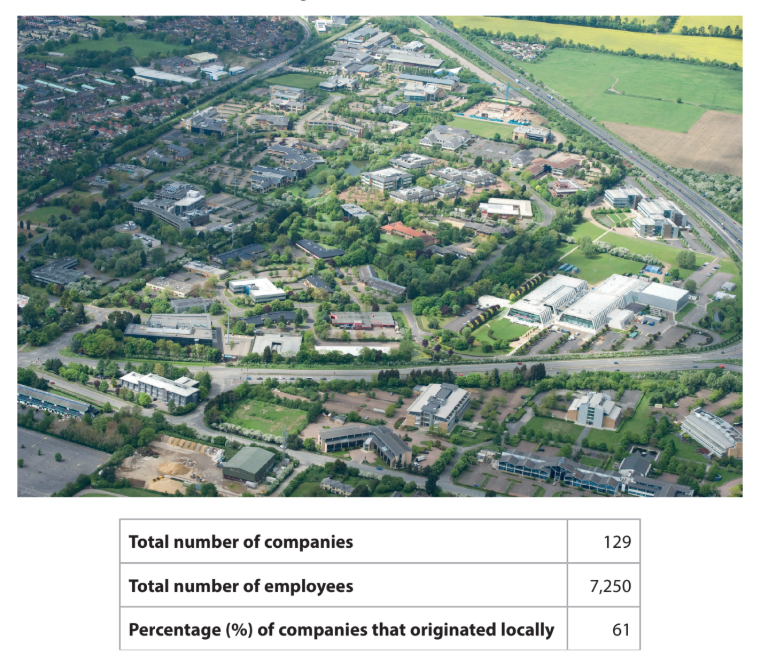
Cambridge Science Park, developed jointly by the local authority and university

Figure 2
Cambridge Science Park, developed jointly by the local authority and university

Calculate the mean number of employees per company.

You must show your working.

Give your answer to one decimal place.

Answer ...............................

2a
1 mark

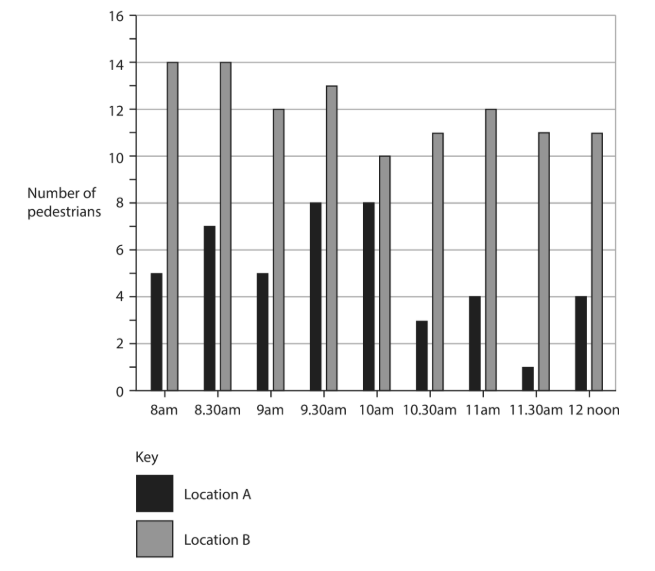
Students collected data about the number of pedestrians passing two locations(A and B) for one minute, at 30-minute intervals on a Monday between 8am and 12 noon. This was part of their research into a completed regeneration project.

One location was close to the completed regeneration project and the other was 2km away.

Study Figure 3.

Pedestrians passing two locations at 30-minute intervals between 8am and 12 noon

Figure 3
Pedestrians passing two locations at 30-minute intervals between 8am and 12 noon

State the range of the data for location A.

2b
2 marks

Suggest whether A or B is more likely to be closer to the location of the regeneration project.

2c
4 marks

Suggest two ways secondary data could be used to investigate the success of such regeneration projects.

3a
1 mark

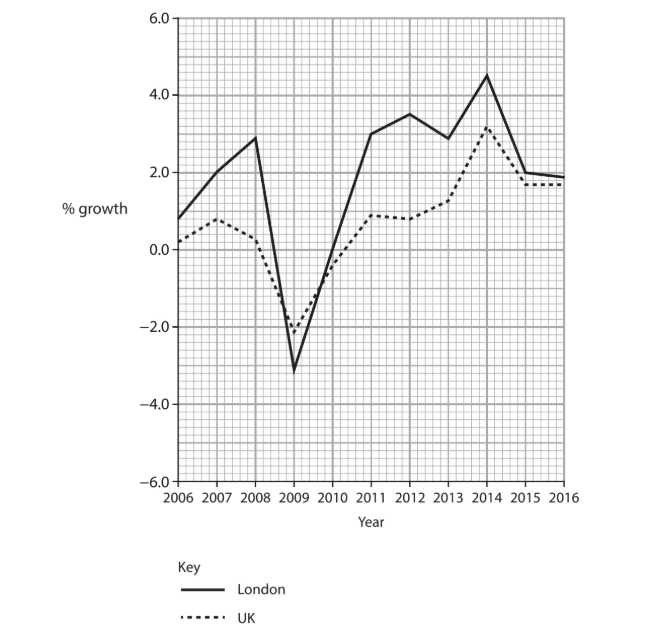
Study Figure 2a.

Percentage (%) growth of jobs in London and the UK, 2006–2016

Figure 2a
Percentage (%) growth of jobs in London and the UK, 2006–2016

Identify which one of the following statements is correct.

  • London’s % change in jobs has always been higher than the UK’s

  • The UK’s % change in jobs has always been higher than London’s

  • London’s % growth in 2015 reached 2.0%

  • The UK’s % growth in 2014 reached 5.0%

3b
1 mark

Calculate the difference between the % growth in jobs in London and the UK in 2011.

Answer = ...........................................%

4
4 marks

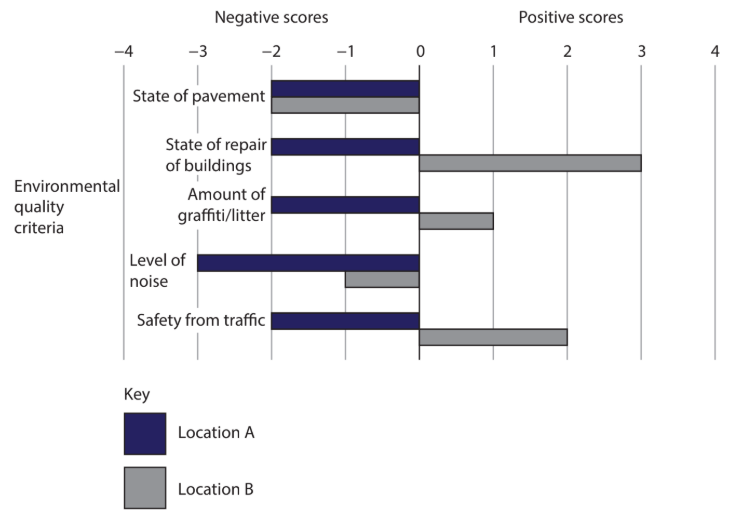
Study Figure 3.

Environmental quality in two contrasting locations in the students’ local town
Scores range from −4 to +4, where −4 is the lowest score for each category

Figure 3

Environmental quality in two contrasting locations in the students’ local town Scores rnge from −4 to +4, where −4 is the lowest score for each category

Explain how secondary data sources could be used to investigate the reasons for differences in environmental quality.

5
1 mark

Students interviewed tourists on Swanage seafront as part of an investigation into perceptions of the town. They used a stratified sampling method to select those they interviewed.

Suggest why this method was chosen.

6a
3 marks

Study Figure 8.

A word cloud about tourists’ perceptions of Swanage, a seaside town in Dorset

Figure 8
A word cloud about tourists’ perceptions of Swanage, a seaside town in Dorset
(Word size is proportional to the number of responses)

This word cloud was created by a student to present and analyse responses to an open question about perceptions of Swanage.

Describe the findings shown in Figure 8.

6b
4 marks

Explain one strength and one weakness of this method of data presentation.

Strength..............................................................................................

Weakness............................................................................................

7
3 marks

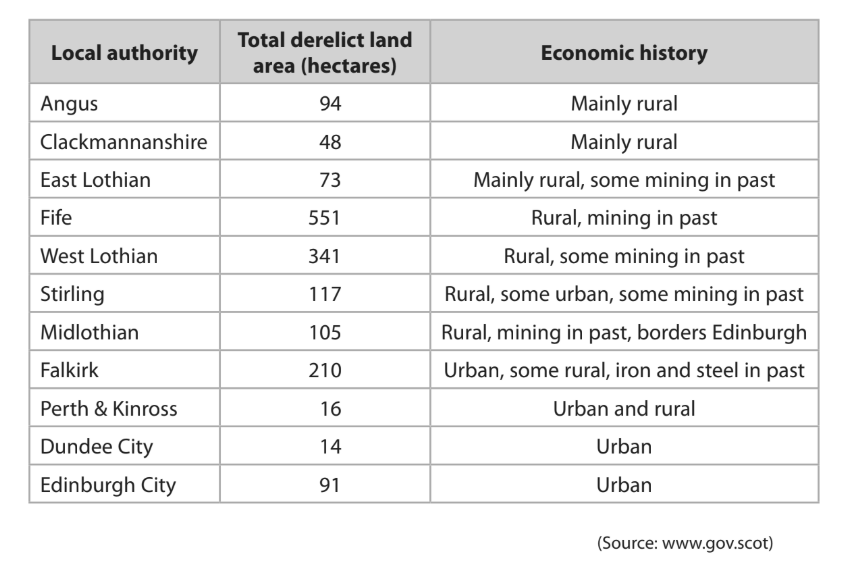
Study Figure 3

Derelict land in selected local authorities in Scotland in 2017

Figure 3
Derelict land in selected local authorities in Scotland in 2017

Suggest one reason why the amount of derelict land might differ between these local authorities.

8
4 marks

Describe two different viewpoints shown in media sources about the need for regeneration in your chosen local place.

Local place:......................................................

Viewpoint 1:......................................................................................................

Viewpoint 2:.....................................................................................................

9
6 marks

Explain why local opinions may differ about ways to regenerate places.

10a
2 marks

Study Figure 4.

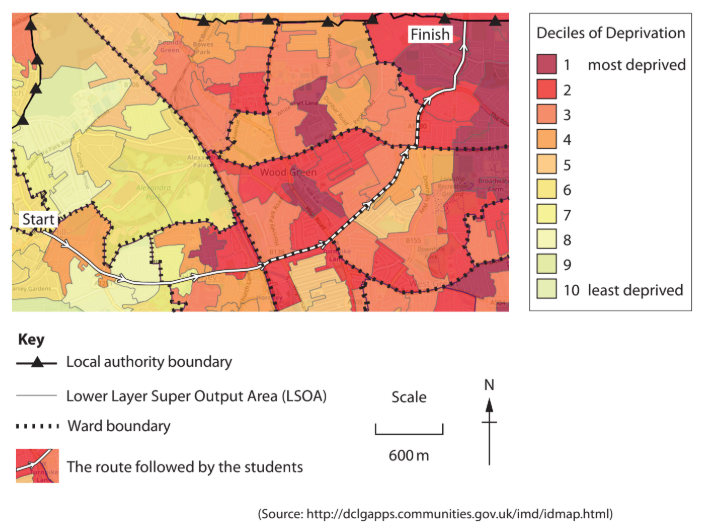
The students’ transect through Haringey (a local authority in north London) plotted on an Index of Multiple Deprivation (IMD) map

Figure 4
The students’ transect through Haringey (a local authority in north London) plotted on an Index of Multiple Deprivation (IMD) map

A group of students travelled by minibus along the route shown in Haringey, north London and used secondary data on multiple deprivation to support their fieldwork.

Describe the change in the level of multiple deprivation along the transect.

10b
2 marks

State one advantage and one disadvantage of displaying data using a choropleth map, as shown in Figure 4.

10c
1 mark

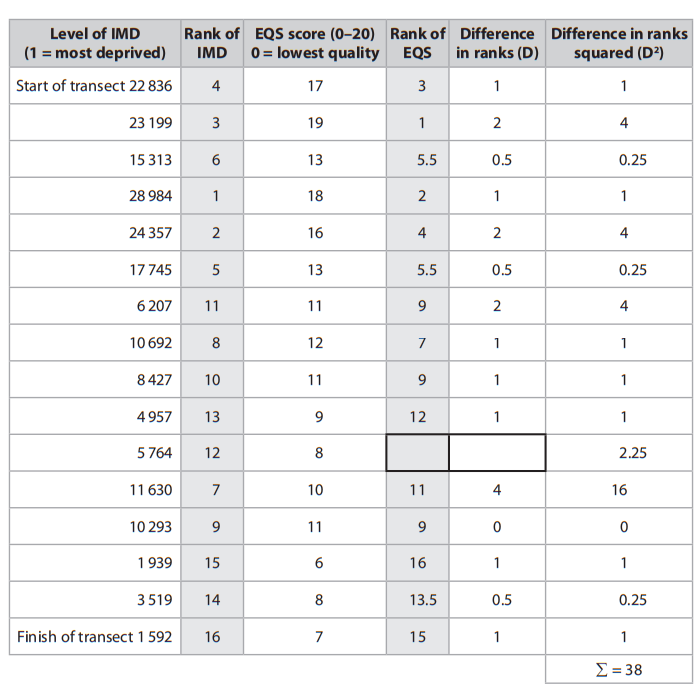
The students carried out an Environmental Quality Survey (EQS) in the 16 LSOAs along the route. The lower the number out of 20, the lower the environmental quality.

Spearman’s rank correlation coefficient was chosen to test the statistical relationship between EQS and IMD.

State a suitable null hypothesis the students could use to test the relationship between environmental quality and multiple deprivation.

10d
2 marks

Their partially-completed table to calculate the Spearman’s rank correlation coefficient is shown in Figure 5.

Complete the missing data in Figure 5 below.

Figure 5

Figure 5

10e
2 marks

The students used the Spearman’s rank correlation coefficient formula to calculate R and their result was 0.944.

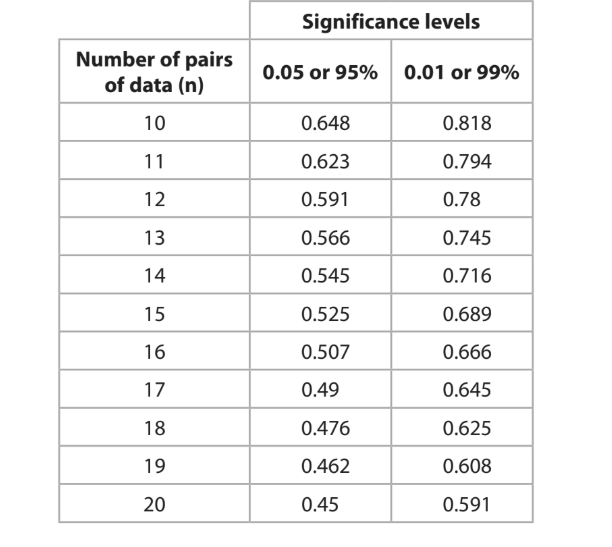
They used a critical values table, shown in Figure 6, to decide if they should accept or reject their null hypothesis.

Spearman’s rank correlation coefficient

Figure 6
Table of critical values for Spearman’s rank correlation coefficient (R)

Explain why they should accept or reject their null hypothesis.

11
9 marks

You have also carried out fieldwork about Regenerating Places.

Assess the accuracy and reliability of the methods used to collect primary data for your own enquiry.

Geographical enquiry question:

12
1 mark

Define the term ‘lived experience of a place’.

13
1 mark

Study Figure 2a.

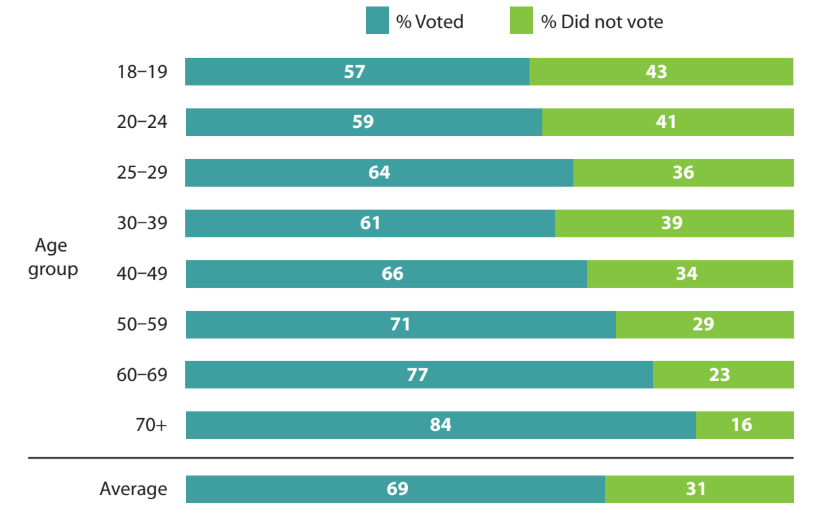
Voting behaviour by age group

Figure 2a
Voting behaviour by age group
(as sampled after the 2017 general election by Yougov)

Identify which one of the following statements is correct.

  • The highest percentage who did not vote were aged 30–39

  • Fewer aged over 70 years voted than those aged 18–19

  • The lowest percentage who did not vote were aged 20–24

  • More aged 60–69 years voted than the average

14a
1 mark

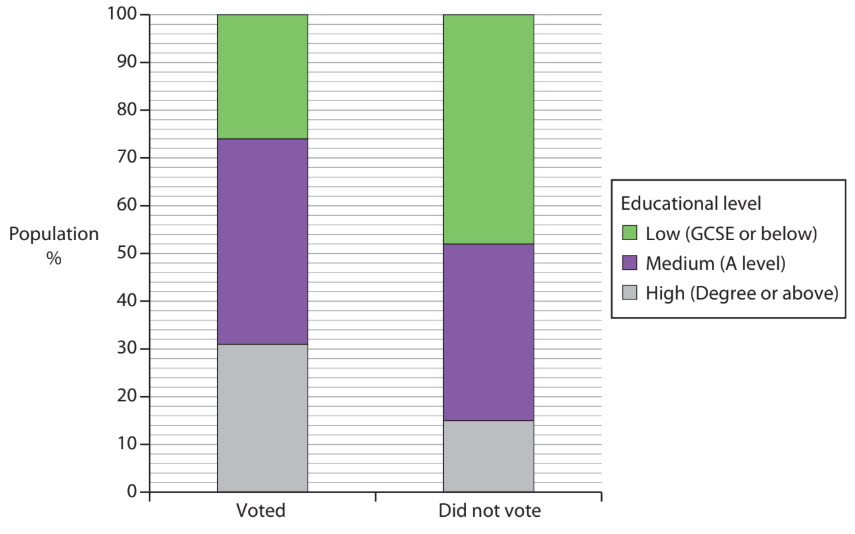
Study Figure 2b .

Voting behaviour by educational level

Figure 2b
Voting behaviour by educational level
(as sampled after the 2017 general election by Yougov)

Calculate the percentage (%) of those who voted, with ‘Medium’ qualifications.

14b
3 marks

Suggest one reason why those with a ‘Low’ educational level were less likely to vote.

15
12 marks

Assess why conflicts may occur between stakeholders involved in the regeneration of places.

16a
3 marks

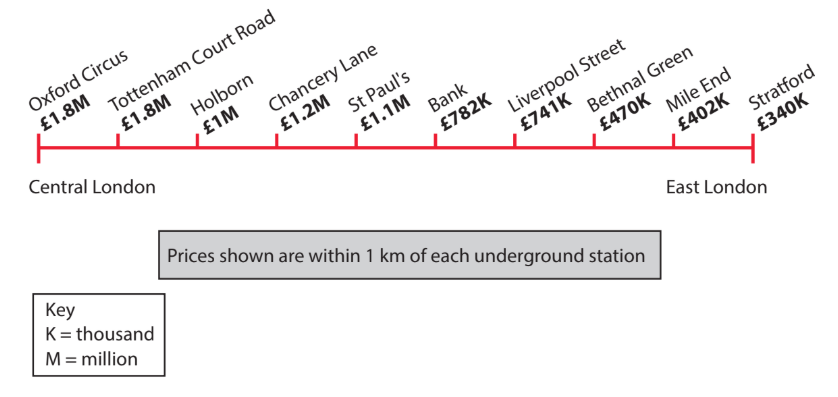
A student used secondary data about average house prices along a transect in London, as part of research on where regeneration was needed.

Study Figure 3 .

Average house prices

Figure 3
Average house prices along a London Underground train line, 2017

Describe the variation in average house prices from central to east London.

16b
2 marks

State one strength and one weakness of using average data to compare areas.

17
4 marks

Explain how one qualitative and one quantitative technique could be used as part of the student’s primary data collection into regeneration.

18
9 marks

You have also carried out fieldwork and research into Regenerating Places.

Assess the contribution of the secondary research data you used in investigating your geographical enquiry question.

Research question:

19a
1 mark

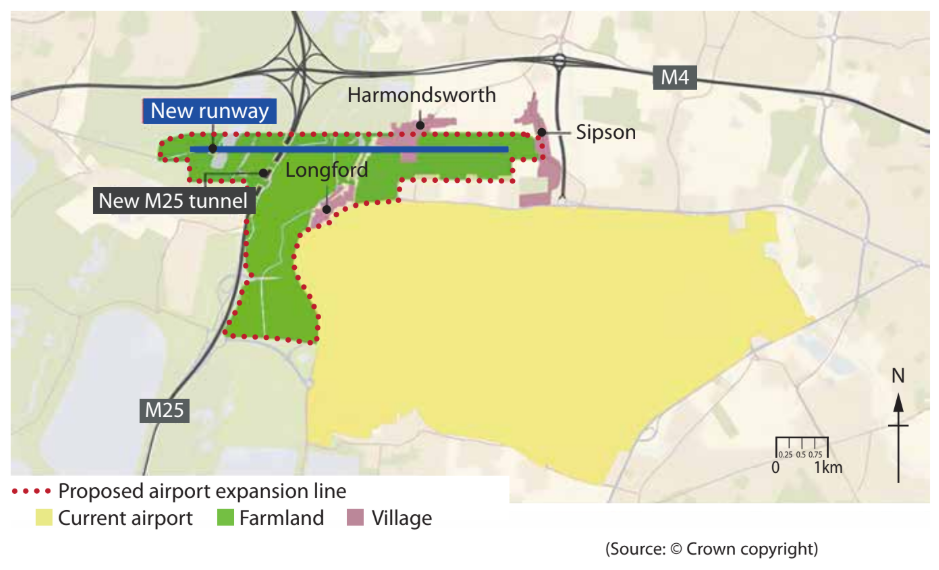
Study Figure 2 .

Map showing proposed airport expansion. Highlights a new runway, M25 tunnel, farmland, and villages like Longford, near M4 and M25 motorways.

Figure 2
Proposed expansion at Heathrow Airport

Calculate the length of the proposed new runway at Heathrow.

.............................................................km

19b
1 mark

Identify the approximate area of the proposed airport expansion.

  • 1 km2

  • 3 km2

  • 5 km2

  • 10 km2

19c
3 marks

Suggest one reason local people in Harmondsworth may object to the expansion of Heathrow Airport.

20
6 marks

Explain the factors that may lead residents to have a low level of engagement in their local community.

21a
1 mark

Study Figure 3 (opens in a new tab) in the below link which shows Chapeltown, near Sheffield, UK, which has undergone economic change.

Students collected data in this town on one day in November 2016 to investigate the changes.

Identify the building at location 352967.

21b
1 mark

State the 6-digit grid reference for the mast south-east of Mortomley.

21c
1 mark

The students started at the roundabout on the B6546, in Chapeltown. Each group collected data every 200m as they walked along one of the roads.

Identify the sampling method they used.

  • random

  • qualitative

  • systematic

  • stratified

22
2 marks

Identify two hazards that should be included in a risk assessment for fieldwork in an urban location.

23
9 marks

You have collected data during your fieldwork relating to Regenerating Places.

You then used a number of data presentation methods.

Assess how effective these were in showing the results of your fieldwork.

Research question:

24
16 marks

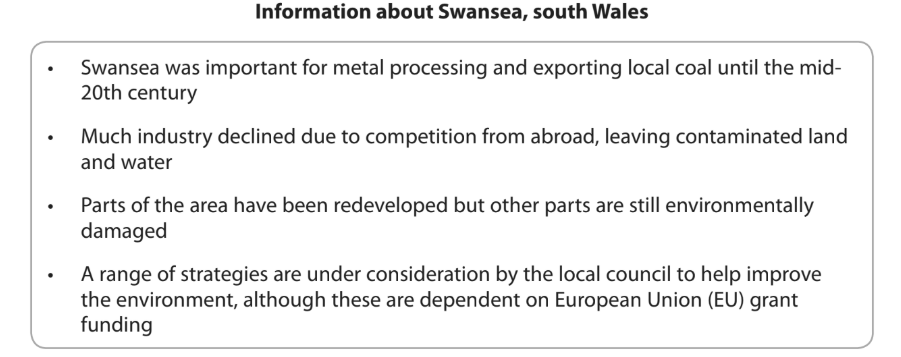
Study Figures 4a, 4b, 4c and 4d.

Information box discusses Swansea's historical metal industry, environmental damage, redevelopment, and EU-funded strategies for improvement.

Figure 4a
Industrial change in Swansea

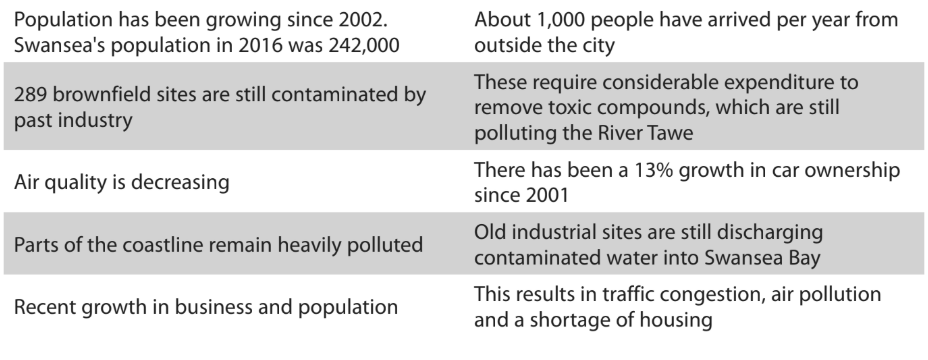
Table discussing Swansea's population growth, pollution from brownfield sites and coastlines, decreased air quality, and impacts on infrastructure.

Figure 4b
Challenges faced by Swansea

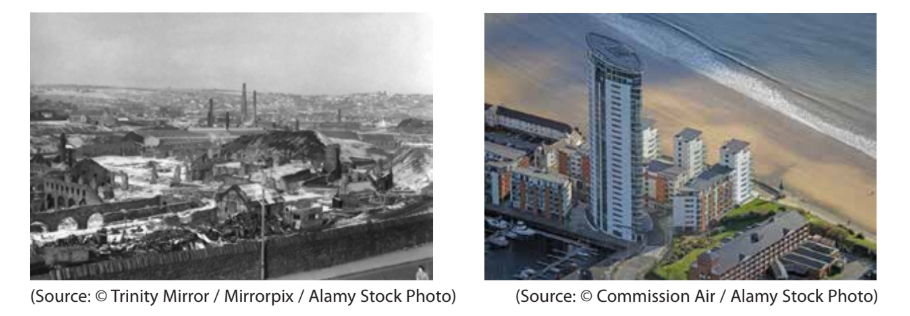
Left image shows an industrial area in black and white with smoke stacks; right image depicts a modern coastal high-rise building near the beach.

Figure 4c
Derelict factory site in 1960 and Meridian Tower waterfront development in 2008

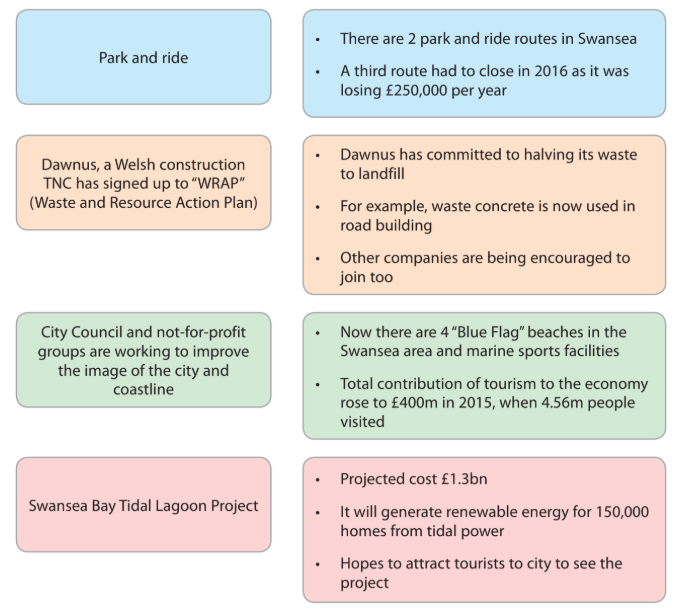
Some strategies used and planned to manage environmental challenges in Swansea

Figure 4d
Some strategies used and planned to manage environmental challenges in Swansea

Swansea faces many challenges.

Evaluate the effectiveness of the strategies shown in meeting these.