Advocates for Particular Causes (DP IB Global Politics): Revision Note

Interest groups
Interest groups are made up of people with shared interests in a particular cause or issue
They are similar to social movements, but interests are broader in scope and encompass a desire to advocate for all kinds of topics, including hobbies, professions, sports
Example of a cause: animal welfare
Animal welfare is a cause where many different interest groups have formed
These groups all advocate for the better treatment of animals, but what they want and how they go about doing so are diverse
Animal welfare group tactics
Name of group | Where they are active | How they define animal welfare | Tactics they use to advocate |
|---|---|---|---|
People for the Ethical Treatment of Animals (PETA) | USA with global offices |
|
|
Wildlife SOS | India |
|
|
Battersea Dogs and Cats Home | UK |
|
|
Measuring the impact of interest groups is challenging as their approaches and goals differ
Some are focused on educating the public
Some hope to influence governments
Some are focused on broadening membership of the group
Pressure groups
Pressure groups are similar to interest groups, but, as their name suggests, they apply pressure to powerful actors or governments to bring about change
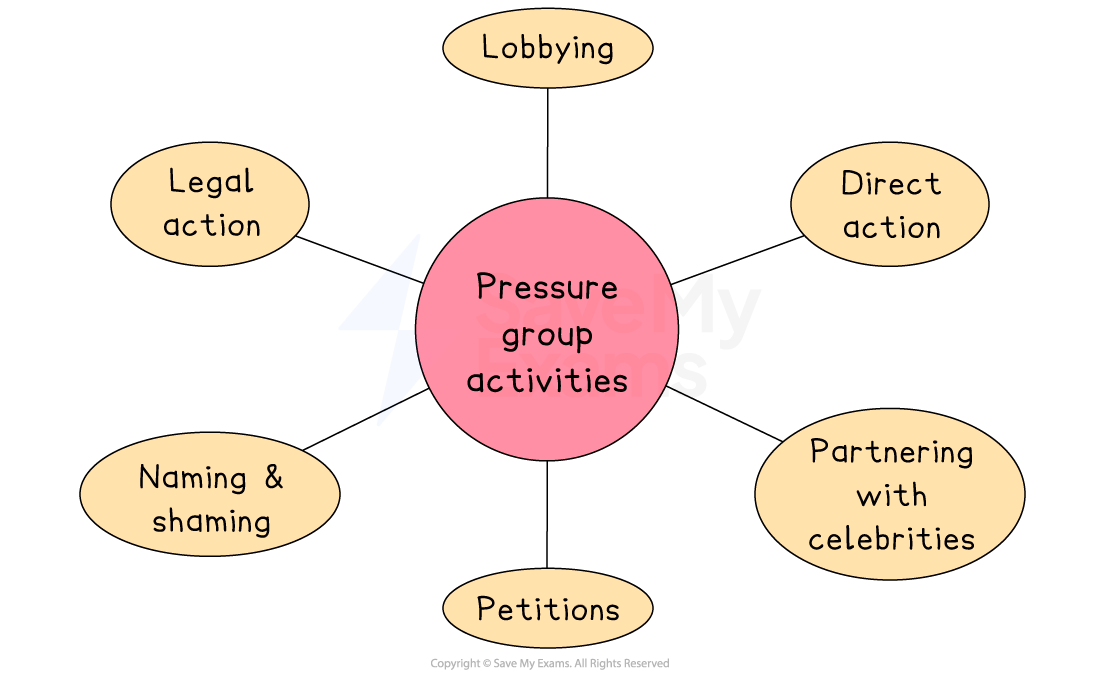
Pressure groups use a range of methods to influence government
Pressure group activities
Method | Successful example |
|---|---|
Lobbying |
|
Direct action |
|
Legal action |
|
Media campaigns |
|
Organising petitions |
|
Naming and shaming |
|
Partnering with celebrities |
|
Factors affecting pressure group success
Insider status gives direct access to decision-makers
Public support increases media coverage and political attention
Resources fund staff, research, campaigns and legal action
Expertise makes groups valuable to government when drafting complex policy
Opposition from rival groups or government reduces chances of success
Methods can raise awareness, but disruptive action risks alienating the public
Media
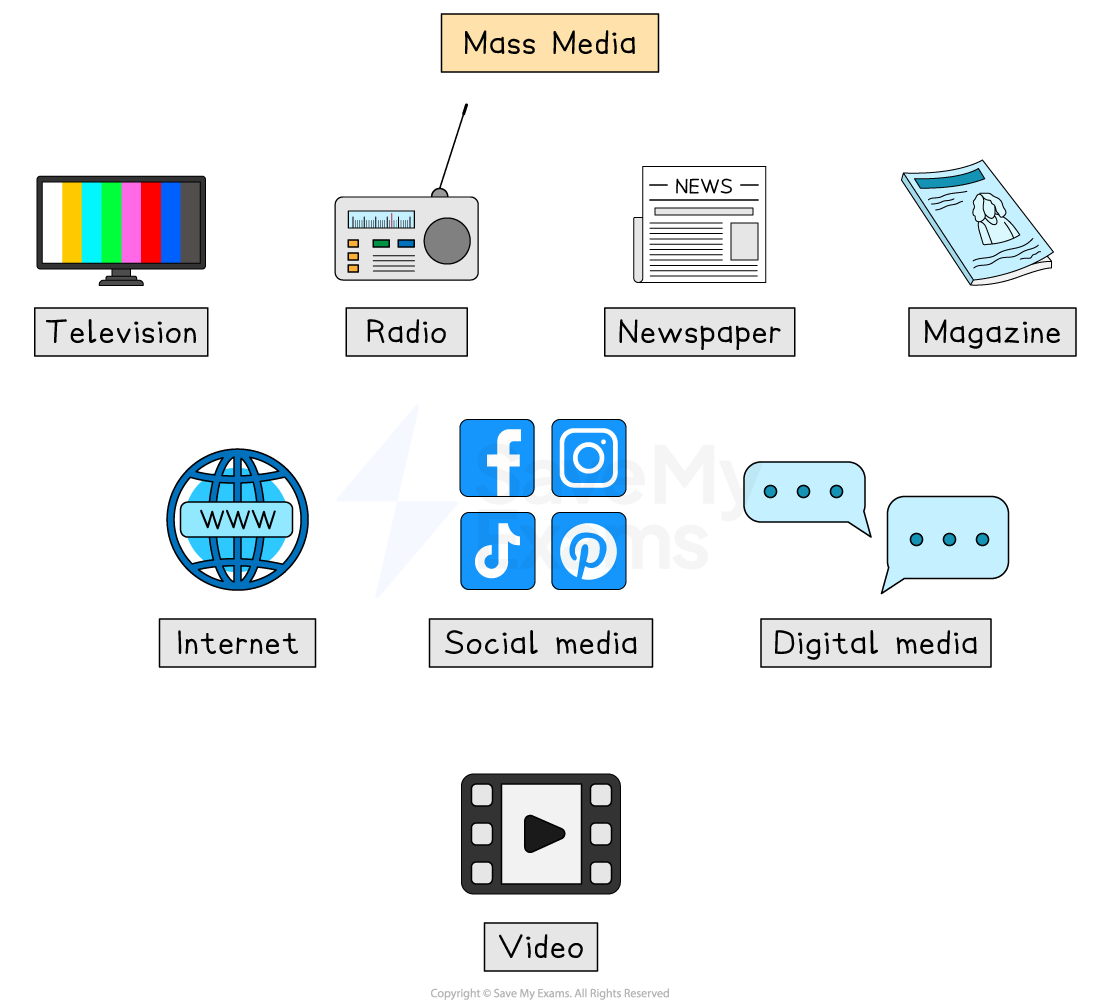
The media refers to the various forms of communication, such as television, newspapers, and social media, that provide information and influence public opinion
The media is used by governments, political parties, political leaders, companies, IGOs, NGOs, religions, social and resistance movements and interest and pressure groups to share ideas and influence media consumers
The media can promote political and social viewpoints of whoever owns or controls the media being produced
Social media algorithms are designed to tailor content based on user preferences
People are not exposed to alternate points of view and are likely to become fixed in their opinions
Increasingly media empires, including X, Meta, Disney, Warner Brothers and many of the world’s news agencies are owned by the wealthiest people on the planet
Some argue they use their media to promote political viewpoints that benefit them financially

Unlock more, it's free!
Join the 100,000+ Students that ❤️ Save My Exams
the (exam) results speak for themselves:

Was this revision note helpful?
