Organised Civil Society (DP IB Global Politics): Revision Note

Civil society and interest(pressure) groups
Civil society are groups of people, not linked to the government, who share common concerns or goals
They usually want to improve society by tackling areas that they think are problematic
Examples include:
Neighbourhood groups (on social media or in person)
Religious community groups
Groups representing the marginalised or those discriminated against
Cultural groups (for example wanting to preserve historical monuments or traditions)
Professional associations
Pressure groups and interest groups are also considered to be part of organised civil society, but their purpose is to influence or change public policies.
They go beyond meeting and discussing concerns and advocate for government changes
Case Study
Te Kōhanga Reo
Te Kōhanga Reo, meaning "language nest," is a Māori cultural movement founded in New Zealand in 1982
Its aim is to preserve and revitalise te reo Māori, the indigenous Māori language, which was in serious danger of dying out by the late twentieth century
It has been highly influential in shaping New Zealand's approach to indigenous culture and language
As a result of sustained campaigning, te reo Māori became an official language of New Zealand in 1987
The movement gave rise to Kura Kaupapa Māori, state-funded schools teaching entirely in Māori and established immersive language environments for pre-school children
Māori Television, a publicly funded broadcaster promoting Māori language and culture, launched in 2004
The number of Māori language speakers has stabilised and grown
Today approximately 185,000 New Zealanders speak te reo Māori
The movement is widely regarded as one of the most successful indigenous language revitalisation programmes in the world
Non-governmental organisations (NGOs)
NGOs are independent organisations that operate outside government to promote causes, influence policy, or provide services
They are considered to be a part of organised civil society that operate from the local to the global level of politics
Some characteristics of NGOs include:
They make decisions independently from government influence
They raise money through private donations
They are mostly concerned with human rights and improving the lives of people
Some respond to disasters to help those in crisis
Examples of NGOs active in global politics at the international level include:
Amnesty International
Human Rights Watch
Save the Children
Oxfam
Case Study
Médecins Sans Frontières
Médecins Sans Frontières is an international humanitarian NGO founded in Paris in 1971
It was established by a group of French doctors and journalists who believed that medical aid should be provided to anyone in need, regardless of nationality, religion or political affiliation
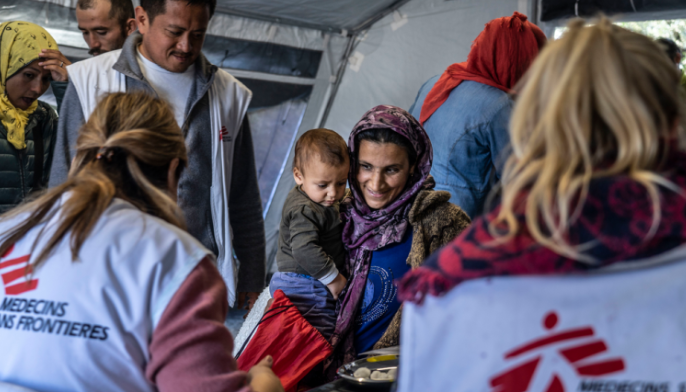
MSF provides emergency medical care in conflict zones, natural disaster areas and regions affected by disease outbreaks
It operates in over 70 countries and employs over 60,000 staff worldwide, the majority of whom are local healthcare workers
MSF has been particularly active in recent conflicts, including those in Syria, Yemen, Sudan and Gaza
MSF is funded almost entirely by private donations, allowing it to remain independent of governments and political influence
In 1999, MSF was awarded the Nobel Peace Prize in recognition of its humanitarian work
It has campaigned successfully for greater access to affordable medicines in low-income countries, influencing international pharmaceutical policy

Unlock more, it's free!
Join the 100,000+ Students that ❤️ Save My Exams
the (exam) results speak for themselves:

Was this revision note helpful?
