Private Actors & Companies (DP IB Global Politics): Revision Note

Individuals with influence
A private actor is an individual, company, or organisation that operates independently of the government but can still influence politics or public policy
Increasingly private actors are taking decisive roles in global politics
Private actors linked to powerful companies
Private actor | Company |
|---|---|
Mark Zuckerberg | Meta |
Jeff Bezos | Amazon |
Elon Musk | X, Tesla, Starlink |
Other private actors are not associated with any commercial interests, and their goals are not tied to the accumulation of wealth
However, they have influence and can bring about positive change
Examples of influential private actors
Private actor | Influence |
|---|---|
Malala Yousafzai  |
|
Greta Thunberg  |
|
In addition to these well-known women, many private actors work for positive change within states and may only be known at the community or national level
Case Study
Boniface Mwangi

Boniface Mwangi is a Kenyan photojournalist and activist, widely known within Kenya for his campaigns against corruption, police brutality and political impunity
He first gained national attention through his powerful photographs documenting post-election violence that killed over 1,000 people in Kenya in 2007–2008
In 2012, he founded a creative hub in Nairobi bringing together artists and activists to use art as a tool for social and political change
Mwangi has organised a series of bold public protests
One of these involved releasing piglets in front of Kenya's parliament building to highlight the greed and corruption of elected officials
He ran as an independent candidate for parliament in the 2017 Kenyan general election, using his campaign to challenge the political establishment
Despite losing the election, his activism has helped to shift public debate around accountability and corruption in Kenya
He remains one of Kenya's most prominent voices for civic change, though he is largely unknown outside East Africa
Companies with influence
Companies prioritise their own profit, and their influence on political issues often reflects this
Negative influences | Positive influences |
|---|---|
|
|
Case Study
Shell in Nigeria
Shell has operated oil fields in Nigeria's Niger Delta since the 1950s
Nigeria is heavily dependent on oil revenues, giving companies like Shell significant leverage over the government
The impact
Decades of oil extraction have caused severe environmental damage across the Niger Delta
Contamination of water supplies
Destruction of farmland and fishing grounds that local communities depend upon
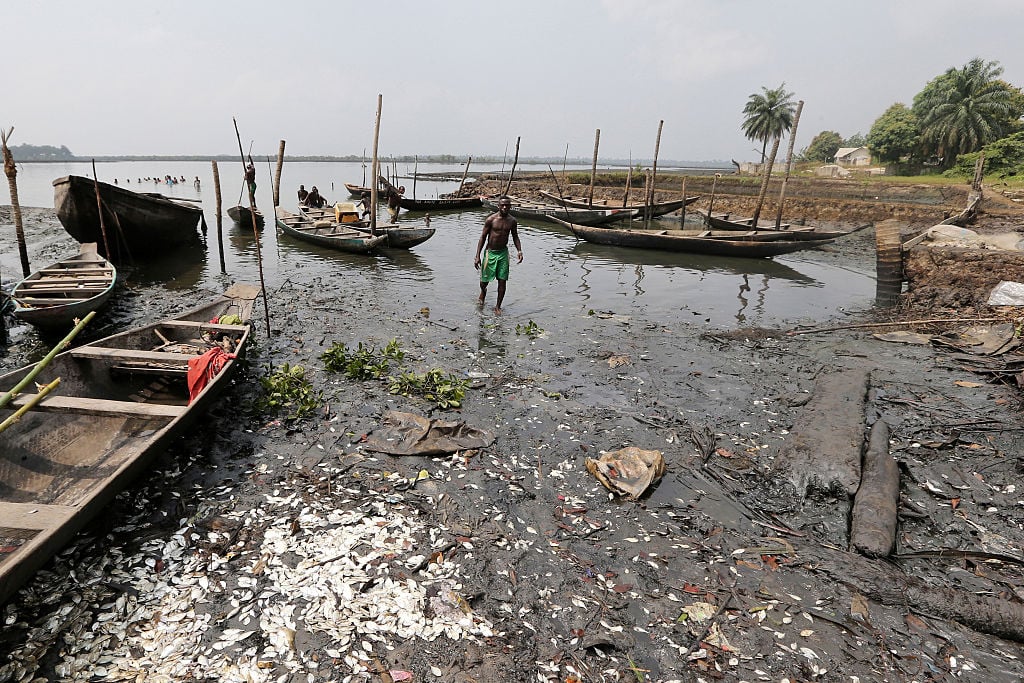
Nigerian law requires oil companies to clean up spills and compensate affected communities, but Shell has repeatedly failed to meet these legal obligations
The Nigerian government has struggled to enforce its own regulations, partly because of the country's economic reliance on oil revenues
Affected communities have had more success pursuing legal action in UK courts than in Nigeria itself
The outcome
In 2023, Shell agreed to pay £55 million in compensation to communities in the Ogoniland region, but only after decades of legal battles
Shell has since announced plans to sell its Nigerian onshore operations, raising serious questions about accountability for the environmental damage left behind
Religions with influence
Religions impact people in a variety of ways, which can then influence how they behave and treat others
Many political issues can be considered through the lens of religious belief, including
Human rights
Law and justice
Peace and conflict
Many political systems prefer to separate religion from politics, but this is not always easy to achieve
A key concern is that religion is centered on belief rather than practical policies
In a society with multiple religious beliefs – almost everywhere in the world – it is argued that one religion must never dominate
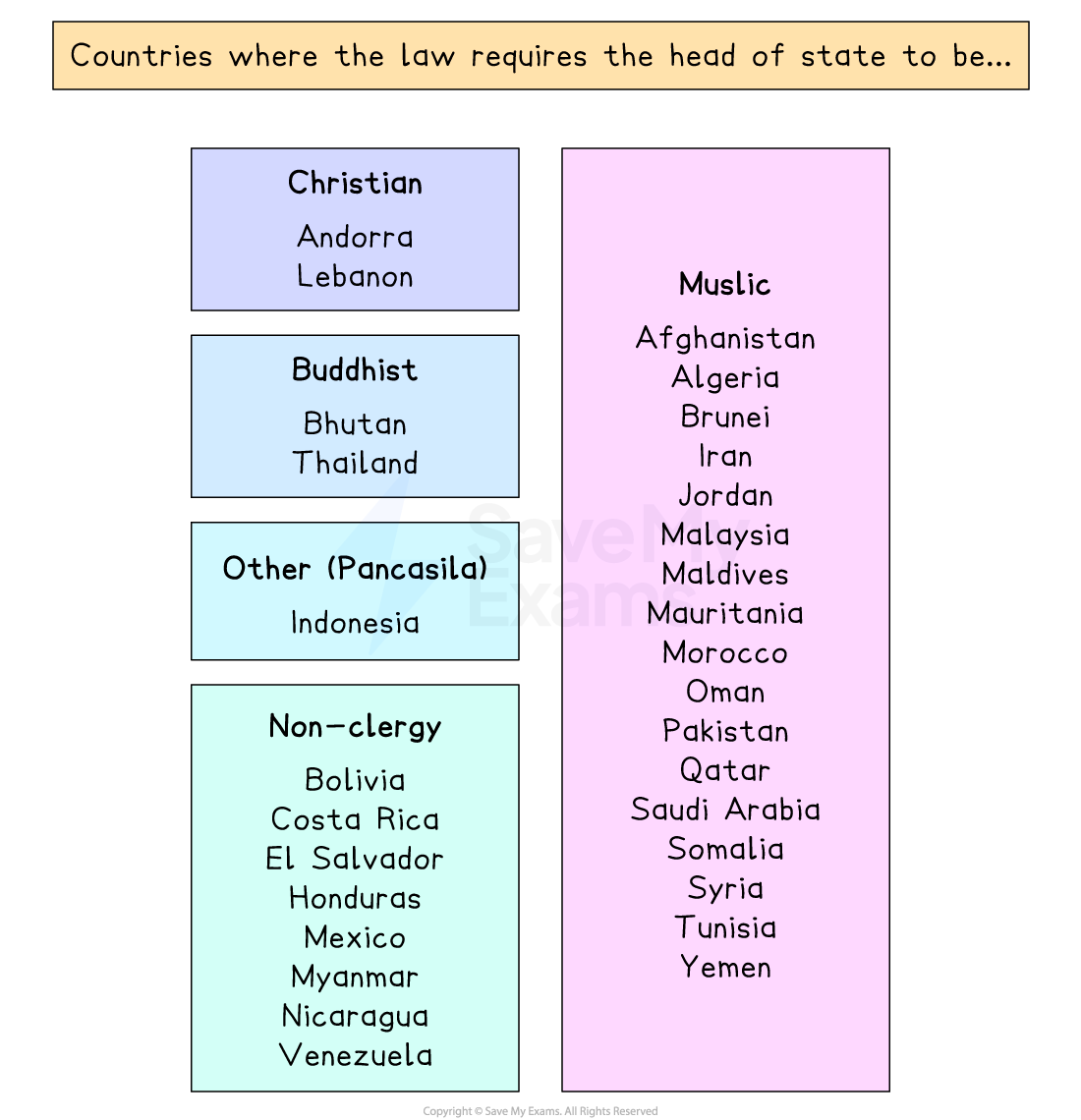
However, in 2026, thirty countries require their heads of state to have a particular religious affiliation

Unlock more, it's free!
Join the 100,000+ Students that ❤️ Save My Exams
the (exam) results speak for themselves:

Was this revision note helpful?
