Political Issues (DP IB Global Politics): Revision Note
Political issues at the international and regional levels
Political issues are problems or topics related to how a country is governed, including policies, laws and decisions that affect society
They are at the heart of global politics
Most political issues involve political actors wanting to make changes while others resist them, and stakeholders are impacted
Power is the key concept here - who has it and who wants it
Political issues in global politics are often associated with international and regional disputes or shared concerns between state actors
As the state is arguably the most important actor in global politics, it is a valid place to begin when thinking about issues at the international and regional levels
Other actors are involved in most real-world case studies and must be considered
IGOs
NGOs
Private actors and private companies
Resistance groups (non-violent and violent)
Political leaders
Media
Informal and formal forums
Current examples of political issues at international and regional levels
Level | Examples |
|---|---|
International |
|
Regional |
|
Examiner Tips and Tricks
The key to success when examining political issues is to consider them from the perspective of multiple actors and stakeholders.
Political issues at the national and local levels
Global politics students sometimes falsely assume that political issues only occur at the international or regional levels but, in reality, political issues are everywhere
Examiner Tips and Tricks
In coursework students ordinarily examine political issues at the local level because they are more accessible and relatable
Examples of political issues at national and local levels
Level | Examples |
|---|---|
National |
|
Local |
|
Case Study
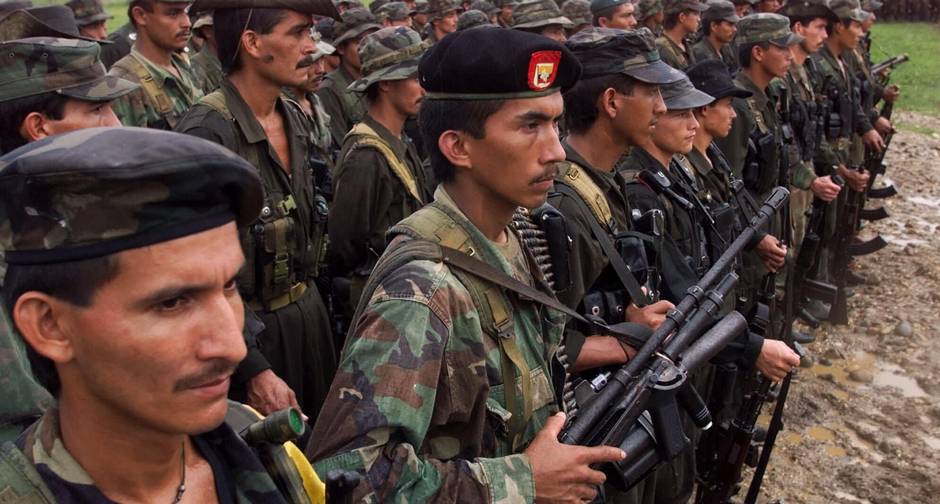
Farc in Columbia
The Revolutionary Armed Forces of Colombia (FARC) began in 1964 as an armed resistance movement
It emerged from rural grievances about economic inequality, land ownership and political exclusion, particularly affecting farmers and rural communities
The group adopted a Marxist ideology, arguing that wealth and land in Colombia should be redistributed more fairly
Actions
To pursue these goals, FARC carried out violent actions including bombings, kidnappings and attacks on military bases and political leaders
The group funded its activities through drug trafficking, ransom payments and other illegal businesses, which strengthened its ability to challenge the Colombian state
Outcome
After decades of conflict, peace negotiations between the Colombian government and FARC eventually produced a peace agreement in 2016.
The agreement aimed to end more than 50 years of armed conflict and included provisions for rural reform, political participation and the disarmament of rebel fighters under UN supervision
Evaluation
The conflict caused hundreds of thousands of deaths and millions of displaced people
Inequality and violence in Colombia have continued in many regions
Overall, FARC’s use of violent resistance did not successfully resolve the political issue of inequality
Instead, it contributed to long-term instability and social disruption, illustrating the limits of violent movements in addressing complex political problems

Unlock more, it's free!
Join the 100,000+ Students that ❤️ Save My Exams
the (exam) results speak for themselves:

Was this revision note helpful?