Market Segmentation (OCR GCSE Business): Exam Questions

Exam code: J204

15 mins7 questions
1
1 mark

Case Study

J Sainsbury plc (Sainsbury’s)

Sainsbury’s is one of the UK’s largest supermarket chains. Sainsbury’s targets middle to high income customers nationally. Sainsbury’s is owned by shareholders who have limited liability.

The supermarket industry is very competitive, and marketing promotions are important. An example is Sainsbury’s price match against similar products sold by Aldi, one of its competitors. Sainsbury’s also spends a large proportion of its marketing budget on television advertising.

Developing new products is important to remain competitive, as customers are always looking for something new. Sainsbury’s uses market segmentation to support successful product development.

Sainsbury’s managers believe that good food should be accessible to everyone. They use primary market research to ensure the business develops products that meet the needs of its customers.

Analyse one likely reason why Sainsbury’s uses market segmentation when developing new products.

2
2 marks

Case Study

Close-up of a finger pressing a keyboard key with a shopping trolley icon, symbolising online shopping, beneath the text "Boohoo.com".

Boohoo was started in 2006 by two entrepreneurs who had the idea of starting a business where customers could buy the latest fashions online.

Boohoo has expanded using organic growth, and has become a global online retailer of its own brand clothes, shoes and accessories. It now sells in over 100 countries. Boohoo charge for delivery. It has millions of website users per month.

The target market for the Boohoo brand is men and women who are 16 to 24 years old and are fashion conscious. To reach this market, Boohoo uses social media. The business is active on Facebook, Twitter, YouTube and Instagram.

Boohoo has also introduced apps for smartphones and tablets that allow customers to browse and buy products very easily.

3
2 marks

Case Study

Nina’s Knitting Supplies

Nina runs a successful business selling knitting wool and sewing products. She opened her first shop 15 years ago. The business has grown organically and now sells products from 10 shops and a website. Nina uses market segmentation to target customers. Nina employs 80 people. She works hard to meet the shared objectives of her employees, as well as external stakeholder groups such as customers, suppliers, lenders and the local community.

Nina produces a weekly update that is sent by email to all employees every Friday. The updates contain information about the future development of the business, plus other stories of interest to employees. Recent stories include congratulating an employee on the birth of a child and the charity fundraising activities of one shop.

Nina plans to develop the business further over the next five years, especially as knitting is becoming an increasingly popular pastime. This has led to more competitors entering the market.

Explain one way that a business can segment its market.

4
1 mark

The owner of a toy shop wishes to use market segmentation to target customers.

What is an example of market segmentation?

  • Encouraging customers into the shop by posting on social media

  • Opening a second toy shop in the same town

  • Organising the toys in the shop by age group

  • Viewing a rival store’s website to identify its special offers

5
6 marks

Case Study

Miles Ahead

Miles Ahead is a bicycle retailer which was set up in 2001 by entrepreneur, Reg Patel. Reg started with one shop, but the business has gradually expanded. There are now six ‘Miles Ahead’ shops. Despite the growth in Miles Ahead, Reg still operates the business as a sole trader, with 15 employees and a tall organisational structure. Reg segments the market (e.g. different bicycles according to age, gender, lifestyle and income), which he thinks has supported his success.

Reg is going to retire in six months’ time. He is selling the business to Nessa Watts. Nessa has a lot of business experience. She has sold jewellery online as a sole trader for many years. Nessa has plans to expand Miles Ahead.

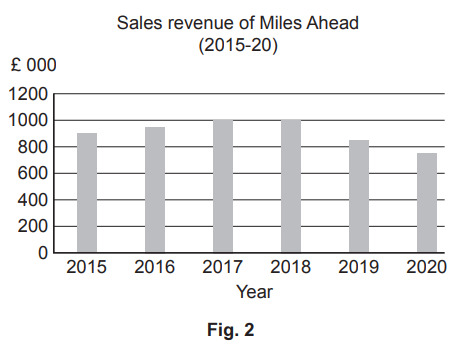
Nessa has had to borrow £500 000 to purchase the business from Reg. Nessa is considering whether to open more ‘Miles Ahead’ shops or launch a ‘Miles Ahead’ website so that customers can purchase online. Sales within the business have fallen over the past two years (see Fig. 2) which Nessa feels is due to the traditional appearance of the shops.

Bar chart depicting sales revenue of Miles Ahead from 2015 to 2020 in thousands of pounds, showing peaks in 2016 and 2019.

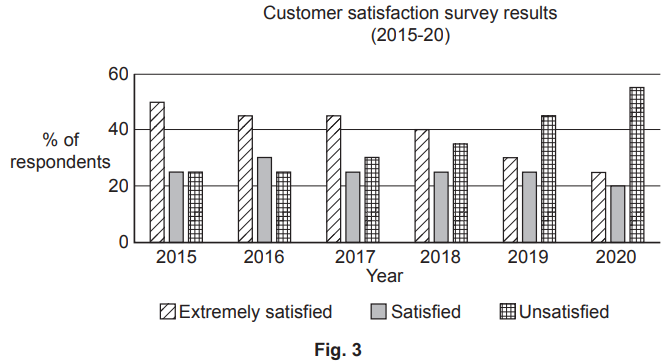
The latest customer satisfaction information is also of concern to Nessa (see Fig. 3).

Bar chart showing customer satisfaction from 2015-2020. Categories: Extremely satisfied, Satisfied, Unsatisfied. Highest in 2020 for Extremely satisfied.

Analyse two benefits for Miles Ahead of using market segmentation.

Benefit 1 .................................................................................................................

Benefit 2 ................................................................................................................

6
1 mark

Case Study

Best Foot Forward Ltd (BFF)

Best Foot Forward Ltd (BFF) operates five stores in the north-west of England, selling shoes (such as ballet and tap) for adult dancers. Up until 2017, the business was growing, due to its reputation for quality products.

A new Managing Director, Jessie Thompson, was appointed six months ago to reverse the recent poor performance of the business.

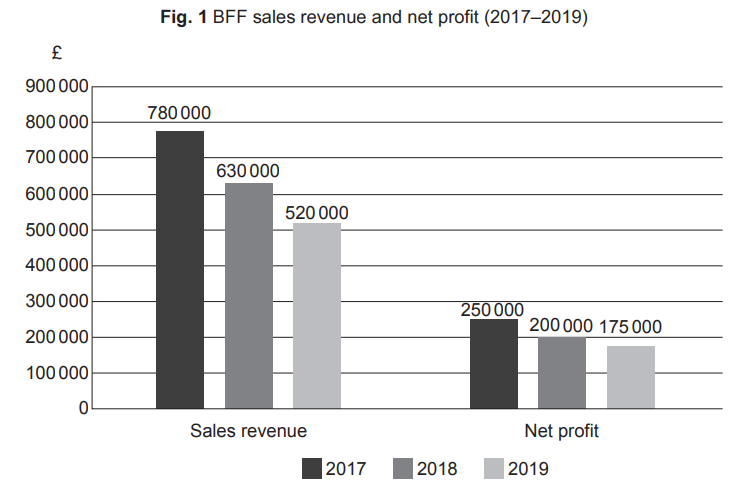
Bar chart showing BFF's sales revenue and net profit from 2017 to 2019. Revenue: £780k, £630k, £520k. Profit: £250k, £200k, £175k.

BFF has never sold dance shoes for children and Jessie would like to expand into this market. Another business, specialising in selling children’s dance shoes, closed down three months ago. Jessie is also concerned by market research which suggests that customer service is poor in BFF’s stores. All store managers have been told to attend a five-day off-the-job training course on customer service.

To support the launch of the children’s range, Jessie plans to create a new position of Marketing Manager (Children’s Shoes) who will work alongside the Marketing Manager (Adults’ Shoes). This employee will be recruited internally, despite many former employees from the children’s shoe retailer which closed down still being out of work.

Table 1 gives some data about the recruitment of staff within BFF.

Table 1

Internal recruitment

External recruitment

Cost of recruitment

£500

£2500

Number of days taken to fill the job

20 days

60 days

Cost of induction

£200

£1500

State one way that BFF could segment its dance shoe market.

7
2 marks

Case Study

The Ford Motor Company Ltd

The Ford Motor Company Limited (Ford Motors) is a global manufacturer of a range of vehicles including cars, vans, trucks and buses. Ford Motors has been one of Britain’s best-selling car brands for over 30 years, with a range of models including the KA, Fiesta, Focus, Mondeo and Galaxy. The company’s large range of products includes models that differ in size to meet the individual needs of different market segments, including eco-friendly small cars, family cars, sports cars and 7-seater people carriers.

Ford Motors carries out a lot of market research when developing new car designs and uses both primary and secondary research. This ensures that new car designs and models meet the needs of potential customers.

Each model’s sales levels are regularly monitored against the product lifecycle.

Explain how Ford Motors could use market segmentation when deciding where to place an advert for its new car models.