Pre-release materials 2026: Sustainable UK water and the South Lincs reservoir (AQA GCSE Geography): Revision Note
Exam code: 8035

UK water use
The average person in the UK uses about 140 litres of water a day (Gov.uk (opens in a new tab), 2025)
This is high compared to many other European countries
One third of this is wasted water
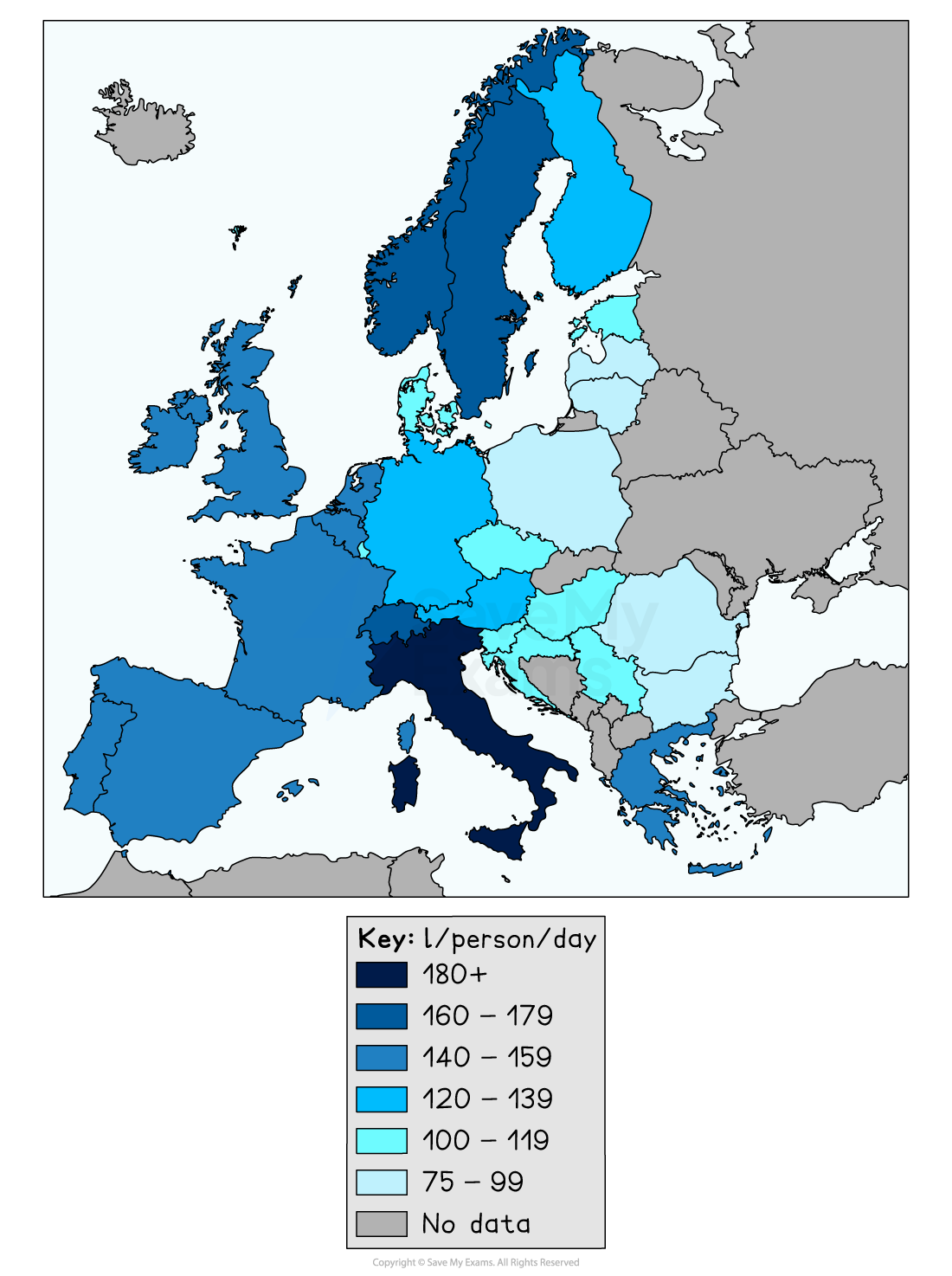
People in the UK underestimate the amount of water they use
A 2023 survey found that, on average, people estimate they used 57 litres of water a day (Kingfisher, 2023)
Due to this underestimation, people will waste more water
The government has now set targets to reduce the use of water from 140 litres to:
A 122 litres per person by 2038
A 110 litres per person by 2050
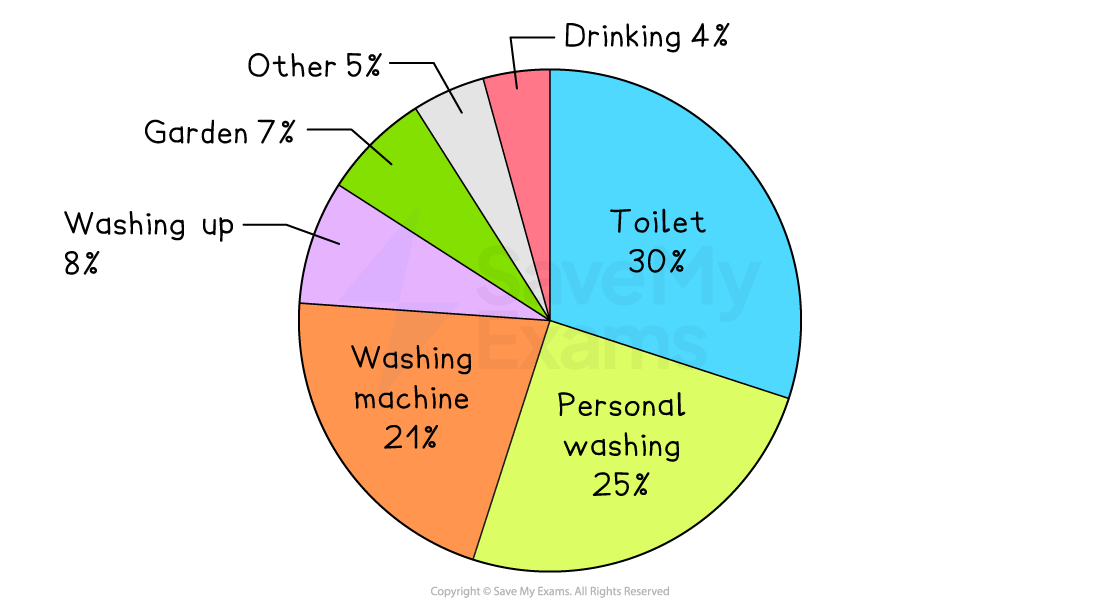
What do households use water for?
Most water in UK households is used for toilets and personal washing (including showers and baths)
Making homes more water-efficient
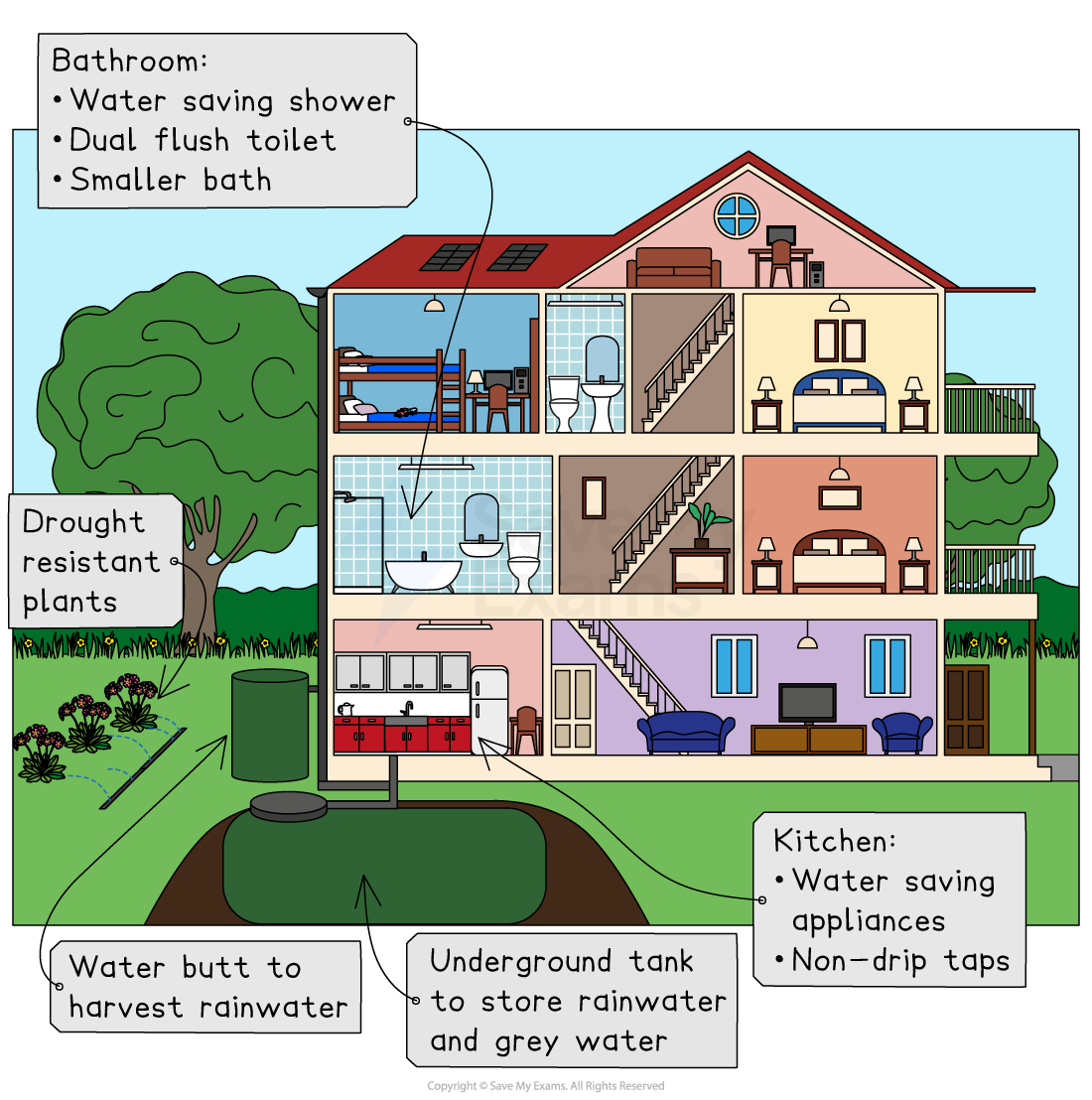
To reduce the average water use per person, the government and water companies are promoting water efficiency
There are many ways in which people can improve the water efficiency of their houses
Examiner Tips and Tricks
You need to ensure that you are familiar with some of the water-efficient methods that can be used in homes to reduce water wastage.
A sustainable water future for the UK
There are many ways in which the government, the Environment Agency and water companies aim to meet the future water needs of the UK
Strategies to meet the UK's future water needs
These strategies include:
Water recycling
Reducing pollution
Desalination
Reservoir construction
Public awareness
Reducing leaks
Water recycling
This involves the treatment of water so that it can be safely reused
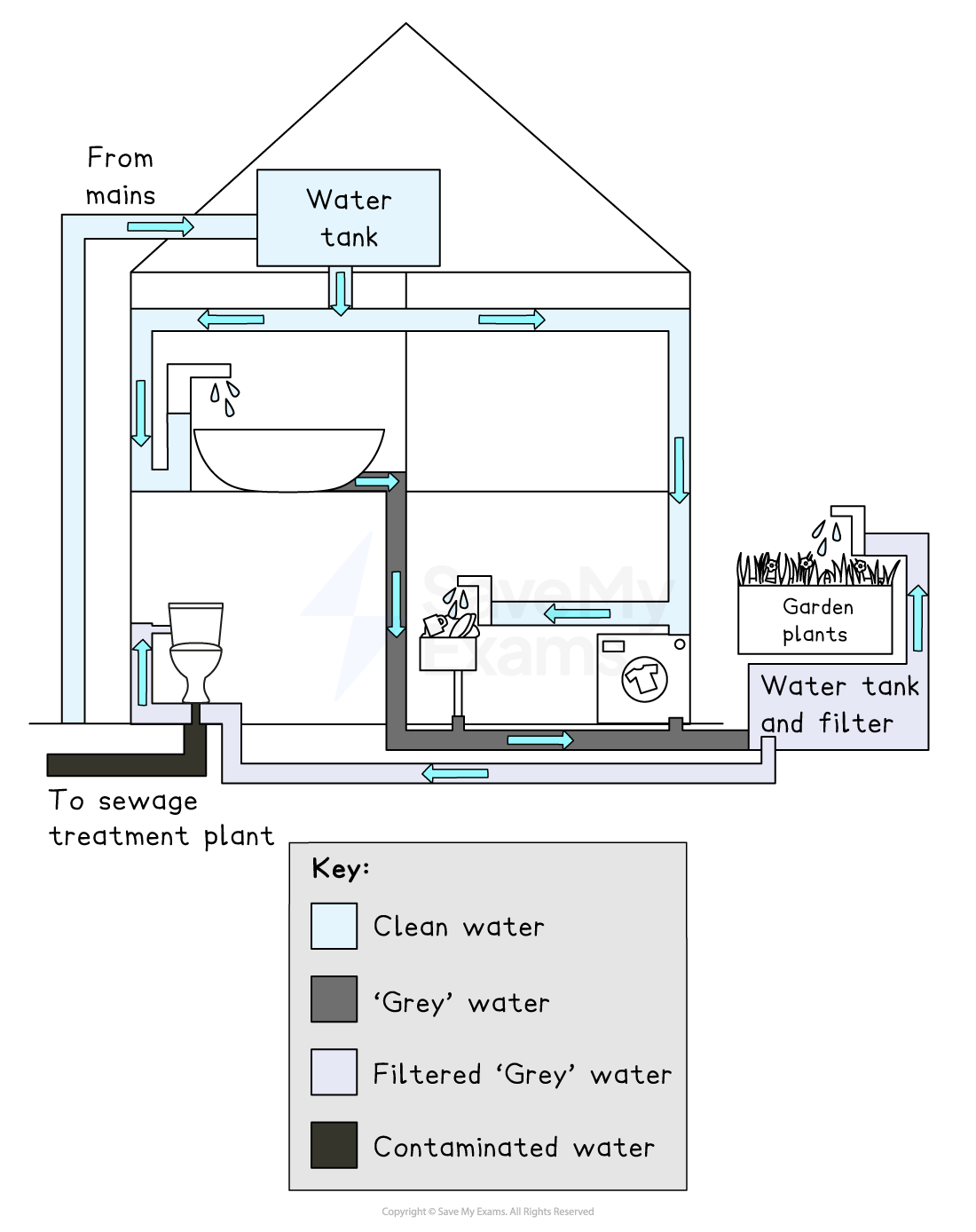
Greywater systems
Greywater is the term used to describe domestic wastewater
This can be used both inside and outside the home in any situation where drinking water quality is not required, including flushing the toilet, watering the garden, and cleaning a car
Reducing pollution
The improvement of water quality to increase the amount of usable water
Desalination
The removal of salt from seawater means that it can be used for domestic, agricultural and industrial purposes
Two new desalination schemes are planned in the UK
Issues with desalination plants include that they:
Are expensive to set up and run
Use a lot of energy
Reservoir construction
Ten new reservoirs are planned, and one reservoir enlargement
These will store water in periods of high rainfall
The water is then released when it is needed
Nine water transfer schemes will then ensure that the water is transferred efficiently (Gov.uk, 2025)
Public awareness
Educating the public about ways to reduce water waste and consumption
This includes ensuring people are more aware of how much water they use
Increased use of water meters so that people are charged for the water they use
Reducing leaks
Approximately 20% of water is lost through leaks
Water companies aim to halve leaks by 2050
Key idea
Reducing leaks, water recycling and conservation, and public awareness are all important strategies
However, they are not sufficient to meet the increasing demand
Sustainable water supply in the UK will require large-scale projects such as reservoir construction and desalination
Proposal for the South Lincs reservoir
Why is the reservoir needed?
One of the new reservoirs proposed for the UK is south-east of Sleaford in Lincolnshire, East England
The region is one of the driest areas of the UK
Average annual precipitation is around 600mm
Lincolnshire is also experiencing one of the highest levels of population growth
Population growth between 2011 and 2021 in East England was 8.3%
An increase in population will lead to the construction of new homes
It is predicted that 175,000 new homes will be built between 2025 and 2030 in the region
Reservoirs
A reservoir aims to store water
Water is stored during times of surplus when supply is high and demand is lower, usually in winter
Water can then be released when supply is low and demand is high, usually in summer
There are currently ten proposed reservoirs in the UK, including:
Abingdon, Oxfordshire
South Lincs, Lincolnshire
North Suffolk, East Anglia
The majority are located in the south and east of England
Advantages and disadvantages of reservoirs
Advantages |
|
|---|---|
Disadvantages |
|
Worked Example
Suggest one reason why there is a need for a new reservoir in South Lincs.
[1 mark]
Answer
Any one from:
To secure long-term water supplies for the East of England
To support population growth, new housing developments and existing communities
To provide a stable supply during dry summers and increased drought risks
[1 mark]
South Lincs location
The proposed reservoir will be located to the south-east of Sleaford in Lincolnshire
The area is mainly agricultural land
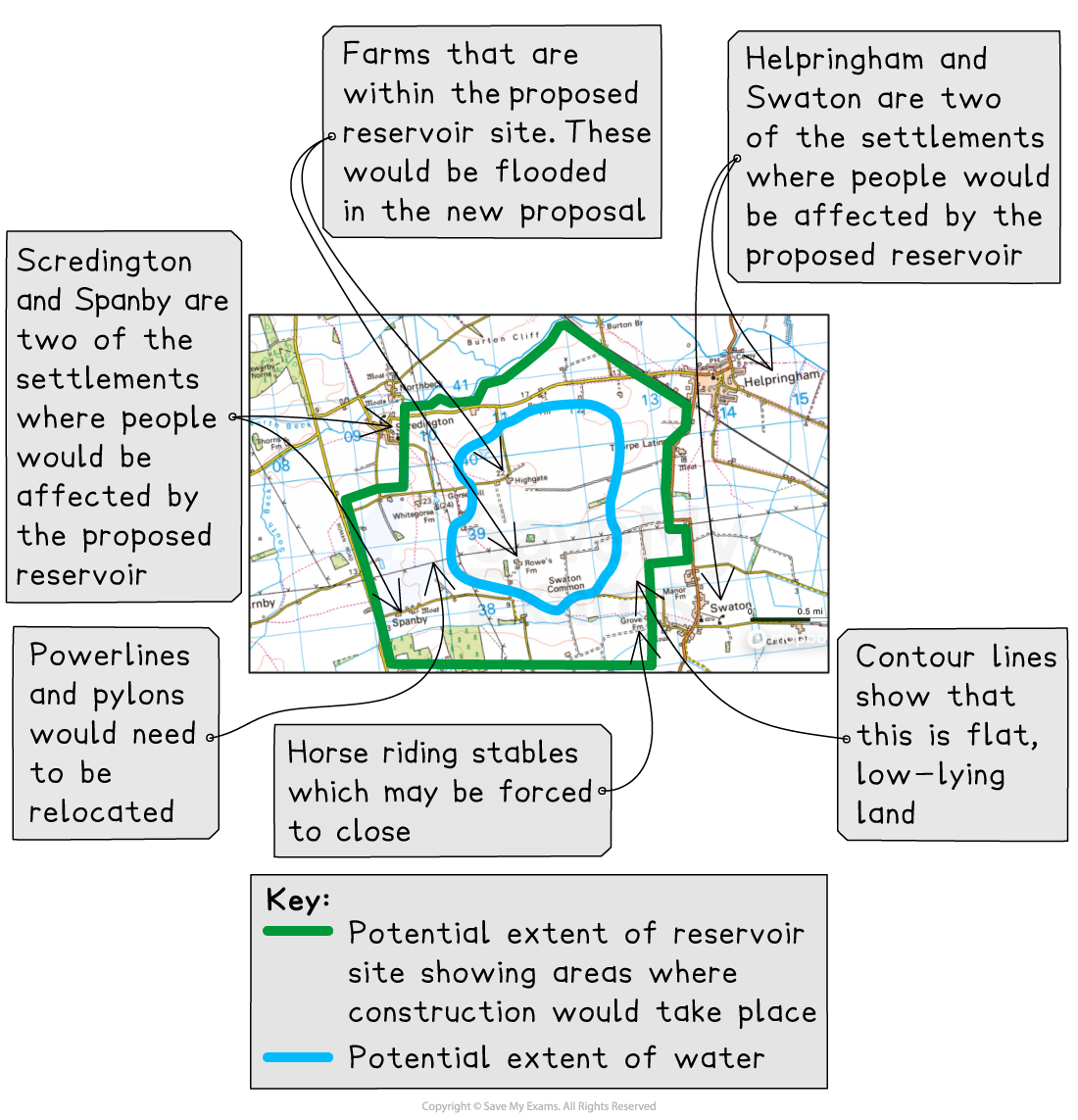
There are four settlements located around the proposed reservoir site:
Helpringham
Scredington
Swaton
Spanby
The B1394 runs along the east of the proposed site and the A52 runs to the south of the site
This means that it is accessible for construction and for visitors once in place
Rowe's Farm and Highgate Farm fall within the area which would be flooded
Over 50 homes in total would be affected by the development
Examiner Tips and Tricks
The resource booklet contains an OS map of the area around the proposed development. It is likely that there will be a question which will require you to demonstrate the use of map skills. It is important that you ensure you are able to:
Give and use grid references
Measure distances
Interpret contour lines to assess the site's suitability for building
Identify key features, such as the places which will be impacted
Why is it a suitable location for a reservoir?
Topography
The land is gently sloped and low-lying
Most of the land is below 10 metres above sea level
It is not too flat, as that would increase the flood risk to the surrounding area
Geology
The site is positioned on clay
Clay has low permeability, which makes it excellent for storing surface water
Water sources
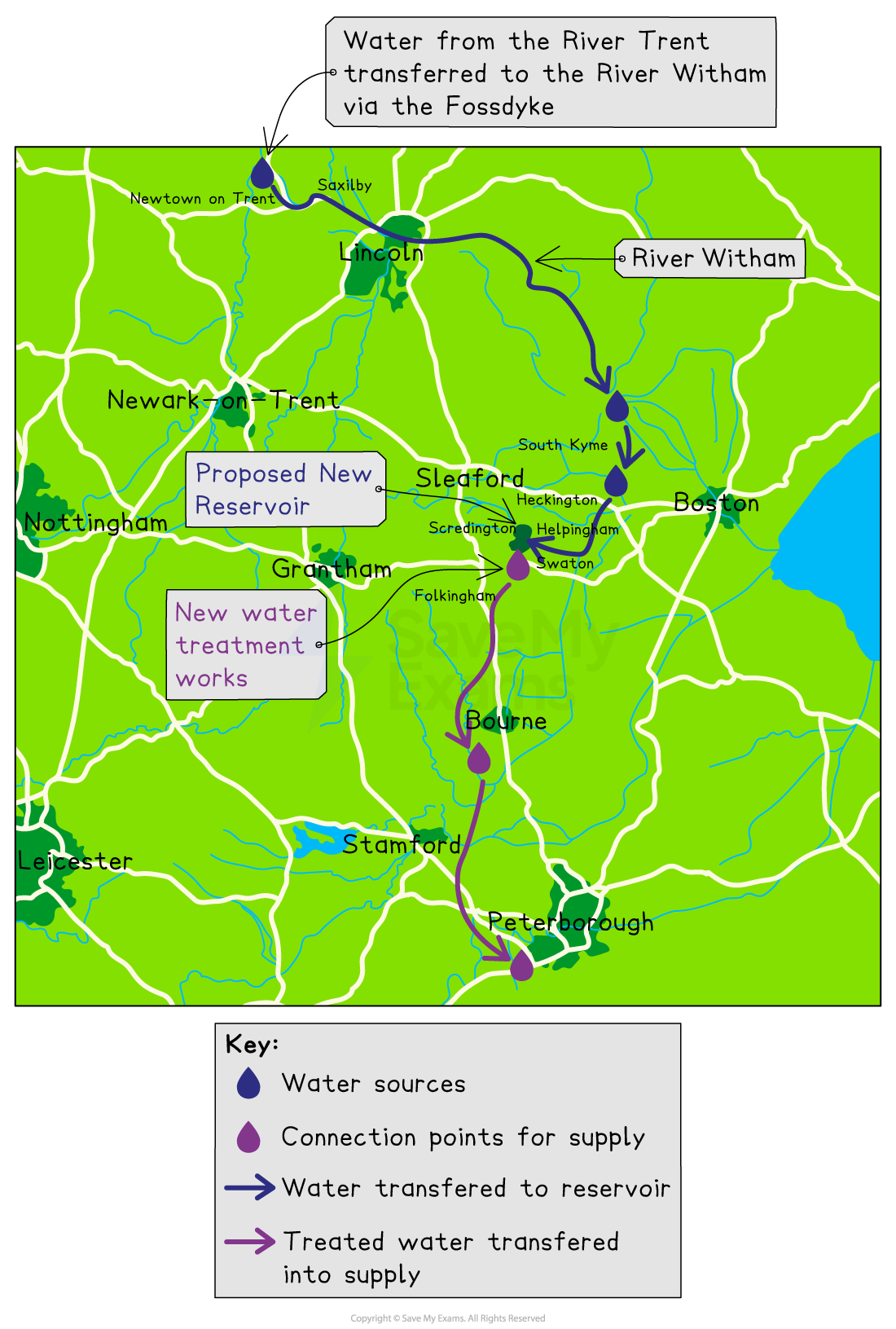
It is close to a range of water sources, which can be used to fill the reservoir in times of surplus
Water would be taken from the River Trent and the River Witham
Geographical location
It is central in the Anglian Water region
Impact on settlements
This location minimised the number of homes which would be affected
Worked Example
Explain one reason why the site south east of Sleaford is a suitable place for a new reservoir.
[2 marks]
Answer
The project is designed to capture high or excess flows from the River Trent and River Witham [1] that would otherwise drain to the sea, using both existing and new infrastructure. [1]
The South Lincs reservoir project
The proposed reservoir would be constructed together with a water transfer scheme
This would transfer water from the River Trent and River Witham to the reservoir to be stored until needed
The water would then be treated at a new treatment works to the south of the reservoir
The treated water would then be transferred to the Anglian Water supplies to the south at Wilsthorpe and Chesterton
These would supply local homes, industry and business
Key idea
The reservoir is part of the wider water scheme planned by Anglian Water to provide over 500,000 homes with water
Benefits of the new reservoir
The new reservoir will:
Store an estimated 55 billion cubic meters of water
Provide 166 million litres of water a day
Supply 500,000 homes with water
The reservoir itself will be 2.6km wide by 3.2km long
The project will have a range of social, economic and environmental impacts
Social
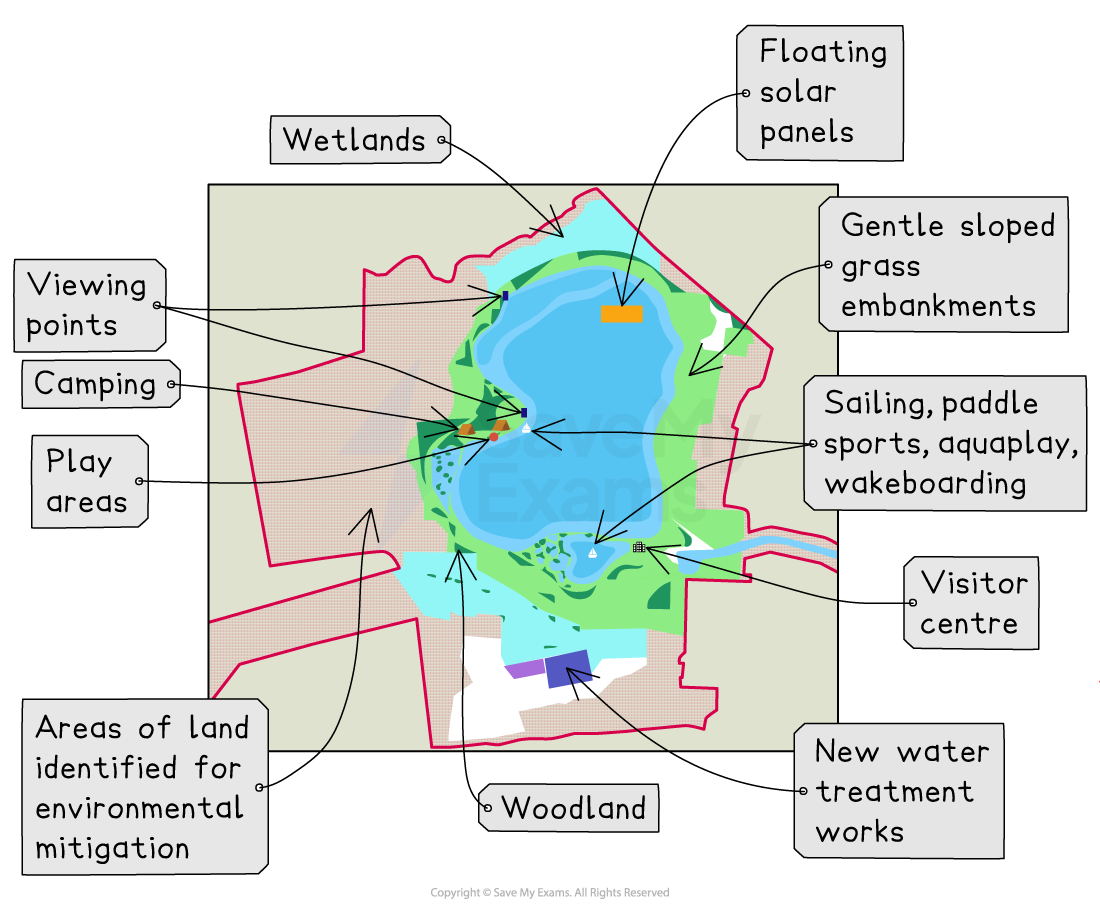
The reservoir project is multi-use, providing leisure activities for local people, including:
Watersports – sailing, windsurfing, etc.
New footpaths and cycle routes
Play areas
Camping sites
Fishing areas
A visitor and education centre will provide facilities for local people and tourists
Economic
The multi-use nature of the site means that it will attract lots of visitors
Boosting local economic growth
Supporting local businesses
Environmental
Floating solar panels and wind turbines will generate renewable energy
New habitats will be created for wildlife, including:
Woodlands
Wetlands
Improved public transport
Aimed at reducing car use
Worked Example
Explain two ways in which the South Lincs reservoir would be a sustainable project?
[4 marks]
Answer
The reservoir will reduce reliance on fragile sources such as groundwater [1] by storing surplus water during winter for a sustainable source of water during the dry summer months. [1]
By using floating solar panels on the reservoir's surface to generate renewable energy [1], the project aims to produce sustainable energy to reduce greenhouse emissions. [1]
Examiner Tips and Tricks
It is important to remember that although the aim is for the South Lincs reservoir to be a sustainable development, it will take almost 15 years (2040) before it is fully operational. This means that some of the features of sustainability will not be in place for many years.
Why is the reservoir project controversial?
Despite the many benefits of the scheme, the South Lincs reservoir is controversial
Some of the reasons for the controversy include:
Destruction of homes and livelihoods
Over 50 homes and working farms will be demolished
This will have a significant impact on those homeowners and farmers
Loss of agricultural land
The project would take 4,500 acres of productive farmland out of use
This affects food production
Environmental and landscape changes
The reservoir requires earth embankments that will change the landscape
The flooding of the land will lead to the loss of habitats
Steep embankments – up to 25 metres
Construction
The construction will take place over a 9- to 10-year period
This will lead to construction traffic on minor roads, noise and air pollution
Decrease in property values
The construction and uncertainty in the local area may reduce property values
Necessity of the project
Opponents argue that it would be better to have small-scale projects and focus on repairing leaks than investing in this large-scale project
Examiner Tips and Tricks
To prepare for the exam, you need to have a thorough understanding of why the project is controversial. The main reasons are social due to the loss of over 50 homes and farms. However, you also need to consider the economic and environmental impacts of the project.
Glossary
Term | Definition |
|---|---|
Desalination | The removal of salt from seawater to make water usable for drinking and irrigation |
Greywater | Domestic wastewater from sinks, baths, dishwashers and washing machines that can be reused for flushing toilets and watering gardens |
Permeability | A measure of a material's ability to allow water to pass through it |
Water efficiency | Sustainable use of water resources through reducing demand (efficient appliances) and reducing waste (fixing leaks). |

Unlock more, it's free!
Join the 100,000+ Students that ❤️ Save My Exams
the (exam) results speak for themselves:

Was this revision note helpful?