Characteristics of the UK climate (WJEC Eduqas GCSE Geography B): Revision Note
Exam code: C112

Specification links
The notes on this page cover part of 2.3.1 of the WJEC Eduqas B specification.
2.3.1 Why is the UK climate so variable?
The characteristics of the UK climate, including regional variations.
Coverage must include
seasonality,
average monthly temperature and
precipitation rates.
The influence of global atmospheric circulation, latitude, altitude, air pressure, and distance from the sea.
The UK's climate
The UK has a temperate, maritime climate
It has a mild, seasonal climate with cool, wet winters and warm, wet summers
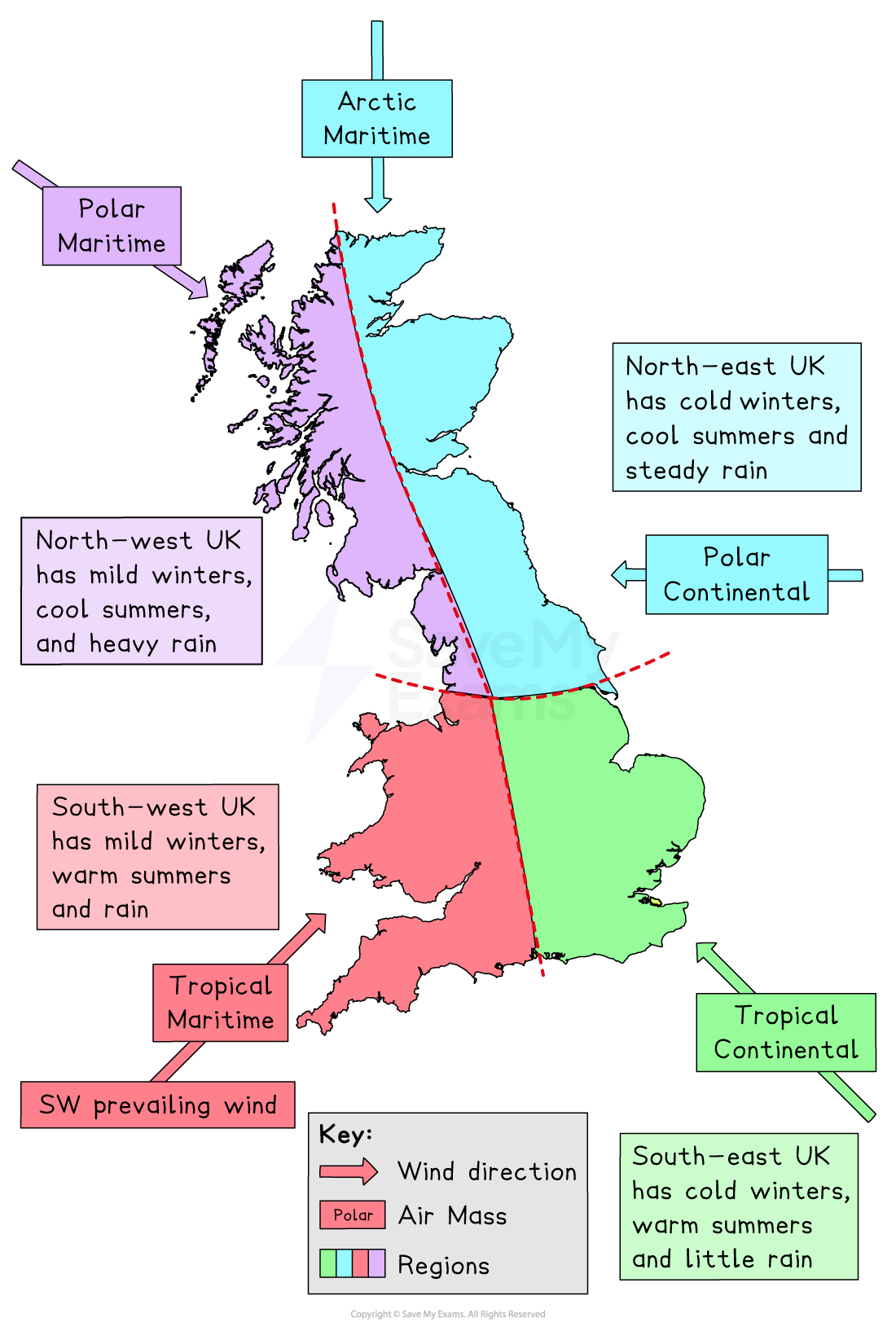
The UK has four distinct regions:
The southeast has cold winters and warm and dry summers
The southwest has mild and very wet winters and warm and wet summers
The northwest has mild winters, cool summers and heavy rain all year
The northeast has cold winters, cool summers and steady rain all year
Seasonality
The UK has four distinct seasons
Spring
Summer
Autumn
Winter
Average monthly temperature
The UK's average monthly temperatures vary from highs in July and August (around 22° C) to lows in January and February (around 7° C)
Other monthly average high temperatures include 19° C in September, 15° C in October, 17° C in May, and 13° C in April
These are very broad UK averages
Generally, the southern and eastern regions of England are warmer than northern England
Precipitation rates
On average, the UK receives 99 mm of precipitation in January and less in summer
June and May average 52 mm, and July and August can be even lower, 29-36 mm in some areas
These figures are averages and vary across the UK
For example, some areas in the north and west receive more rain than the south and east, and this difference can be more evident in the summer months
Climate change
Recent data shows a trend of increasing rainfall, especially in autumn and winter, with 2024 being one of the wettest years on record
Examiner Tips and Tricks
Remember that generally in the UK, rainfall is highest in the west and north due to prevailing winds and mountains. Summers are warmer and drier in the southeast.
Reasons for variability of the UK climate
The factors that affect regional variations across the UK include
Location:
The UK's location is mid-latitude, which is between 50° N and 60° N
Cold air descends from the north and meets warm air rising from the south
This causes unsettled weather
Maritime influence:
The UK is surrounded by the sea
The air picks up moisture before reaching the country
Leading to rainfall year-round
Coastal areas are warmer in winter and cooler in summer
North Atlantic Drift
Ocean currents bring warm waters from the Caribbean to the west coast of the UK
This keeps the west coast of the UK warmer than other regions of the UK
Prevailing wind:
The main direction the wind travels for the UK is south-west
This air comes across the Atlantic Ocean, bringing moisture and more rain
Global atmospheric circulation
Due to the Earth's rotation, weather systems usually pass over the UK from west to east
The polar jet stream constantly changes position
The jet stream tracks north and south through the year
If the jet stream flows to the north of the UK, it will bring tropical air masses
If it tracks south, then cold polar air masses are more likely
Air Masses
Air masses bring different weather depending on which air mass is travelling across the UK
Controlled by the polar jet stream, they are classified by the region where they form
There are five types of air masses that bring different weather to the UK:
Air masses of the UK
Air Mass | Weather |
|---|---|
Polar Maritime | Cold and wet |
Arctic Maritime | Very cold and wet |
Polar Continental | Cold and dry |
Tropical Continental | Warm and dry |
Tropical Maritime | Warm and wet |
Air pressure
High pressure produces sinking air, which heats and holds more water vapour
This brings in stable air, with little to no rainfall
Skies are often clear with warm conditions in summer and cold conditions in winter
Low pressure produces rising air, which cools and condenses to form water droplets that fall as precipitation
As low-pressure systems come off the Atlantic Ocean from west to east, it is the west that experiences the greatest rainfall
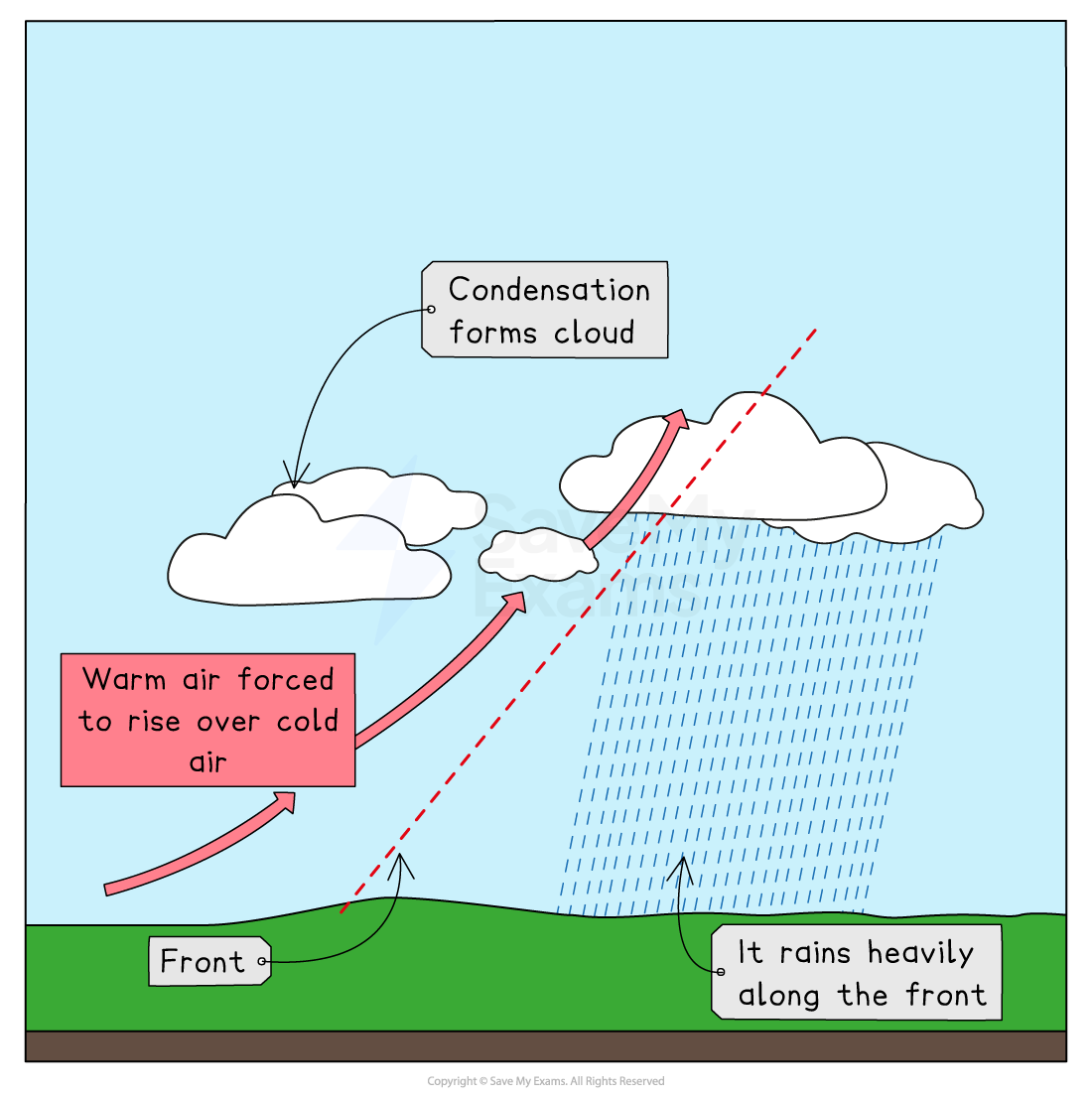
Where air masses meet, frontal rainfall is common
Altitude
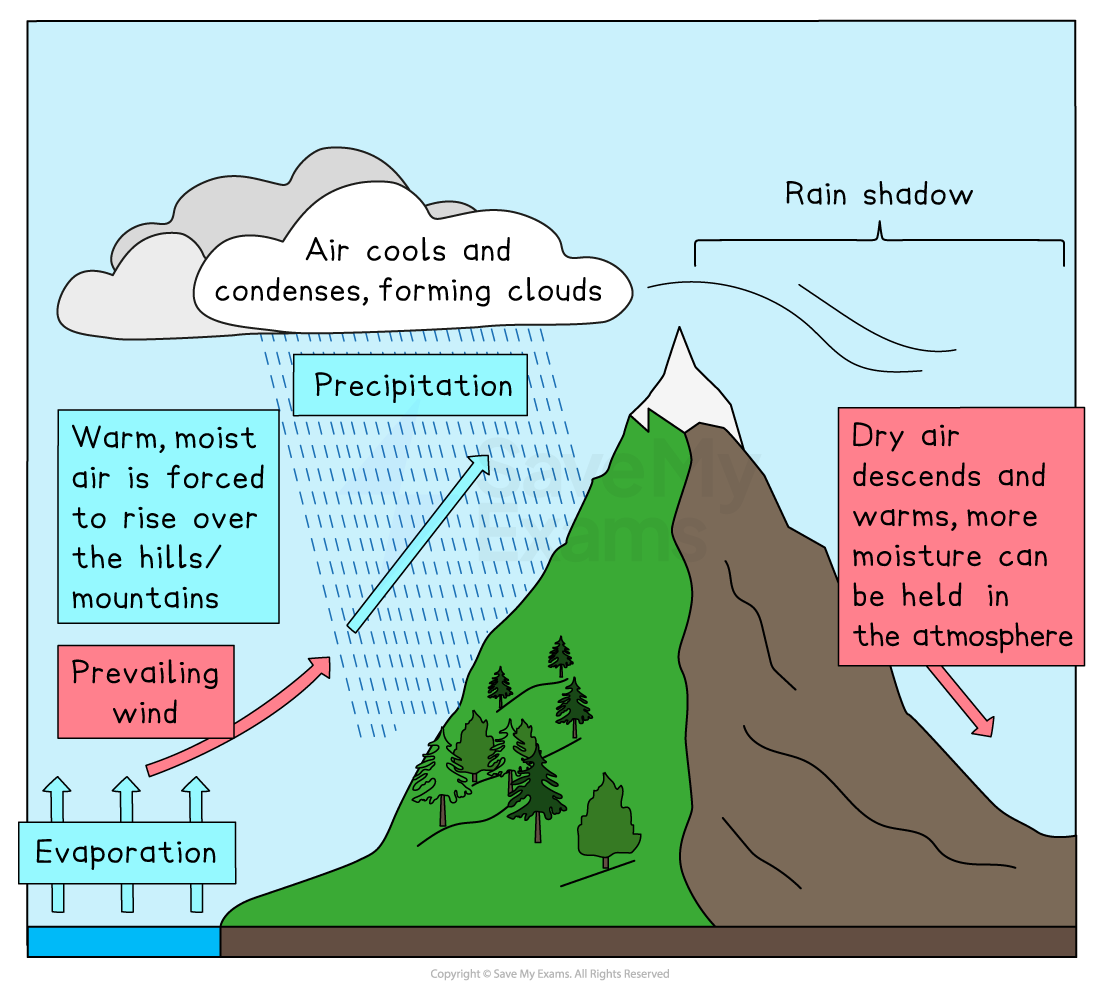
The higher an area, the wetter and cooler it is
Mountainous regions get a lot of relief rainfall
There is more rainfall over the western upland regions than in the lower areas in the east
The UK's regional climate variations
Worked Example
The UK climate varies from place to place.
Define the term prevailing wind.
[1 mark]
Answer
The prevailing wind is the direction it usually blows from. [1 mark]
Marking guidance
You do not need to state the direction of the UK's prevailing wind, only what the term means.

Unlock more, it's free!
Join the 100,000+ Students that ❤️ Save My Exams
the (exam) results speak for themselves:

Was this revision note helpful?
