Extreme weather case studies (WJEC Eduqas GCSE Geography B): Revision Note
Exam code: C112

Specification links
The notes on this page cover part 2.3.4 of the WJEC Eduqas B specification
2.3.4 - What are the causes, impacts and responses to two contrasting extreme weather events?
A detailed study of two contrasting extreme weather events located outside of the UK.
One event must relate to a dominant, long-lasting high-pressure system.
One event must relate to an intense low-pressure system.
For each event, coverage must include:
Causes
Impacts on different groups of people
Responses
High-pressure weather event: 2021 North America heat dome
The 2021 Western North America heat dome was a record-breaking heatwave from late June to early July
It brought extreme temperatures to the Pacific Northwest of the U.S. and western Canada
Many locations broke all-time maximum temperature records, with some exceeding previous records by more than 5 °C
The Canadian national temperature record was broken by a new record of
49.6° C in Lytton, British Columbia
Causes
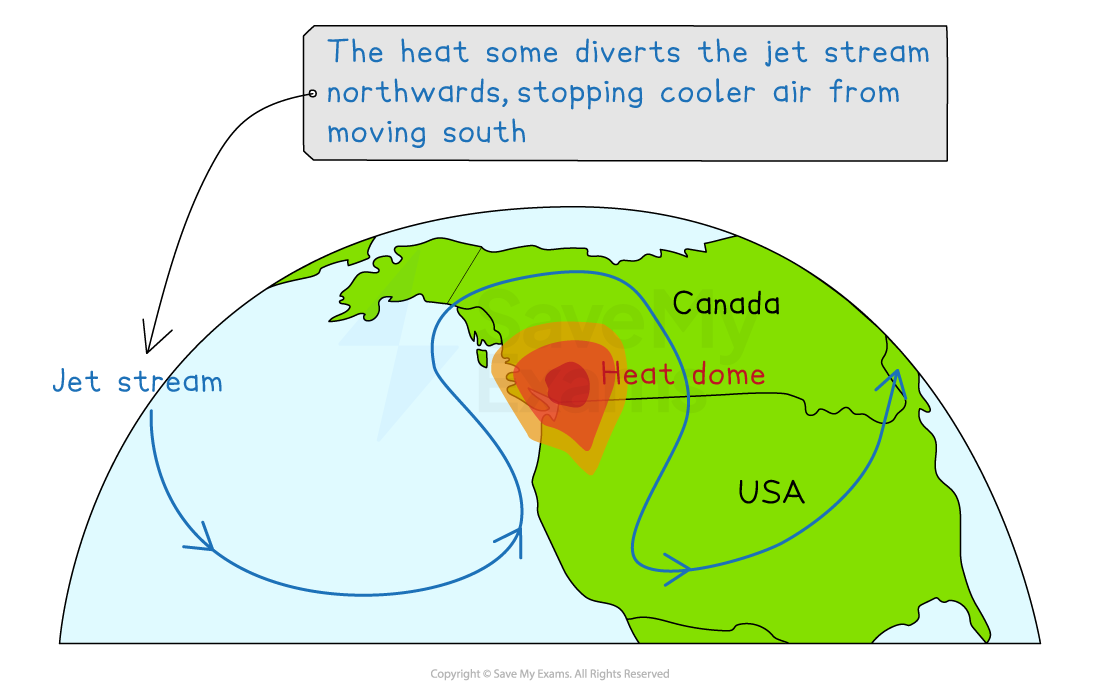
A powerful and persistent area of high pressure, known as a 'heat dome', settled over Western North America (including British Columbia, Canada, and the US Pacific Northwest) in late June 2021
The high-pressure system blocked the flow of cooler, wetter air from the Pacific Ocean, trapping scorching hot air below
Within the high-pressure system, air fell, warmed, and dried out, creating stable weather and clear skies, which made the sun's warming effect stronger
Scientists think that the event was made worse by human-caused climate change, which amplified factors such as meanders in the jet stream
Impacts on different groups of people
The heat dome resulted in record-breaking temperatures (e.g., 49.6°C in Lytton, B.C.), leading to severe consequences:
Vulnerable individuals suffered heat-related deaths, particularly the elderly and those with pre-existing health conditions who were less able to cope with the heat, especially if they lacked air conditioning
The heatwave caused over 1,400 deaths across the affected regions, including hundreds in Washington and Oregon
Over 600 sudden deaths were reported in British Columbia alone
Hospitals and emergency services were overwhelmed by heatstroke victims and fire-related emergencies
The high temperatures strained infrastructure, with some power systems failing due to increased demand for cooling
Some COVID-19 vaccination centres were forced to close or relocate temporarily
Infrastructure suffered as the extreme heat caused buckling roads, melting power lines, and cracking windows
The intense dry heat also led to devastating wildfires; the most serious one burnt down the town of Lytton, displacing hundreds of residents and destroying property
The intense heat and dryness contributed to widespread wildfires, which caused significant environmental damage
Crops failed and livestock died due to the heat and lack of water, causing financial losses and impacting food security
Responses
British Columbia's government declared a state of emergency to help coordinate the response
People were warned about the dangers of heat and given tips on how to stay cool and drink water through large public health campaigns
People without air conditioning could go to temporary cooling centres set up in public buildings
To keep rail lines from buckling, transport services like trains had to go slower
To fight the widespread wildfires, firefighting equipment was shared between the US and Canada
Low-pressure weather event: Cyclone Idai
Cyclone Idai's formation and intensification were driven by several meteorological factors
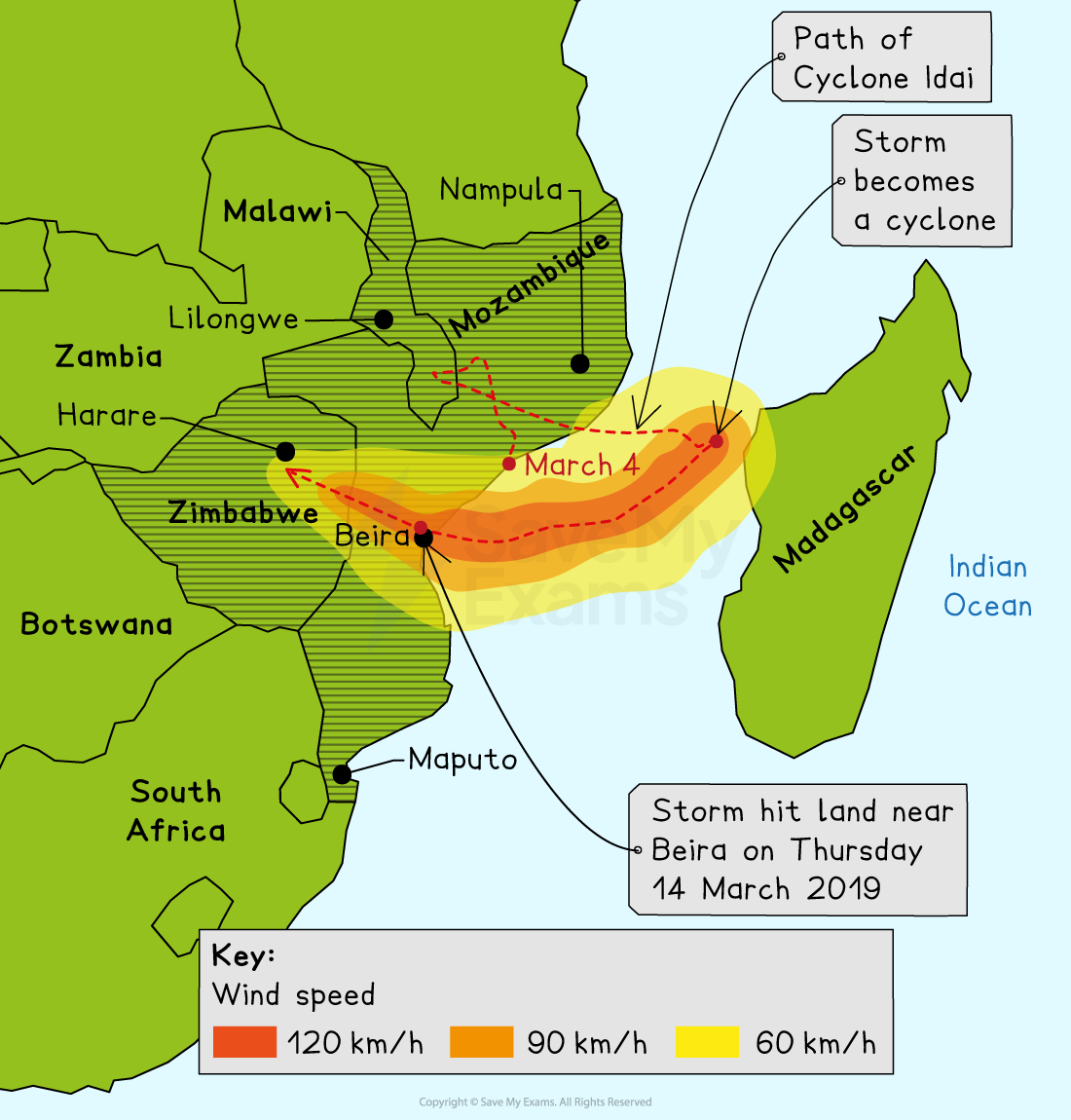
The storm developed in the Mozambique Channel
Sea surface temperatures were above average, providing the substantial energy needed for intensification
Favourable upper-level atmospheric conditions, including low wind shear, allowed the storm's vertical structure to remain intact and strengthen
After initially making landfall as a tropical depression, the storm looped back over the warm waters of the Mozambique Channel
It rapidly intensified into a powerful Category 3-equivalent cyclone before its devastating second landfall near Beira, Mozambique
Impacts on different groups of people
The impacts of Cyclone Idai were widespread and varied among different populations
Vulnerable populations (e.g. poor, rural communities) were especially affected due to:
Living in poorly constructed housing
Having limited access to early warning systems
Living in flood-prone areas
They suffered the highest rates of casualties and displacement
Women and children faced increased risks of gender-based violence in crowded displacement camps and disruption of maternal and child health services
The destruction of schools also impacted children's education
Farmers and agricultural workers suffered huge crop losses and livestock deaths due to flooding
This caused immediate food insecurity and long-term economic hardship, as agriculture is the primary livelihood in the affected regions
Urban residents were impacted by wind damage, flooding, and the collapse of essential infrastructure, such as water supply systems and sanitation, leading to outbreaks of diseases like cholera
Responses
Responses to Cyclone Idai occurred at local, national, and international levels
International organisations like the UN, Red Cross, and various NGOs responded quickly to provide search and rescue operations, emergency food, shelter materials, and medical support
The governments of Mozambique, Zimbabwe, and Malawi declared national emergencies, coordinating relief efforts and appealed for international assistance
Their resources were quickly overwhelmed by the size of the disaster
In many cases, local communities and civil society organisations were the first to help their neighbours by giving them shelter, food, and emotional support
After the immediate crisis, the focus shifted to fixing roads, bridges, schools, hospitals, and other infrastructure, getting people back to work, and putting in place long-term strategies to make the area more resilient to future climate events

Unlock more, it's free!
Join the 100,000+ Students that ❤️ Save My Exams
the (exam) results speak for themselves:

Was this revision note helpful?
