Human activity & desertification (WJEC Eduqas GCSE Geography B): Revision Note
Exam code: C112

Specification Link
The notes on this page cover part of 3.4.2 of the WJEC Eduqas GCSE B specification.
3.4.2 -To what extent does human activity contribute to the problem of desertification?
Human activities to include unsustainable use of water resources, over-grazing, poor land management and use of fire wood.
The different viewpoints, values and attitudes of stakeholders in the region.
Desertification
Desertification threatens approximately 20% of the world's population
It can be argued that many of the natural causes, including soil erosion and rainfall patterns, may be made worse by human activity and climate change
Human causes of desertification
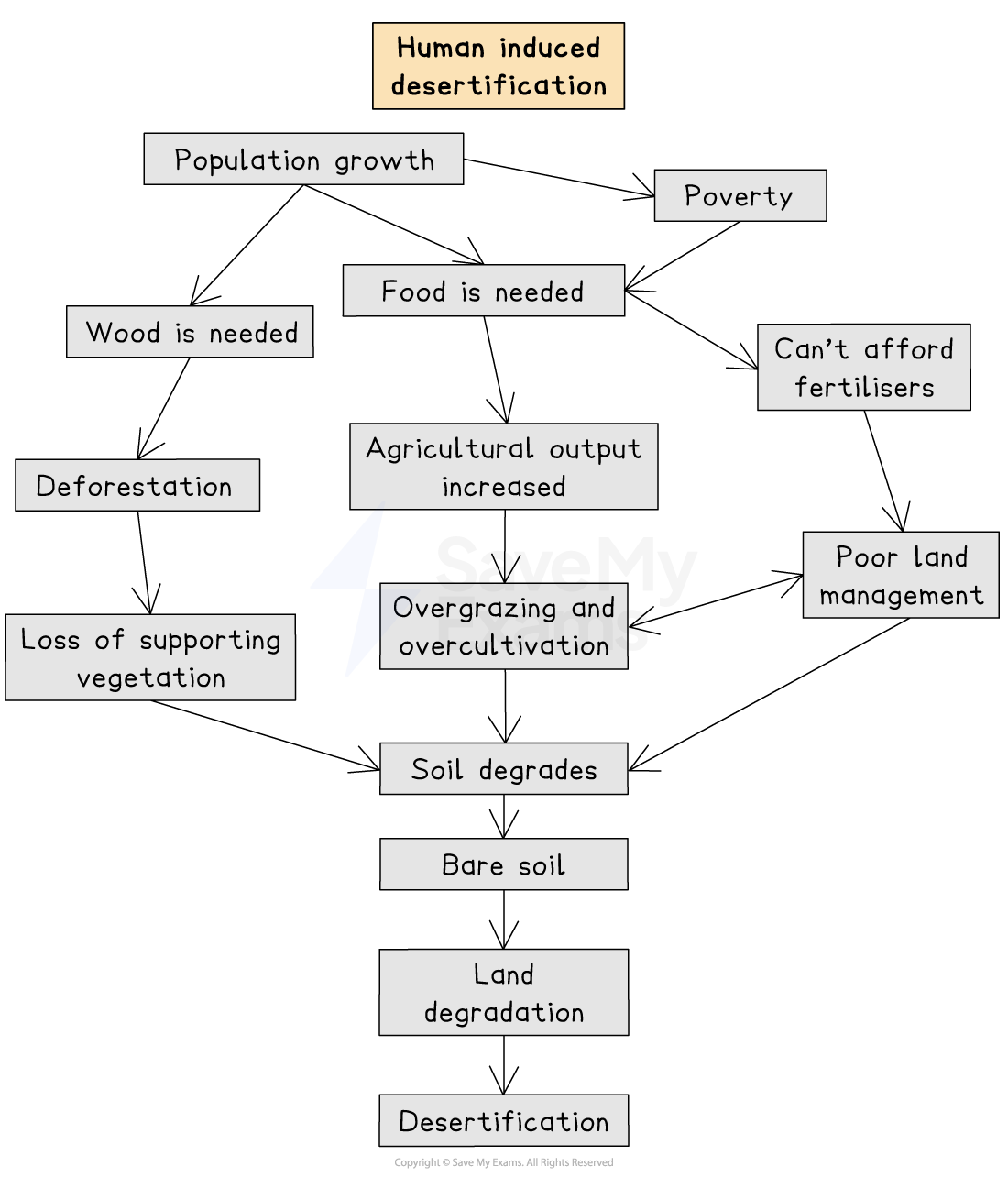
One of the main causes of desertification is poor land management
This may involve:
Overgrazing means the vegetation has all gone due to the number of animals, or because the land does not have a chance to recover
Over-cultivation leads to all the nutrients being taken up by crops, leaving none for future vegetation to grow
Deforestation removes shade for the soil and means there are no roots, which bind the soil together
This increases soil erosion, whilst decreasing infiltration and interception
Population growth puts increased pressure on the land as people raise more animals and grow more crops
In many areas, people are still dependent on fuelwood as an energy source
This leads to further deforestation, which in turn increases desertification
In areas such as Kenya, both human and natural factors lead to desertification
Grazing patterns and traditional lifestyles mean that:
Nomadic Masai farmers have been forced to use smaller and smaller areas of land for grazing
This results in overgrazing, which removes the vegetation
The soil no longer has protection from the wind and rain, which leads to soil erosion and desertification
Population growth increases the demand for food and fuelwood
Kenya's population is predicted to double between 2010 and 2030
This leads to over-cultivation and deforestation
Deforestation:
Reduces the amount of nutrients returned to the soil
Exposes the soil to wind and rain
This further increases soil erosion, leading to desertification
In Kenya, increasing temperatures and more irregular rainfall are natural causes of desertification
However, these could be the result of the enhanced greenhouse effect (human-caused), leading to climate change
Stakeholder views and attitudes
Stakeholders in regions affected by desertification hold different, often conflicting viewpoints and attitudes
These viewpoints are often influenced by their dependence on the resources and their economic, social, and cultural contexts
Local communities
People in the local community may have views and attitudes which relate to their livelihoods, food security, and energy needs
They may be locked in a cycle of poverty and unsustainable practices due to a lack of alternatives and population pressure
Attitudes towards conservation and sustainable practices may be positive if the benefits are clear
Government
Government views and attitudes are often focused on regional development, economic growth, and national food/energy security
This may sometimes prioritise short-term gains over long-term sustainability
They also aim to address the national and international issue of land degradation and desertification.
Non-Government Organisations (NGOs)
NGOs mainly focus on environmental protection, biodiversity conservation, and promoting sustainable practices at the local level with communities.
They tend to promote strategies like water and soil management, tree planting, and the use of appropriate, drought-tolerant crops
NGOs often work to raise awareness and educate the public on environmental issues
Agribusiness
The main concerns of commercial agriculture are profit and market demands
This can lead to unsustainable practices, including:
Intensive land use
Expansion of agriculture
Overexploitation of water resources

Unlock more, it's free!
Join the 100,000+ Students that ❤️ Save My Exams
the (exam) results speak for themselves:

Was this revision note helpful?