Biome case studies (WJEC Eduqas GCSE Geography B): Revision Note
Exam code: C112

Specification Link
The notes on this page cover 3.2.2 of the WJEC Eduqas GCSE B Geography.
3.2.2 - How are ecosystems damaged by human activity?
How hot semi-arid grasslands and one other ecosystem have been damaged by human activity.
How processes within the ecosystem have been affected
The effects of the damage at the local scale, to include the effect on biodiversity, and at the global scale.
Case study: hot semi-arid grassland
Case Study
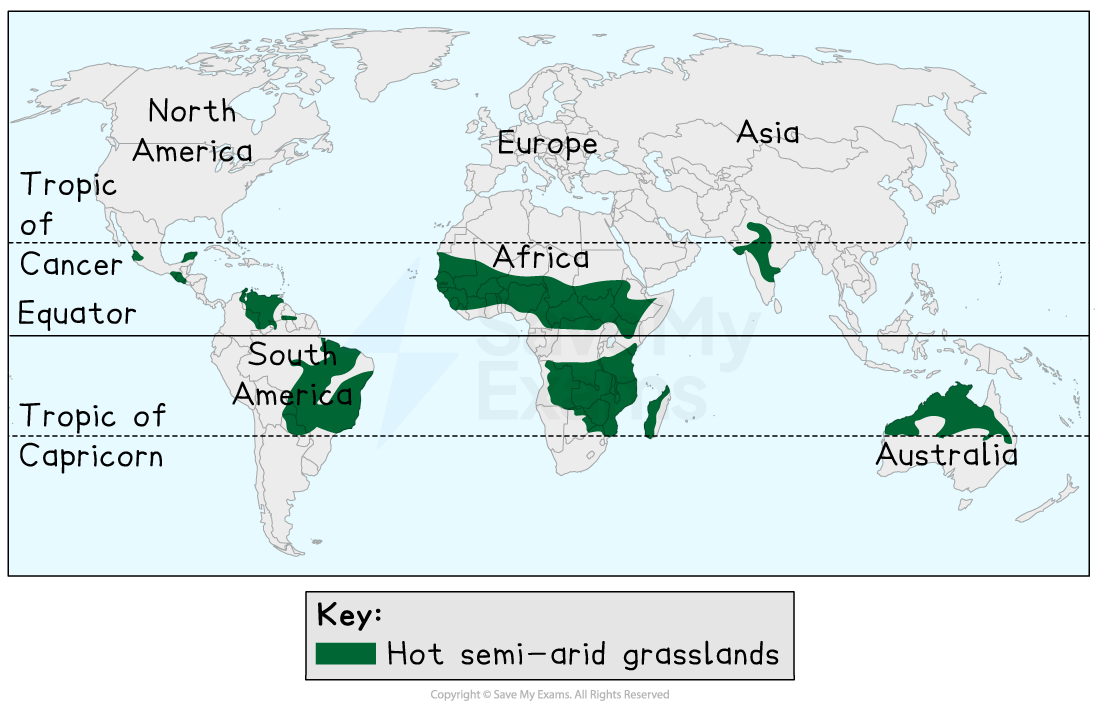
The hot semi-arid grassland (savanna) biome is part of the larger grassland biome
Grasses, rather than shrubs and trees, dominate this biome
Other than Antarctica, grasslands are found on every continent and cover over 20% of Earth's surface
They form the transition from tropical forests to deserts
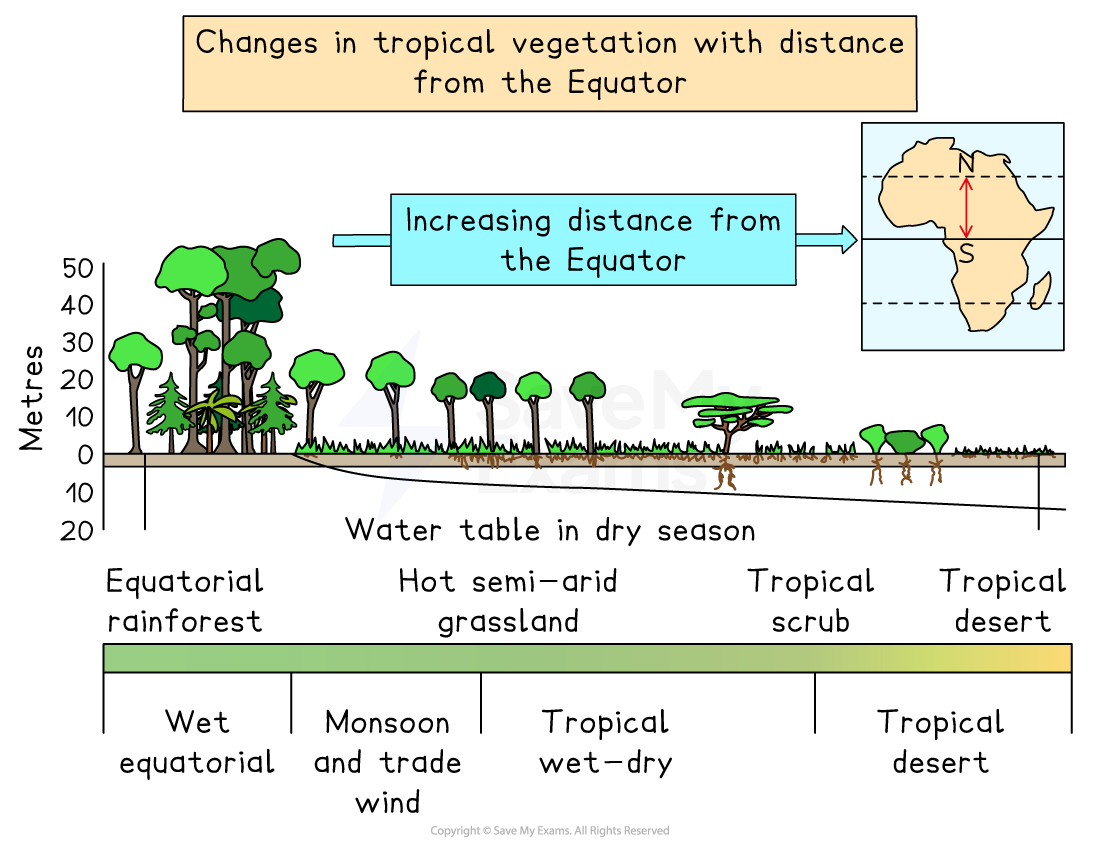
Location
Between 15° and 30° north and south of the equator
Towards the outer reaches of the tropical zone on the continents of Africa, Asia, South America, northern Australia and southern North America
Central Africa – Tanzania, Kenya
Annual precipitation
Between 500 and 1200 mm
Dry season: virtually no rainfall (< 100mm)
Wet season rainfall averages 20 days/month and up to 400 mm a day
Distinct wet and dry seasons – dry season May to Sept and wet season Dec to March
Annual temperature range
High temperature all round (27° – 30°C), with low relative humidity (53% annual average but up to 73% during wet season)
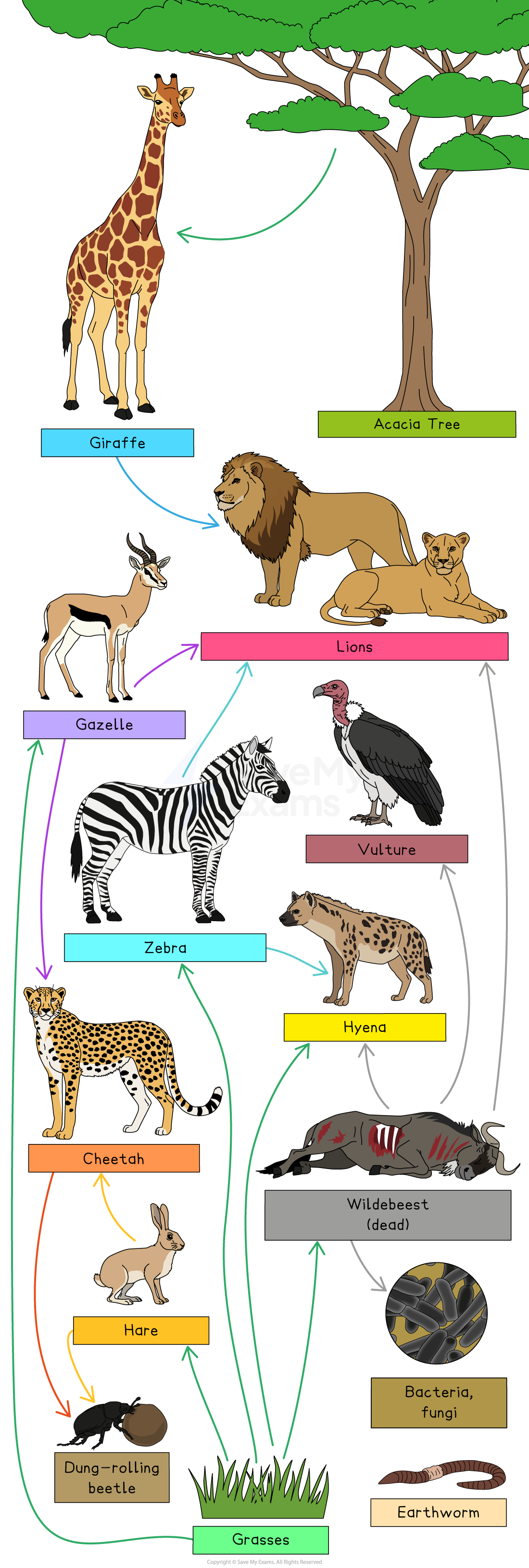
Food chains and webs in the hot, semi-arid grasslands
Hot semi-arid grasslands have high biodiversity with many endangered species
Grasses dominate the biome
These are the producers in the ecosystem, together with acacia trees and baobab trees
The trees and grasses are eaten by insects and grazing herbivores (primary consumers) such as giraffes and zebras
The herbivores are then eaten by carnivores (secondary and tertiary consumers) such as cheetahs, leopards and lions
Adaptations
In the wet season, grasses grow rapidly up to 3-4 m in height
Baobab trees and acacia trees are xerophytic (drought-resistant), so they can survive long periods without precipitation
Baobab trees have:
Shallow roots which spread out to collect the maximum water
Thick fire-resistant bark
Barrel-shaped trunk to store water
Acacia trees have:
Thorns to stop animals from eating the trees
Broad flat canopy to reduce water loss
Long taproots to reach water, which is deep underground
Small waxy leaves to reduce transpiration
Animals are also adapted to the hot, semi-arid grasslands
Interdependence in the hot semi - arid grasslands
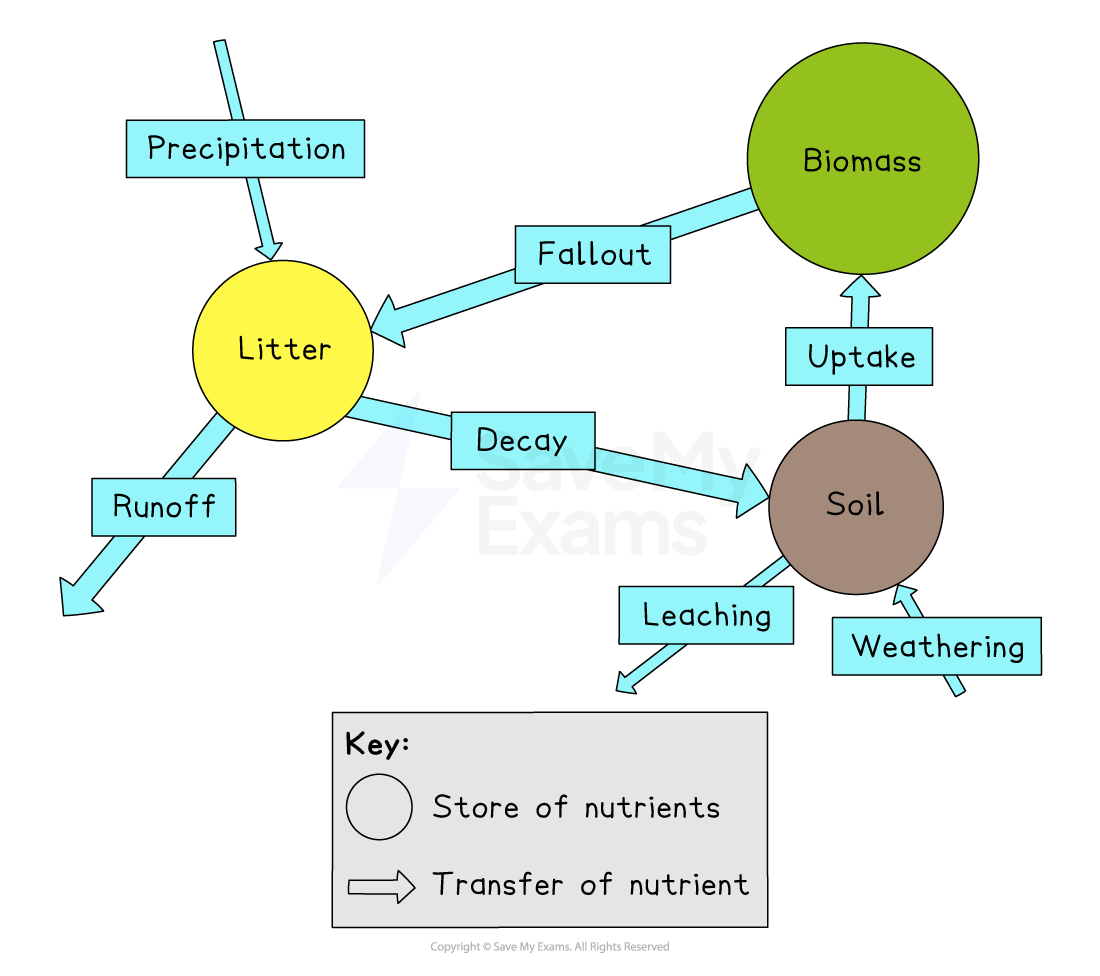
Nutrient cycle
Stores in the hot semi-arid grasslands are quite even
However, there are seasonal variations across the biome (dependent on rainfall and temperature)
The dry season creates a short growing season, so the biomass store is much less than that of the rainforest biome
However, at the start of the dry season, there is a higher transfer of biomass to the litter store because trees lose their leaves and grasses die back.
Trees lose their leaves
Grasses die back
Animal waste is also added to the litter
Decomposition can be rapid due to the heat
Termites and fires speed up the recycling of nutrients
The soil store is larger than the rainforest because:
Vegetation demand for nutrients is lower
Uptake of nutrients is restricted to the wet season
Leaching and weathering are lower in the dry season
Impact of humans in hot semi-arid grasslands
Human activity has many impacts on the grassland areas
Safaris and other tourist activities can disturb wildlife breeding, feeding and migration patterns
Hunting and poaching have led to significant decreases in the population of animals such as black rhinos and elephants
Between 1970 and 1993, the population of black rhinos decreased by 96%
The population has now started to increase again due to conservation efforts
Human activities such as overgrazing increase and exacerbate desertification.
Overgrazing means the vegetation has all gone due to the number of animals, or the land does not have a chance to recover
Over-cultivation leads to all the nutrients being taken up by crops, leaving none for future vegetation to grow
Deforestation removes shade for the soil and means there are no roots, which bind the soil together
This increases soil erosion, whilst decreasing infiltration and interception
Population growth puts increased pressure on the land as people raise more animals and grow more crops
Examiner Tips and Tricks
Examiners may ask you to explain the connections between various characteristics of semi-arid grasslands. For example, you may be asked to explain how biodiversity has been affected by human activity.
To answer this, you need to make the links between issues like desertification and reduced biodiversity clear in your answer. For example, desertification reduces the number of plant species, so there are fewer habitats, leading to a reduction in animal species.
Case study: tundra
'Tundra' comes from the Finnish word 'tunturi', meaning 'treeless plain'
There is permanent darkness in winter
During the summer, the sun never sets
Location
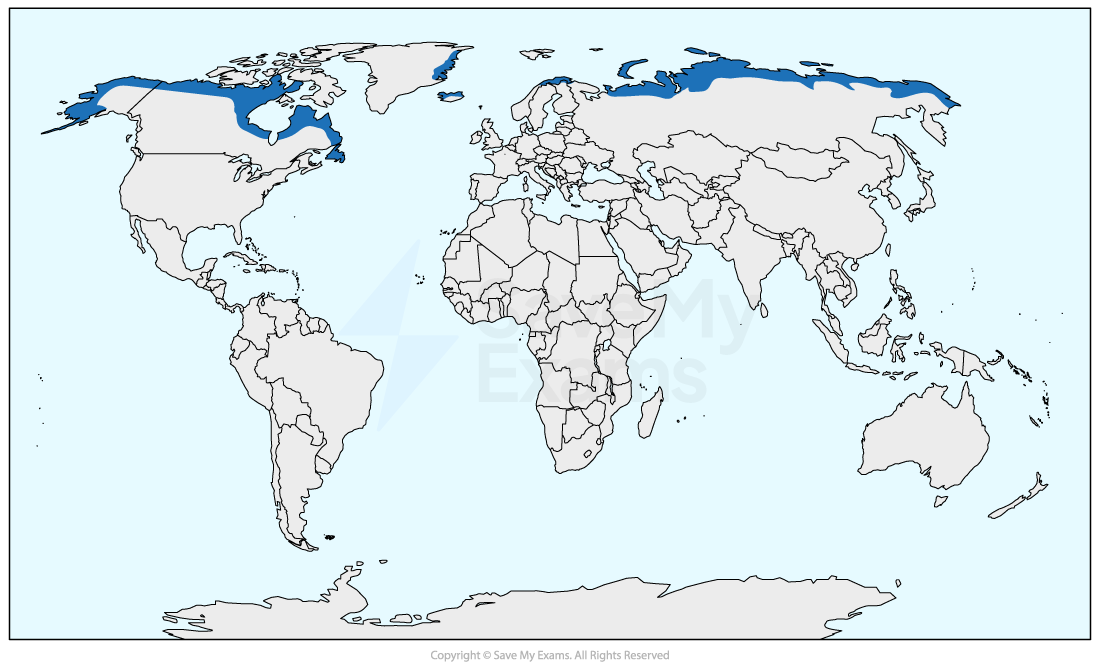
The biome is found mostly in the northern hemisphere, along the Arctic Ocean's edge in North America and Eurasia, and around Greenland
Small areas of tundra are found in South Georgia and the Antarctic Peninsula in the southern hemisphere
Annual precipitation
Precipitation is low, under 380 mm
Annual temperature range
Winter temperatures can fall to -50°C, while summer temperatures hit 10°C
The average temperature is between -6°C and -12°C
Food chains and webs in the tundra
The tundra biome has low biodiversity
The tundra biome has about 400 varieties of flowers, but only 48 different animals
Lichens and mosses dominate the biome
These are the producers in the ecosystem
No trees grow in permafrost, but small trees appear in warmer, sheltered spots
The growing season is short
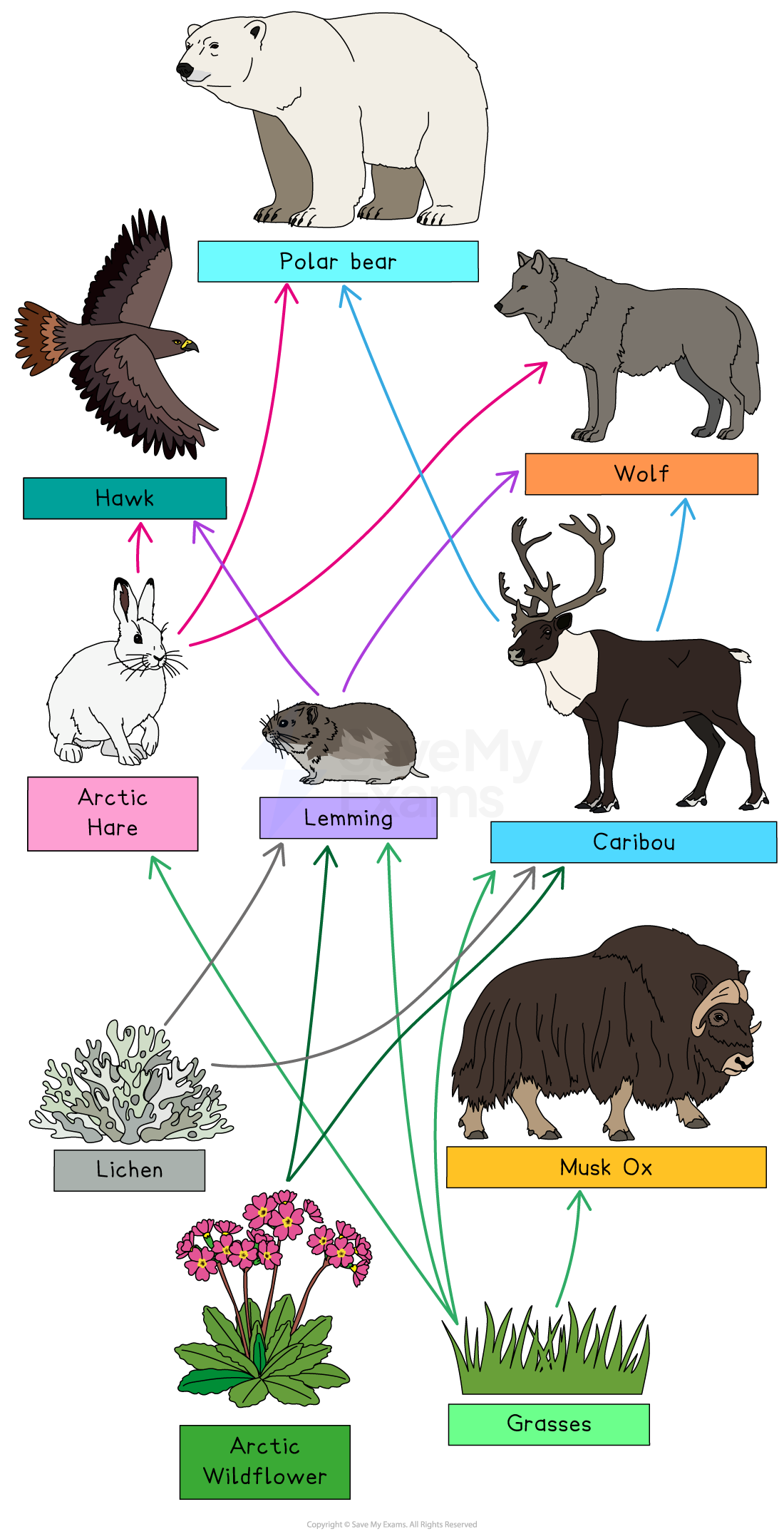
The lichens and mosses are eaten by insects and grazing herbivores (primary consumers) such as caribou and hares
The herbivores are then eaten by carnivores (secondary and tertiary consumers) such as wolves and polar bears
Adaptations
Plants in the tundra need to adapt to wet summers and dry winters:
Summer: The top layer of soil thaws, producing boggy and waterlogged land
Winter: Frozen soil and long, dark winters
Animals need to adapt to cold, dry and snowy conditions, as well as wet summers
Some animals hibernate to conserve energy and survive the winter
For example, the Arctic ground squirrels hibernate for 7-8 months of the year
They can survive even if their body temperature drops below freezing
Animals are well-insulated, and this reduces the amount of energy they have to use to keep warm
e.g. thick fur like polar bears or blubber like seals
Many birds migrate to warmer areas during winter
Arctic terns live in the Arctic during the northern hemisphere summer, then fly to Antarctica for the southern hemisphere summer
Many animals have white coats in winter for camouflage; the colour helps predators sneak up on prey and allows prey to hide in the snow
Arctic hares are white, which makes them harder for predators to spot against the snow
Many animals have physical adaptations, such as short legs, round squatting bodies, layers of fur, and insulating blubber
The Musk Ox grows two layers of fur
The shorter layer traps warm air
The longer layer is over 60 cm long
Its hooves are large and tough, allowing it to break the ice and drink the water beneath
Most plants become dormant to survive the cold, dark winters
Plants are small and round-shaped to protect them from the wind
Most plants have shallow roots because the permafrost prevents any further growth
Leaves are generally small, and this limits moisture loss
The caribou moss has hollow stems and will become dormant until the next rainfall
The warmer, wetter summer is brief, so most plants have adapted to a growing season of just 50–60 days
They are usually very bright and vibrant to attract as many insects as possible for pollination
Many plants use underground runners or bulbs instead of seeds to reproduce because the growing season is so short
Interdependence in the tundra
Living and non-living things in the tundra are closely linked
If one part changes, the others change too
They are 'inter-dependent' on each other for survival
The cold, dry climate has low biodiversity, making this interdependence fragile and easy to disrupt or damage
Herbivores, such as reindeer, depend on plants like mosses for survival
They also enrich the soil with nutrients through their dung after eating the plants
Plants depend on herbivores for reproduction because animals spread seeds in their dung and on their fur
Carnivores, such as wolves, follow herbivores in their search for vegetation
In the summer, the tundra has more plant cover
This helps surface plants absorb heat from the sun and keeps the permafrost below from thawing
Permafrost gives water and nutrients to plants
Damage to permafrost causes it to melt, which leads to flooding and halts plant growth
When the permafrost thaws, it releases trapped greenhouse gases like methane, which increases global warming and alters the climate in the tundra
This impacts the plants and animals in the tundra
Nutrient cycle
Stores in the tundra are quite even
There is a short growing season
Decomposition is slow due to the low temperatures
Uptake of nutrients is restricted to the short growing season
Leaching and weathering are low due to low precipitation
The soil is rich in nitrogen and phosphorus
It contains large amounts of biomass and decomposed biomass
The soil is infertile even with high levels of nitrogen and phosphorus because these nutrients are trapped in frozen organic matter
Impact of humans on the tundra
Human activity can have a significant impact on the tundra biome
Cold environments are fragile and take a long time to recover if damaged
Plant growth is already very slow: If plants are damaged (e.g. by vehicle tyres), they take even longer to regrow, if at all
As species are already highly specialised, they would find it difficult to adapt to further change
Permafrost melt
Climate change is one of the main threats to the tundra, causing permafrost to melt, releasing greenhouse gases
Permafrost is also melting at an increasing rate due to buildings heating the land, especially around big urban centres
Oil and gas
There are many oil fields in areas such as those around Prudhoe Bay
The Trans-Alaska oil pipeline links the oil fields to Valdez, where the oil can be shipped out
The pipeline impacts the migration patterns of animals such as caribou
Oil drilling increases the risk of oil spills, such as the Exxon Valdez in 1989
Wildlife populations took many years to recover from the oil spill by the tanker in Prince William Sound
Mineral resources
Gold, silver, iron ore and copper ore are mined, particularly in the Tintina gold belt region
Mining leads to:
Damage from heavy machinery
Long-term soil and water contamination
Infrastructure like roads and pipelines can destroy habitats and impact animal migration.
Tourism
Tourists are attracted to the tundra's wilderness scenery
Over 2 million tourists visit Alaska each year
Tourists can impact the tundra by:
Increase pollution
Trampling vegetation
Disturbing wildlife
Increased infrastructure
Erosion and soil compaction

Unlock more, it's free!
Join the 100,000+ Students that ❤️ Save My Exams
the (exam) results speak for themselves:

Was this revision note helpful?