Small scale ecosystems (WJEC Eduqas GCSE Geography B): Revision Note
Exam code: C112

Specification Link
The notes on this page cover part 3.1.3 of the WJEC Eduqas GCSE B Geography.
3.1.3 - How are small-scale ecosystems in the UK managed and used?
The characteristics of one small-scale ecosystem in the UK.
The benefits of the ecosystem for local communities.
The challenges of managing the ecosystem and how different stakeholders perceive its value.
Characteristics of a small-scale ecosystem
Examiner Tips and Tricks
You may have studied other small-scale ecosystems, such as wetlands or sand dunes, for this case study. The case study given below is just one of many examples of what you could cover.
In the final exam, you can use the one you have studied in lessons or the example given below. The key information you need to ensure that you know for the case study is:
The characteristics of the ecosystem
Food web
Examples of plants and animals
Nutrient cycle
The benefits and challenges of the ecosystem
The views of different stakeholders
Leigh Woods
Leigh Woods is a deciduous woodland
Located in Bristol, to the west of the Avon Gorge
It is the largest area of ancient woodland in the city
The National Trust and Forestry Commission manage the woodland
It is a National Nature Reserve and Site of Special Scientific Interest (SSSI)
The woods are also part of the Avon Gorge Woodlands Special Area of Conservation
Leigh Woods food web
It provides a variety of habitats for plants, insects and animals
Producers include:
Tree species: ash, beech, oak and chestnut
Other plants: Holly, fern, bluebells, wild garlic
There are also lichens and mosses
Primary consumers include:
Insects
Rabbits
Deer
Squirrel (though they may eat larvae/caterpillars if conditions are harsh)
Secondary consumers include:
Frogs
Voles
Fox
Badgers
Tertiary consumers include:
Foxes
Birds of prey such as kestrels

Animals can be in more than one trophic level: For example, a fox will eat both primary consumers, such as rabbits and secondary consumers, such as voles
There are also many decomposers (fungi), which are vital to the nutrient cycle
Leigh Woods nutrient cycle
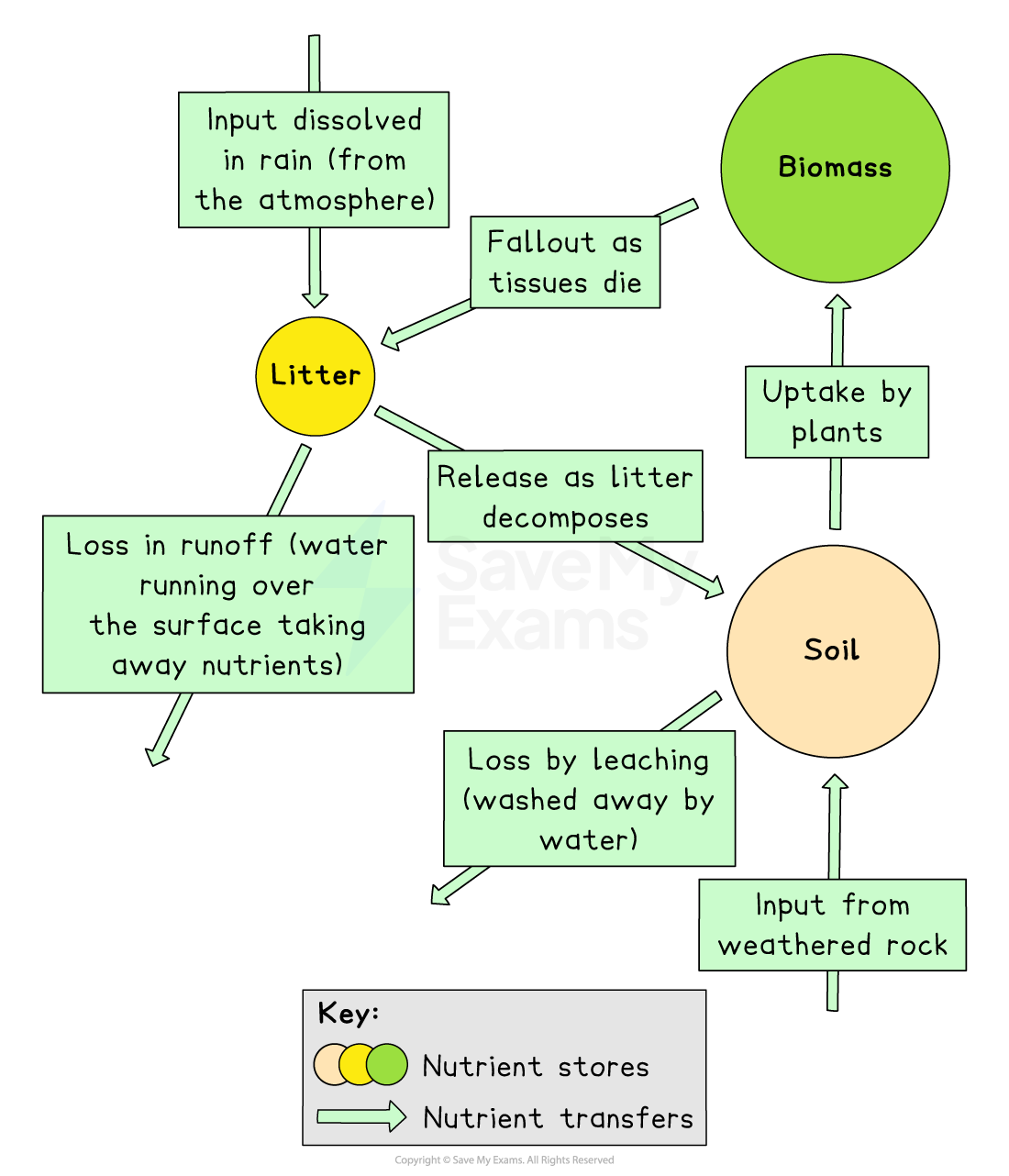
Interdependence
The biotic and abiotic parts of the woodland are linked through the nutrient cycle and food webs
Trees such as the rowan rely on birds eating the berries to disperse their seeds
Some berries are dropped during the flight in a new location
The seeds have an indigestible coating, which means that seeds which are eaten are deposited in droppings
Oak trees rely on squirrels burying the acorns to store for winter
Acorns, which are forgotten, then germinate
The trees in the woodland are mostly deciduous
In autumn, the trees lose their leaves
This covers the ground in a thick layer
The layer of leaves decomposes, adding nutrients to the soil
A shrub layer of brambles, grass, bracken and other plants is the main producer
In spring, before the trees come into leaf, more light reaches the woodland floor, allowing bluebells and daffodils to flower
Benefits and challenges of the ecosystem
Benefits of Leigh Woods
Biodiversity
The woods provide a habitat for many rare and nationally scarce animal and plant species
There are seven of the UK's 17 bat species
Scarce insects found in the woods include:
False darkling beetles
Pauper pug and silky wave moths
White-letter hairstreak butterflies
Bullfinches, marsh tits and song thrushes
There are several species of whitebeam tree which only grow in this area, including the Wilmott's whitebeam
The woodlands are known for the limestone rock plants, including:
Bristol rock-cress and western spiked speedwell
Recreation and leisure
The forest is a vital public space for recreation and leisure
The visitors are mainly local people from East Sussex
The forest area includes:
Historical and cultural features include Stokeleigh Camp hillfort
Disused celestine quarries and tramway
The Clifton Suspension Bridge
It is popular with visitors for:
Mountain biking, including the Yer Tiz, Keener and Gert Lush trails
Running - there is a 'RunTogether' route created by England Athletics
Walking – the 'Feel good forest trail' created with the WWF
Orienteering
The benefits for people may include:
Improved well-being
Increased fitness
Permeable surfaces to reduce surface runoff
Reduced pollution levels
Reduced temperatures in hot weather
Challenges of the ecosystem
A stable ecosystem is one where all the biotic and abiotic components are in balance so that the populations remain constant
This may take hundreds of years to develop, but the balance can be disturbed very suddenly
Disruptions to the woodland ecosystem can be the result of either natural events or human activity
These disruptions can make managing the ecosystem challenging
Natural events
Natural events may include:
Wildfires caused by lightning
Climate change (though it can be argued that this is human-induced)
Spread of invasive species
Disease
Extreme weather events: Flood or drought
Like many deciduous woodlands in the UK, Leigh Woods have been affected by ash dieback
Over 1000 species are dependent on ash, including wood mice, wrens, bats, lichen and beetles
It is a significant tree for about 89 invertebrate species, including the endangered Violet Click beetle and the Hawk Moth caterpillar
The removal and death of ash trees impacts all of these species, which then has a knock-on effect on the species which feed on them
Woodpeckers, other birds and small mammals which feed on the insects living on and in ash trees may experience a population decrease
This would then impact owls and other birds of prey, which feed on the smaller birds and mammals
Human activities
Human activities may include:
Deforestation
Hunting of animals/birds
Introduction of invasive species
Hedgerow removal
Changes to water supply/drainage patterns or temperature
Addition of chemicals: Fertilisers/herbicides/pesticides
Fires used to clear land
Accidental fires caused by barbecues or litter
Unauthorised trail use by mountain bikers
This leads to erosion and damage to ground plants
Increased traffic and car parking issues
The installation of pay and display machines has reduced visitor numbers to manageable levels
Views of stakeholders
Leigh Woods is managed by the National Trust and Forestry Commission
The location in Bristol means that there are many stakeholders who have views on how the ecosystem should be managed
Conservation groups
These include groups such as Abbots Leigh Wildlife Group
Their priority is the conservation and enhancement of the natural environment and biodiversity
Local residents
There are mixed views which mainly focus on preserving the woodlands
The main concerns include:
Urban sprawl
Increased traffic
Loss of wildlife habitats
Local councils
Needs to ensure that infrastructure and housing meet local needs
Want to make rail improvements 'Metrowest'
Has an agreement with the Forestry Commission that another area of the forest will be raised to SSSI standards to compensate for the loss of woodland due to the railway
Other groups
At the edge of the woodland, planning permission has been granted for 700 allotments
Allotment holders argued that the allotments were beneficial for:
Their health
Mental well-being
Many people opposed the allotments due to:
The creation of road access
Shipping containers are being used for storage

Unlock more, it's free!
Join the 100,000+ Students that ❤️ Save My Exams
the (exam) results speak for themselves:

Was this revision note helpful?