Water deficit (WJEC Eduqas GCSE Geography B): Revision Note
Exam code: C112

Specification link
This page covers section 3.3.2 of the WJEC Eduqas GCSE specification.
3.3.2 What happens when demand for water exceeds supply?
The concept of over-abstraction and the reasons for water transfer schemes.
The impact of over-abstraction and unsustainable use of water on people, the economy and environment.
Coverage to include the impacts in countries at contrasting levels of development.
Over-abstraction
Aquifers are where water is stored underground in layers of porous rock
Precipitation filters through soil and rocks to reach the aquifers, where it is stored
This process is known as recharge
The water is obtained by drilling boreholes or digging wells
Groundwater may also come to the surface as a spring
Issues with groundwater/aquifers include:
Overuse or over-abstraction of water in some areas means that aquifers do not have time to recharge through precipitation
Pollution from industry, agriculture and domestic waste can leach into the groundwater
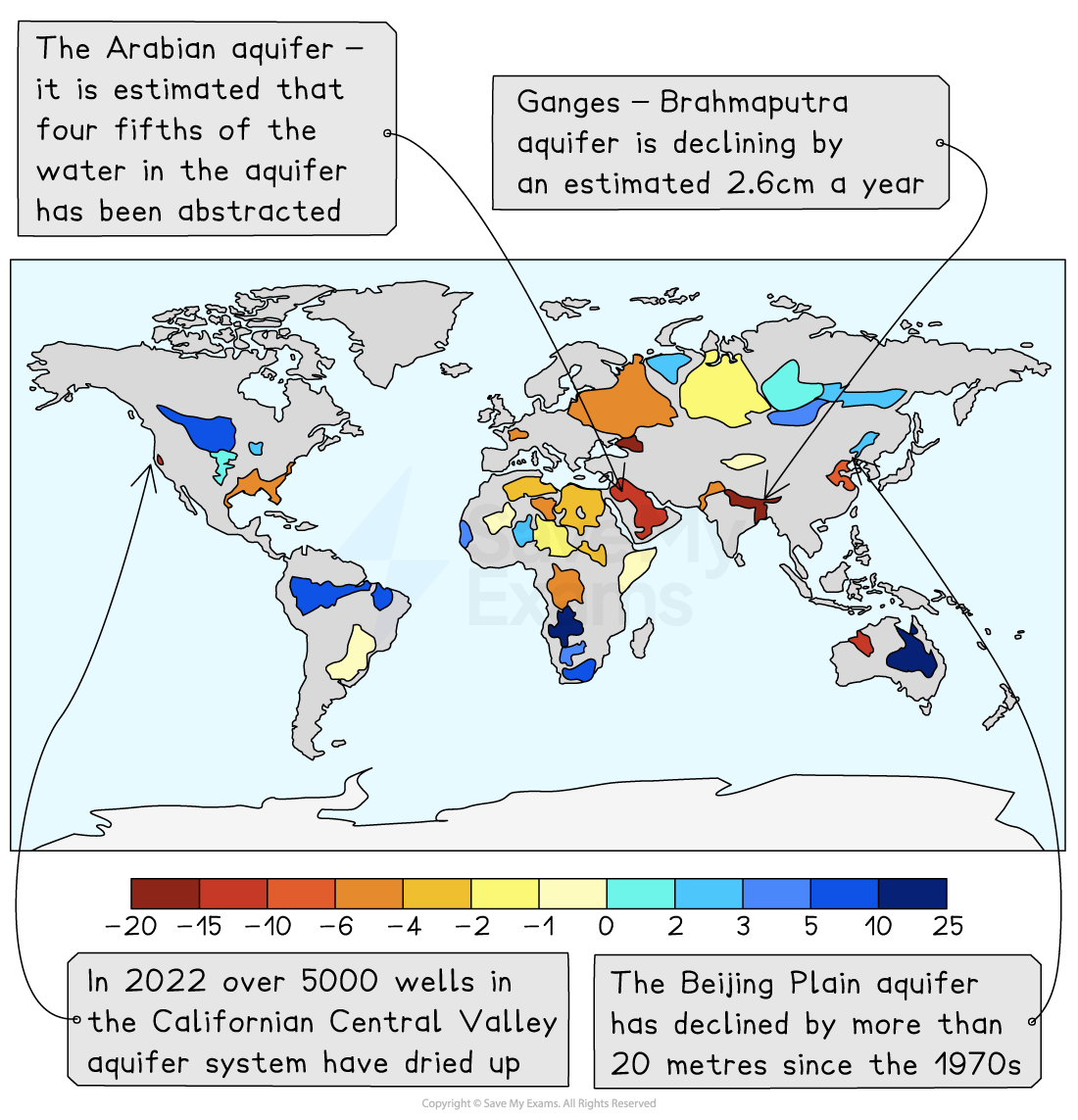
Many countries rely on groundwater as the main source of water
This can lead to impacts such as:
Subsisdence
Water insecurity
North China Plain
The North China Plain (NCP) is a densely populated agricultural and industrial region
It includes parts of Beijing, Hebei, Henan, and Shandong provinces
The main water source for the area in the past has been groundwater
Why is there so much abstraction of water?
Demand for water in Beijing alone is 3.6 billion cubic meters
The supply of freshwater in Beijing is 3 billion cubic meters
The area receives less than 600 mm of precipitation per year
This falls mainly in the summer months
Eight months of the year have an average rainfall of less than 40mm
This means that in some years, the aquifers are not recharged
Surface stores are often polluted
Groundwater is viewed as cleaner, though it may also be polluted
Rapid urbanisation and a growing population increase the demand for water
The digging of illegal wells increases the abstraction of water
There is a significant water deficit
This has led to over-abstraction of groundwater
Water transfer
To meet the demand for water, many countries have invested in water transfer schemes
These are 'top-down' developments
Governments, businesses and local governments make decisions
Dams and reservoirs are built to store water
The water is then transferred by pipes, canals and rivers from areas of water surplus to areas of water deficit
Water transfer schemes have been used by countries at all levels of development
South North Water Transfer Project (SNWTP)
A significant water transfer project in China was the SNWTP
The project aimed to transfer 12 trillion gallons of water a year from the south of China to the area around Beijing
The central section was completed in 2014
Completion was planned for 2050
It was aimed to link China's four main rivers: the Yangtze, Yellow, Huaihe and Haihe
The eastern and central routes are operational
The western route is not completed, and no decision has been made regarding its completion
Impacts of unsustainable water use
Many areas suffer significant impacts as a result of unsustainable water use
Unsustainable water use occurs when water is consumed or polluted at a rate faster than it can be naturally replenished
Over-abstraction of water is unsustainable
Unsustainable water use is an issue in countries at all levels of development. It can lead to:
Water stress
Pollution
Groundwater depletion
Impact of water stress
Water stress occurs when the available clean, accessible water supply is less than 1700 cubic metres per person per year
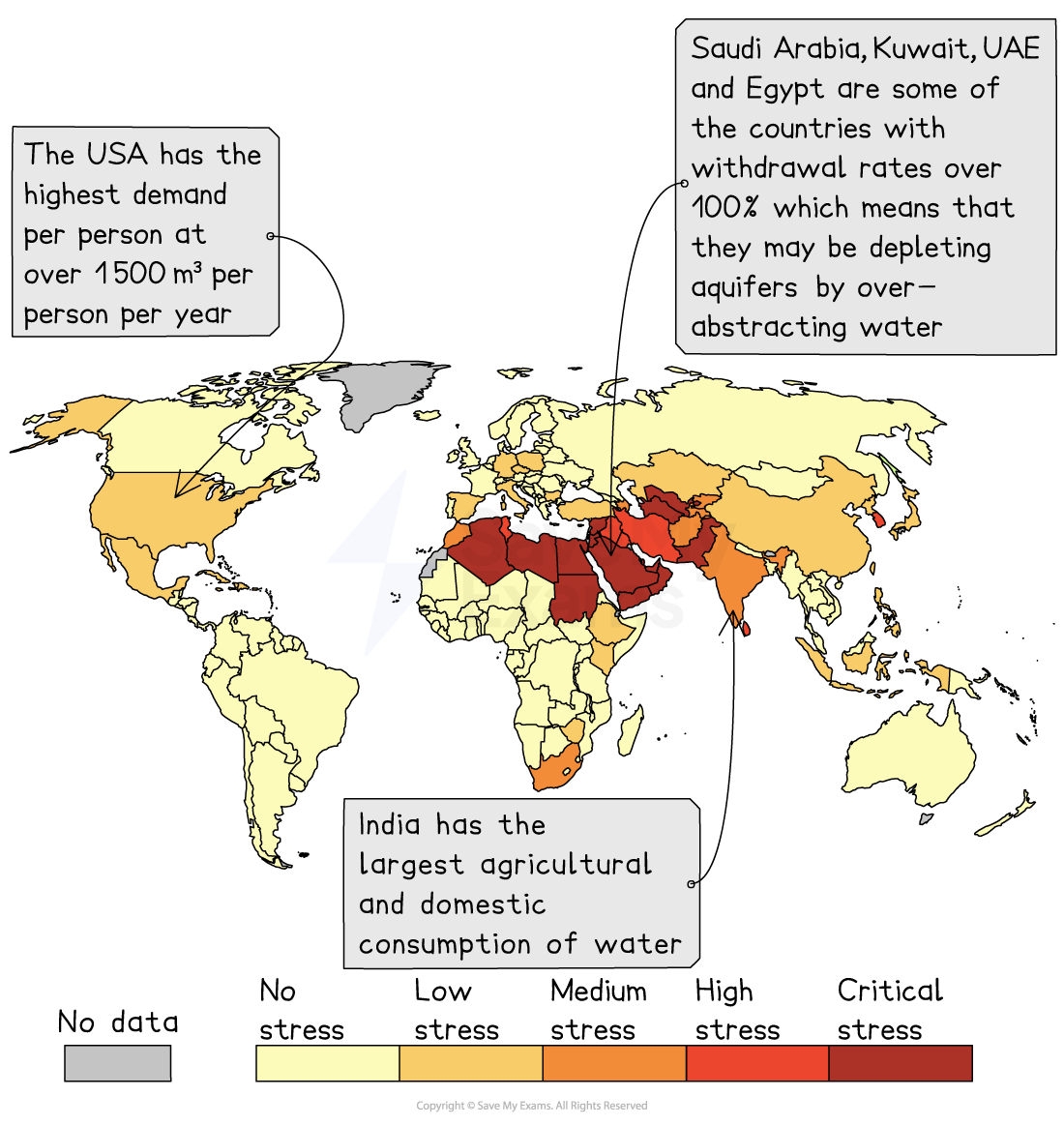
The impacts of water stress include:
Agricultural impact
Water stress can reduce crop yields due to a lack of sufficient irrigation water, leading to food insecurity
Economic impact
Water shortages can disrupt industries, particularly those requiring significant water inputs like energy, textiles, and food production
Health impact
Low water quality in stressed regions leads to diseases like cholera and dysentery due to a lack of clean drinking water
Impact of pollution
Water pollution occurs when harmful materials are in high enough concentrations to make the water unfit for use and/or harmful to the ecosystems
Water pollution is an unsustainable use of the water
The impacts of water pollution include:
Agriculture and aquaculture
Fish populations decrease
Contaminated seafood may be unsafe to eat
Using contaminated water for irrigation or livestock may lead to crop and animal deaths
Economic impact
Cost of water treatment
Higher costs of water for consumers
Loss of tourism due to polluted lakes and rivers
Health risks,
Waterborne diseases, including cholera and dysentery
Chemical pollutants can also lead to reproductive issues and increased cancer risk
Impact of groundwater depletion
Groundwater depletion is a decrease in aquifer levels caused by abstracting more groundwater than is being replenished by rainfall
This is unsustainable because eventually the water will run out
The impacts of groundwater depletion include:
Agriculture
Crops fail
Lower yields due to reduced irrigation
Food insecurity
Higher irrigation costs
Increased salinity of water can affect crops
Economic impact
Factories and power stations reliant on water may face shortages
Tourism may be affected as water scarcity can impact resort facilities such as swimming pools
Subsidence leads to repair costs
Health risks
Reduced access to safe drinking water leads to health problems, such as dehydration
Pollution concentrations increase as there is less water to dilute the pollutant
Impacts of unsustainable water use in Spain
Over-abstraction is a significant issue in Spain
The main causes are:
Agriculture, especially in areas such as Almeria
Over 80% of Spain's freshwater is used for agriculture
Tourism, particularly in the south-east of Spain
Illegal wells
It is estimated that there are over 500,000 illegal wells in Spain, extracting groundwater
This unsustainable water use leads to:
Higher water costs for users
Water shortages
In many areas in 2025, restrictions were put in place to reduce water use, including bans on filling swimming pools, watering gardens etc..
Poor water quality, including increased salinity
Land subsidence - In Murcia, it is estimated that the rate of subsidence has doubled between 2004-2008
Drying up of wetlands like Doñana National Park
Industry and agriculture can adapt but costs are high and have included the building of desalination plants
Impacts of unsustainable water use in India
Unsustainable water use in India is the result of factors including:
Increased demand due to population growth
India's population is now the largest of any country in the world
India has 18% of the world's population, but only 4% of the world's freshwater (2025)
Poor water management, including inefficient irrigation systems and poor waste disposal
Over 90% of sewage enters the rivers untreated
Industries dump 300-400 million tonnes of waste into the rivers
Increased levels of water pollution from industry, domestic and agricultural activities
This unsustainable water use leads to:
Limited access to clean water for many people
Over 35 million people lack access to safe water
Health impacts are severe
An estimated 37.7 million people are affected by waterborne diseases each year
In one informal settlement in Mumbai, 30% of deaths were the result of waterborne illness
A decrease in the water table of up to 4 meters in some areas
Agriculture suffers decreased yields
In the Sonipat district, farmers report crop failures, which they attribute to water pollution
Examiner Tips and Tricks
Where questions ask for the impacts of unsustainable water use, aim to mention:
Social (health, conflict, water access)
Economic (agriculture, industry, cost of extraction)
Environmental (subsidence, loss of wetlands, biodiversity decline)

Unlock more, it's free!
Join the 100,000+ Students that ❤️ Save My Exams
the (exam) results speak for themselves:

Was this revision note helpful?