Water supply & demand (WJEC Eduqas GCSE Geography B): Revision Note
Exam code: C112

Specification link
This page covers section 3.3.1 of the WJEC Eduqas GCSE specification.
3.3.1 - Why does supply and demand for water vary over time and space?
An overview of past and present global trends in water supply and demand.
The concepts of water footprints and water security.
The social, economic and environmental reasons why supply and demand for water varies over time and place.
The links between population change, economic growth, consumerism and increasing demands for water.
Past and present trends in water supply and demand
Water supply
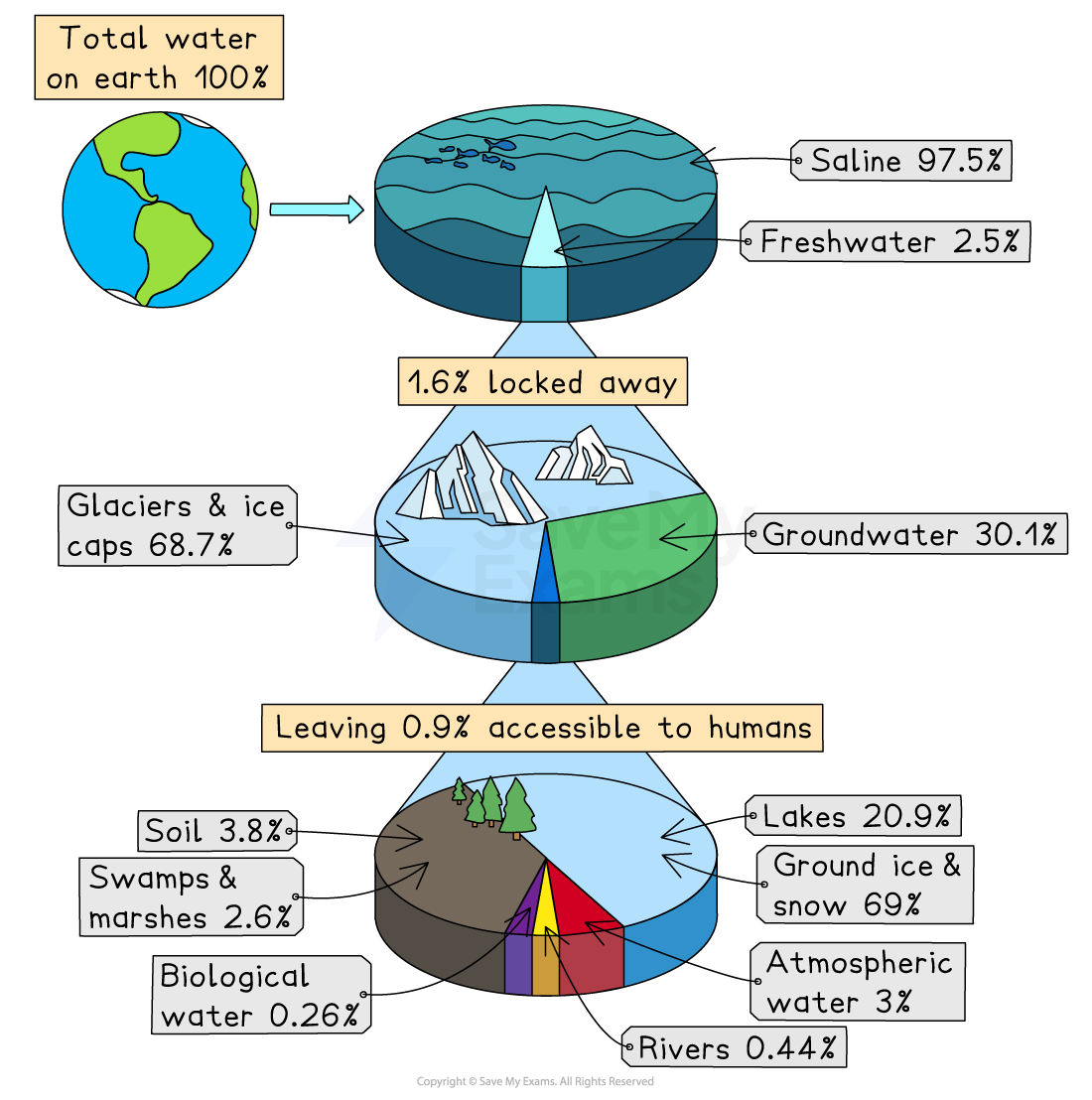
Only 2.5% of the water on Earth is freshwater
Approximately 68.7% of freshwater is stored in glaciers and ice sheets, and 30% is groundwater
The remaining 1.3% of freshwater is in rivers, soil moisture, lakes and the atmosphere
This is not evenly distributed across the globe—Canada contains more lakes than the rest of the world combined
The supply of water humans use comes from three main sources:
Lakes and rivers
Aquifers
Ice and glaciers
The amount in each of these stores depends on the climate
In Peru, over 20 million people rely on water supply from glacier ice melt
Brazil's water supply is mainly from lakes and rivers
Over 60% of India's water comes from groundwater
Global demand for water
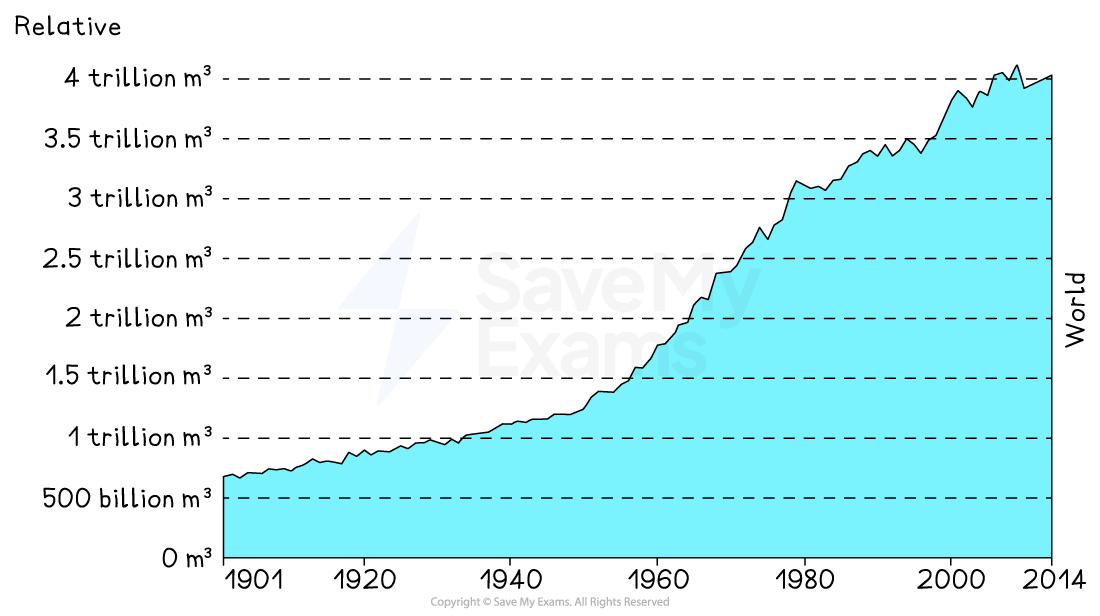
The global demand for water is increasing
Between 1934 and 2014, demand increased from 1 trillion m3 to 4 trillion m3
Water security
To be water secure is to have a clean, reliable source of water
A place or country that does not have this is water insecure
Why is water security important?
Populations need access to safe, sufficient and affordable water
This is required to meet basic needs for:
Drinking
Sanitation and hygiene
Cooking
Well-being
Adequate water supply is also needed for:
Industry
Food production
Energy production
Transport
Tourism
Water footprint
Everyone has a water footprint
This is a measure of the amount of water each individual uses and their impact on water resources
People use water every day for drinking, washing, cooking and sanitation
Every product used by people also uses water in its production and transport. This is called embedded water
On average, people use between 2,000 and 5,000 litres a day of embedded water
It takes:
Over 15,500 litres of water are required to make 1kg of beef
Making one cup of coffee takes 140 litres of water
To make 1kg of chocolate requires 24,000 litres of water
This is because water is used to water the crop or for the livestock, as well as during transport and other steps of production
Reasons for variation in water supply and demand
Social reasons for changing supply and demand
Population growth - the more people there are, the more water is needed
Many people in LICs do not have access to piped water and, as a result, are more cautious with water use
Water use also varies between regions in the same country
The demand for water is higher in urban areas than in rural areas
Increased use of water in leisure and tourism - water parks, golf courses
Economic reasons for changing supply and demand
Improving living standards - people have more appliances/sanitation, which use water
Increased urbanisation
Increasing industry - water is needed for the production of goods and energy production
Increasing use in commercial agriculture - more water is needed for livestock and crops
Environmental reasons for changing supply and demand
Changing weather patterns due to climate change, including more extreme weather events and higher temperatures
This can lead to more frequent and severe droughts, which in turn affect the water supply.
Industrial and agricultural waste can pollute surface and groundwater sources, making water unusable without costly purification
The over-abstraction of water from rivers and aquifers can lower water tables and reduce the long-term sustainability of water sources.
Links between factors affecting the supply and demand of water
Population increase and economic growth lead to consumerism
This increases the water demand
Water demand is greatest in HICs due to higher levels of domestic and industrial use
The largest use of water in HICs tends to be in industry
Unlike HICs, water use in LICs is mostly used for agriculture
Many people are still dependent on agriculture
Examiner Tips and Tricks
It is important to understand the links between the different factors which affect water supply and demand. There are clear links between economic development, consumerism and an increased demand for water. You should be able to explain the links, for example, the more disposable income people have, the more products they buy, and this leads to an increase in the demand for water by industry.

Unlock more, it's free!
Join the 100,000+ Students that ❤️ Save My Exams
the (exam) results speak for themselves:

Was this revision note helpful?