Contrasting Lives in Elizabethan England (OCR GCSE History B (Schools History Project)): Revision Note
Exam code: J411

Summary
Where Elizabethan people lived, what they ate and how they spent their spare time depended on their social standing. The wealthy lived in grand houses, with plentiful and varied food and spent many hours at leisure - often hunting animals for fun.
The 'middling-sort' lived in good homes and ate well if not extravagantly. They enjoyed a variety of leisure activities both inside and outside the home.
The Elizabethan poor had a limited diet, often went hungry and were at risk of starvation. Their leisure time was limited and their homes were too uncomfortable to spend an enjoyable time in them. Watching and betting on animals fighting and joining in large football matches were the most popular pastimes for the poor.
Lives of the wealthy Elizabethans
The wealthy came from the nobility and the gentry
They were less than two per cent of the population
They owned over half of the land
The rents they received from the lands they owned meant they did not have to do any physical work
It also meant they had more money to spend on their homes and their diet and more time to spend enjoying themselves
Houses of the Wealthy
Many members of the nobility and gentry used their enormous wealth to build magnificent homes
These homes symbolised their power and status
The biggest had over 50 rooms and would often have enormous windows
Glass was a very expensive luxury in 16th-century England
Food of the Wealthy
The large homes of the wealthy were surrounded by farms, gardens and orchards that provided the owners with food
They could also afford meat and would frequently eat beef, lamb, pork and venison
Feasts and banquets were often held
These allowed the gentry to display their wealth
Food imported from abroad was commonly eaten at these banquets
Leisure Activities of the Wealthy
The nobility were rich in both time and money and took part in a variety of leisure pursuits
These included:
Hunting animals with hounds whilst following on horseback
Hunting animals with trained hawks
Fishing
Fencing - fighting with blunt swords to score points
Playing a form of indoor tennis known as Real Tennis
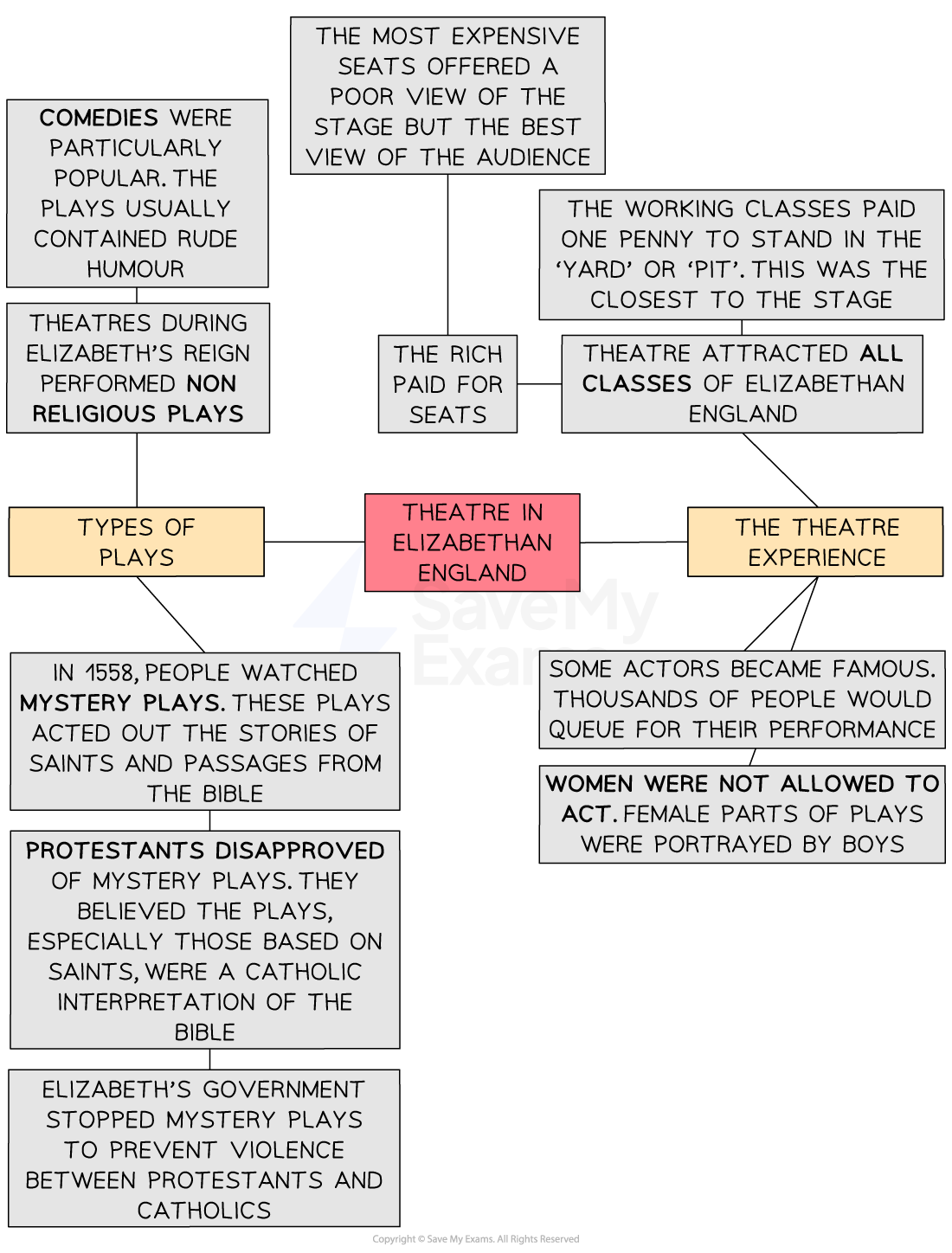
Visiting the theatre became increasingly popular during Elizabeth's reign
There were no theatres in England in 1555 but some wealthy Elizabethans invested in theatres and paid for the actors to perform the plays
Although the theatres were funded by the wealthy, people from all parts of society attended them
Lives of the 'middling-sort' Elizabethans
The middle class of Elizabethan society were often referred to as the 'middling-sort'
They were considerably wealthier than the poor but nowhere near as wealthy as the gentry and nobility
In towns, the 'middling-sort' were small business owners and craftsmen
In the countryside, they owned and farmed their own land and often employed labourers
They did not have the status to become Justices of the Peace or Members of Parliament (MP)
Houses of the 'middling-sort'
The homes of the 'middling-sort' or Elizabethan England were a vast improvement on those of small farmers of the Medieval era
They often featured enclosed chimneys, which allowed for upstairs to be built
Medieval homes would have a simple hole in the ceiling to allow smoke to escape, which meant having upper floors was impossible
Yeoman's homes, such as the one pictured below, also featured glass windows
Food of the 'middling-sort'
Most members of the 'middling-sort' were farmers
They had access to plentiful supplies of food
Those who ran businesses in towns could also afford to eat well
Meat and vegetables were commonly eaten
The bread they ate was known as 'yeoman bread' and was made with wheat flour
Ale or mead were drunk but not the expensive imported wines enjoyed by the wealthy
Leisure Activities of the 'middling-sort'
Those people who lived in towns would attend the theatre and watch spectator sports such as baiting and cock-fighting
Baiting required a bear or a bull
The owner would file the bear's teeth and then tie the animal to a post
The organisers would release dogs to attack the bear or the bull
Spectators would bet a large amount of money on whether the dogs would kill the bear or the bull
Owners wanted the bear to win as they were expensive animals in Elizabethan times
Bulls were less expensive to purchase. Owners allowed bulls to fight to the death with the dogs
Cock-fighting required two cockerels
These animals are aggressive when they are close to another male cockerel
The owners placed metal spurs on the cockerel's head
The organisers would place the two cockerels together to fight to the death using their spurs or their beaks
Spectators would bet a large amount of money on which cockerel would win
Many towns had specialised arenas for bear-baiting and cock-fighting
At home, 'middling-sort' families enjoyed making music and playing games with cards and dice
Paying social visits to extended family was also a key social activity
Lives of the poor Elizabethans
Around half of all people in Elizabethan England belonged to the poor, labouring classes
Their lives were hard and featured hard physical work from sunrise to sunset
Work was usually temporary
They often experienced hunger or starvation
Poor Elizabethans had far less time or money to enjoy themselves
Houses of the Poor
The houses of the poor were simple, poorly built cottages of one or two rooms
There were no upper floors
Smoke from the fires escaped through a simple hole in the roof
The floor was made of bare earth, covered in straw
Furniture might include a simple table and benches
Food of the Poor
Much like the poor of the medieval period, the diet of the Elizabethan poor was mainly bread and pottage
The bread was made from rye or barley, as they were cheaper than wheat
Pottage was a thick soup made from whatever vegetables were available but often included onions, turnips and beans
Hunger was common
When harvests failed, as they did in 1595 and 1596, members of the labouring poor starved to death
Leisure Activities of the Poor
Hunting rabbits and fishing were enjoyed as pastimes, as well as providing food
Poor people went to the theatre and watched baiting and cock-fights
The main sport that the working classes played was football
The aim of Elizabethan football is the same as the modern-day version - to place the ball in the opponent's goal
There are key differences between the rules of Elizabethan football and football today:
The pitch in Elizabethan football was much larger
People played the game between villages
This meant the pitch could be miles in length
There was no punishment for:
Picking up the football
Attacking another player. It was not uncommon for people to die during football matches
Having a larger number of players on your team than your opponents
Examiner Tips and Tricks
Remember that many of the interpretations made about daily life in Elizabethan England focus on the lives of the wealthy and the 'middling-sort'. This is because many of the historical sources that these interpretations are based on are from people from wealthy and 'middling-sort' backgrounds.
The labouring poor are much less likely to have been able to read and write; they owned fewer possessions and, unlike palaces and mansions, their homes were destroyed between Elizabethan times and today.

Unlock more, it's free!
Join the 100,000+ Students that ❤️ Save My Exams
the (exam) results speak for themselves:

Was this revision note helpful?
