Poverty in Elizabethan England (OCR GCSE History B (Schools History Project)): Revision Note
Exam code: J411

Summary
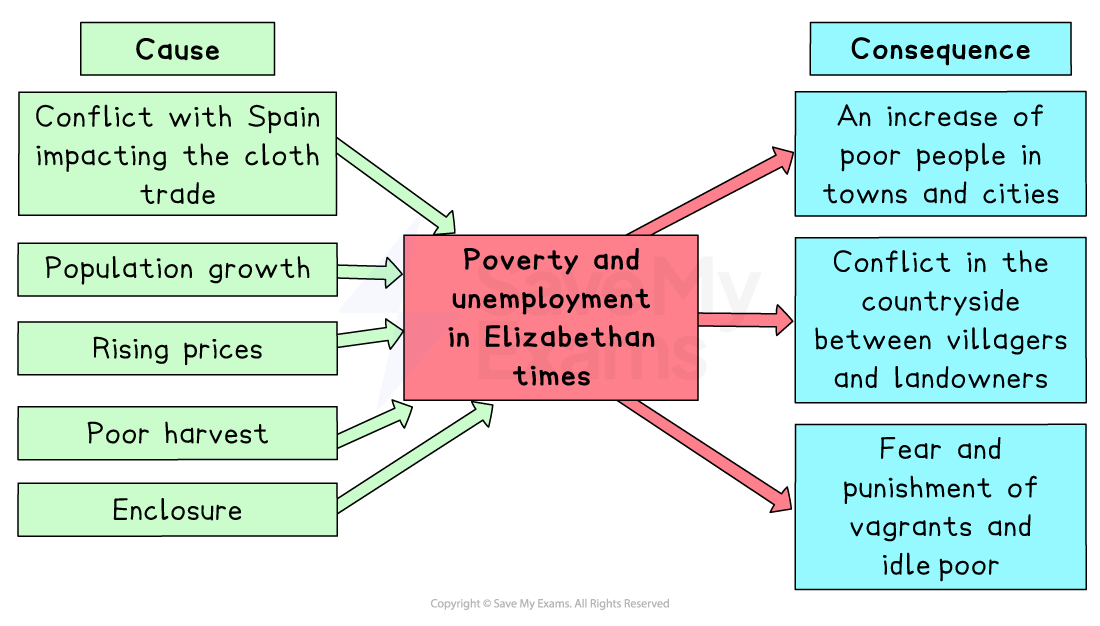
Poverty had been a feature of life in England for many centuries but the number of people unable to afford food and housing significantly increased whilst Elizabeth was Queen. This was due to a combination of the rapid increase in population size, failed harvests and a prolonged war with Spain.
Although people understood that events had led to an increase in poverty, many of the poor were also blamed personally and brutally punished. These were known as the idle or undeserving poor. The punishments included whipping or even death.
Those who were elderly or sick and unable to work were seen as the deserving poor and increasing attempts were made to help them. This resulted in the Elizabethan Poor Law of 1601, which led to people being taxed to pay for both helping the deserving poor and punishing the undeserving poor.
The causes of poverty in Elizabethan England
Poverty and homelessness were significant problems in Elizabethan England
Towns and cities, in particular, had large numbers of people begging and sleeping out on the streets
Some historians estimate that as much as 30 per cent of urban populations were living in terrible poverty in the late 1500s
Many others, known as vagrants or vagabonds, wandered the lanes of England in search of work
Why poverty increased
The population of England grew from 2.4 million in 1520 to 4.1 million in 1600
Farming methods of the time were not able to produce enough food to cope with such an increase in just eighty years
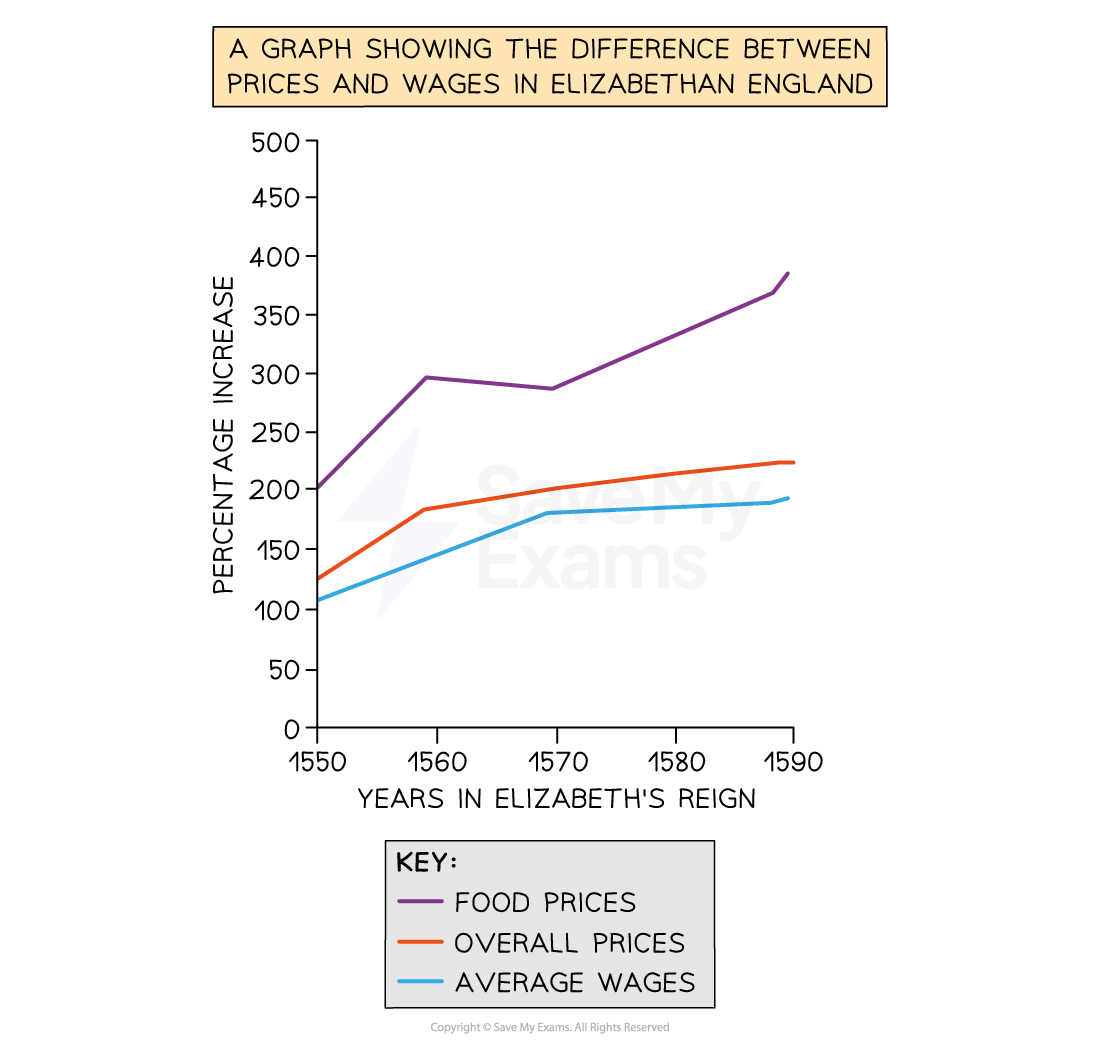
The shortage of food led to large price increases of wheat, barley and rye
The main ingredients used to make bread
When the harvests failed, food prices increased even more
Average wages did not increase at the same rate as the price of food, which pushed people into poverty
At the same time, because of the war with Spain, there was a downturn in demand for England's main export - wool
This led to many people losing their jobs and having to move in search of work
Elizabethan explanation of poverty in England
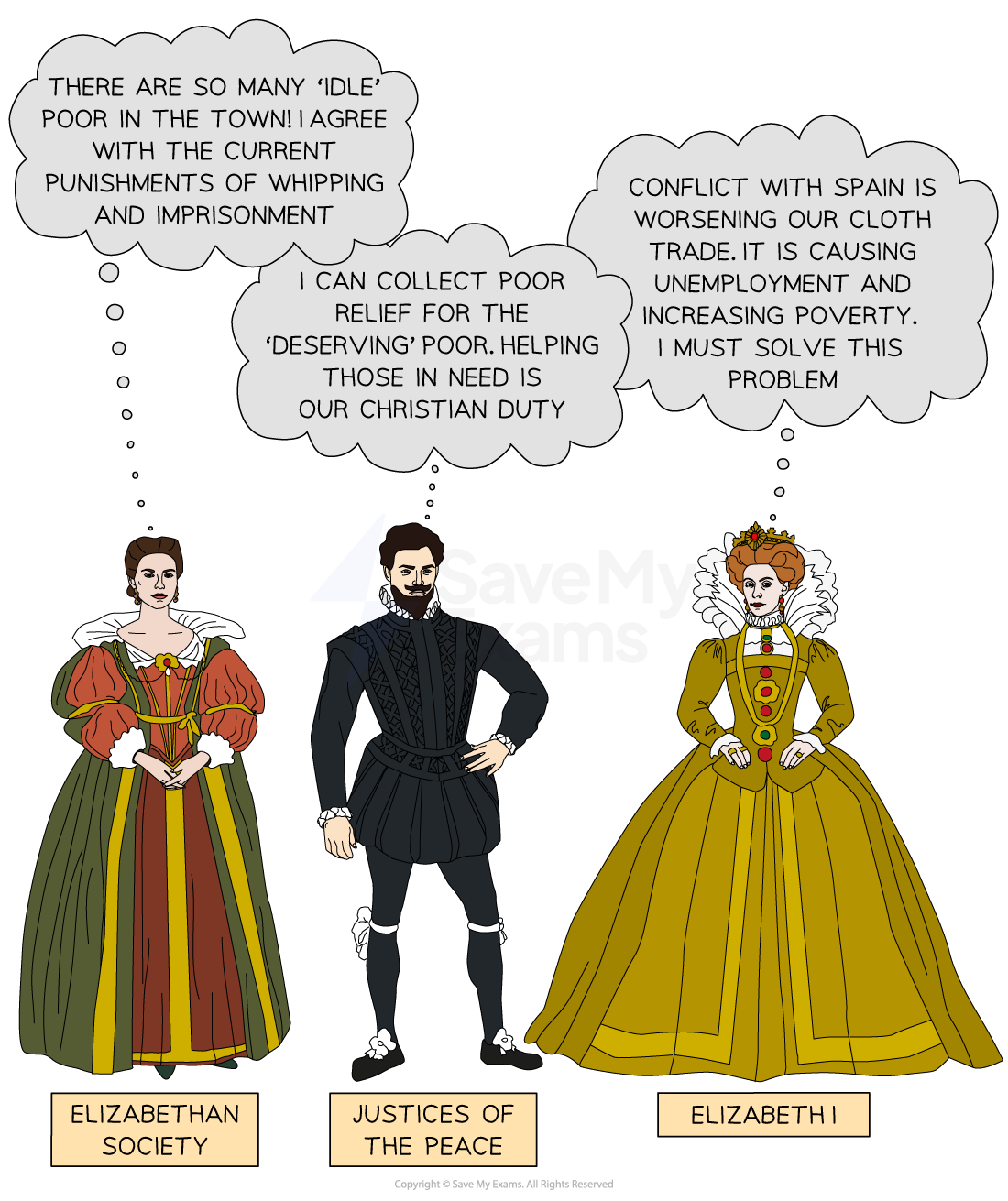
Although Elizabethans understood that a rising population and failing harvests had an impact on the number of people in poverty, they also believed it was down to personal weakness
As a result, the poor of Elizabethan England were divided into two groups:
The deserving poor
These included the elderly, the sick, widows and orphaned children
The undeserving or idle poor
The 'undeserving' or 'idle poor' describes those who were considered fit and healthy enough to work but were unwilling to do so
They were also known as sturdy beggars and vagabonds
Elizabeth's reactions to the poor
The Queen believed it was her Christian duty to help those who were poor through no fault of their own
However, she saw sturdy beggars as a threat to the whole of English society
The social hierarchy depended on people knowing their place
Vagabonds did not follow the laws or rules and did not stop in one place
Early attempts to end poverty
The treatment the poor received depended on whether they were viewed as being deserving or undeserving
The Vagabonds Act was passed in 1572 and meant that people over the age of 14 and identified as vagabonds were;
Whipped
Had a hole burned through their ear with a red-hot poker
If they were caught a second time, they could be hanged
If they were seen as being deserving poor, they were given poor relief by local officials
The Statute of Artificers of 1563 ensured that everybody contributed to poor relief
Those who refused to pay were fined or even imprisoned by Justices of the Peace
The Poor Relief Act, 1576 gave people raw materials which they could turn into goods and sell
The Poor Law, 1601
Despite the measures taken by the government in the 1560s and 1570s, poverty was still a growing problem in the 1590s
This led to the passing of the Elizabethan Poor Law in 1601
Every householder in the parish had to pay a 'poor rate'
This was then used to pay for the overseers, almshouses and houses of correction
How successful were Elizabethan attempts to help the poor?
The problem of poverty never went away during Elizabeth's reign
The treatment of those identified as 'undeserving' poor was brutal, cruel and inhumane
However, the Elizabethans did create a 'safety net' that prevented mass starvation when the harvests failed
They also established the idea that the government would step in and look after the poor with money raised through taxes
The Poor Law system, established in 1601, was used in England until 1834
Examiner Tips and Tricks
When explaining the causes and consequences of something, connectives are your best friend!
Using phrases like: "This led to...", "As a result...", "Consequently..." and "This resulted in..." will highlight to the examiner that your answer shows a chain of reasoning and not just a list of facts.

Unlock more, it's free!
Join the 100,000+ Students that ❤️ Save My Exams
the (exam) results speak for themselves:

Was this revision note helpful?
